SUBSCRIBE TO OUR FREE NEWSLETTER
Daily news & progressive opinion—funded by the people, not the corporations—delivered straight to your inbox.
5
#000000
#FFFFFF
To donate by check, phone, or other method, see our More Ways to Give page.
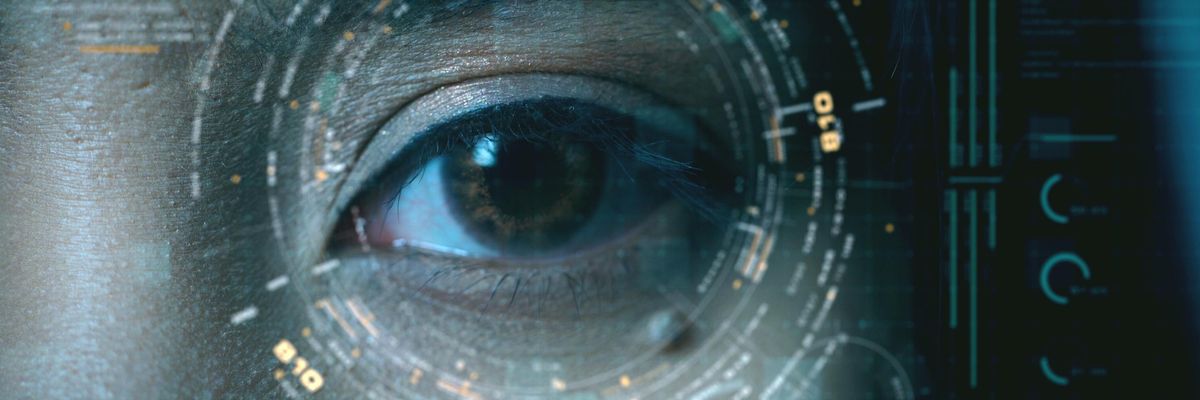
A quartet of progressives in Congress sent letters to five U.S. departments Wednesday urging all federal agencies to end the use of Clearview AI's facial recognition technology.
"Facial recognition technology runs the risk of deterring the public from participating in marches or rallies, or speaking out against injustice."
Clearview AI, a private U.S. company led by Australian entrepreneur Hoan Ton-That, boasts "the largest known database of 10+ billion facial images sourced from public-only web sources, including news media, mugshot websites, public social media, and other open sources."
Reps. Pramila Jayapal (D-Wash.) and Ayanna Pressley (D-Mass.) joined with Sens. Ed Markey (D-Mass.) and Jeff Merkley (D-Ore.) for the letters about Clearview AI and facial recognition tools more broadly, which were sent to the departments of Defense, Homeland Security, the Interior, Justice, and Health and Human Services.
"Facial recognition tools pose a serious threat to the public's civil liberties and privacy rights," the lawmakers wrote, "and Clearview AI's product is particularly dangerous."
Warning that the firm's technology "could eliminate public anonymity in the United States," the Democrats explained:
It reportedly allows users to capture and upload photos of strangers, analyze the photographed individuals' biometric information, and provide users with existing images and personal information of the photographed individuals found online. Clearview AI reportedly scrapes billions of photos from social media sites without permission from or notice to the pictured individuals. In conjunction with the company's facial recognition capabilities, this trove of personal information is capable of fundamentally dismantling Americans' expectation that they can move, assemble, or simply appear in public without being identified. Reports indicate that use of this technology is already threatening to do so.
The letters reference studies showing that "when individuals believe the government is surveilling them, they are likely to avoid engaging in activities protected by the First Amendment," and warn that "facial recognition technology runs the risk of deterring the public from participating in marches or rallies, or speaking out against injustice."
"Additionally, this technology poses unique threats to Black communities, other communities of color, and immigrant communities," the letters note, pointing to research--as well as multiple arrests of the wrong person--demonstrating how facial recognition tools misidentify marginalized groups.
Beyond "inaccuracy issues," the letters emphasize, "communities of color are systematically subjected to over-policing, and the proliferation of biometric surveillance tools is, therefore, likely to disproportionately infringe upon the privacy of individuals in Black, Brown, and immigrant communities."
Citing an August 2021 Government Accountability Office report detailing federal agencies' current use of facial recognition technology and plans for the future, the letters encourage department heads to ditch not only Clearview AI but also all other firms.
Clearview AI faces various legal challenges, including a lawsuit brought under the Illinois Biometric Information Privacy Act. After a state court let that case proceed in August, Vera Eidelman, staff attorney with the ACLU's Speech, Privacy, and Technology Project, said that "this ruling protects our clients' rights, and sends a strong message to lawmakers across the country that they can protect privacy without running afoul of the First Amendment."
Related Content

Though there are no nationwide laws governing the use of facial recognition technology, the four lawmakers behind the letters last June reintroduced legislation that would bar all federal entities from using such tools.
"We do not have to forgo privacy and justice for safety," Markey said at the time. "This legislation is about rooting out systemic racism and stopping invasive technologies from becoming irreversibly imbedded in our society."
As Common Dreams reported Monday, after intense pressure from lawmakers and privacy advocates, the U.S. Internal Revenue Service ditched its plan to require the use of ID.me's facial recognition software to access various information on the IRS website.
A quartet of progressives in Congress sent letters to five U.S. departments Wednesday urging all federal agencies to end the use of Clearview AI's facial recognition technology.
"Facial recognition technology runs the risk of deterring the public from participating in marches or rallies, or speaking out against injustice."
Clearview AI, a private U.S. company led by Australian entrepreneur Hoan Ton-That, boasts "the largest known database of 10+ billion facial images sourced from public-only web sources, including news media, mugshot websites, public social media, and other open sources."
Reps. Pramila Jayapal (D-Wash.) and Ayanna Pressley (D-Mass.) joined with Sens. Ed Markey (D-Mass.) and Jeff Merkley (D-Ore.) for the letters about Clearview AI and facial recognition tools more broadly, which were sent to the departments of Defense, Homeland Security, the Interior, Justice, and Health and Human Services.
"Facial recognition tools pose a serious threat to the public's civil liberties and privacy rights," the lawmakers wrote, "and Clearview AI's product is particularly dangerous."
Warning that the firm's technology "could eliminate public anonymity in the United States," the Democrats explained:
It reportedly allows users to capture and upload photos of strangers, analyze the photographed individuals' biometric information, and provide users with existing images and personal information of the photographed individuals found online. Clearview AI reportedly scrapes billions of photos from social media sites without permission from or notice to the pictured individuals. In conjunction with the company's facial recognition capabilities, this trove of personal information is capable of fundamentally dismantling Americans' expectation that they can move, assemble, or simply appear in public without being identified. Reports indicate that use of this technology is already threatening to do so.
The letters reference studies showing that "when individuals believe the government is surveilling them, they are likely to avoid engaging in activities protected by the First Amendment," and warn that "facial recognition technology runs the risk of deterring the public from participating in marches or rallies, or speaking out against injustice."
"Additionally, this technology poses unique threats to Black communities, other communities of color, and immigrant communities," the letters note, pointing to research--as well as multiple arrests of the wrong person--demonstrating how facial recognition tools misidentify marginalized groups.
Beyond "inaccuracy issues," the letters emphasize, "communities of color are systematically subjected to over-policing, and the proliferation of biometric surveillance tools is, therefore, likely to disproportionately infringe upon the privacy of individuals in Black, Brown, and immigrant communities."
Citing an August 2021 Government Accountability Office report detailing federal agencies' current use of facial recognition technology and plans for the future, the letters encourage department heads to ditch not only Clearview AI but also all other firms.
Clearview AI faces various legal challenges, including a lawsuit brought under the Illinois Biometric Information Privacy Act. After a state court let that case proceed in August, Vera Eidelman, staff attorney with the ACLU's Speech, Privacy, and Technology Project, said that "this ruling protects our clients' rights, and sends a strong message to lawmakers across the country that they can protect privacy without running afoul of the First Amendment."
Related Content
Though there are no nationwide laws governing the use of facial recognition technology, the four lawmakers behind the letters last June reintroduced legislation that would bar all federal entities from using such tools.
"We do not have to forgo privacy and justice for safety," Markey said at the time. "This legislation is about rooting out systemic racism and stopping invasive technologies from becoming irreversibly imbedded in our society."
As Common Dreams reported Monday, after intense pressure from lawmakers and privacy advocates, the U.S. Internal Revenue Service ditched its plan to require the use of ID.me's facial recognition software to access various information on the IRS website.
A quartet of progressives in Congress sent letters to five U.S. departments Wednesday urging all federal agencies to end the use of Clearview AI's facial recognition technology.
"Facial recognition technology runs the risk of deterring the public from participating in marches or rallies, or speaking out against injustice."
Clearview AI, a private U.S. company led by Australian entrepreneur Hoan Ton-That, boasts "the largest known database of 10+ billion facial images sourced from public-only web sources, including news media, mugshot websites, public social media, and other open sources."
Reps. Pramila Jayapal (D-Wash.) and Ayanna Pressley (D-Mass.) joined with Sens. Ed Markey (D-Mass.) and Jeff Merkley (D-Ore.) for the letters about Clearview AI and facial recognition tools more broadly, which were sent to the departments of Defense, Homeland Security, the Interior, Justice, and Health and Human Services.
"Facial recognition tools pose a serious threat to the public's civil liberties and privacy rights," the lawmakers wrote, "and Clearview AI's product is particularly dangerous."
Warning that the firm's technology "could eliminate public anonymity in the United States," the Democrats explained:
It reportedly allows users to capture and upload photos of strangers, analyze the photographed individuals' biometric information, and provide users with existing images and personal information of the photographed individuals found online. Clearview AI reportedly scrapes billions of photos from social media sites without permission from or notice to the pictured individuals. In conjunction with the company's facial recognition capabilities, this trove of personal information is capable of fundamentally dismantling Americans' expectation that they can move, assemble, or simply appear in public without being identified. Reports indicate that use of this technology is already threatening to do so.
The letters reference studies showing that "when individuals believe the government is surveilling them, they are likely to avoid engaging in activities protected by the First Amendment," and warn that "facial recognition technology runs the risk of deterring the public from participating in marches or rallies, or speaking out against injustice."
"Additionally, this technology poses unique threats to Black communities, other communities of color, and immigrant communities," the letters note, pointing to research--as well as multiple arrests of the wrong person--demonstrating how facial recognition tools misidentify marginalized groups.
Beyond "inaccuracy issues," the letters emphasize, "communities of color are systematically subjected to over-policing, and the proliferation of biometric surveillance tools is, therefore, likely to disproportionately infringe upon the privacy of individuals in Black, Brown, and immigrant communities."
Citing an August 2021 Government Accountability Office report detailing federal agencies' current use of facial recognition technology and plans for the future, the letters encourage department heads to ditch not only Clearview AI but also all other firms.
Clearview AI faces various legal challenges, including a lawsuit brought under the Illinois Biometric Information Privacy Act. After a state court let that case proceed in August, Vera Eidelman, staff attorney with the ACLU's Speech, Privacy, and Technology Project, said that "this ruling protects our clients' rights, and sends a strong message to lawmakers across the country that they can protect privacy without running afoul of the First Amendment."
Related Content
Though there are no nationwide laws governing the use of facial recognition technology, the four lawmakers behind the letters last June reintroduced legislation that would bar all federal entities from using such tools.
"We do not have to forgo privacy and justice for safety," Markey said at the time. "This legislation is about rooting out systemic racism and stopping invasive technologies from becoming irreversibly imbedded in our society."
As Common Dreams reported Monday, after intense pressure from lawmakers and privacy advocates, the U.S. Internal Revenue Service ditched its plan to require the use of ID.me's facial recognition software to access various information on the IRS website.