SUBSCRIBE TO OUR FREE NEWSLETTER
Daily news & progressive opinion—funded by the people, not the corporations—delivered straight to your inbox.
5
#000000
#FFFFFF
To donate by check, phone, or other method, see our More Ways to Give page.
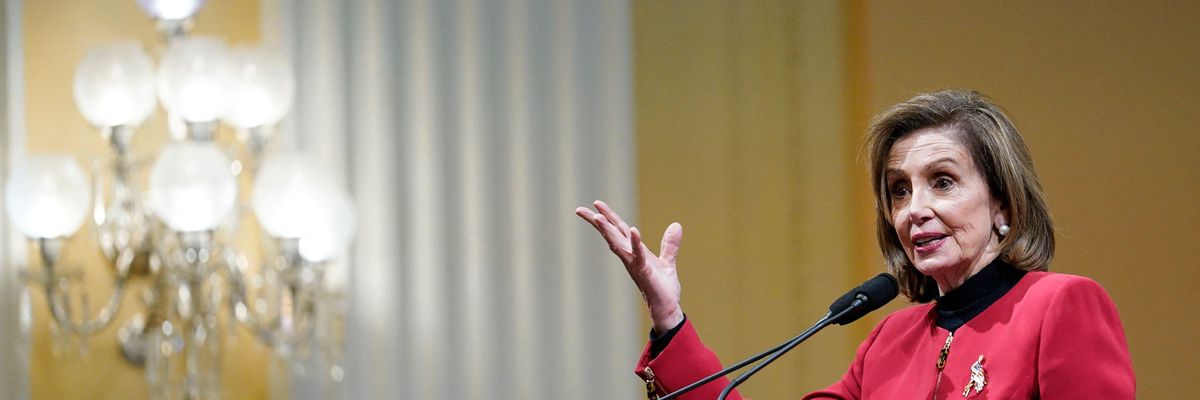
Congressional Democrats on Tuesday faced new pressure to bar sitting lawmakers from trading stocks amid reports that Republican House Minority Leader Kevin McCarthy is considering enacting such a ban if the GOP wins control of the House in the upcoming midterms.
Seen by progressives as an obvious political ploy rather than a genuine reform effort, news of McCarthy's (R-Calif.) potential endorsement of a stock trading ban comes just weeks after House Speaker Nancy Pelosi (D-Calif.) defended current rules that allow members of Congress to hold and trade individual stocks while in office--a status quo that has helped turn Capitol Hill into a veritable hotbed of insider trading.
"Democrats taking the lead on this issue would prevent Republicans from pretending they care about fighting corruption."
"This is a free market and people--we are a free-market economy," Pelosi, whose husband is a prolific trader, told reporters last month. "[Members of Congress] should be able to participate in that."
Ethics experts and other observers immediately criticized Pelosi's remarks as both politically damaging and absurd on the merits, given that members of Congress have access to non-public information that ordinary people don't--a dynamic that the coronavirus pandemic has laid bare.
According to one analysis, Republican and Democratic members of Congress made nearly 1,500 stock transactions worth up to $158 million between February and April 2020 as the coronavirus began to spread across the United States, throwing the economy into chaos and sending the stock market into a tailspin.
In response to McCarthy's possible support for some form of stock trading ban, The Intercept's Ryan Grim wrote that "if Democrats were smart or cared about winning, they'd ban congressional stock trading by the end of the week and take this off the table."
A recent survey, conducted by a conservative advocacy group, found that more than three-quarters of U.S. voters would support the ban.
Punchbowl News reported Tuesday that McCarthy is "considering instituting new limits or an outright ban on lawmakers holding and trading stocks and equities" should Republicans retake the House. The GOP leader has not finalized a proposal, Punchbowl emphasized.
"Never believe McCarthy is credible on stuff like this, but Democrats taking the lead on this issue would prevent Republicans from pretending they care about fighting corruption," progressive commentator Aaron Huertas said in response.
Related Content

Despite Pelosi's opposition, Sen. Jon Ossoff (D-Ga.)--whose Republican opponent in 2020 sparked insider trading accusations with his many suspiciously timed transactions--is reportedly gearing up to introduce legislation banning federal legislators and their immediate family members from trading in individual stocks.
Several prominent Democratic lawmakers, including Sen. Elizabeth Warren (D-Mass.) and Rep. Alexandria Ocasio-Cortez (D-N.Y.), have indicated they would enthusiastically support such a measure.
"There is no reason members of Congress should hold and trade individual stock when we write major policy and have access to sensitive information," Ocasio-Cortez tweeted last month. "There are many ways members can invest without creating actual or appeared conflict of interest, like thrift savings plans or index funds."
Congressional Democrats on Tuesday faced new pressure to bar sitting lawmakers from trading stocks amid reports that Republican House Minority Leader Kevin McCarthy is considering enacting such a ban if the GOP wins control of the House in the upcoming midterms.
Seen by progressives as an obvious political ploy rather than a genuine reform effort, news of McCarthy's (R-Calif.) potential endorsement of a stock trading ban comes just weeks after House Speaker Nancy Pelosi (D-Calif.) defended current rules that allow members of Congress to hold and trade individual stocks while in office--a status quo that has helped turn Capitol Hill into a veritable hotbed of insider trading.
"Democrats taking the lead on this issue would prevent Republicans from pretending they care about fighting corruption."
"This is a free market and people--we are a free-market economy," Pelosi, whose husband is a prolific trader, told reporters last month. "[Members of Congress] should be able to participate in that."
Ethics experts and other observers immediately criticized Pelosi's remarks as both politically damaging and absurd on the merits, given that members of Congress have access to non-public information that ordinary people don't--a dynamic that the coronavirus pandemic has laid bare.
According to one analysis, Republican and Democratic members of Congress made nearly 1,500 stock transactions worth up to $158 million between February and April 2020 as the coronavirus began to spread across the United States, throwing the economy into chaos and sending the stock market into a tailspin.
In response to McCarthy's possible support for some form of stock trading ban, The Intercept's Ryan Grim wrote that "if Democrats were smart or cared about winning, they'd ban congressional stock trading by the end of the week and take this off the table."
A recent survey, conducted by a conservative advocacy group, found that more than three-quarters of U.S. voters would support the ban.
Punchbowl News reported Tuesday that McCarthy is "considering instituting new limits or an outright ban on lawmakers holding and trading stocks and equities" should Republicans retake the House. The GOP leader has not finalized a proposal, Punchbowl emphasized.
"Never believe McCarthy is credible on stuff like this, but Democrats taking the lead on this issue would prevent Republicans from pretending they care about fighting corruption," progressive commentator Aaron Huertas said in response.
Related Content
Despite Pelosi's opposition, Sen. Jon Ossoff (D-Ga.)--whose Republican opponent in 2020 sparked insider trading accusations with his many suspiciously timed transactions--is reportedly gearing up to introduce legislation banning federal legislators and their immediate family members from trading in individual stocks.
Several prominent Democratic lawmakers, including Sen. Elizabeth Warren (D-Mass.) and Rep. Alexandria Ocasio-Cortez (D-N.Y.), have indicated they would enthusiastically support such a measure.
"There is no reason members of Congress should hold and trade individual stock when we write major policy and have access to sensitive information," Ocasio-Cortez tweeted last month. "There are many ways members can invest without creating actual or appeared conflict of interest, like thrift savings plans or index funds."
Congressional Democrats on Tuesday faced new pressure to bar sitting lawmakers from trading stocks amid reports that Republican House Minority Leader Kevin McCarthy is considering enacting such a ban if the GOP wins control of the House in the upcoming midterms.
Seen by progressives as an obvious political ploy rather than a genuine reform effort, news of McCarthy's (R-Calif.) potential endorsement of a stock trading ban comes just weeks after House Speaker Nancy Pelosi (D-Calif.) defended current rules that allow members of Congress to hold and trade individual stocks while in office--a status quo that has helped turn Capitol Hill into a veritable hotbed of insider trading.
"Democrats taking the lead on this issue would prevent Republicans from pretending they care about fighting corruption."
"This is a free market and people--we are a free-market economy," Pelosi, whose husband is a prolific trader, told reporters last month. "[Members of Congress] should be able to participate in that."
Ethics experts and other observers immediately criticized Pelosi's remarks as both politically damaging and absurd on the merits, given that members of Congress have access to non-public information that ordinary people don't--a dynamic that the coronavirus pandemic has laid bare.
According to one analysis, Republican and Democratic members of Congress made nearly 1,500 stock transactions worth up to $158 million between February and April 2020 as the coronavirus began to spread across the United States, throwing the economy into chaos and sending the stock market into a tailspin.
In response to McCarthy's possible support for some form of stock trading ban, The Intercept's Ryan Grim wrote that "if Democrats were smart or cared about winning, they'd ban congressional stock trading by the end of the week and take this off the table."
A recent survey, conducted by a conservative advocacy group, found that more than three-quarters of U.S. voters would support the ban.
Punchbowl News reported Tuesday that McCarthy is "considering instituting new limits or an outright ban on lawmakers holding and trading stocks and equities" should Republicans retake the House. The GOP leader has not finalized a proposal, Punchbowl emphasized.
"Never believe McCarthy is credible on stuff like this, but Democrats taking the lead on this issue would prevent Republicans from pretending they care about fighting corruption," progressive commentator Aaron Huertas said in response.
Related Content
Despite Pelosi's opposition, Sen. Jon Ossoff (D-Ga.)--whose Republican opponent in 2020 sparked insider trading accusations with his many suspiciously timed transactions--is reportedly gearing up to introduce legislation banning federal legislators and their immediate family members from trading in individual stocks.
Several prominent Democratic lawmakers, including Sen. Elizabeth Warren (D-Mass.) and Rep. Alexandria Ocasio-Cortez (D-N.Y.), have indicated they would enthusiastically support such a measure.
"There is no reason members of Congress should hold and trade individual stock when we write major policy and have access to sensitive information," Ocasio-Cortez tweeted last month. "There are many ways members can invest without creating actual or appeared conflict of interest, like thrift savings plans or index funds."