SUBSCRIBE TO OUR FREE NEWSLETTER
Daily news & progressive opinion—funded by the people, not the corporations—delivered straight to your inbox.
5
#000000
#FFFFFF
To donate by check, phone, or other method, see our More Ways to Give page.
Daily news & progressive opinion—funded by the people, not the corporations—delivered straight to your inbox.
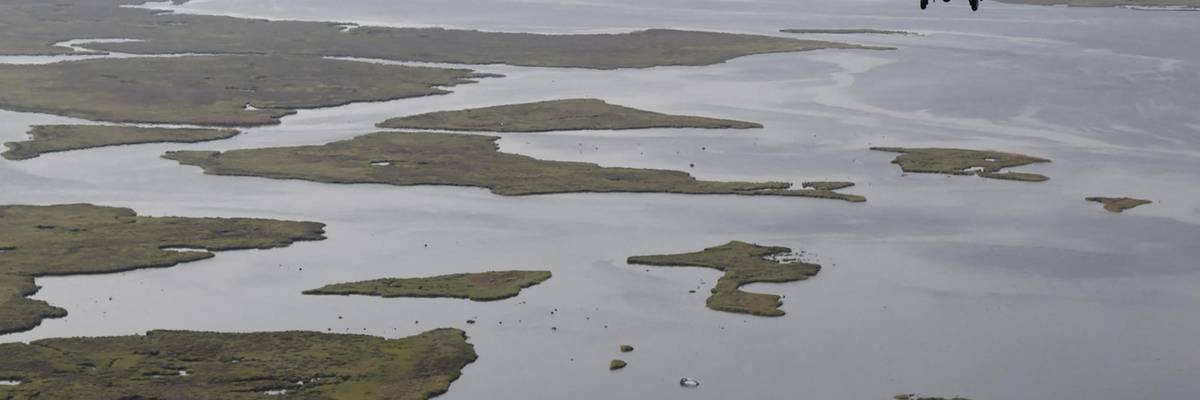
President Joe Biden, aboard the Marine One helicopter, inspects the damage from Hurricane Ida on an aerial tour of communities in Laffite, Grand Isle, Port Fourchon and Lafourche Parish, Louisiana, September 3, 2021. (Photo: Jonathan Ernst/pool/AFP via Getty Images)
The fossil fuel industry's role in environmental destruction is under renewed fire this week after the U.S. Coast Guard announced reports of nearly 350 oil spills in the Gulf of Mexico in the aftermath of Hurricane Ida.
"350 spills," the Louisiana Bucket Brigade tweeted Tuesday. "This is the petrochemical industry's responsibility, so it should foot the bill for a total cleanup--not the taxpayer."
"Every pipeline in the Gulf--and those across our bayous, backyards, and neighborhoods--must be decommissioned at the first opportunity," the group said.
Ida made landfall on Aug. 29 as a Category 4 storm and brought catastrophic devastation to Louisiana, where over 400,000 homes and businesses are still without power. The storm wreaked havoc in other states along its path as well, including New Jersey and New York, which faced deadly flooding.
"350 spills. This is the petrochemical industry's responsibility, so it should foot the bill for a total cleanup--not the taxpayer."
- Louisiana Bucket Brigade
The storm also impacted the Gulf Coast's oil and gas industry, with about 88% of the region's offshore oil production shuttered, and over 100 offshore oil production platforms still without crew, Reuters reported Monday. Coast Guard crews are flying over the area looking for potential spills.
Advocacy group Environment America noted in a press statement last week that "oil spills over the past couple of decades have been unfortunate byproducts of building large oil rigs in hurricane-prone areas--especially as climate change increasingly fuels more powerful hurricanes."
The possibility of such impacts after Ida was given weight last week with aerial imagery from the National Oceanic and Atmospheric Administration (NOAA) and the Associated Press showing what appeared to be a miles-long slick near an offshore rig, though that leak now appears to be no longer active. But further cause for concern remains.
According to NOLA.com:
The Coast Guard's National Response Center and the [Louisiana] state Department of Environmental Quality have received dozens of reports of potential spills and sheens, in addition to reports of upsets at refineries and petrochemical plants that have resulted in air emissions.
The response center's public listing of its reports is only updated weekly, on Mondays. Its Monday morning update, listed 250 incidents reported between August 29, the day Ida hit, and Sept. 5 in Louisiana and the Gulf of Mexico. In its Monday news release, the Coast Guard said it was "prioritizing nearly 350 reported incidents for further investigation by state, local and federal authorities in the aftermath of Hurricane Ida," and in response to a query said all were in Louisiana.
Sharing NOLA.com's reporting, marine science professor Don Boesch described the reported oil spills as "kind of like a hellish dystopia. Fossil fuels responsible for an overheated Gulf oozing out of the ground after the hurricane, like that carbon wants to be free."
In a May report, the Government Accountability Office said the Bureau of Safety and Environmental Enforcement (BSEE) "does not have a robust process to address the environmental and safety risks posed by leaving decommissioned pipelines in place on the seafloor due to the cumulative effects of oversight gaps before, during, and after the decommissioning process."
Since the 1960s, the report added, regulators have let the offshore industry leave 97% of no-longer-in-use pipelines on the Gulf seafloor, an amount spanning roughly 18,000 miles. What's more, BSEE fails to "ensure that operators meet decommissioning standards, such as cleaning pipelines," the report found.
Miyoko Sakashita, oceans program director with the Center for Biological Diversity, said at the time that the GAO report was evidence of "how corporations profit from polluting our water and air, leaving the rest of us to pay the price," and stressed the need for "a just transition away from offshore drilling in the Gulf that includes removing dangerous old pipelines and restoring public and environmental health."
Dear Common Dreams reader, It’s been nearly 30 years since I co-founded Common Dreams with my late wife, Lina Newhouser. We had the radical notion that journalism should serve the public good, not corporate profits. It was clear to us from the outset what it would take to build such a project. No paid advertisements. No corporate sponsors. No millionaire publisher telling us what to think or do. Many people said we wouldn't last a year, but we proved those doubters wrong. Together with a tremendous team of journalists and dedicated staff, we built an independent media outlet free from the constraints of profits and corporate control. Our mission has always been simple: To inform. To inspire. To ignite change for the common good. Building Common Dreams was not easy. Our survival was never guaranteed. When you take on the most powerful forces—Wall Street greed, fossil fuel industry destruction, Big Tech lobbyists, and uber-rich oligarchs who have spent billions upon billions rigging the economy and democracy in their favor—the only bulwark you have is supporters who believe in your work. But here’s the urgent message from me today. It's never been this bad out there. And it's never been this hard to keep us going. At the very moment Common Dreams is most needed, the threats we face are intensifying. We need your support now more than ever. We don't accept corporate advertising and never will. We don't have a paywall because we don't think people should be blocked from critical news based on their ability to pay. Everything we do is funded by the donations of readers like you. When everyone does the little they can afford, we are strong. But if that support retreats or dries up, so do we. Will you donate now to make sure Common Dreams not only survives but thrives? —Craig Brown, Co-founder |
The fossil fuel industry's role in environmental destruction is under renewed fire this week after the U.S. Coast Guard announced reports of nearly 350 oil spills in the Gulf of Mexico in the aftermath of Hurricane Ida.
"350 spills," the Louisiana Bucket Brigade tweeted Tuesday. "This is the petrochemical industry's responsibility, so it should foot the bill for a total cleanup--not the taxpayer."
"Every pipeline in the Gulf--and those across our bayous, backyards, and neighborhoods--must be decommissioned at the first opportunity," the group said.
Ida made landfall on Aug. 29 as a Category 4 storm and brought catastrophic devastation to Louisiana, where over 400,000 homes and businesses are still without power. The storm wreaked havoc in other states along its path as well, including New Jersey and New York, which faced deadly flooding.
"350 spills. This is the petrochemical industry's responsibility, so it should foot the bill for a total cleanup--not the taxpayer."
- Louisiana Bucket Brigade
The storm also impacted the Gulf Coast's oil and gas industry, with about 88% of the region's offshore oil production shuttered, and over 100 offshore oil production platforms still without crew, Reuters reported Monday. Coast Guard crews are flying over the area looking for potential spills.
Advocacy group Environment America noted in a press statement last week that "oil spills over the past couple of decades have been unfortunate byproducts of building large oil rigs in hurricane-prone areas--especially as climate change increasingly fuels more powerful hurricanes."
The possibility of such impacts after Ida was given weight last week with aerial imagery from the National Oceanic and Atmospheric Administration (NOAA) and the Associated Press showing what appeared to be a miles-long slick near an offshore rig, though that leak now appears to be no longer active. But further cause for concern remains.
According to NOLA.com:
The Coast Guard's National Response Center and the [Louisiana] state Department of Environmental Quality have received dozens of reports of potential spills and sheens, in addition to reports of upsets at refineries and petrochemical plants that have resulted in air emissions.
The response center's public listing of its reports is only updated weekly, on Mondays. Its Monday morning update, listed 250 incidents reported between August 29, the day Ida hit, and Sept. 5 in Louisiana and the Gulf of Mexico. In its Monday news release, the Coast Guard said it was "prioritizing nearly 350 reported incidents for further investigation by state, local and federal authorities in the aftermath of Hurricane Ida," and in response to a query said all were in Louisiana.
Sharing NOLA.com's reporting, marine science professor Don Boesch described the reported oil spills as "kind of like a hellish dystopia. Fossil fuels responsible for an overheated Gulf oozing out of the ground after the hurricane, like that carbon wants to be free."
In a May report, the Government Accountability Office said the Bureau of Safety and Environmental Enforcement (BSEE) "does not have a robust process to address the environmental and safety risks posed by leaving decommissioned pipelines in place on the seafloor due to the cumulative effects of oversight gaps before, during, and after the decommissioning process."
Since the 1960s, the report added, regulators have let the offshore industry leave 97% of no-longer-in-use pipelines on the Gulf seafloor, an amount spanning roughly 18,000 miles. What's more, BSEE fails to "ensure that operators meet decommissioning standards, such as cleaning pipelines," the report found.
Miyoko Sakashita, oceans program director with the Center for Biological Diversity, said at the time that the GAO report was evidence of "how corporations profit from polluting our water and air, leaving the rest of us to pay the price," and stressed the need for "a just transition away from offshore drilling in the Gulf that includes removing dangerous old pipelines and restoring public and environmental health."
The fossil fuel industry's role in environmental destruction is under renewed fire this week after the U.S. Coast Guard announced reports of nearly 350 oil spills in the Gulf of Mexico in the aftermath of Hurricane Ida.
"350 spills," the Louisiana Bucket Brigade tweeted Tuesday. "This is the petrochemical industry's responsibility, so it should foot the bill for a total cleanup--not the taxpayer."
"Every pipeline in the Gulf--and those across our bayous, backyards, and neighborhoods--must be decommissioned at the first opportunity," the group said.
Ida made landfall on Aug. 29 as a Category 4 storm and brought catastrophic devastation to Louisiana, where over 400,000 homes and businesses are still without power. The storm wreaked havoc in other states along its path as well, including New Jersey and New York, which faced deadly flooding.
"350 spills. This is the petrochemical industry's responsibility, so it should foot the bill for a total cleanup--not the taxpayer."
- Louisiana Bucket Brigade
The storm also impacted the Gulf Coast's oil and gas industry, with about 88% of the region's offshore oil production shuttered, and over 100 offshore oil production platforms still without crew, Reuters reported Monday. Coast Guard crews are flying over the area looking for potential spills.
Advocacy group Environment America noted in a press statement last week that "oil spills over the past couple of decades have been unfortunate byproducts of building large oil rigs in hurricane-prone areas--especially as climate change increasingly fuels more powerful hurricanes."
The possibility of such impacts after Ida was given weight last week with aerial imagery from the National Oceanic and Atmospheric Administration (NOAA) and the Associated Press showing what appeared to be a miles-long slick near an offshore rig, though that leak now appears to be no longer active. But further cause for concern remains.
According to NOLA.com:
The Coast Guard's National Response Center and the [Louisiana] state Department of Environmental Quality have received dozens of reports of potential spills and sheens, in addition to reports of upsets at refineries and petrochemical plants that have resulted in air emissions.
The response center's public listing of its reports is only updated weekly, on Mondays. Its Monday morning update, listed 250 incidents reported between August 29, the day Ida hit, and Sept. 5 in Louisiana and the Gulf of Mexico. In its Monday news release, the Coast Guard said it was "prioritizing nearly 350 reported incidents for further investigation by state, local and federal authorities in the aftermath of Hurricane Ida," and in response to a query said all were in Louisiana.
Sharing NOLA.com's reporting, marine science professor Don Boesch described the reported oil spills as "kind of like a hellish dystopia. Fossil fuels responsible for an overheated Gulf oozing out of the ground after the hurricane, like that carbon wants to be free."
In a May report, the Government Accountability Office said the Bureau of Safety and Environmental Enforcement (BSEE) "does not have a robust process to address the environmental and safety risks posed by leaving decommissioned pipelines in place on the seafloor due to the cumulative effects of oversight gaps before, during, and after the decommissioning process."
Since the 1960s, the report added, regulators have let the offshore industry leave 97% of no-longer-in-use pipelines on the Gulf seafloor, an amount spanning roughly 18,000 miles. What's more, BSEE fails to "ensure that operators meet decommissioning standards, such as cleaning pipelines," the report found.
Miyoko Sakashita, oceans program director with the Center for Biological Diversity, said at the time that the GAO report was evidence of "how corporations profit from polluting our water and air, leaving the rest of us to pay the price," and stressed the need for "a just transition away from offshore drilling in the Gulf that includes removing dangerous old pipelines and restoring public and environmental health."