SUBSCRIBE TO OUR FREE NEWSLETTER
Daily news & progressive opinion—funded by the people, not the corporations—delivered straight to your inbox.
5
#000000
#FFFFFF
To donate by check, phone, or other method, see our More Ways to Give page.
Daily news & progressive opinion—funded by the people, not the corporations—delivered straight to your inbox.
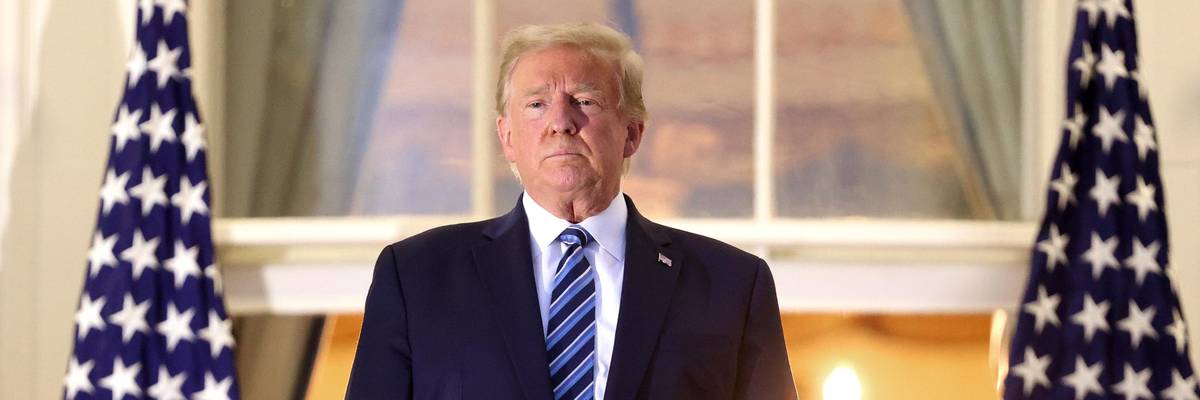
Then-President Donald Trump stands on the Truman Balcony after returning to the White House from Walter Reed National Military Medical Center on October 5, 2020 in Washington, D.C. (Photo: Win McNamee via Getty Images)
Additional evidence of former U.S. President Donald Trump's efforts to invalidate and reverse the outcome of the 2020 presidential race came to light on Friday when the New York Times, using newly obtained documents, reported that Trump pressured top Justice Department officials in late December to declare that "the election was corrupt" so that he and his GOP allies could overturn the results.
According to the Times:
The exchange unfolded during a phone call on December 27 in which Mr. Trump pressed the acting attorney general at the time, Jeffrey A. Rosen, and his deputy, Richard P. Donoghue, on voter fraud claims that the department had disproved. Mr. Donoghue warned that the department had no power to change the outcome of the election. Mr. Trump replied that he did not expect that, according to notes Mr. Donoghue took memorializing the conversation.
"Just say that the election was corrupt + leave the rest to me" and congressional Republican allies. That's how Donoghue, who took notes during the call, summarized Trump's response.
The DOJ provided Donoghue's notes to the House Committee on Oversight and Reform, which is investigating the Trump administration's far-reaching campaign to reverse Trump's loss last November.
In light of the new revelations, committee chairwoman Rep. Carolyn Maloney (D-N.Y.) said in a statement that "these handwritten notes show that President Trump directly instructed our nation's top law enforcement agency to take steps to overturn a free and fair election in the final days of his presidency."
In response to the Times' bombshell report documenting yet another layer of Trump's attempted power grab, some commentators highlighted the ongoing complicity of the congressional GOP, the vast majority of which continues to legitimize the former president even after he attempted to subvert the will of voters and incited a deadly insurrection on January 6 to block the certification of President Joe Biden's Electoral College victory.
"Trump tried and failed to execute a coup," tweeted The Atlantic's Adam Serwer, "and he remains the most admired and important leader in the Republican Party."
Trump's December 27 call to acting AG Rosen, who took over following the resignation of William Barr, came just three weeks after Trump urged Georgia Republican Gov. Brian Kemp "to call a special session of the state legislature for lawmakers to override the results and appoint electors who would back the president at the Electoral College," as the Washington Post reported at the time.
Hours after Kemp declined to nullify Biden's win in Georgia, Trump slammed Kemp during a rally for refusing to support his authoritarian scheme.
NBC News election reporter Benjy Sarlin on Friday said that "we can't take a continuous historic scandal for granted just because he says it out loud all the time. These are Watergate-level allegations."
The Times reported:
Mr. Trump did not name the lawmakers, but at other points during the call, he mentioned Rep. Jim Jordan of Ohio, whom he described as a "fighter"; Rep. Scott Perry of Pennsylvania, who at the time promoted the idea that the election was stolen from Mr. Trump; and Sen. Ron Johnson of Wisconsin, whom Mr. Trump praised for "getting to bottom of things."
Jordan and Perry were among the 147 Republican lawmakers who--just hours after the violent right-wing riot they helped provoke was contained--voted in the early morning of January 7 to overturn election results in key states, attempting to disenfranchise millions of voters in the process.
Earlier this week, Jordan--whom House Speaker Nancy Pelosi (D-Calif.) refused to appoint to the House select committee investigating the attack on the Capitol by a pro-Trump mob--admitted that he spoke with Trump on January 6, "increasing the likelihood that he will be called to testify," the Post reported.
The Times noted that after Rosen and Donoghue told Trump on December 27 that "the Justice Department had no evidence to support a lawsuit regarding the election results," the outgoing president "castigated the officials, saying that 'thousands of people called' their local U.S. attorney's offices to complain about the election and that 'nobody trusts the FBI.'"
According to the newspaper:
[Trump] said that "people are angry--blaming DOJ for inaction."
"You guys may not be following the internet the way I do," Mr. Trump said, according to the document.
In a moment of foreshadowing, Mr. Trump said, "people tell me Jeff Clark is great, I should put him in," referring to the acting chief of the Justice Department's civil division, who had also encouraged department officials to intervene in the election. "People want me to replace DOJ leadership."
"You should have the leadership you want," Mr. Donoghue replied. But it "won't change the dept's position."
A week later, Rosen and Donoghue "would be forced to fight Mr. Clark for their jobs in an Oval Office showdown," the Times noted.
Maloney said the House Committee on Oversight and Reform "has begun scheduling interviews with key witnesses to investigate the full extent of the former president's corruption, and I will exercise every tool at my disposal to ensure all witness testimony is secured without delay."
Dear Common Dreams reader, It’s been nearly 30 years since I co-founded Common Dreams with my late wife, Lina Newhouser. We had the radical notion that journalism should serve the public good, not corporate profits. It was clear to us from the outset what it would take to build such a project. No paid advertisements. No corporate sponsors. No millionaire publisher telling us what to think or do. Many people said we wouldn't last a year, but we proved those doubters wrong. Together with a tremendous team of journalists and dedicated staff, we built an independent media outlet free from the constraints of profits and corporate control. Our mission has always been simple: To inform. To inspire. To ignite change for the common good. Building Common Dreams was not easy. Our survival was never guaranteed. When you take on the most powerful forces—Wall Street greed, fossil fuel industry destruction, Big Tech lobbyists, and uber-rich oligarchs who have spent billions upon billions rigging the economy and democracy in their favor—the only bulwark you have is supporters who believe in your work. But here’s the urgent message from me today. It's never been this bad out there. And it's never been this hard to keep us going. At the very moment Common Dreams is most needed, the threats we face are intensifying. We need your support now more than ever. We don't accept corporate advertising and never will. We don't have a paywall because we don't think people should be blocked from critical news based on their ability to pay. Everything we do is funded by the donations of readers like you. When everyone does the little they can afford, we are strong. But if that support retreats or dries up, so do we. Will you donate now to make sure Common Dreams not only survives but thrives? —Craig Brown, Co-founder |
Additional evidence of former U.S. President Donald Trump's efforts to invalidate and reverse the outcome of the 2020 presidential race came to light on Friday when the New York Times, using newly obtained documents, reported that Trump pressured top Justice Department officials in late December to declare that "the election was corrupt" so that he and his GOP allies could overturn the results.
According to the Times:
The exchange unfolded during a phone call on December 27 in which Mr. Trump pressed the acting attorney general at the time, Jeffrey A. Rosen, and his deputy, Richard P. Donoghue, on voter fraud claims that the department had disproved. Mr. Donoghue warned that the department had no power to change the outcome of the election. Mr. Trump replied that he did not expect that, according to notes Mr. Donoghue took memorializing the conversation.
"Just say that the election was corrupt + leave the rest to me" and congressional Republican allies. That's how Donoghue, who took notes during the call, summarized Trump's response.
The DOJ provided Donoghue's notes to the House Committee on Oversight and Reform, which is investigating the Trump administration's far-reaching campaign to reverse Trump's loss last November.
In light of the new revelations, committee chairwoman Rep. Carolyn Maloney (D-N.Y.) said in a statement that "these handwritten notes show that President Trump directly instructed our nation's top law enforcement agency to take steps to overturn a free and fair election in the final days of his presidency."
In response to the Times' bombshell report documenting yet another layer of Trump's attempted power grab, some commentators highlighted the ongoing complicity of the congressional GOP, the vast majority of which continues to legitimize the former president even after he attempted to subvert the will of voters and incited a deadly insurrection on January 6 to block the certification of President Joe Biden's Electoral College victory.
"Trump tried and failed to execute a coup," tweeted The Atlantic's Adam Serwer, "and he remains the most admired and important leader in the Republican Party."
Trump's December 27 call to acting AG Rosen, who took over following the resignation of William Barr, came just three weeks after Trump urged Georgia Republican Gov. Brian Kemp "to call a special session of the state legislature for lawmakers to override the results and appoint electors who would back the president at the Electoral College," as the Washington Post reported at the time.
Hours after Kemp declined to nullify Biden's win in Georgia, Trump slammed Kemp during a rally for refusing to support his authoritarian scheme.
NBC News election reporter Benjy Sarlin on Friday said that "we can't take a continuous historic scandal for granted just because he says it out loud all the time. These are Watergate-level allegations."
The Times reported:
Mr. Trump did not name the lawmakers, but at other points during the call, he mentioned Rep. Jim Jordan of Ohio, whom he described as a "fighter"; Rep. Scott Perry of Pennsylvania, who at the time promoted the idea that the election was stolen from Mr. Trump; and Sen. Ron Johnson of Wisconsin, whom Mr. Trump praised for "getting to bottom of things."
Jordan and Perry were among the 147 Republican lawmakers who--just hours after the violent right-wing riot they helped provoke was contained--voted in the early morning of January 7 to overturn election results in key states, attempting to disenfranchise millions of voters in the process.
Earlier this week, Jordan--whom House Speaker Nancy Pelosi (D-Calif.) refused to appoint to the House select committee investigating the attack on the Capitol by a pro-Trump mob--admitted that he spoke with Trump on January 6, "increasing the likelihood that he will be called to testify," the Post reported.
The Times noted that after Rosen and Donoghue told Trump on December 27 that "the Justice Department had no evidence to support a lawsuit regarding the election results," the outgoing president "castigated the officials, saying that 'thousands of people called' their local U.S. attorney's offices to complain about the election and that 'nobody trusts the FBI.'"
According to the newspaper:
[Trump] said that "people are angry--blaming DOJ for inaction."
"You guys may not be following the internet the way I do," Mr. Trump said, according to the document.
In a moment of foreshadowing, Mr. Trump said, "people tell me Jeff Clark is great, I should put him in," referring to the acting chief of the Justice Department's civil division, who had also encouraged department officials to intervene in the election. "People want me to replace DOJ leadership."
"You should have the leadership you want," Mr. Donoghue replied. But it "won't change the dept's position."
A week later, Rosen and Donoghue "would be forced to fight Mr. Clark for their jobs in an Oval Office showdown," the Times noted.
Maloney said the House Committee on Oversight and Reform "has begun scheduling interviews with key witnesses to investigate the full extent of the former president's corruption, and I will exercise every tool at my disposal to ensure all witness testimony is secured without delay."
Additional evidence of former U.S. President Donald Trump's efforts to invalidate and reverse the outcome of the 2020 presidential race came to light on Friday when the New York Times, using newly obtained documents, reported that Trump pressured top Justice Department officials in late December to declare that "the election was corrupt" so that he and his GOP allies could overturn the results.
According to the Times:
The exchange unfolded during a phone call on December 27 in which Mr. Trump pressed the acting attorney general at the time, Jeffrey A. Rosen, and his deputy, Richard P. Donoghue, on voter fraud claims that the department had disproved. Mr. Donoghue warned that the department had no power to change the outcome of the election. Mr. Trump replied that he did not expect that, according to notes Mr. Donoghue took memorializing the conversation.
"Just say that the election was corrupt + leave the rest to me" and congressional Republican allies. That's how Donoghue, who took notes during the call, summarized Trump's response.
The DOJ provided Donoghue's notes to the House Committee on Oversight and Reform, which is investigating the Trump administration's far-reaching campaign to reverse Trump's loss last November.
In light of the new revelations, committee chairwoman Rep. Carolyn Maloney (D-N.Y.) said in a statement that "these handwritten notes show that President Trump directly instructed our nation's top law enforcement agency to take steps to overturn a free and fair election in the final days of his presidency."
In response to the Times' bombshell report documenting yet another layer of Trump's attempted power grab, some commentators highlighted the ongoing complicity of the congressional GOP, the vast majority of which continues to legitimize the former president even after he attempted to subvert the will of voters and incited a deadly insurrection on January 6 to block the certification of President Joe Biden's Electoral College victory.
"Trump tried and failed to execute a coup," tweeted The Atlantic's Adam Serwer, "and he remains the most admired and important leader in the Republican Party."
Trump's December 27 call to acting AG Rosen, who took over following the resignation of William Barr, came just three weeks after Trump urged Georgia Republican Gov. Brian Kemp "to call a special session of the state legislature for lawmakers to override the results and appoint electors who would back the president at the Electoral College," as the Washington Post reported at the time.
Hours after Kemp declined to nullify Biden's win in Georgia, Trump slammed Kemp during a rally for refusing to support his authoritarian scheme.
NBC News election reporter Benjy Sarlin on Friday said that "we can't take a continuous historic scandal for granted just because he says it out loud all the time. These are Watergate-level allegations."
The Times reported:
Mr. Trump did not name the lawmakers, but at other points during the call, he mentioned Rep. Jim Jordan of Ohio, whom he described as a "fighter"; Rep. Scott Perry of Pennsylvania, who at the time promoted the idea that the election was stolen from Mr. Trump; and Sen. Ron Johnson of Wisconsin, whom Mr. Trump praised for "getting to bottom of things."
Jordan and Perry were among the 147 Republican lawmakers who--just hours after the violent right-wing riot they helped provoke was contained--voted in the early morning of January 7 to overturn election results in key states, attempting to disenfranchise millions of voters in the process.
Earlier this week, Jordan--whom House Speaker Nancy Pelosi (D-Calif.) refused to appoint to the House select committee investigating the attack on the Capitol by a pro-Trump mob--admitted that he spoke with Trump on January 6, "increasing the likelihood that he will be called to testify," the Post reported.
The Times noted that after Rosen and Donoghue told Trump on December 27 that "the Justice Department had no evidence to support a lawsuit regarding the election results," the outgoing president "castigated the officials, saying that 'thousands of people called' their local U.S. attorney's offices to complain about the election and that 'nobody trusts the FBI.'"
According to the newspaper:
[Trump] said that "people are angry--blaming DOJ for inaction."
"You guys may not be following the internet the way I do," Mr. Trump said, according to the document.
In a moment of foreshadowing, Mr. Trump said, "people tell me Jeff Clark is great, I should put him in," referring to the acting chief of the Justice Department's civil division, who had also encouraged department officials to intervene in the election. "People want me to replace DOJ leadership."
"You should have the leadership you want," Mr. Donoghue replied. But it "won't change the dept's position."
A week later, Rosen and Donoghue "would be forced to fight Mr. Clark for their jobs in an Oval Office showdown," the Times noted.
Maloney said the House Committee on Oversight and Reform "has begun scheduling interviews with key witnesses to investigate the full extent of the former president's corruption, and I will exercise every tool at my disposal to ensure all witness testimony is secured without delay."