SUBSCRIBE TO OUR FREE NEWSLETTER
Daily news & progressive opinion—funded by the people, not the corporations—delivered straight to your inbox.
5
#000000
#FFFFFF
To donate by check, phone, or other method, see our More Ways to Give page.
Daily news & progressive opinion—funded by the people, not the corporations—delivered straight to your inbox.
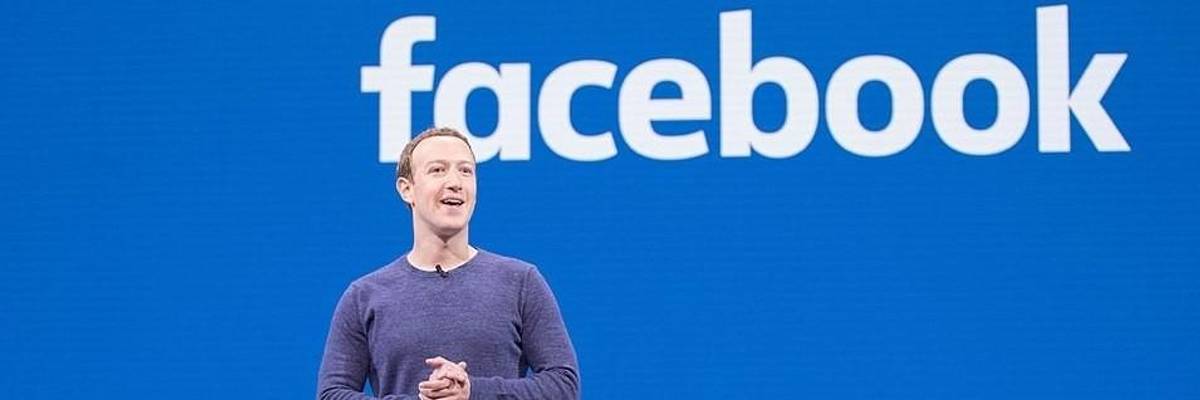
Facebook CEO Mark Zuckerberg speaks to an audience in 2018. (Photo: Anthony Quintano/Flickr/cc)
In Facebook's latest attempt to limit the spread of electoral misinformation on its platform, the social media giant announced Wednesday that it will ban political advertisements in the United States after polls close on Election Day--but critics raised concerns about the timing of the policy and other recent moves by the company.
The ad ban was revealed in a new blog post from Guy Rosen, Facebook's VP of integrity, detailing the company's preparations for the U.S. general election.
Rosen wrote that "while ads are an important way to express voice, we plan to temporarily stop running all social issue, electoral, or political ads in the U.S. after the polls close on November 3, to reduce opportunities for confusion or abuse. We will notify advertisers when this policy is lifted."
The advocacy group Public Citizen responded to the move on Twitter by casting doubt on the effectiveness of imposing such a ban after voting is over:
In a pair of tweets, Sleeping Giants, another advocacy organization, was similarly critical of the timing and called for making the ban permanent:
New York Times technology correspondent Mike Isaac reported that the move came after weeks of Facebook CEO Mark Zuckerberg and his lieutenants watching the race between President Donald Trump and Democratic presidential nominee Joe Biden "with an increasing sense of alarm."
According to Isaac:
Executives have held meetings to discuss President Trump's evasive comments about whether he would accept a peaceful transfer of power if he lost the election. They watched Mr. Trump tell the Proud Boys, a far-right group that has endorsed violence, to "stand back and stand by." And they have had conversations with civil rights groups, who have privately told them that the company needs to do more because Election Day could erupt into chaos, Facebook employees said.
The new ad policy comes after the company introduced "measures to reduce election misinformation and interference on its site just last month," Isaac noted. "At the time, Facebook said it planned to ban new political ads for a contained period--the week before Election Day--and would act swiftly against posts that tried to dissuade people from voting. Mr. Zuckerberg also said Facebook would not make any other changes until there was an official election result."
Fight for the Future suggested in a series of tweets that the ad ban "isn't going to fix the problem at all," pointing to recently announced changes to Facebook's recommendation algorithm which the digital rights advocacy group claims "will make the site even more toxic and ruin one of the last parts of it that are still actually kind of useful: Facebook groups."
"This is just silly. No one is going to need to use paid advertising to make disinformation go wildly viral in the immediate aftermath of November 3rd. They can just ... post it," tweeted Fight for the Future deputy director Evan Greer. "Facebook needs to put an immediate moratorium on algorithmic amplification."
Greer's group has launched a petition urging the social media company to immediately reverse its algorithm decision, warning that "turning on algorithmic amplification for Facebook group posts will make the site more toxic and less usable while endangering democracy and human rights."
Dear Common Dreams reader, It’s been nearly 30 years since I co-founded Common Dreams with my late wife, Lina Newhouser. We had the radical notion that journalism should serve the public good, not corporate profits. It was clear to us from the outset what it would take to build such a project. No paid advertisements. No corporate sponsors. No millionaire publisher telling us what to think or do. Many people said we wouldn't last a year, but we proved those doubters wrong. Together with a tremendous team of journalists and dedicated staff, we built an independent media outlet free from the constraints of profits and corporate control. Our mission has always been simple: To inform. To inspire. To ignite change for the common good. Building Common Dreams was not easy. Our survival was never guaranteed. When you take on the most powerful forces—Wall Street greed, fossil fuel industry destruction, Big Tech lobbyists, and uber-rich oligarchs who have spent billions upon billions rigging the economy and democracy in their favor—the only bulwark you have is supporters who believe in your work. But here’s the urgent message from me today. It's never been this bad out there. And it's never been this hard to keep us going. At the very moment Common Dreams is most needed, the threats we face are intensifying. We need your support now more than ever. We don't accept corporate advertising and never will. We don't have a paywall because we don't think people should be blocked from critical news based on their ability to pay. Everything we do is funded by the donations of readers like you. When everyone does the little they can afford, we are strong. But if that support retreats or dries up, so do we. Will you donate now to make sure Common Dreams not only survives but thrives? —Craig Brown, Co-founder |
In Facebook's latest attempt to limit the spread of electoral misinformation on its platform, the social media giant announced Wednesday that it will ban political advertisements in the United States after polls close on Election Day--but critics raised concerns about the timing of the policy and other recent moves by the company.
The ad ban was revealed in a new blog post from Guy Rosen, Facebook's VP of integrity, detailing the company's preparations for the U.S. general election.
Rosen wrote that "while ads are an important way to express voice, we plan to temporarily stop running all social issue, electoral, or political ads in the U.S. after the polls close on November 3, to reduce opportunities for confusion or abuse. We will notify advertisers when this policy is lifted."
The advocacy group Public Citizen responded to the move on Twitter by casting doubt on the effectiveness of imposing such a ban after voting is over:
In a pair of tweets, Sleeping Giants, another advocacy organization, was similarly critical of the timing and called for making the ban permanent:
New York Times technology correspondent Mike Isaac reported that the move came after weeks of Facebook CEO Mark Zuckerberg and his lieutenants watching the race between President Donald Trump and Democratic presidential nominee Joe Biden "with an increasing sense of alarm."
According to Isaac:
Executives have held meetings to discuss President Trump's evasive comments about whether he would accept a peaceful transfer of power if he lost the election. They watched Mr. Trump tell the Proud Boys, a far-right group that has endorsed violence, to "stand back and stand by." And they have had conversations with civil rights groups, who have privately told them that the company needs to do more because Election Day could erupt into chaos, Facebook employees said.
The new ad policy comes after the company introduced "measures to reduce election misinformation and interference on its site just last month," Isaac noted. "At the time, Facebook said it planned to ban new political ads for a contained period--the week before Election Day--and would act swiftly against posts that tried to dissuade people from voting. Mr. Zuckerberg also said Facebook would not make any other changes until there was an official election result."
Fight for the Future suggested in a series of tweets that the ad ban "isn't going to fix the problem at all," pointing to recently announced changes to Facebook's recommendation algorithm which the digital rights advocacy group claims "will make the site even more toxic and ruin one of the last parts of it that are still actually kind of useful: Facebook groups."
"This is just silly. No one is going to need to use paid advertising to make disinformation go wildly viral in the immediate aftermath of November 3rd. They can just ... post it," tweeted Fight for the Future deputy director Evan Greer. "Facebook needs to put an immediate moratorium on algorithmic amplification."
Greer's group has launched a petition urging the social media company to immediately reverse its algorithm decision, warning that "turning on algorithmic amplification for Facebook group posts will make the site more toxic and less usable while endangering democracy and human rights."
In Facebook's latest attempt to limit the spread of electoral misinformation on its platform, the social media giant announced Wednesday that it will ban political advertisements in the United States after polls close on Election Day--but critics raised concerns about the timing of the policy and other recent moves by the company.
The ad ban was revealed in a new blog post from Guy Rosen, Facebook's VP of integrity, detailing the company's preparations for the U.S. general election.
Rosen wrote that "while ads are an important way to express voice, we plan to temporarily stop running all social issue, electoral, or political ads in the U.S. after the polls close on November 3, to reduce opportunities for confusion or abuse. We will notify advertisers when this policy is lifted."
The advocacy group Public Citizen responded to the move on Twitter by casting doubt on the effectiveness of imposing such a ban after voting is over:
In a pair of tweets, Sleeping Giants, another advocacy organization, was similarly critical of the timing and called for making the ban permanent:
New York Times technology correspondent Mike Isaac reported that the move came after weeks of Facebook CEO Mark Zuckerberg and his lieutenants watching the race between President Donald Trump and Democratic presidential nominee Joe Biden "with an increasing sense of alarm."
According to Isaac:
Executives have held meetings to discuss President Trump's evasive comments about whether he would accept a peaceful transfer of power if he lost the election. They watched Mr. Trump tell the Proud Boys, a far-right group that has endorsed violence, to "stand back and stand by." And they have had conversations with civil rights groups, who have privately told them that the company needs to do more because Election Day could erupt into chaos, Facebook employees said.
The new ad policy comes after the company introduced "measures to reduce election misinformation and interference on its site just last month," Isaac noted. "At the time, Facebook said it planned to ban new political ads for a contained period--the week before Election Day--and would act swiftly against posts that tried to dissuade people from voting. Mr. Zuckerberg also said Facebook would not make any other changes until there was an official election result."
Fight for the Future suggested in a series of tweets that the ad ban "isn't going to fix the problem at all," pointing to recently announced changes to Facebook's recommendation algorithm which the digital rights advocacy group claims "will make the site even more toxic and ruin one of the last parts of it that are still actually kind of useful: Facebook groups."
"This is just silly. No one is going to need to use paid advertising to make disinformation go wildly viral in the immediate aftermath of November 3rd. They can just ... post it," tweeted Fight for the Future deputy director Evan Greer. "Facebook needs to put an immediate moratorium on algorithmic amplification."
Greer's group has launched a petition urging the social media company to immediately reverse its algorithm decision, warning that "turning on algorithmic amplification for Facebook group posts will make the site more toxic and less usable while endangering democracy and human rights."