SUBSCRIBE TO OUR FREE NEWSLETTER
Daily news & progressive opinion—funded by the people, not the corporations—delivered straight to your inbox.
5
#000000
#FFFFFF
To donate by check, phone, or other method, see our More Ways to Give page.
Daily news & progressive opinion—funded by the people, not the corporations—delivered straight to your inbox.
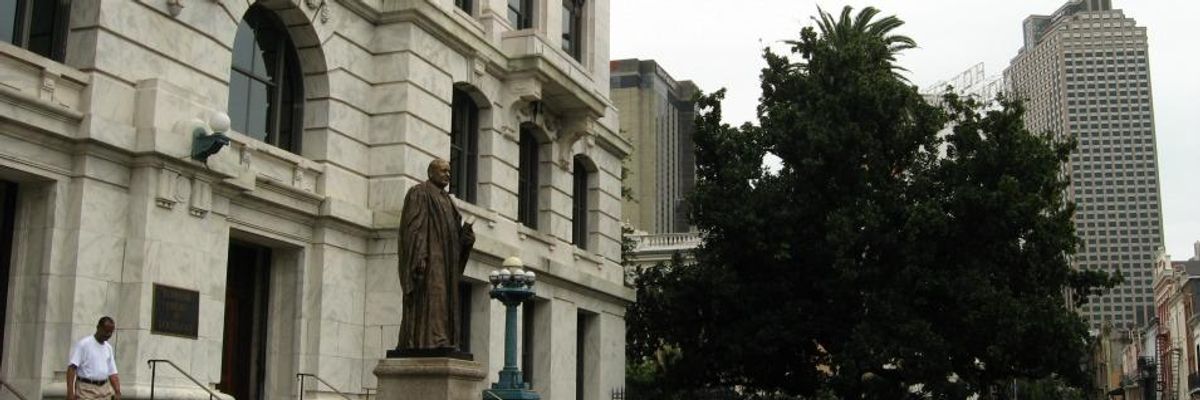
The Louisiana Supreme Court last week declined to overturn a life sentence for Fair Wayne Bryant, a black man who was convicted of attempted burglary in 1997. (Photo: Ken Lund/Flickr/cc)
A 62-year-old Black man is expected to spend the rest of his life in Louisiana's largest maximum-security prison after the state Supreme Court denied his request to overturn his life sentence 23 years after he was convicted for attempting to steal a pair of hedge clippers.
Five of the court's six justices ruled last week that Fair Wayne Bryant's life sentence for an attempted burglary in 1997 was fair and should be carried out, leaving Bryant with little recourse.
Chief Justice Bernette Johnson, the court's only female and only Black judge, dissented against the ruling of her five colleagues, all of whom are white men.
"This man's life sentence for a failed attempt to steal a set of three hedge clippers is grossly out of proportion to the crime and serves no legitimate penal purpose," Johnson wrote (pdf).
The ACLU of Louisiana condemned "the sheer cruely and unfairness" of the sentence, calling the court's ruling "enraging and inexcusable."
"A system that condemns a man to life in prison for stealing a pair of hedge clippers is not justice," said Alanah Odoms Hebert, executive director of the ACLU of Louisiana in a statement on Thursday. "It is part and parcel of a system designed to perpetuate racial injustice and white supremacy."
Bryant was stopped by police while driving in Shreveport, Louisiana in 1997 after the officers matched his car to the description of one used in a recent home burglary. He told the police the hedge clippers in his car were his wife's, and acknowledged that he had entered a carport on a private property in search of a tank of gas after his vehicle had broken down. The admission was used against Bryant to secure the conviction and life sentence.
Bryant had also been convicted of previous robberies and an attempted forgery years before 1997, allowing prosecutors to pursue a life sentence based on the state's "habitual offender" law.
The habitual offender provision and Bryant's sentence, Johnson wrote in her dissent, are modern-day manifestations of Reconstruction-era "pig laws." The laws targeted recently-emancipated Black people for crimes involving petty theft, often linked to the persistent poverty in which formerly-enslaved people lived.
Under the laws, accused criminals were sentenced to forced labor.
"Pig Laws were largely designed to re-enslave African Americans," Johnson wrote.
The ACLU of Louisiana demanded that state legislators repeal the habitual offender law.
"Legislators have a clear choice to make when they return to session: defend these extreme and unjust sentences, or stand with Fair Wayne Bryant and repeal this unjust law once and for all," said Hebert.
Benjamin Crump, a lawyer for the family of George Floyd, whose killing by four Minneapolis police officers in May sparked a nationwide uprising against policing and racial injustice, tweeted that the ruling illustrated the "two justice systems in America."
While Bryant will live out the rest of his life in prison, the three Louisville police officers who shot and killed Breonna Taylor in March have yet to face criminal charges, while Iran-Contra convict Elliott Abrams on Thursday was named State Department Iran envoy.
The contrast between sentences for Black Americans like Bryant and the justice system's treatment of powerful white people "is why we need change," tweeted Crump.
Dear Common Dreams reader, It’s been nearly 30 years since I co-founded Common Dreams with my late wife, Lina Newhouser. We had the radical notion that journalism should serve the public good, not corporate profits. It was clear to us from the outset what it would take to build such a project. No paid advertisements. No corporate sponsors. No millionaire publisher telling us what to think or do. Many people said we wouldn't last a year, but we proved those doubters wrong. Together with a tremendous team of journalists and dedicated staff, we built an independent media outlet free from the constraints of profits and corporate control. Our mission has always been simple: To inform. To inspire. To ignite change for the common good. Building Common Dreams was not easy. Our survival was never guaranteed. When you take on the most powerful forces—Wall Street greed, fossil fuel industry destruction, Big Tech lobbyists, and uber-rich oligarchs who have spent billions upon billions rigging the economy and democracy in their favor—the only bulwark you have is supporters who believe in your work. But here’s the urgent message from me today. It's never been this bad out there. And it's never been this hard to keep us going. At the very moment Common Dreams is most needed, the threats we face are intensifying. We need your support now more than ever. We don't accept corporate advertising and never will. We don't have a paywall because we don't think people should be blocked from critical news based on their ability to pay. Everything we do is funded by the donations of readers like you. When everyone does the little they can afford, we are strong. But if that support retreats or dries up, so do we. Will you donate now to make sure Common Dreams not only survives but thrives? —Craig Brown, Co-founder |
A 62-year-old Black man is expected to spend the rest of his life in Louisiana's largest maximum-security prison after the state Supreme Court denied his request to overturn his life sentence 23 years after he was convicted for attempting to steal a pair of hedge clippers.
Five of the court's six justices ruled last week that Fair Wayne Bryant's life sentence for an attempted burglary in 1997 was fair and should be carried out, leaving Bryant with little recourse.
Chief Justice Bernette Johnson, the court's only female and only Black judge, dissented against the ruling of her five colleagues, all of whom are white men.
"This man's life sentence for a failed attempt to steal a set of three hedge clippers is grossly out of proportion to the crime and serves no legitimate penal purpose," Johnson wrote (pdf).
The ACLU of Louisiana condemned "the sheer cruely and unfairness" of the sentence, calling the court's ruling "enraging and inexcusable."
"A system that condemns a man to life in prison for stealing a pair of hedge clippers is not justice," said Alanah Odoms Hebert, executive director of the ACLU of Louisiana in a statement on Thursday. "It is part and parcel of a system designed to perpetuate racial injustice and white supremacy."
Bryant was stopped by police while driving in Shreveport, Louisiana in 1997 after the officers matched his car to the description of one used in a recent home burglary. He told the police the hedge clippers in his car were his wife's, and acknowledged that he had entered a carport on a private property in search of a tank of gas after his vehicle had broken down. The admission was used against Bryant to secure the conviction and life sentence.
Bryant had also been convicted of previous robberies and an attempted forgery years before 1997, allowing prosecutors to pursue a life sentence based on the state's "habitual offender" law.
The habitual offender provision and Bryant's sentence, Johnson wrote in her dissent, are modern-day manifestations of Reconstruction-era "pig laws." The laws targeted recently-emancipated Black people for crimes involving petty theft, often linked to the persistent poverty in which formerly-enslaved people lived.
Under the laws, accused criminals were sentenced to forced labor.
"Pig Laws were largely designed to re-enslave African Americans," Johnson wrote.
The ACLU of Louisiana demanded that state legislators repeal the habitual offender law.
"Legislators have a clear choice to make when they return to session: defend these extreme and unjust sentences, or stand with Fair Wayne Bryant and repeal this unjust law once and for all," said Hebert.
Benjamin Crump, a lawyer for the family of George Floyd, whose killing by four Minneapolis police officers in May sparked a nationwide uprising against policing and racial injustice, tweeted that the ruling illustrated the "two justice systems in America."
While Bryant will live out the rest of his life in prison, the three Louisville police officers who shot and killed Breonna Taylor in March have yet to face criminal charges, while Iran-Contra convict Elliott Abrams on Thursday was named State Department Iran envoy.
The contrast between sentences for Black Americans like Bryant and the justice system's treatment of powerful white people "is why we need change," tweeted Crump.
A 62-year-old Black man is expected to spend the rest of his life in Louisiana's largest maximum-security prison after the state Supreme Court denied his request to overturn his life sentence 23 years after he was convicted for attempting to steal a pair of hedge clippers.
Five of the court's six justices ruled last week that Fair Wayne Bryant's life sentence for an attempted burglary in 1997 was fair and should be carried out, leaving Bryant with little recourse.
Chief Justice Bernette Johnson, the court's only female and only Black judge, dissented against the ruling of her five colleagues, all of whom are white men.
"This man's life sentence for a failed attempt to steal a set of three hedge clippers is grossly out of proportion to the crime and serves no legitimate penal purpose," Johnson wrote (pdf).
The ACLU of Louisiana condemned "the sheer cruely and unfairness" of the sentence, calling the court's ruling "enraging and inexcusable."
"A system that condemns a man to life in prison for stealing a pair of hedge clippers is not justice," said Alanah Odoms Hebert, executive director of the ACLU of Louisiana in a statement on Thursday. "It is part and parcel of a system designed to perpetuate racial injustice and white supremacy."
Bryant was stopped by police while driving in Shreveport, Louisiana in 1997 after the officers matched his car to the description of one used in a recent home burglary. He told the police the hedge clippers in his car were his wife's, and acknowledged that he had entered a carport on a private property in search of a tank of gas after his vehicle had broken down. The admission was used against Bryant to secure the conviction and life sentence.
Bryant had also been convicted of previous robberies and an attempted forgery years before 1997, allowing prosecutors to pursue a life sentence based on the state's "habitual offender" law.
The habitual offender provision and Bryant's sentence, Johnson wrote in her dissent, are modern-day manifestations of Reconstruction-era "pig laws." The laws targeted recently-emancipated Black people for crimes involving petty theft, often linked to the persistent poverty in which formerly-enslaved people lived.
Under the laws, accused criminals were sentenced to forced labor.
"Pig Laws were largely designed to re-enslave African Americans," Johnson wrote.
The ACLU of Louisiana demanded that state legislators repeal the habitual offender law.
"Legislators have a clear choice to make when they return to session: defend these extreme and unjust sentences, or stand with Fair Wayne Bryant and repeal this unjust law once and for all," said Hebert.
Benjamin Crump, a lawyer for the family of George Floyd, whose killing by four Minneapolis police officers in May sparked a nationwide uprising against policing and racial injustice, tweeted that the ruling illustrated the "two justice systems in America."
While Bryant will live out the rest of his life in prison, the three Louisville police officers who shot and killed Breonna Taylor in March have yet to face criminal charges, while Iran-Contra convict Elliott Abrams on Thursday was named State Department Iran envoy.
The contrast between sentences for Black Americans like Bryant and the justice system's treatment of powerful white people "is why we need change," tweeted Crump.