

SUBSCRIBE TO OUR FREE NEWSLETTER
Daily news & progressive opinion—funded by the people, not the corporations—delivered straight to your inbox.
5
#000000
#FFFFFF
To donate by check, phone, or other method, see our More Ways to Give page.
Daily news & progressive opinion—funded by the people, not the corporations—delivered straight to your inbox.
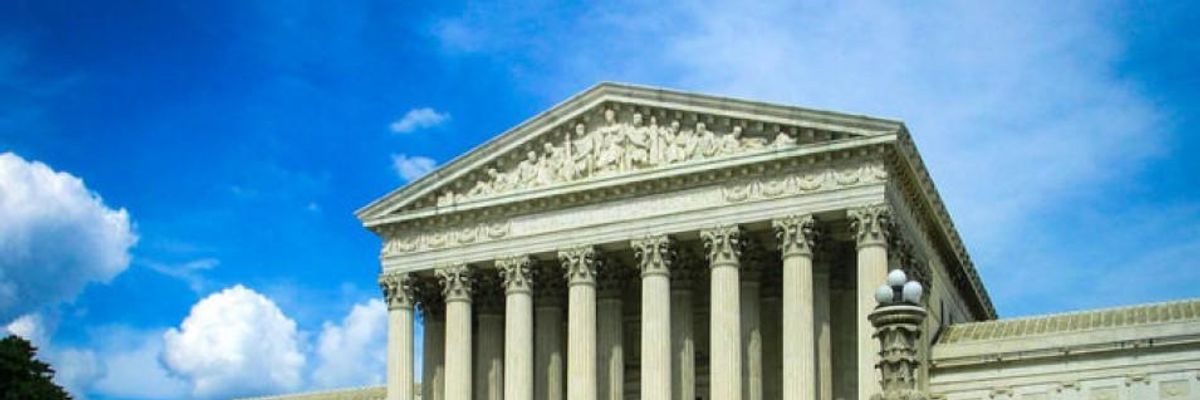
Two multinational food corporations are asking the Supreme Court to reinterpret the Alien Tort Statute, a law dating back to 1789 which gives federal courts jurisdiction to hear lawsuits filed by non-U.S. citizens regarding violations of international law. (Photo: wbentprice / Flickr)
The U.S. Supreme Court could soon turn the nation into "a safe haven for human rights abusers," rights groups said Wednesday, raising alarm over the court's plan to hear arguments from Nestle and Cargill about a lawsuit brought against the companies in 2005.
The two multinational food corporations are asking the Supreme Court to reinterpret the Alien Tort Statute, which dates back to 1789 and gives federal courts jurisdiction to hear lawsuits filed by non-U.S. citizens regarding violation of international law. The court said last month it would hear the appeal in the fall.
Fifteen years after six Malian people brought a case against Nestle and Cargill, alleging they were abused while working on Ivory Coast cocoa farms used by the companies, Nestle and Cargill are arguing that the Alien Tort Statute can only be used to indict individuals, not corporations.
A ruling in the companies' favor "would be bad news for human rights," the Fair World Project tweeted.
"If they win this appeal, they will have succeeded in denuding the major human rights tool that activists have in court," Terrence Collingsworth, executive director of International Rights Advocates, which is representing the plaintiffs, told The Guardian Wednesday.
The companies' appeal follows more than a decade of federal court decisions regarding the case. Most recently, a California circuit court ruled Nestle and Cargill could be held liable under the Alien Tort Statute.
The six plaintiffs allege they were kidnapped from Mali and taken to farms in the Ivory Coast where they were physically abused and forced to work without pay for up to 14 hours per day--an ordeal from which Nestle and Cargill allegedly profited.
The two companies say they have not worked with farms that use child labor or forced labor, and Nestle has stated that all parties involved in the case have previously said the company did not engage in child labor.
A high court ruling in favor of Cargill and Nestle would be a "nail-in-the-coffin moment" for corporate accountability, Charity Ryerson of Corporate Accountability Lab told The Guardian.
Should the court rule as the companies hope it will, plaintiffs would need to present evidence that specific company leaders at Nestle and Cargill signed off on the use of child labor, a "virtually impossible" feat," Collingsworth told The Guardian.
"This would effectively allow [some companies] to continue using child slaves with impunity," he added.
Companies would be disincentivized by the potential ruling to monitor their supply chains and would become "potentially more abusive" toward workers, Ryerson warned.
Last month, when the Supreme Court announced it would hear Nestle and Cargill's appeal, International Rights Advocates slammed the companies for "arguing that corporations should be absolutely immune under international law."
"Rather than work with IRAdvocates and others to stop child slavery, Nestle and Cargill want legal immunity to continue profiting from child slavery," said the group. "Win or lose in the Supreme Court, we must and will continue the fight to force these companies to free the children."
Dear Common Dreams reader, It’s been nearly 30 years since I co-founded Common Dreams with my late wife, Lina Newhouser. We had the radical notion that journalism should serve the public good, not corporate profits. It was clear to us from the outset what it would take to build such a project. No paid advertisements. No corporate sponsors. No millionaire publisher telling us what to think or do. Many people said we wouldn't last a year, but we proved those doubters wrong. Together with a tremendous team of journalists and dedicated staff, we built an independent media outlet free from the constraints of profits and corporate control. Our mission has always been simple: To inform. To inspire. To ignite change for the common good. Building Common Dreams was not easy. Our survival was never guaranteed. When you take on the most powerful forces—Wall Street greed, fossil fuel industry destruction, Big Tech lobbyists, and uber-rich oligarchs who have spent billions upon billions rigging the economy and democracy in their favor—the only bulwark you have is supporters who believe in your work. But here’s the urgent message from me today. It's never been this bad out there. And it's never been this hard to keep us going. At the very moment Common Dreams is most needed, the threats we face are intensifying. We need your support now more than ever. We don't accept corporate advertising and never will. We don't have a paywall because we don't think people should be blocked from critical news based on their ability to pay. Everything we do is funded by the donations of readers like you. When everyone does the little they can afford, we are strong. But if that support retreats or dries up, so do we. Will you donate now to make sure Common Dreams not only survives but thrives? —Craig Brown, Co-founder |
The U.S. Supreme Court could soon turn the nation into "a safe haven for human rights abusers," rights groups said Wednesday, raising alarm over the court's plan to hear arguments from Nestle and Cargill about a lawsuit brought against the companies in 2005.
The two multinational food corporations are asking the Supreme Court to reinterpret the Alien Tort Statute, which dates back to 1789 and gives federal courts jurisdiction to hear lawsuits filed by non-U.S. citizens regarding violation of international law. The court said last month it would hear the appeal in the fall.
Fifteen years after six Malian people brought a case against Nestle and Cargill, alleging they were abused while working on Ivory Coast cocoa farms used by the companies, Nestle and Cargill are arguing that the Alien Tort Statute can only be used to indict individuals, not corporations.
A ruling in the companies' favor "would be bad news for human rights," the Fair World Project tweeted.
"If they win this appeal, they will have succeeded in denuding the major human rights tool that activists have in court," Terrence Collingsworth, executive director of International Rights Advocates, which is representing the plaintiffs, told The Guardian Wednesday.
The companies' appeal follows more than a decade of federal court decisions regarding the case. Most recently, a California circuit court ruled Nestle and Cargill could be held liable under the Alien Tort Statute.
The six plaintiffs allege they were kidnapped from Mali and taken to farms in the Ivory Coast where they were physically abused and forced to work without pay for up to 14 hours per day--an ordeal from which Nestle and Cargill allegedly profited.
The two companies say they have not worked with farms that use child labor or forced labor, and Nestle has stated that all parties involved in the case have previously said the company did not engage in child labor.
A high court ruling in favor of Cargill and Nestle would be a "nail-in-the-coffin moment" for corporate accountability, Charity Ryerson of Corporate Accountability Lab told The Guardian.
Should the court rule as the companies hope it will, plaintiffs would need to present evidence that specific company leaders at Nestle and Cargill signed off on the use of child labor, a "virtually impossible" feat," Collingsworth told The Guardian.
"This would effectively allow [some companies] to continue using child slaves with impunity," he added.
Companies would be disincentivized by the potential ruling to monitor their supply chains and would become "potentially more abusive" toward workers, Ryerson warned.
Last month, when the Supreme Court announced it would hear Nestle and Cargill's appeal, International Rights Advocates slammed the companies for "arguing that corporations should be absolutely immune under international law."
"Rather than work with IRAdvocates and others to stop child slavery, Nestle and Cargill want legal immunity to continue profiting from child slavery," said the group. "Win or lose in the Supreme Court, we must and will continue the fight to force these companies to free the children."
The U.S. Supreme Court could soon turn the nation into "a safe haven for human rights abusers," rights groups said Wednesday, raising alarm over the court's plan to hear arguments from Nestle and Cargill about a lawsuit brought against the companies in 2005.
The two multinational food corporations are asking the Supreme Court to reinterpret the Alien Tort Statute, which dates back to 1789 and gives federal courts jurisdiction to hear lawsuits filed by non-U.S. citizens regarding violation of international law. The court said last month it would hear the appeal in the fall.
Fifteen years after six Malian people brought a case against Nestle and Cargill, alleging they were abused while working on Ivory Coast cocoa farms used by the companies, Nestle and Cargill are arguing that the Alien Tort Statute can only be used to indict individuals, not corporations.
A ruling in the companies' favor "would be bad news for human rights," the Fair World Project tweeted.
"If they win this appeal, they will have succeeded in denuding the major human rights tool that activists have in court," Terrence Collingsworth, executive director of International Rights Advocates, which is representing the plaintiffs, told The Guardian Wednesday.
The companies' appeal follows more than a decade of federal court decisions regarding the case. Most recently, a California circuit court ruled Nestle and Cargill could be held liable under the Alien Tort Statute.
The six plaintiffs allege they were kidnapped from Mali and taken to farms in the Ivory Coast where they were physically abused and forced to work without pay for up to 14 hours per day--an ordeal from which Nestle and Cargill allegedly profited.
The two companies say they have not worked with farms that use child labor or forced labor, and Nestle has stated that all parties involved in the case have previously said the company did not engage in child labor.
A high court ruling in favor of Cargill and Nestle would be a "nail-in-the-coffin moment" for corporate accountability, Charity Ryerson of Corporate Accountability Lab told The Guardian.
Should the court rule as the companies hope it will, plaintiffs would need to present evidence that specific company leaders at Nestle and Cargill signed off on the use of child labor, a "virtually impossible" feat," Collingsworth told The Guardian.
"This would effectively allow [some companies] to continue using child slaves with impunity," he added.
Companies would be disincentivized by the potential ruling to monitor their supply chains and would become "potentially more abusive" toward workers, Ryerson warned.
Last month, when the Supreme Court announced it would hear Nestle and Cargill's appeal, International Rights Advocates slammed the companies for "arguing that corporations should be absolutely immune under international law."
"Rather than work with IRAdvocates and others to stop child slavery, Nestle and Cargill want legal immunity to continue profiting from child slavery," said the group. "Win or lose in the Supreme Court, we must and will continue the fight to force these companies to free the children."

