SUBSCRIBE TO OUR FREE NEWSLETTER
Daily news & progressive opinion—funded by the people, not the corporations—delivered straight to your inbox.
5
#000000
#FFFFFF
To donate by check, phone, or other method, see our More Ways to Give page.
Daily news & progressive opinion—funded by the people, not the corporations—delivered straight to your inbox.
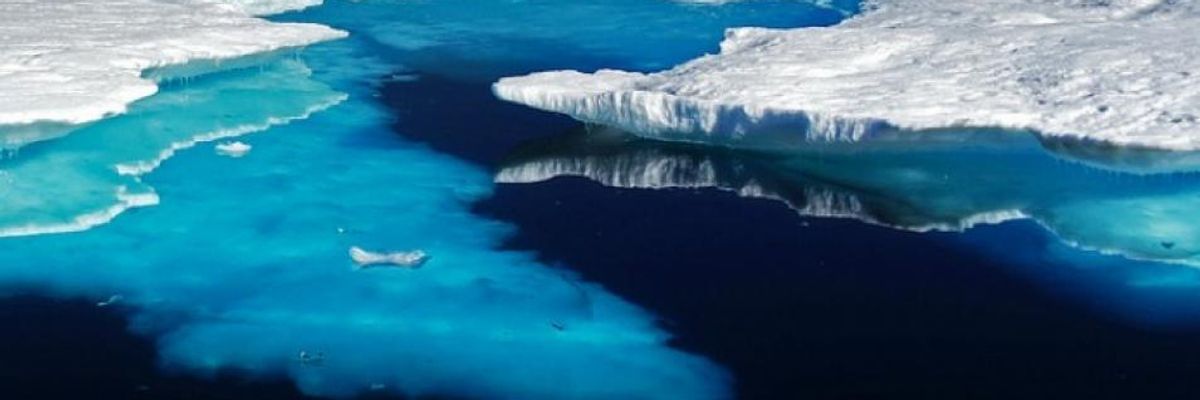
Scientists revealed Tuesday that they detected the first leak of methane gas from the sea floor beneath Antarctica. (Photo: mariusz kluzniak/flickr/cc)
Scientists have for the first time identified an active leak of methane gas from the sea floor in Antarctica, increasing the possibility that the planet is close to one of the "tipping points" that would put the impacts of global heating out of humans' control.
According to The Guardian, researchers led by Andrew Thurber at Oregon State University found the methane leak in a region known as Cinder Cones in McMurdo Sound, within the Ross Sea. The site is 30 feet below the surface of the ocean.
In addition to finding methane dissolved in the water there, the scientists found that microbes which usually consume the gas before it reaches the atmosphere had only formed in small numbers five years after they first began to study the site.
Thurber called the findings "incredibly concerning."
"It is not good news. It took more than five years for the microbes to begin to show up and even then there was still methane rapidly escaping from the sea floor," he told The Guardian. "The methane cycle is absolutely something that we as a society need to be concerned about."
Scientists have warned for years that the climate crisis could lead to the "tipping point" of methane leaks in the sea floor and the thawing of permafrost regions.
"At some point in a warming world, greenhouse gas emissions from nature will go way beyond anything we can control," tweeted Australian immunologist Peter Doherty.
The Ross Sea has not yet warmed significantly from the climate crisis, so the research did not directly link the methane leak to global heating.
But climate models have not yet accounted for significant delays in the development of microbes, which help to keep methane from leaking into the atmosphere.
"The big question is: how large is the lag [in microbe development] compared with the speed at which new leaks of methane might potentially form in the wake of retreating ice?" Prof. Jemma Wadham of the University of Bristol in the UK, who reviewed the study, told The Guardian.
Thurber called the discovery of the methane leak and the delayed microbe growth "a significant discovery that can help fill a large hole in our understanding of the methane cycle."
"Methane is the second-most effective gas at warming our atmosphere and the Antarctic has vast reservoirs that are likely to open up as ice sheets retreat due to climate change," he said in a statement.
Other tipping points identified by climate scientists include the disintegration of the ice sheet in West Antarctica, "dieback" in the Amazon which would transform the rainforest into a dry ecosystem, and the dying off of the coral reefs.
Scientists raised alarm earlier this year about unusually warm water beneath a massive glacier in West Antarctica, and researchers warned in February that the third major bleaching event in five years at the Great Barrier Reef would put the reef "on a knife edge."
Dear Common Dreams reader, It’s been nearly 30 years since I co-founded Common Dreams with my late wife, Lina Newhouser. We had the radical notion that journalism should serve the public good, not corporate profits. It was clear to us from the outset what it would take to build such a project. No paid advertisements. No corporate sponsors. No millionaire publisher telling us what to think or do. Many people said we wouldn't last a year, but we proved those doubters wrong. Together with a tremendous team of journalists and dedicated staff, we built an independent media outlet free from the constraints of profits and corporate control. Our mission has always been simple: To inform. To inspire. To ignite change for the common good. Building Common Dreams was not easy. Our survival was never guaranteed. When you take on the most powerful forces—Wall Street greed, fossil fuel industry destruction, Big Tech lobbyists, and uber-rich oligarchs who have spent billions upon billions rigging the economy and democracy in their favor—the only bulwark you have is supporters who believe in your work. But here’s the urgent message from me today. It's never been this bad out there. And it's never been this hard to keep us going. At the very moment Common Dreams is most needed, the threats we face are intensifying. We need your support now more than ever. We don't accept corporate advertising and never will. We don't have a paywall because we don't think people should be blocked from critical news based on their ability to pay. Everything we do is funded by the donations of readers like you. When everyone does the little they can afford, we are strong. But if that support retreats or dries up, so do we. Will you donate now to make sure Common Dreams not only survives but thrives? —Craig Brown, Co-founder |
Scientists have for the first time identified an active leak of methane gas from the sea floor in Antarctica, increasing the possibility that the planet is close to one of the "tipping points" that would put the impacts of global heating out of humans' control.
According to The Guardian, researchers led by Andrew Thurber at Oregon State University found the methane leak in a region known as Cinder Cones in McMurdo Sound, within the Ross Sea. The site is 30 feet below the surface of the ocean.
In addition to finding methane dissolved in the water there, the scientists found that microbes which usually consume the gas before it reaches the atmosphere had only formed in small numbers five years after they first began to study the site.
Thurber called the findings "incredibly concerning."
"It is not good news. It took more than five years for the microbes to begin to show up and even then there was still methane rapidly escaping from the sea floor," he told The Guardian. "The methane cycle is absolutely something that we as a society need to be concerned about."
Scientists have warned for years that the climate crisis could lead to the "tipping point" of methane leaks in the sea floor and the thawing of permafrost regions.
"At some point in a warming world, greenhouse gas emissions from nature will go way beyond anything we can control," tweeted Australian immunologist Peter Doherty.
The Ross Sea has not yet warmed significantly from the climate crisis, so the research did not directly link the methane leak to global heating.
But climate models have not yet accounted for significant delays in the development of microbes, which help to keep methane from leaking into the atmosphere.
"The big question is: how large is the lag [in microbe development] compared with the speed at which new leaks of methane might potentially form in the wake of retreating ice?" Prof. Jemma Wadham of the University of Bristol in the UK, who reviewed the study, told The Guardian.
Thurber called the discovery of the methane leak and the delayed microbe growth "a significant discovery that can help fill a large hole in our understanding of the methane cycle."
"Methane is the second-most effective gas at warming our atmosphere and the Antarctic has vast reservoirs that are likely to open up as ice sheets retreat due to climate change," he said in a statement.
Other tipping points identified by climate scientists include the disintegration of the ice sheet in West Antarctica, "dieback" in the Amazon which would transform the rainforest into a dry ecosystem, and the dying off of the coral reefs.
Scientists raised alarm earlier this year about unusually warm water beneath a massive glacier in West Antarctica, and researchers warned in February that the third major bleaching event in five years at the Great Barrier Reef would put the reef "on a knife edge."
Scientists have for the first time identified an active leak of methane gas from the sea floor in Antarctica, increasing the possibility that the planet is close to one of the "tipping points" that would put the impacts of global heating out of humans' control.
According to The Guardian, researchers led by Andrew Thurber at Oregon State University found the methane leak in a region known as Cinder Cones in McMurdo Sound, within the Ross Sea. The site is 30 feet below the surface of the ocean.
In addition to finding methane dissolved in the water there, the scientists found that microbes which usually consume the gas before it reaches the atmosphere had only formed in small numbers five years after they first began to study the site.
Thurber called the findings "incredibly concerning."
"It is not good news. It took more than five years for the microbes to begin to show up and even then there was still methane rapidly escaping from the sea floor," he told The Guardian. "The methane cycle is absolutely something that we as a society need to be concerned about."
Scientists have warned for years that the climate crisis could lead to the "tipping point" of methane leaks in the sea floor and the thawing of permafrost regions.
"At some point in a warming world, greenhouse gas emissions from nature will go way beyond anything we can control," tweeted Australian immunologist Peter Doherty.
The Ross Sea has not yet warmed significantly from the climate crisis, so the research did not directly link the methane leak to global heating.
But climate models have not yet accounted for significant delays in the development of microbes, which help to keep methane from leaking into the atmosphere.
"The big question is: how large is the lag [in microbe development] compared with the speed at which new leaks of methane might potentially form in the wake of retreating ice?" Prof. Jemma Wadham of the University of Bristol in the UK, who reviewed the study, told The Guardian.
Thurber called the discovery of the methane leak and the delayed microbe growth "a significant discovery that can help fill a large hole in our understanding of the methane cycle."
"Methane is the second-most effective gas at warming our atmosphere and the Antarctic has vast reservoirs that are likely to open up as ice sheets retreat due to climate change," he said in a statement.
Other tipping points identified by climate scientists include the disintegration of the ice sheet in West Antarctica, "dieback" in the Amazon which would transform the rainforest into a dry ecosystem, and the dying off of the coral reefs.
Scientists raised alarm earlier this year about unusually warm water beneath a massive glacier in West Antarctica, and researchers warned in February that the third major bleaching event in five years at the Great Barrier Reef would put the reef "on a knife edge."