SUBSCRIBE TO OUR FREE NEWSLETTER
Daily news & progressive opinion—funded by the people, not the corporations—delivered straight to your inbox.
5
#000000
#FFFFFF
To donate by check, phone, or other method, see our More Ways to Give page.
Daily news & progressive opinion—funded by the people, not the corporations—delivered straight to your inbox.
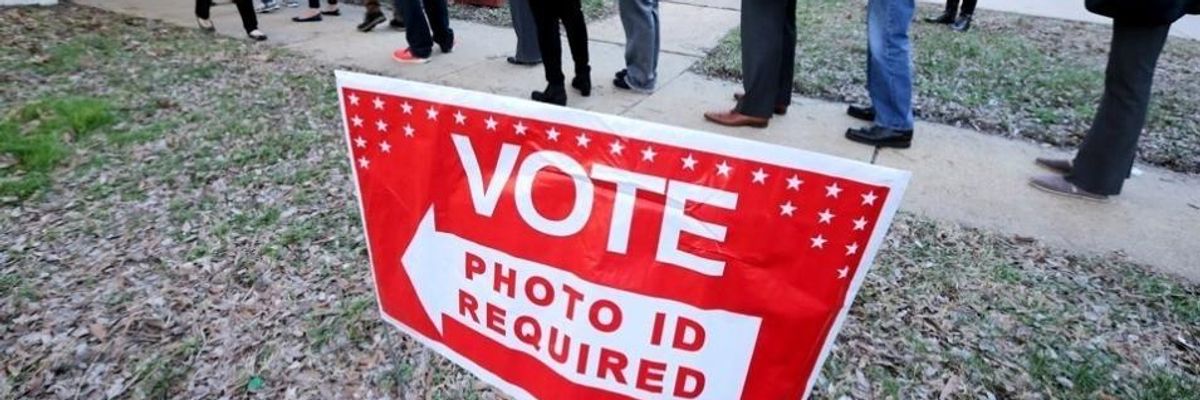
Wisconsin Gov. Tony Evers called on the state legislature to meet for a special session Saturday to take up legislation to postpone the Democratic primary along with state elections, set to take place April 7. (Photo: Getty)
After facing mounting pressure--including calls from public health officials, voting rights advocates, and presidential candidate Sen. Bernie Sanders--Democratic Wisconsin Gov. Tony Evers finally on Friday called on the state's Republican-led legislature to hold a special session Saturday afternoon to take up legislation that would delay the state's Democratic primary and a number of state and local elections set to take place Tuesday, April 7.
The legislation Evers wants lawmakers to consider would allow an all-mail election, following the lead of 15 states which have postponed voting in the Democratic primary due to the coronavirus pandemic, which had spread to more than 258,000 Americans at press time.
The state would be ordered to send mail-in ballots to every voter who hasn't already requested one by May 19, and voters would have until May 26 to return their ballots.
Republican state lawmakers are insisting the election go forward as planned. In addition to the Democratic primary, Wisconsin voters are set to cast ballots in several local elections and a state Supreme Court race. A victory for current Justice Daniel Kelly would preserve a 5-2 conservative majority on the court. As President Donald Trump suggested earlier this week, low turnout due to the pandemic could help secure Kelly's seat.
As The Nation's journalist John Nichols wrote, influential Democrats in Wisconsin have largely been united against the GOP's refusal to delay the election--especially after Evers on March 25 followed the advice of public health officials and issued a stay-at-home order for the state to keep residents from gathering in groups and risking spreading the coronavirus.
The state party, a number of mayors, Sen. Bernie Sanders (I-Vt.), and voting rights groups all called on Evers and the state legislature to halt in-person voting to protect Wisconsin residents--but Sanders' opponent in the Democratic presidential primary, former Vice President Joe Biden, has not joined the call.
Evers' reluctance to act has thrown the impending election into disarray in recent weeks, with more than 100 precincts reporting they don't have enough poll workers to staff voting locations and Milwaukee announcing it plans to use only five polling places instead of the usual 180, increasing the likelihood of dangerous crowds on Election Day.
This week, U.S. Judge William Conley ordered the state to extend the deadline to request an absentee ballot by one day and to allow voters until April 14 to return them, but said it was not within his power to delay the election.
Conley harshly criticized lawmakers and Evers on Thursday for their refusal to take action.
"The Wisconsin State Legislature and governor apparently are hoping...that the efforts of the [Wisconsin Election Commission] administrator, her staff, the municipalities and poll workers, as well as voters willing to ignore the obvious risk to themselves and others of proceeding with in-person voting, will thread the needle to produce a reasonable voter turnout and no increase in the dissemination of COVID-19," Conley said.
Dear Common Dreams reader, It’s been nearly 30 years since I co-founded Common Dreams with my late wife, Lina Newhouser. We had the radical notion that journalism should serve the public good, not corporate profits. It was clear to us from the outset what it would take to build such a project. No paid advertisements. No corporate sponsors. No millionaire publisher telling us what to think or do. Many people said we wouldn't last a year, but we proved those doubters wrong. Together with a tremendous team of journalists and dedicated staff, we built an independent media outlet free from the constraints of profits and corporate control. Our mission has always been simple: To inform. To inspire. To ignite change for the common good. Building Common Dreams was not easy. Our survival was never guaranteed. When you take on the most powerful forces—Wall Street greed, fossil fuel industry destruction, Big Tech lobbyists, and uber-rich oligarchs who have spent billions upon billions rigging the economy and democracy in their favor—the only bulwark you have is supporters who believe in your work. But here’s the urgent message from me today. It's never been this bad out there. And it's never been this hard to keep us going. At the very moment Common Dreams is most needed, the threats we face are intensifying. We need your support now more than ever. We don't accept corporate advertising and never will. We don't have a paywall because we don't think people should be blocked from critical news based on their ability to pay. Everything we do is funded by the donations of readers like you. When everyone does the little they can afford, we are strong. But if that support retreats or dries up, so do we. Will you donate now to make sure Common Dreams not only survives but thrives? —Craig Brown, Co-founder |
After facing mounting pressure--including calls from public health officials, voting rights advocates, and presidential candidate Sen. Bernie Sanders--Democratic Wisconsin Gov. Tony Evers finally on Friday called on the state's Republican-led legislature to hold a special session Saturday afternoon to take up legislation that would delay the state's Democratic primary and a number of state and local elections set to take place Tuesday, April 7.
The legislation Evers wants lawmakers to consider would allow an all-mail election, following the lead of 15 states which have postponed voting in the Democratic primary due to the coronavirus pandemic, which had spread to more than 258,000 Americans at press time.
The state would be ordered to send mail-in ballots to every voter who hasn't already requested one by May 19, and voters would have until May 26 to return their ballots.
Republican state lawmakers are insisting the election go forward as planned. In addition to the Democratic primary, Wisconsin voters are set to cast ballots in several local elections and a state Supreme Court race. A victory for current Justice Daniel Kelly would preserve a 5-2 conservative majority on the court. As President Donald Trump suggested earlier this week, low turnout due to the pandemic could help secure Kelly's seat.
As The Nation's journalist John Nichols wrote, influential Democrats in Wisconsin have largely been united against the GOP's refusal to delay the election--especially after Evers on March 25 followed the advice of public health officials and issued a stay-at-home order for the state to keep residents from gathering in groups and risking spreading the coronavirus.
The state party, a number of mayors, Sen. Bernie Sanders (I-Vt.), and voting rights groups all called on Evers and the state legislature to halt in-person voting to protect Wisconsin residents--but Sanders' opponent in the Democratic presidential primary, former Vice President Joe Biden, has not joined the call.
Evers' reluctance to act has thrown the impending election into disarray in recent weeks, with more than 100 precincts reporting they don't have enough poll workers to staff voting locations and Milwaukee announcing it plans to use only five polling places instead of the usual 180, increasing the likelihood of dangerous crowds on Election Day.
This week, U.S. Judge William Conley ordered the state to extend the deadline to request an absentee ballot by one day and to allow voters until April 14 to return them, but said it was not within his power to delay the election.
Conley harshly criticized lawmakers and Evers on Thursday for their refusal to take action.
"The Wisconsin State Legislature and governor apparently are hoping...that the efforts of the [Wisconsin Election Commission] administrator, her staff, the municipalities and poll workers, as well as voters willing to ignore the obvious risk to themselves and others of proceeding with in-person voting, will thread the needle to produce a reasonable voter turnout and no increase in the dissemination of COVID-19," Conley said.
After facing mounting pressure--including calls from public health officials, voting rights advocates, and presidential candidate Sen. Bernie Sanders--Democratic Wisconsin Gov. Tony Evers finally on Friday called on the state's Republican-led legislature to hold a special session Saturday afternoon to take up legislation that would delay the state's Democratic primary and a number of state and local elections set to take place Tuesday, April 7.
The legislation Evers wants lawmakers to consider would allow an all-mail election, following the lead of 15 states which have postponed voting in the Democratic primary due to the coronavirus pandemic, which had spread to more than 258,000 Americans at press time.
The state would be ordered to send mail-in ballots to every voter who hasn't already requested one by May 19, and voters would have until May 26 to return their ballots.
Republican state lawmakers are insisting the election go forward as planned. In addition to the Democratic primary, Wisconsin voters are set to cast ballots in several local elections and a state Supreme Court race. A victory for current Justice Daniel Kelly would preserve a 5-2 conservative majority on the court. As President Donald Trump suggested earlier this week, low turnout due to the pandemic could help secure Kelly's seat.
As The Nation's journalist John Nichols wrote, influential Democrats in Wisconsin have largely been united against the GOP's refusal to delay the election--especially after Evers on March 25 followed the advice of public health officials and issued a stay-at-home order for the state to keep residents from gathering in groups and risking spreading the coronavirus.
The state party, a number of mayors, Sen. Bernie Sanders (I-Vt.), and voting rights groups all called on Evers and the state legislature to halt in-person voting to protect Wisconsin residents--but Sanders' opponent in the Democratic presidential primary, former Vice President Joe Biden, has not joined the call.
Evers' reluctance to act has thrown the impending election into disarray in recent weeks, with more than 100 precincts reporting they don't have enough poll workers to staff voting locations and Milwaukee announcing it plans to use only five polling places instead of the usual 180, increasing the likelihood of dangerous crowds on Election Day.
This week, U.S. Judge William Conley ordered the state to extend the deadline to request an absentee ballot by one day and to allow voters until April 14 to return them, but said it was not within his power to delay the election.
Conley harshly criticized lawmakers and Evers on Thursday for their refusal to take action.
"The Wisconsin State Legislature and governor apparently are hoping...that the efforts of the [Wisconsin Election Commission] administrator, her staff, the municipalities and poll workers, as well as voters willing to ignore the obvious risk to themselves and others of proceeding with in-person voting, will thread the needle to produce a reasonable voter turnout and no increase in the dissemination of COVID-19," Conley said.