

SUBSCRIBE TO OUR FREE NEWSLETTER
Daily news & progressive opinion—funded by the people, not the corporations—delivered straight to your inbox.
5
#000000
#FFFFFF
To donate by check, phone, or other method, see our More Ways to Give page.
"Gold over life, literally."
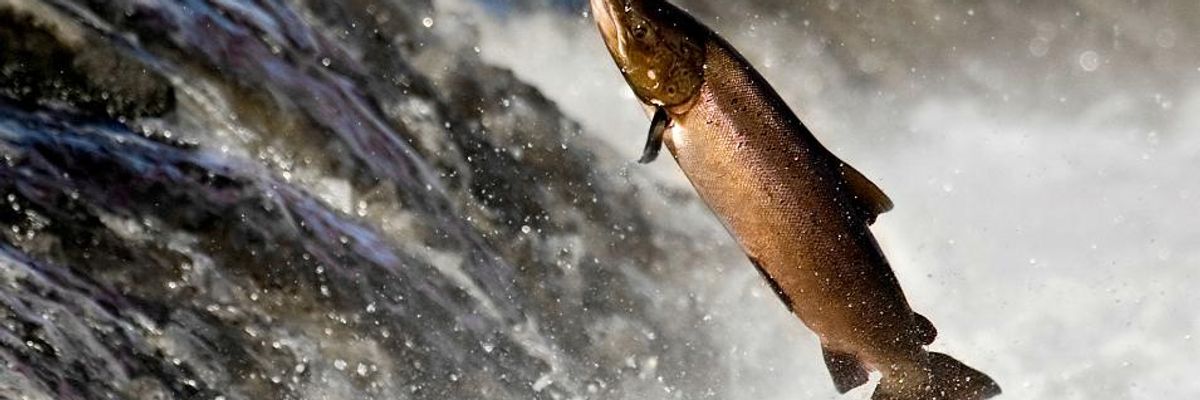
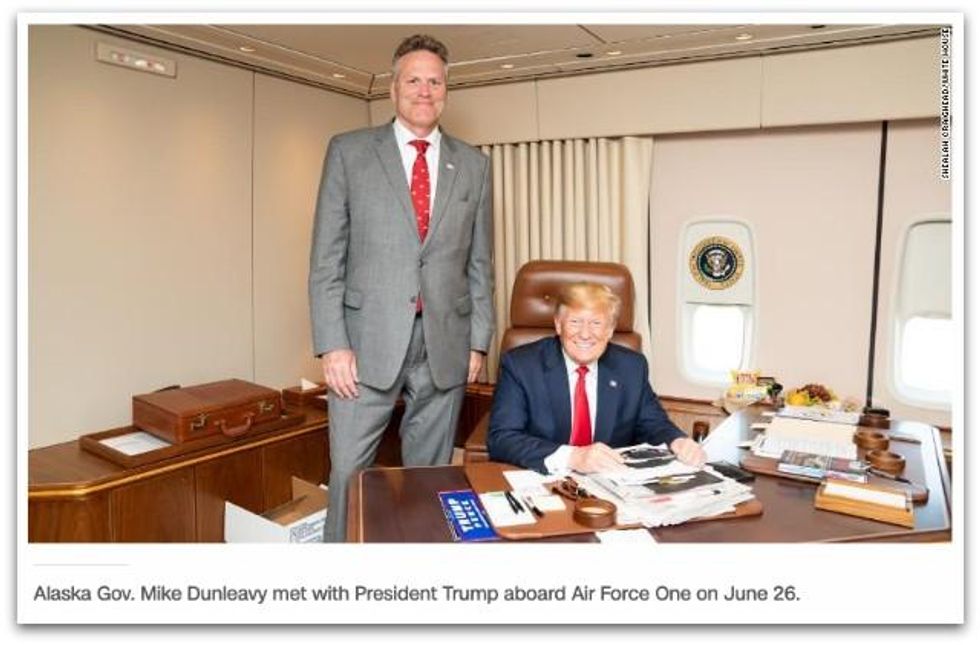
"If that mine gets put in, it would ... completely devastate our region. It would not only kill our resources, but it would kill us culturally." --Gayla Hoseth, Curyung Tribal Council/Bristol Bay Native AssociationThat was the succinct and critical reaction of Canadian author and activist Naomi Klein to reporting on Friday that President Donald Trump had personally intervened--after a meeting with Alaska's Republican Governor Mike Dunleavy on Air Force One in June--to withdraw the Environmental Protection Agency's opposition to a gold mining project in the state that the federal government's own scientists have acknowledged would destroy native fisheries and undermine the state's fragile ecosystems.
So Trump meets Alaska's governor in his airplane and agrees to push through a goldmine that had been stopped b/c it will devastate salmon habitat. This at a time that orcas are already starving death. Salmon carry entire ecosystems on their backs. Gold over life, literally. https://t.co/QcT2UosP0g
-- Naomi Klein (@NaomiAKlein) August 9, 2019
Based on reporting by CNN that only emerged Friday evening, the key developments happened weeks ago after Trump's one-on-one meeting with Dunleavy--who has supported the copper and gold Pebble Mine project in Bristol Bay despite the opposition of conservationists, Indigenous groups, salmon fisheries experts, and others.
CNN reports:
In 2014, the project was halted because an EPA study found that it would cause "complete loss of fish habitat due to elimination, dewatering, and fragmentation of streams, wetlands, and other aquatic resources" in some areas of Bristol Bay. The agency invoked a rarely used provision of the Clean Water Act that works like a veto, effectively banning mining on the site.
"If that mine gets put in, it would ... completely devastate our region," Gayla Hoseth, second chief of the Curyung Tribal Council and a Bristol Bay Native Association director, told CNN. "It would not only kill our resources, but it would kill us culturally."
When the internal announcement was made by Trump political appointees that the agency was dropping its opposition, which came one day after the Trump-Dunleavy meeting, sources told CNN it came as a "total shock" to some of the top EPA scientists who were planning to oppose the project on environmental grounds. Sources for the story, the news outlet noted, "asked to remain anonymous for fear of retribution."
According to CNN:
Four EPA sources with knowledge of the decision told CNN that senior agency officials in Washington summoned scientists and other staffers to an internal videoconference on June 27, the day after the Trump-Dunleavy meeting, to inform them of the agency's reversal. The details of that meeting are not on any official EPA calendar and have not previously been reported.
Those sources said the decision disregards the standard assessment process under the Clean Water Act, cutting scientists out of the process.
The EPA's new position on the project is the latest development in a decade-long battle that has pitted environmentalists, Alaskan Natives and the fishing industry against pro-mining interests in Alaska.
Responding to Klein's tweet, fellow author and activist Bill McKibben--long a colleague of hers at 350.org--expressed similar contempt.
"This is one of the world's most beautiful places, with a thriving salmon run, and now we'll get some...gold," McKibben tweeted. Trump, he added, is "President Midas."
After being told that the decision was made, one EPA inside told CNN, "I was dumbfounded. We were basically told we weren't going to examine anything. We were told to get out of the way and just make it happen."
"Gold over life, literally."
"If that mine gets put in, it would ... completely devastate our region. It would not only kill our resources, but it would kill us culturally." --Gayla Hoseth, Curyung Tribal Council/Bristol Bay Native AssociationThat was the succinct and critical reaction of Canadian author and activist Naomi Klein to reporting on Friday that President Donald Trump had personally intervened--after a meeting with Alaska's Republican Governor Mike Dunleavy on Air Force One in June--to withdraw the Environmental Protection Agency's opposition to a gold mining project in the state that the federal government's own scientists have acknowledged would destroy native fisheries and undermine the state's fragile ecosystems.
So Trump meets Alaska's governor in his airplane and agrees to push through a goldmine that had been stopped b/c it will devastate salmon habitat. This at a time that orcas are already starving death. Salmon carry entire ecosystems on their backs. Gold over life, literally. https://t.co/QcT2UosP0g
-- Naomi Klein (@NaomiAKlein) August 9, 2019
Based on reporting by CNN that only emerged Friday evening, the key developments happened weeks ago after Trump's one-on-one meeting with Dunleavy--who has supported the copper and gold Pebble Mine project in Bristol Bay despite the opposition of conservationists, Indigenous groups, salmon fisheries experts, and others.
CNN reports:
In 2014, the project was halted because an EPA study found that it would cause "complete loss of fish habitat due to elimination, dewatering, and fragmentation of streams, wetlands, and other aquatic resources" in some areas of Bristol Bay. The agency invoked a rarely used provision of the Clean Water Act that works like a veto, effectively banning mining on the site.
"If that mine gets put in, it would ... completely devastate our region," Gayla Hoseth, second chief of the Curyung Tribal Council and a Bristol Bay Native Association director, told CNN. "It would not only kill our resources, but it would kill us culturally."
When the internal announcement was made by Trump political appointees that the agency was dropping its opposition, which came one day after the Trump-Dunleavy meeting, sources told CNN it came as a "total shock" to some of the top EPA scientists who were planning to oppose the project on environmental grounds. Sources for the story, the news outlet noted, "asked to remain anonymous for fear of retribution."
According to CNN:
Four EPA sources with knowledge of the decision told CNN that senior agency officials in Washington summoned scientists and other staffers to an internal videoconference on June 27, the day after the Trump-Dunleavy meeting, to inform them of the agency's reversal. The details of that meeting are not on any official EPA calendar and have not previously been reported.
Those sources said the decision disregards the standard assessment process under the Clean Water Act, cutting scientists out of the process.
The EPA's new position on the project is the latest development in a decade-long battle that has pitted environmentalists, Alaskan Natives and the fishing industry against pro-mining interests in Alaska.
Responding to Klein's tweet, fellow author and activist Bill McKibben--long a colleague of hers at 350.org--expressed similar contempt.
"This is one of the world's most beautiful places, with a thriving salmon run, and now we'll get some...gold," McKibben tweeted. Trump, he added, is "President Midas."
After being told that the decision was made, one EPA inside told CNN, "I was dumbfounded. We were basically told we weren't going to examine anything. We were told to get out of the way and just make it happen."
"Gold over life, literally."
"If that mine gets put in, it would ... completely devastate our region. It would not only kill our resources, but it would kill us culturally." --Gayla Hoseth, Curyung Tribal Council/Bristol Bay Native AssociationThat was the succinct and critical reaction of Canadian author and activist Naomi Klein to reporting on Friday that President Donald Trump had personally intervened--after a meeting with Alaska's Republican Governor Mike Dunleavy on Air Force One in June--to withdraw the Environmental Protection Agency's opposition to a gold mining project in the state that the federal government's own scientists have acknowledged would destroy native fisheries and undermine the state's fragile ecosystems.
So Trump meets Alaska's governor in his airplane and agrees to push through a goldmine that had been stopped b/c it will devastate salmon habitat. This at a time that orcas are already starving death. Salmon carry entire ecosystems on their backs. Gold over life, literally. https://t.co/QcT2UosP0g
-- Naomi Klein (@NaomiAKlein) August 9, 2019
Based on reporting by CNN that only emerged Friday evening, the key developments happened weeks ago after Trump's one-on-one meeting with Dunleavy--who has supported the copper and gold Pebble Mine project in Bristol Bay despite the opposition of conservationists, Indigenous groups, salmon fisheries experts, and others.
CNN reports:
In 2014, the project was halted because an EPA study found that it would cause "complete loss of fish habitat due to elimination, dewatering, and fragmentation of streams, wetlands, and other aquatic resources" in some areas of Bristol Bay. The agency invoked a rarely used provision of the Clean Water Act that works like a veto, effectively banning mining on the site.
"If that mine gets put in, it would ... completely devastate our region," Gayla Hoseth, second chief of the Curyung Tribal Council and a Bristol Bay Native Association director, told CNN. "It would not only kill our resources, but it would kill us culturally."
When the internal announcement was made by Trump political appointees that the agency was dropping its opposition, which came one day after the Trump-Dunleavy meeting, sources told CNN it came as a "total shock" to some of the top EPA scientists who were planning to oppose the project on environmental grounds. Sources for the story, the news outlet noted, "asked to remain anonymous for fear of retribution."
According to CNN:
Four EPA sources with knowledge of the decision told CNN that senior agency officials in Washington summoned scientists and other staffers to an internal videoconference on June 27, the day after the Trump-Dunleavy meeting, to inform them of the agency's reversal. The details of that meeting are not on any official EPA calendar and have not previously been reported.
Those sources said the decision disregards the standard assessment process under the Clean Water Act, cutting scientists out of the process.
The EPA's new position on the project is the latest development in a decade-long battle that has pitted environmentalists, Alaskan Natives and the fishing industry against pro-mining interests in Alaska.
Responding to Klein's tweet, fellow author and activist Bill McKibben--long a colleague of hers at 350.org--expressed similar contempt.
"This is one of the world's most beautiful places, with a thriving salmon run, and now we'll get some...gold," McKibben tweeted. Trump, he added, is "President Midas."
After being told that the decision was made, one EPA inside told CNN, "I was dumbfounded. We were basically told we weren't going to examine anything. We were told to get out of the way and just make it happen."

