SUBSCRIBE TO OUR FREE NEWSLETTER
Daily news & progressive opinion—funded by the people, not the corporations—delivered straight to your inbox.
5
#000000
#FFFFFF
To donate by check, phone, or other method, see our More Ways to Give page.
Daily news & progressive opinion—funded by the people, not the corporations—delivered straight to your inbox.
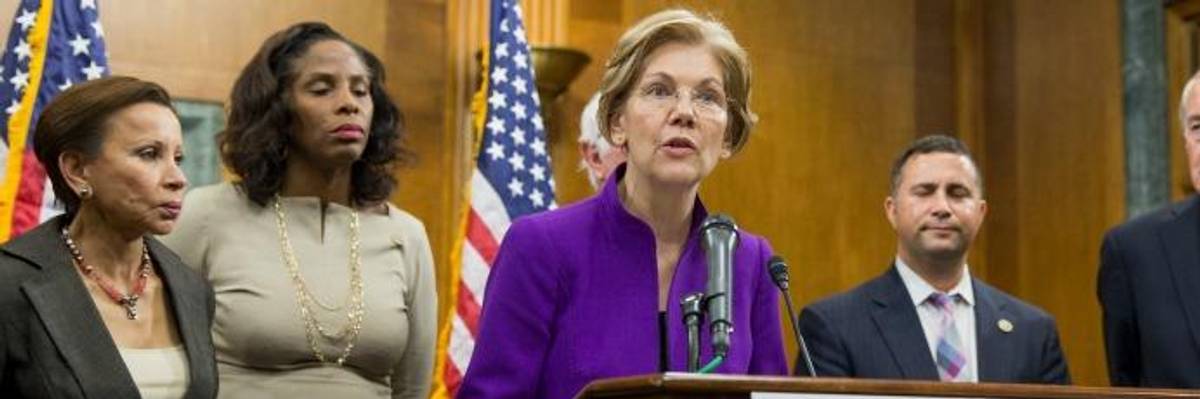
Sen. Elizabeth Warren (D-Mass.) attends a news conference to discuss a comprehensive plan to address the immediate humanitarian needs in Puerto Rico and the U.S. Virgin Islands, and ensure that the islands are able to rebuild in a way that empowers them to thrive on November 28, 2017 in Washington, D.C. (Photo: Tasos Katopodis/Getty Images)
On the heels of a new study showing the federal government gave short shrift to Puerto Rico relief efforts in the wake of Hurricane Maria, Sen. Elizabeth Warren (D-Mass.) on Tuesday delivered a speech on the island in which she blasted the Trump administration for its lack of respect and "cruelty" towards the Puerto Rican people.
The purpose of her talk, said Warren, who recently announced a potential 2020 presidential bid, was "to talk about the dignity and respect this island deserves from our government--and the cruelty that it has been inflicted upon."
It was 16 months ago that Hurricanes Irma and Maria battered the island, she said, yet still "the people of Puerto Rico have not received the help they need to rebuild."
Echoing other observers, Warren noted that "these storms were piled on top of a much longer-running economic devastation of Puerto Rico," and called it "a clear example of how well the federal government works for Wall Street" but not for suffering people who need it most.
She noted for example, the "vulture funds" holding the majority of the island's debt, leaving Puerto Ricans "at the mercy of Wall Street corporate executives who are focused on squeezing out every last penny of profit from this island." She also citicized the fiscal oversight board, which has been slashing "basic government services throughout the island, while generously helping out the Wall Street firms that hold your debt."
Those indignities began before the current administration--she noted the U.S. military's still-toxic caused environmental damage on Vieques. "The legacy of colonialism dies hard," Warren said. Fingering the White House's current inhabitant, she chastized President Donald Trump for blocking nutritional assistance and using his "shutdown as an excuse to delay paying out disaster recovery funds to Puerto Rico."
"Even now, even after the Trump administration has denied how many died and has dragged its feet on sending adequate disaster relief funds, the president of the United States has doubled down on the insult by toying with the idea of diverting your recovery funds to build a wall," she added, calling the barrier "dumb."
"With Trump, cruelty is not an accident," Warren said, "it is part of the plan."
Warren also appeared on CNN's "Anderson Cooper 360" on Tuesday, and reiterated the themes from her earlier talk:
In her San Juan talk, Warren outlined a number of steps to address the cruelty, including giving islanders self-determination in its association with the U.S.; strengthening unions; protecting the island "from pollution and the threats of climate change"; enacting real debt relief; creating a "Marshall Plan" for the island to rebuild; and expanding the safety net including full Medicaid funding.
She also reiterated her call for a 9/11-style commission to probe the federal government's response to the hurricanes, and said accountability for the disaster needs to include getting rid of FEMA Administrator Brock Long, whom she accused of enabling "negligence."
A new analysis may help fuel her call for that probe. Published Friday in the journal BMJ Global Health, researchers found that the government's response to the aftermath of Hurricane Maria in Puerto Rico was slower and less financially generous than its response to Hurricanes Irma and Harvey in Florida and Texas.
Storm severity can't be the explanation, the study noted, as "Hurricanes Harvey and Irma made landfall as category four hurricanes, and Maria hit Puerto Rico as a 'high-end' category 4, or just below the threshold of a category 5 hurricane. Maria caused more damage in Puerto Rico than Irma in Florida or Harvey in Texas in terms of loss of electricity and housing destruction, with overall damage estimates comparable to Harvey, and greater than estimates for Irma."
Regardless of any possible justified barriers to response time, the researchers said "what cannot be contested is that the responses were in fact different across critical time points, and these differences have serious consequences for acute and long-term health outcomes and recovery efforts."
Dear Common Dreams reader, It’s been nearly 30 years since I co-founded Common Dreams with my late wife, Lina Newhouser. We had the radical notion that journalism should serve the public good, not corporate profits. It was clear to us from the outset what it would take to build such a project. No paid advertisements. No corporate sponsors. No millionaire publisher telling us what to think or do. Many people said we wouldn't last a year, but we proved those doubters wrong. Together with a tremendous team of journalists and dedicated staff, we built an independent media outlet free from the constraints of profits and corporate control. Our mission has always been simple: To inform. To inspire. To ignite change for the common good. Building Common Dreams was not easy. Our survival was never guaranteed. When you take on the most powerful forces—Wall Street greed, fossil fuel industry destruction, Big Tech lobbyists, and uber-rich oligarchs who have spent billions upon billions rigging the economy and democracy in their favor—the only bulwark you have is supporters who believe in your work. But here’s the urgent message from me today. It's never been this bad out there. And it's never been this hard to keep us going. At the very moment Common Dreams is most needed, the threats we face are intensifying. We need your support now more than ever. We don't accept corporate advertising and never will. We don't have a paywall because we don't think people should be blocked from critical news based on their ability to pay. Everything we do is funded by the donations of readers like you. When everyone does the little they can afford, we are strong. But if that support retreats or dries up, so do we. Will you donate now to make sure Common Dreams not only survives but thrives? —Craig Brown, Co-founder |
On the heels of a new study showing the federal government gave short shrift to Puerto Rico relief efforts in the wake of Hurricane Maria, Sen. Elizabeth Warren (D-Mass.) on Tuesday delivered a speech on the island in which she blasted the Trump administration for its lack of respect and "cruelty" towards the Puerto Rican people.
The purpose of her talk, said Warren, who recently announced a potential 2020 presidential bid, was "to talk about the dignity and respect this island deserves from our government--and the cruelty that it has been inflicted upon."
It was 16 months ago that Hurricanes Irma and Maria battered the island, she said, yet still "the people of Puerto Rico have not received the help they need to rebuild."
Echoing other observers, Warren noted that "these storms were piled on top of a much longer-running economic devastation of Puerto Rico," and called it "a clear example of how well the federal government works for Wall Street" but not for suffering people who need it most.
She noted for example, the "vulture funds" holding the majority of the island's debt, leaving Puerto Ricans "at the mercy of Wall Street corporate executives who are focused on squeezing out every last penny of profit from this island." She also citicized the fiscal oversight board, which has been slashing "basic government services throughout the island, while generously helping out the Wall Street firms that hold your debt."
Those indignities began before the current administration--she noted the U.S. military's still-toxic caused environmental damage on Vieques. "The legacy of colonialism dies hard," Warren said. Fingering the White House's current inhabitant, she chastized President Donald Trump for blocking nutritional assistance and using his "shutdown as an excuse to delay paying out disaster recovery funds to Puerto Rico."
"Even now, even after the Trump administration has denied how many died and has dragged its feet on sending adequate disaster relief funds, the president of the United States has doubled down on the insult by toying with the idea of diverting your recovery funds to build a wall," she added, calling the barrier "dumb."
"With Trump, cruelty is not an accident," Warren said, "it is part of the plan."
Warren also appeared on CNN's "Anderson Cooper 360" on Tuesday, and reiterated the themes from her earlier talk:
In her San Juan talk, Warren outlined a number of steps to address the cruelty, including giving islanders self-determination in its association with the U.S.; strengthening unions; protecting the island "from pollution and the threats of climate change"; enacting real debt relief; creating a "Marshall Plan" for the island to rebuild; and expanding the safety net including full Medicaid funding.
She also reiterated her call for a 9/11-style commission to probe the federal government's response to the hurricanes, and said accountability for the disaster needs to include getting rid of FEMA Administrator Brock Long, whom she accused of enabling "negligence."
A new analysis may help fuel her call for that probe. Published Friday in the journal BMJ Global Health, researchers found that the government's response to the aftermath of Hurricane Maria in Puerto Rico was slower and less financially generous than its response to Hurricanes Irma and Harvey in Florida and Texas.
Storm severity can't be the explanation, the study noted, as "Hurricanes Harvey and Irma made landfall as category four hurricanes, and Maria hit Puerto Rico as a 'high-end' category 4, or just below the threshold of a category 5 hurricane. Maria caused more damage in Puerto Rico than Irma in Florida or Harvey in Texas in terms of loss of electricity and housing destruction, with overall damage estimates comparable to Harvey, and greater than estimates for Irma."
Regardless of any possible justified barriers to response time, the researchers said "what cannot be contested is that the responses were in fact different across critical time points, and these differences have serious consequences for acute and long-term health outcomes and recovery efforts."
On the heels of a new study showing the federal government gave short shrift to Puerto Rico relief efforts in the wake of Hurricane Maria, Sen. Elizabeth Warren (D-Mass.) on Tuesday delivered a speech on the island in which she blasted the Trump administration for its lack of respect and "cruelty" towards the Puerto Rican people.
The purpose of her talk, said Warren, who recently announced a potential 2020 presidential bid, was "to talk about the dignity and respect this island deserves from our government--and the cruelty that it has been inflicted upon."
It was 16 months ago that Hurricanes Irma and Maria battered the island, she said, yet still "the people of Puerto Rico have not received the help they need to rebuild."
Echoing other observers, Warren noted that "these storms were piled on top of a much longer-running economic devastation of Puerto Rico," and called it "a clear example of how well the federal government works for Wall Street" but not for suffering people who need it most.
She noted for example, the "vulture funds" holding the majority of the island's debt, leaving Puerto Ricans "at the mercy of Wall Street corporate executives who are focused on squeezing out every last penny of profit from this island." She also citicized the fiscal oversight board, which has been slashing "basic government services throughout the island, while generously helping out the Wall Street firms that hold your debt."
Those indignities began before the current administration--she noted the U.S. military's still-toxic caused environmental damage on Vieques. "The legacy of colonialism dies hard," Warren said. Fingering the White House's current inhabitant, she chastized President Donald Trump for blocking nutritional assistance and using his "shutdown as an excuse to delay paying out disaster recovery funds to Puerto Rico."
"Even now, even after the Trump administration has denied how many died and has dragged its feet on sending adequate disaster relief funds, the president of the United States has doubled down on the insult by toying with the idea of diverting your recovery funds to build a wall," she added, calling the barrier "dumb."
"With Trump, cruelty is not an accident," Warren said, "it is part of the plan."
Warren also appeared on CNN's "Anderson Cooper 360" on Tuesday, and reiterated the themes from her earlier talk:
In her San Juan talk, Warren outlined a number of steps to address the cruelty, including giving islanders self-determination in its association with the U.S.; strengthening unions; protecting the island "from pollution and the threats of climate change"; enacting real debt relief; creating a "Marshall Plan" for the island to rebuild; and expanding the safety net including full Medicaid funding.
She also reiterated her call for a 9/11-style commission to probe the federal government's response to the hurricanes, and said accountability for the disaster needs to include getting rid of FEMA Administrator Brock Long, whom she accused of enabling "negligence."
A new analysis may help fuel her call for that probe. Published Friday in the journal BMJ Global Health, researchers found that the government's response to the aftermath of Hurricane Maria in Puerto Rico was slower and less financially generous than its response to Hurricanes Irma and Harvey in Florida and Texas.
Storm severity can't be the explanation, the study noted, as "Hurricanes Harvey and Irma made landfall as category four hurricanes, and Maria hit Puerto Rico as a 'high-end' category 4, or just below the threshold of a category 5 hurricane. Maria caused more damage in Puerto Rico than Irma in Florida or Harvey in Texas in terms of loss of electricity and housing destruction, with overall damage estimates comparable to Harvey, and greater than estimates for Irma."
Regardless of any possible justified barriers to response time, the researchers said "what cannot be contested is that the responses were in fact different across critical time points, and these differences have serious consequences for acute and long-term health outcomes and recovery efforts."