SUBSCRIBE TO OUR FREE NEWSLETTER
Daily news & progressive opinion—funded by the people, not the corporations—delivered straight to your inbox.
5
#000000
#FFFFFF
To donate by check, phone, or other method, see our More Ways to Give page.
Daily news & progressive opinion—funded by the people, not the corporations—delivered straight to your inbox.
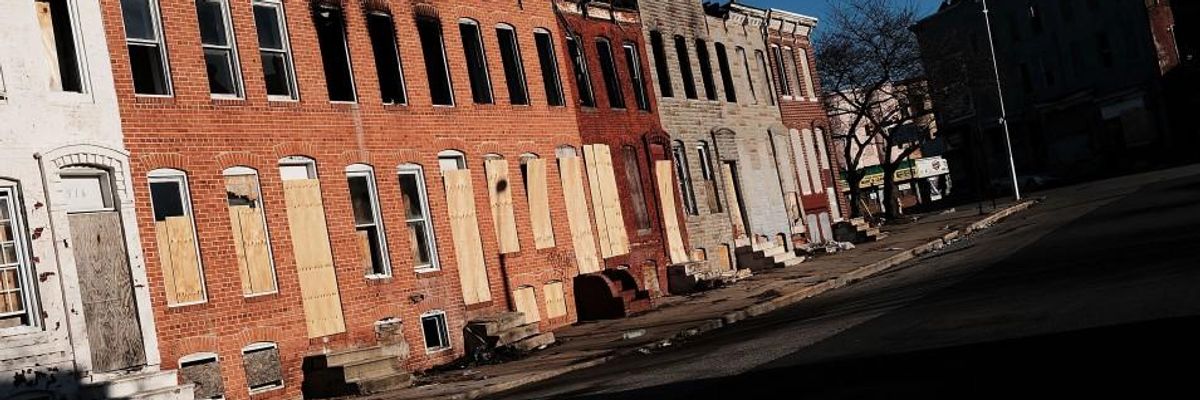
The U.N. special rapporteur on extreme poverty and human rights issued a report on "devastating inequality" in the U.S. last year. (Photo: Spencer Platt/Getty Images)
Displaying what one United Nations human rights expert called "arrogance" considering international outcry over the Trump administration's record of human rights violations, the State Department has refused to cooperate with U.N. investigators regarding their complaints about such issues for the better part of a year.
As the Guardian reported Friday, the administration has "quietly and unnoticed" left unanswered at least 13 official requests from U.N. special rapporteurs on human rights since last May. The failure to respond began a month before Philip Alston, special rapporteur on extreme poverty, issued a scathing report detailing "devastating inequality" in the U.S., made worse by the policies of President Donald Trump and Republican lawmakers.
As Alston said, the administration's refusal to answer questions and cooperate not only leaves issues including inequality and the rights of immigrants and asylum seekers unaddressed in the U.S., but also sends a harmful message to other human rights abusers leading countries around the world.
"This sends a message that you can opt out of routine scrutiny if you don't like what is being said about your record on human rights," he told the Guardian.
ACLU human rights director Jamil Dakwar also called the State Department's conduct "a serious setback to the system created after World War II to ensure that domestic human rights violations could no longer be seen as an internal matter."
The administration was dismissive of Alston's report, which made headlines last June. Then-UN ambassador Nikki Haley called the study "patently ridiculous" and suggested that no human rights violations exist in the U.S.--despite well documented evidence of growing income inequality, a federal minimum wage which cannot pay the rent on a two-bedroom apartment in any state in the country, the use of solitary confinement in U.S. prisons, and the Department of Homeland Security's (DHS) forcible separation of thousands of children from their parents.
The Trump administration's attitude toward the U.N. special rapporteurs on human rights "demonstrates a rather inappropriate arrogance, at a time when human rights in the U.S. are particularly fragile," said Leilani Farha, investigator on adequate housing.
Dear Common Dreams reader, It’s been nearly 30 years since I co-founded Common Dreams with my late wife, Lina Newhouser. We had the radical notion that journalism should serve the public good, not corporate profits. It was clear to us from the outset what it would take to build such a project. No paid advertisements. No corporate sponsors. No millionaire publisher telling us what to think or do. Many people said we wouldn't last a year, but we proved those doubters wrong. Together with a tremendous team of journalists and dedicated staff, we built an independent media outlet free from the constraints of profits and corporate control. Our mission has always been simple: To inform. To inspire. To ignite change for the common good. Building Common Dreams was not easy. Our survival was never guaranteed. When you take on the most powerful forces—Wall Street greed, fossil fuel industry destruction, Big Tech lobbyists, and uber-rich oligarchs who have spent billions upon billions rigging the economy and democracy in their favor—the only bulwark you have is supporters who believe in your work. But here’s the urgent message from me today. It's never been this bad out there. And it's never been this hard to keep us going. At the very moment Common Dreams is most needed, the threats we face are intensifying. We need your support now more than ever. We don't accept corporate advertising and never will. We don't have a paywall because we don't think people should be blocked from critical news based on their ability to pay. Everything we do is funded by the donations of readers like you. When everyone does the little they can afford, we are strong. But if that support retreats or dries up, so do we. Will you donate now to make sure Common Dreams not only survives but thrives? —Craig Brown, Co-founder |
Displaying what one United Nations human rights expert called "arrogance" considering international outcry over the Trump administration's record of human rights violations, the State Department has refused to cooperate with U.N. investigators regarding their complaints about such issues for the better part of a year.
As the Guardian reported Friday, the administration has "quietly and unnoticed" left unanswered at least 13 official requests from U.N. special rapporteurs on human rights since last May. The failure to respond began a month before Philip Alston, special rapporteur on extreme poverty, issued a scathing report detailing "devastating inequality" in the U.S., made worse by the policies of President Donald Trump and Republican lawmakers.
As Alston said, the administration's refusal to answer questions and cooperate not only leaves issues including inequality and the rights of immigrants and asylum seekers unaddressed in the U.S., but also sends a harmful message to other human rights abusers leading countries around the world.
"This sends a message that you can opt out of routine scrutiny if you don't like what is being said about your record on human rights," he told the Guardian.
ACLU human rights director Jamil Dakwar also called the State Department's conduct "a serious setback to the system created after World War II to ensure that domestic human rights violations could no longer be seen as an internal matter."
The administration was dismissive of Alston's report, which made headlines last June. Then-UN ambassador Nikki Haley called the study "patently ridiculous" and suggested that no human rights violations exist in the U.S.--despite well documented evidence of growing income inequality, a federal minimum wage which cannot pay the rent on a two-bedroom apartment in any state in the country, the use of solitary confinement in U.S. prisons, and the Department of Homeland Security's (DHS) forcible separation of thousands of children from their parents.
The Trump administration's attitude toward the U.N. special rapporteurs on human rights "demonstrates a rather inappropriate arrogance, at a time when human rights in the U.S. are particularly fragile," said Leilani Farha, investigator on adequate housing.
Displaying what one United Nations human rights expert called "arrogance" considering international outcry over the Trump administration's record of human rights violations, the State Department has refused to cooperate with U.N. investigators regarding their complaints about such issues for the better part of a year.
As the Guardian reported Friday, the administration has "quietly and unnoticed" left unanswered at least 13 official requests from U.N. special rapporteurs on human rights since last May. The failure to respond began a month before Philip Alston, special rapporteur on extreme poverty, issued a scathing report detailing "devastating inequality" in the U.S., made worse by the policies of President Donald Trump and Republican lawmakers.
As Alston said, the administration's refusal to answer questions and cooperate not only leaves issues including inequality and the rights of immigrants and asylum seekers unaddressed in the U.S., but also sends a harmful message to other human rights abusers leading countries around the world.
"This sends a message that you can opt out of routine scrutiny if you don't like what is being said about your record on human rights," he told the Guardian.
ACLU human rights director Jamil Dakwar also called the State Department's conduct "a serious setback to the system created after World War II to ensure that domestic human rights violations could no longer be seen as an internal matter."
The administration was dismissive of Alston's report, which made headlines last June. Then-UN ambassador Nikki Haley called the study "patently ridiculous" and suggested that no human rights violations exist in the U.S.--despite well documented evidence of growing income inequality, a federal minimum wage which cannot pay the rent on a two-bedroom apartment in any state in the country, the use of solitary confinement in U.S. prisons, and the Department of Homeland Security's (DHS) forcible separation of thousands of children from their parents.
The Trump administration's attitude toward the U.N. special rapporteurs on human rights "demonstrates a rather inappropriate arrogance, at a time when human rights in the U.S. are particularly fragile," said Leilani Farha, investigator on adequate housing.