SUBSCRIBE TO OUR FREE NEWSLETTER
Daily news & progressive opinion—funded by the people, not the corporations—delivered straight to your inbox.
5
#000000
#FFFFFF
To donate by check, phone, or other method, see our More Ways to Give page.
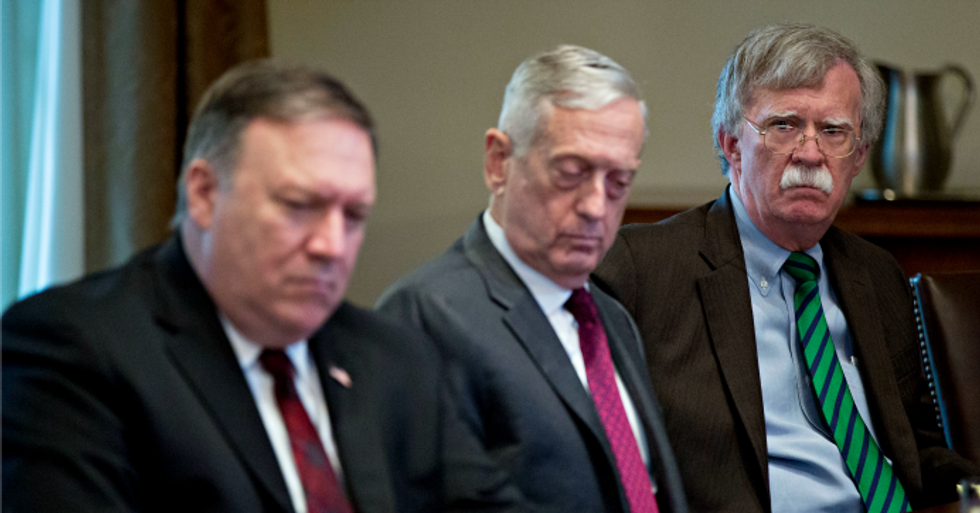
Amid mounting concerns about possible war with Iran after the Trump administration ditched a decades-old bilateral treaty in response to an International Court of Justice (ICJ) ruling on Wednesday that U.S. sanctions violate it, National Security Adviser John Bolton announced a review of all international agreements that could lead to more binding decisions by the principal judicial organ of the United Nations.
"John Bolton and the Trump administration are turning us away from international accountability and cooperation and towards war and unilateral aggression."
--Win Without War
Bolton also revealed that President Donald Trump "has decided that the United States will withdraw from the optional protocol on dispute resolution to the Vienna Convention on Diplomatic Relations," which gives the ICJ authority to hear diplomatic disputes.
As motivation for the withdrawal, he pointed to "a case brought by the so-called state of Palestine" challenging Trump's widely condemned decision to move the American embassy to Jerusalem.
While Bolton, a longtime warmonger, insisted that "the United States remains a party to the underlying Vienna Convention on Diplomatic Relations," critics quickly raised alarm about what the developments could mean for the future of U.S. diplomacy, especially with Iran and the Palestinian Authority.
"Bolton is basically announcing that the U.S. is becoming a rogue state," tweeted journalist Aaron Rupar. "The drums of war can be heard in the distance."
"John Bolton and the Trump administration are turning us away from international accountability and cooperation and towards war and unilateral aggression," concluded Win Without War.
Secretary of State Mike Pompeo had provoked similar alarm on Wednesday morning when he announced Trump's decision to terminate the 1955 Treaty of Amity with Iran after the ICJ ordered the administration to ease sanctions impacting humanitarian aid and aviation safety.
Earlier this year, as tensions were rising after Trump left the Iran nuclear deal, Reuters reported that Bolton and Pompeo were backing the administration's "offensive of speeches and online communications meant to foment unrest and help pressure Iran to end its nuclear program and its support of militant groups."
Addressing reporters at the White House on Wednesday, Bolton declared, "The United States will not sit idly by as baseless politicized claims are brought against us."
The Palestinian complaint announced by the ICJ last Friday argues that Trump violated the Vienna Convention when he moved the U.S. embassy in Israel from Tel Aviv to Jerusalem earlier this year because the treaty requires embassies to be located on the territory of a host state and Israeli control of Jerusalem is disputed.
While Bolton pointed to the case as a reason why the U.S. is withdrawing from the protocol, he later said the move "really has less to do with Iran and the Palestinians than with the continued consistent policy of the United States to reject the jurisdiction of the International Court of Justice, which we think is politicized and ineffective."
Amid mounting concerns about possible war with Iran after the Trump administration ditched a decades-old bilateral treaty in response to an International Court of Justice (ICJ) ruling on Wednesday that U.S. sanctions violate it, National Security Adviser John Bolton announced a review of all international agreements that could lead to more binding decisions by the principal judicial organ of the United Nations.
"John Bolton and the Trump administration are turning us away from international accountability and cooperation and towards war and unilateral aggression."
--Win Without War
Bolton also revealed that President Donald Trump "has decided that the United States will withdraw from the optional protocol on dispute resolution to the Vienna Convention on Diplomatic Relations," which gives the ICJ authority to hear diplomatic disputes.
As motivation for the withdrawal, he pointed to "a case brought by the so-called state of Palestine" challenging Trump's widely condemned decision to move the American embassy to Jerusalem.
While Bolton, a longtime warmonger, insisted that "the United States remains a party to the underlying Vienna Convention on Diplomatic Relations," critics quickly raised alarm about what the developments could mean for the future of U.S. diplomacy, especially with Iran and the Palestinian Authority.
"Bolton is basically announcing that the U.S. is becoming a rogue state," tweeted journalist Aaron Rupar. "The drums of war can be heard in the distance."
"John Bolton and the Trump administration are turning us away from international accountability and cooperation and towards war and unilateral aggression," concluded Win Without War.
Secretary of State Mike Pompeo had provoked similar alarm on Wednesday morning when he announced Trump's decision to terminate the 1955 Treaty of Amity with Iran after the ICJ ordered the administration to ease sanctions impacting humanitarian aid and aviation safety.
Earlier this year, as tensions were rising after Trump left the Iran nuclear deal, Reuters reported that Bolton and Pompeo were backing the administration's "offensive of speeches and online communications meant to foment unrest and help pressure Iran to end its nuclear program and its support of militant groups."
Addressing reporters at the White House on Wednesday, Bolton declared, "The United States will not sit idly by as baseless politicized claims are brought against us."
The Palestinian complaint announced by the ICJ last Friday argues that Trump violated the Vienna Convention when he moved the U.S. embassy in Israel from Tel Aviv to Jerusalem earlier this year because the treaty requires embassies to be located on the territory of a host state and Israeli control of Jerusalem is disputed.
While Bolton pointed to the case as a reason why the U.S. is withdrawing from the protocol, he later said the move "really has less to do with Iran and the Palestinians than with the continued consistent policy of the United States to reject the jurisdiction of the International Court of Justice, which we think is politicized and ineffective."
Amid mounting concerns about possible war with Iran after the Trump administration ditched a decades-old bilateral treaty in response to an International Court of Justice (ICJ) ruling on Wednesday that U.S. sanctions violate it, National Security Adviser John Bolton announced a review of all international agreements that could lead to more binding decisions by the principal judicial organ of the United Nations.
"John Bolton and the Trump administration are turning us away from international accountability and cooperation and towards war and unilateral aggression."
--Win Without War
Bolton also revealed that President Donald Trump "has decided that the United States will withdraw from the optional protocol on dispute resolution to the Vienna Convention on Diplomatic Relations," which gives the ICJ authority to hear diplomatic disputes.
As motivation for the withdrawal, he pointed to "a case brought by the so-called state of Palestine" challenging Trump's widely condemned decision to move the American embassy to Jerusalem.
While Bolton, a longtime warmonger, insisted that "the United States remains a party to the underlying Vienna Convention on Diplomatic Relations," critics quickly raised alarm about what the developments could mean for the future of U.S. diplomacy, especially with Iran and the Palestinian Authority.
"Bolton is basically announcing that the U.S. is becoming a rogue state," tweeted journalist Aaron Rupar. "The drums of war can be heard in the distance."
"John Bolton and the Trump administration are turning us away from international accountability and cooperation and towards war and unilateral aggression," concluded Win Without War.
Secretary of State Mike Pompeo had provoked similar alarm on Wednesday morning when he announced Trump's decision to terminate the 1955 Treaty of Amity with Iran after the ICJ ordered the administration to ease sanctions impacting humanitarian aid and aviation safety.
Earlier this year, as tensions were rising after Trump left the Iran nuclear deal, Reuters reported that Bolton and Pompeo were backing the administration's "offensive of speeches and online communications meant to foment unrest and help pressure Iran to end its nuclear program and its support of militant groups."
Addressing reporters at the White House on Wednesday, Bolton declared, "The United States will not sit idly by as baseless politicized claims are brought against us."
The Palestinian complaint announced by the ICJ last Friday argues that Trump violated the Vienna Convention when he moved the U.S. embassy in Israel from Tel Aviv to Jerusalem earlier this year because the treaty requires embassies to be located on the territory of a host state and Israeli control of Jerusalem is disputed.
While Bolton pointed to the case as a reason why the U.S. is withdrawing from the protocol, he later said the move "really has less to do with Iran and the Palestinians than with the continued consistent policy of the United States to reject the jurisdiction of the International Court of Justice, which we think is politicized and ineffective."