SUBSCRIBE TO OUR FREE NEWSLETTER
Daily news & progressive opinion—funded by the people, not the corporations—delivered straight to your inbox.
5
#000000
#FFFFFF
To donate by check, phone, or other method, see our More Ways to Give page.
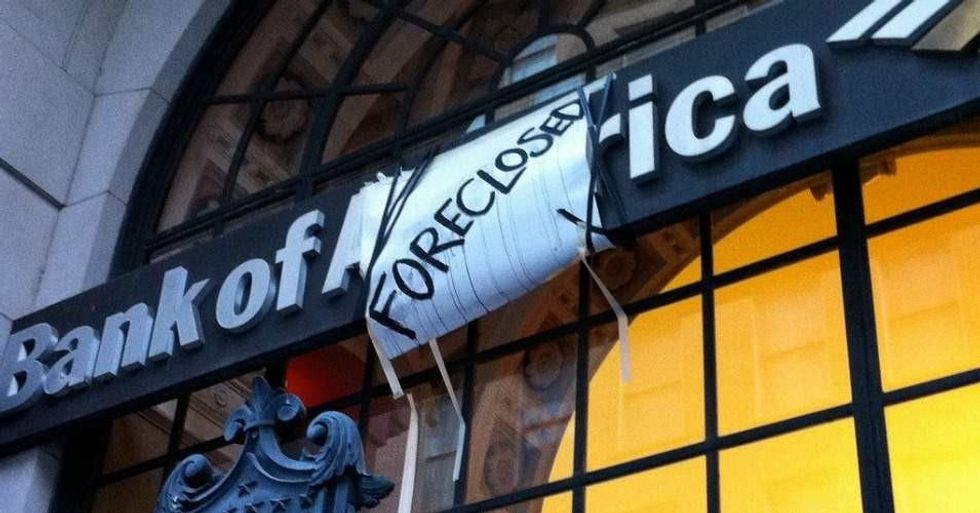
Consumer advocates and banking customers are expressing outrage after an announcement by the Bank of America that it would begin charging fees to account-holders who maintain low balances.
The decision, announced Monday, comes a month after the Republican tax law gave the bank an expected $3.5 billion tax break, and less than a week after it posted $2.4 billion profits in the last quarter of 2017.
Critics argued that such news should garner at least as much attention as the bank's announcement last month that it would use some of the financial windfall to give its 145,000 employees a one-time bonus of $1,000 each--a relatively small portion of its tax savings.
Bank of America's free online checking accounts--popular with low-income customers--will now be subject to $12 monthly fees unless the customer has a direct deposit of at least $250 per month or maintains a balance of at least $1,500.
Those impacted by the change will be the very people likely to overdraw their accounts due to their low wages, argue critics.
The fees could also drive customers away from banking altogether, adding to the 9.6 million Americans who don't use a bank account--forcing many to rely on check-cashing services, which can end up costing them hundreds of dollars annually.
Nearly 49,000 people had signed a Change.org petition by Tuesday demanding that the bank reconsider its decision.
"Many low income families do not meet these requirements," the creator of the petition wrote of the new fees. "There have been times where I've only had $10 to my name. That wouldn't even cover the maintenance fee."
A low-income account that charges only $4.95 per month will be available to customers, but those accounts come without paper checks, making them off-limits for people who use checks to pay bills and other necessities.
While tens of thousands have signed the petition, some customers announced they had had enough of the bank's unfair practices and would be closing their accounts in protest of the new policy.
Consumer advocates and banking customers are expressing outrage after an announcement by the Bank of America that it would begin charging fees to account-holders who maintain low balances.
The decision, announced Monday, comes a month after the Republican tax law gave the bank an expected $3.5 billion tax break, and less than a week after it posted $2.4 billion profits in the last quarter of 2017.
Critics argued that such news should garner at least as much attention as the bank's announcement last month that it would use some of the financial windfall to give its 145,000 employees a one-time bonus of $1,000 each--a relatively small portion of its tax savings.
Bank of America's free online checking accounts--popular with low-income customers--will now be subject to $12 monthly fees unless the customer has a direct deposit of at least $250 per month or maintains a balance of at least $1,500.
Those impacted by the change will be the very people likely to overdraw their accounts due to their low wages, argue critics.
The fees could also drive customers away from banking altogether, adding to the 9.6 million Americans who don't use a bank account--forcing many to rely on check-cashing services, which can end up costing them hundreds of dollars annually.
Nearly 49,000 people had signed a Change.org petition by Tuesday demanding that the bank reconsider its decision.
"Many low income families do not meet these requirements," the creator of the petition wrote of the new fees. "There have been times where I've only had $10 to my name. That wouldn't even cover the maintenance fee."
A low-income account that charges only $4.95 per month will be available to customers, but those accounts come without paper checks, making them off-limits for people who use checks to pay bills and other necessities.
While tens of thousands have signed the petition, some customers announced they had had enough of the bank's unfair practices and would be closing their accounts in protest of the new policy.
Consumer advocates and banking customers are expressing outrage after an announcement by the Bank of America that it would begin charging fees to account-holders who maintain low balances.
The decision, announced Monday, comes a month after the Republican tax law gave the bank an expected $3.5 billion tax break, and less than a week after it posted $2.4 billion profits in the last quarter of 2017.
Critics argued that such news should garner at least as much attention as the bank's announcement last month that it would use some of the financial windfall to give its 145,000 employees a one-time bonus of $1,000 each--a relatively small portion of its tax savings.
Bank of America's free online checking accounts--popular with low-income customers--will now be subject to $12 monthly fees unless the customer has a direct deposit of at least $250 per month or maintains a balance of at least $1,500.
Those impacted by the change will be the very people likely to overdraw their accounts due to their low wages, argue critics.
The fees could also drive customers away from banking altogether, adding to the 9.6 million Americans who don't use a bank account--forcing many to rely on check-cashing services, which can end up costing them hundreds of dollars annually.
Nearly 49,000 people had signed a Change.org petition by Tuesday demanding that the bank reconsider its decision.
"Many low income families do not meet these requirements," the creator of the petition wrote of the new fees. "There have been times where I've only had $10 to my name. That wouldn't even cover the maintenance fee."
A low-income account that charges only $4.95 per month will be available to customers, but those accounts come without paper checks, making them off-limits for people who use checks to pay bills and other necessities.
While tens of thousands have signed the petition, some customers announced they had had enough of the bank's unfair practices and would be closing their accounts in protest of the new policy.