SUBSCRIBE TO OUR FREE NEWSLETTER
Daily news & progressive opinion—funded by the people, not the corporations—delivered straight to your inbox.
5
#000000
#FFFFFF
To donate by check, phone, or other method, see our More Ways to Give page.
Daily news & progressive opinion—funded by the people, not the corporations—delivered straight to your inbox.
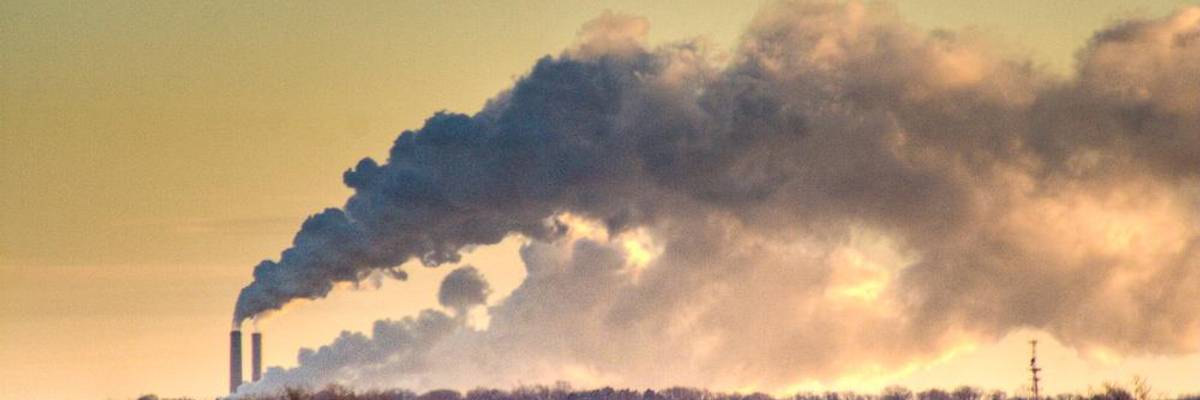
Public advocates say the results of rampant deregulation in recent decades have included the financial crisis of 2008, increased pollution, and fewer protections for workers. (Photo: Mr. Nixter/Flickr/cc)
Public interest groups spoke out Monday about a White House event at which Vice President Mike Pence touted the Trump administration's deregulation efforts. President Donald Trump did not attend the "Cut the Red Tape" event due to the attack in Las Vegas, but the meeting went on as planned with the White House barring the press from the room.
The administration has demonstrated repeatedly since Trump took office in January that it aims to roll back safeguards put in place by the Obama administration in a number of areas. The president announced early in his term that he would offset any new regulation by scrapping two existing regulations. According to an analysis by Reuters, federal agencies have so far taken 25 deregulatory steps, affecting infrastructure projects, the environment, and workers in a wide variety of sectors.
"They've ignored the evidence and put the interests of industry lobbyists over public health and safety."--Andrew Rosenberg, Union of Concerned Scientists
Regarding the climate, in addition to withdrawing from the Paris agreement on climate change, Trump has rolled back President Barack Obama's Clean Power Plan, scrapped his rules limiting water pollution from coal-fired power plants, and reversed a policy banning national parks from selling bottled water.
The Union of Concerned Scientists released a statement on the need for environmental protections like the one Trump has been eliminating. "These critical safeguards were created based on the best available science and public input, but now they're being quickly and carelessly deleted," said Andrew Rosenberg of the group's Center for Science and Democracy. "They've ignored the evidence and put the interests of industry lobbyists over public health and safety. These changes will put Americans at risk, yet the president and vice president see this as an opportunity to take a victory lap."
Pointing to the recent example of a chemical plant explosion in the aftermath of Hurricane Harvey in Texas, Rosenberg added, "The rush to undo these rules has real, damaging consequences. Communities near chemical facilities will have less information about the risks they face--raising the danger to families and first responders in the case of accidents like the recent Arkema explosion in Houston...The vice president may tout it as an accomplishment that the administration has derailed so many public health and safety protections. For the rest of us, though--particularly for low-income neighborhoods and communities of color--this is no victory. It's a willful failure by the administration to do its job protecting Americans."
The American Sustainable Business Council (ASBC) was among those pushing back against the familiar Republican argument that deregulating industries is somehow a cost-saving maneuver.
"Over-regulation was not the problem that led to banks creating the mortgage crisis, that in turn resulted in the loss of 200,000 small businesses and 8.7 million jobs throughout the United States," pointed out Richard Eidlin, co-founder of the ASBC. "The Trump administration's deregulation approach based on the arbitrary benchmark of eliminating 'two existing regulations for every one new regulation' is ill-conceived and will not achieve meaningful regulatory reform. Placing focus solely on the costs of compliance instead of the benefits to society contradicts the goals of many of the laws that enable these regulations."
The government watchdog group Public Citizen called Trump's deregulation agenda a "craven attempt at self-enrichment and payback to corporate donors," adding, "in fact, robust regulation and enforcement are essential to economic prosperity."
Dear Common Dreams reader, It’s been nearly 30 years since I co-founded Common Dreams with my late wife, Lina Newhouser. We had the radical notion that journalism should serve the public good, not corporate profits. It was clear to us from the outset what it would take to build such a project. No paid advertisements. No corporate sponsors. No millionaire publisher telling us what to think or do. Many people said we wouldn't last a year, but we proved those doubters wrong. Together with a tremendous team of journalists and dedicated staff, we built an independent media outlet free from the constraints of profits and corporate control. Our mission has always been simple: To inform. To inspire. To ignite change for the common good. Building Common Dreams was not easy. Our survival was never guaranteed. When you take on the most powerful forces—Wall Street greed, fossil fuel industry destruction, Big Tech lobbyists, and uber-rich oligarchs who have spent billions upon billions rigging the economy and democracy in their favor—the only bulwark you have is supporters who believe in your work. But here’s the urgent message from me today. It's never been this bad out there. And it's never been this hard to keep us going. At the very moment Common Dreams is most needed, the threats we face are intensifying. We need your support now more than ever. We don't accept corporate advertising and never will. We don't have a paywall because we don't think people should be blocked from critical news based on their ability to pay. Everything we do is funded by the donations of readers like you. When everyone does the little they can afford, we are strong. But if that support retreats or dries up, so do we. Will you donate now to make sure Common Dreams not only survives but thrives? —Craig Brown, Co-founder |
Public interest groups spoke out Monday about a White House event at which Vice President Mike Pence touted the Trump administration's deregulation efforts. President Donald Trump did not attend the "Cut the Red Tape" event due to the attack in Las Vegas, but the meeting went on as planned with the White House barring the press from the room.
The administration has demonstrated repeatedly since Trump took office in January that it aims to roll back safeguards put in place by the Obama administration in a number of areas. The president announced early in his term that he would offset any new regulation by scrapping two existing regulations. According to an analysis by Reuters, federal agencies have so far taken 25 deregulatory steps, affecting infrastructure projects, the environment, and workers in a wide variety of sectors.
"They've ignored the evidence and put the interests of industry lobbyists over public health and safety."--Andrew Rosenberg, Union of Concerned Scientists
Regarding the climate, in addition to withdrawing from the Paris agreement on climate change, Trump has rolled back President Barack Obama's Clean Power Plan, scrapped his rules limiting water pollution from coal-fired power plants, and reversed a policy banning national parks from selling bottled water.
The Union of Concerned Scientists released a statement on the need for environmental protections like the one Trump has been eliminating. "These critical safeguards were created based on the best available science and public input, but now they're being quickly and carelessly deleted," said Andrew Rosenberg of the group's Center for Science and Democracy. "They've ignored the evidence and put the interests of industry lobbyists over public health and safety. These changes will put Americans at risk, yet the president and vice president see this as an opportunity to take a victory lap."
Pointing to the recent example of a chemical plant explosion in the aftermath of Hurricane Harvey in Texas, Rosenberg added, "The rush to undo these rules has real, damaging consequences. Communities near chemical facilities will have less information about the risks they face--raising the danger to families and first responders in the case of accidents like the recent Arkema explosion in Houston...The vice president may tout it as an accomplishment that the administration has derailed so many public health and safety protections. For the rest of us, though--particularly for low-income neighborhoods and communities of color--this is no victory. It's a willful failure by the administration to do its job protecting Americans."
The American Sustainable Business Council (ASBC) was among those pushing back against the familiar Republican argument that deregulating industries is somehow a cost-saving maneuver.
"Over-regulation was not the problem that led to banks creating the mortgage crisis, that in turn resulted in the loss of 200,000 small businesses and 8.7 million jobs throughout the United States," pointed out Richard Eidlin, co-founder of the ASBC. "The Trump administration's deregulation approach based on the arbitrary benchmark of eliminating 'two existing regulations for every one new regulation' is ill-conceived and will not achieve meaningful regulatory reform. Placing focus solely on the costs of compliance instead of the benefits to society contradicts the goals of many of the laws that enable these regulations."
The government watchdog group Public Citizen called Trump's deregulation agenda a "craven attempt at self-enrichment and payback to corporate donors," adding, "in fact, robust regulation and enforcement are essential to economic prosperity."
Public interest groups spoke out Monday about a White House event at which Vice President Mike Pence touted the Trump administration's deregulation efforts. President Donald Trump did not attend the "Cut the Red Tape" event due to the attack in Las Vegas, but the meeting went on as planned with the White House barring the press from the room.
The administration has demonstrated repeatedly since Trump took office in January that it aims to roll back safeguards put in place by the Obama administration in a number of areas. The president announced early in his term that he would offset any new regulation by scrapping two existing regulations. According to an analysis by Reuters, federal agencies have so far taken 25 deregulatory steps, affecting infrastructure projects, the environment, and workers in a wide variety of sectors.
"They've ignored the evidence and put the interests of industry lobbyists over public health and safety."--Andrew Rosenberg, Union of Concerned Scientists
Regarding the climate, in addition to withdrawing from the Paris agreement on climate change, Trump has rolled back President Barack Obama's Clean Power Plan, scrapped his rules limiting water pollution from coal-fired power plants, and reversed a policy banning national parks from selling bottled water.
The Union of Concerned Scientists released a statement on the need for environmental protections like the one Trump has been eliminating. "These critical safeguards were created based on the best available science and public input, but now they're being quickly and carelessly deleted," said Andrew Rosenberg of the group's Center for Science and Democracy. "They've ignored the evidence and put the interests of industry lobbyists over public health and safety. These changes will put Americans at risk, yet the president and vice president see this as an opportunity to take a victory lap."
Pointing to the recent example of a chemical plant explosion in the aftermath of Hurricane Harvey in Texas, Rosenberg added, "The rush to undo these rules has real, damaging consequences. Communities near chemical facilities will have less information about the risks they face--raising the danger to families and first responders in the case of accidents like the recent Arkema explosion in Houston...The vice president may tout it as an accomplishment that the administration has derailed so many public health and safety protections. For the rest of us, though--particularly for low-income neighborhoods and communities of color--this is no victory. It's a willful failure by the administration to do its job protecting Americans."
The American Sustainable Business Council (ASBC) was among those pushing back against the familiar Republican argument that deregulating industries is somehow a cost-saving maneuver.
"Over-regulation was not the problem that led to banks creating the mortgage crisis, that in turn resulted in the loss of 200,000 small businesses and 8.7 million jobs throughout the United States," pointed out Richard Eidlin, co-founder of the ASBC. "The Trump administration's deregulation approach based on the arbitrary benchmark of eliminating 'two existing regulations for every one new regulation' is ill-conceived and will not achieve meaningful regulatory reform. Placing focus solely on the costs of compliance instead of the benefits to society contradicts the goals of many of the laws that enable these regulations."
The government watchdog group Public Citizen called Trump's deregulation agenda a "craven attempt at self-enrichment and payback to corporate donors," adding, "in fact, robust regulation and enforcement are essential to economic prosperity."