SUBSCRIBE TO OUR FREE NEWSLETTER
Daily news & progressive opinion—funded by the people, not the corporations—delivered straight to your inbox.
5
#000000
#FFFFFF
To donate by check, phone, or other method, see our More Ways to Give page.
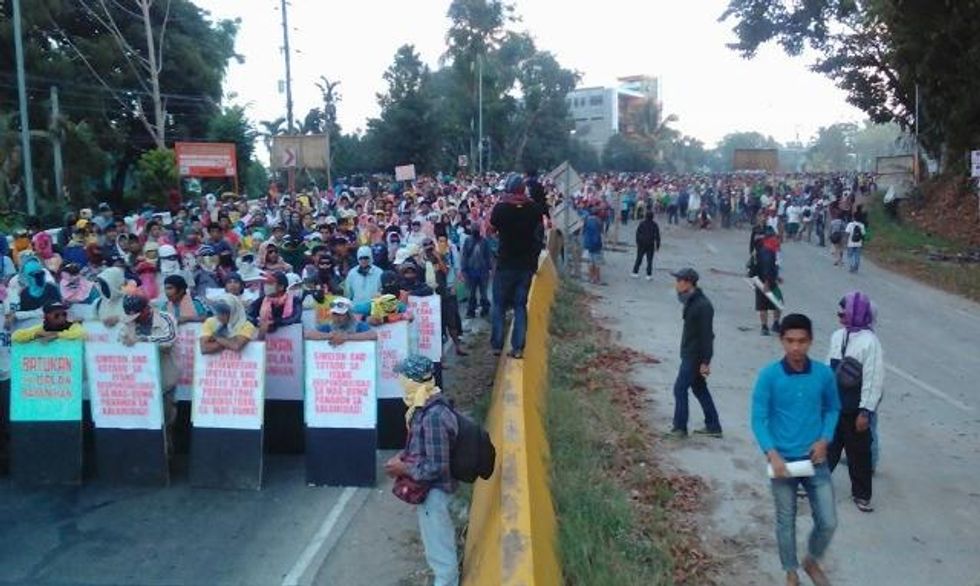
Police and army forces shot at about 6,000 starving farmers and Lumad Indigenous people demonstrating for drought relief in the Philippines on Friday, ultimately killing 10. Observers characterized the security forces' action as "a strafing."
"The government's response to hunger is violence," said Zeph Repollo, Southeast Asia campaign coordinator for 350.org, in an email to Common Dreams.
Three protesters were immediately killed, and by Monday the death toll had risen to 10 as more demonstrators succumbed to injuries.
"We don't have anything to eat or harvest. Our plants wilted. Even our water has dried up."
--Noralyn Laus, demonstrating farmer
The farmers and Indigenous people had been blockading a highway in the Cotabato province for four days in a desperate plea for government aid, after this winter's record-breaking temperatures produced a three-months-long drought that has destroyed their crops and now threatens their lives.
The demonstrators were asking the government to provide 15,000 sacks of rice to ease the hunger crisis. Provincial governor Emmylou Mendoza has refused to engage the protesters.
"The government's policy of systematic land grabbing combined with the intensified El Nino pushed our farmers and indigenous peoples to heighten their struggles with sweat and blood in defense of their right to land and life," wrote Repollo in a statement.
On Monday, local farmer Noralyn Laus gave Democracy Now! a firsthand account of the disaster:
"Why we came down here is not to make trouble. We just want to demand for rice, because of the situation of El Nino is leaving our tribes hungry. What happened yesterday, we didn't start it. They started it by beating us. We wouldn't be angry if we weren't beaten up or attacked. We're having a crisis. We don't have anything to eat or harvest. Our plants wilted. Even our water has dried up."
"Our farmers--the country's food producers--are battered the hardest and are left in poverty and hunger," Rapollo said. "Civil disobedience will continue to escalate until the government stops playing deaf and blind to the genuine cry of the people."
Seventy-eight people were still under arrest on Monday, Rapollo said, and a local Methodist Church is sheltering many protesters who escaped the bullets. Rapollo also reported that no members of the armed forces have been relieved of duty or investigated for Friday's shooting.
The state-sponsored violence in the Philippines portends what turmoil may come as the planet continues to warm, creating more disastrous, extreme weather events worldwide, environmental activists note.
"The conditions that prompted the 3-day blockade gives us a glimpse of what's ahead if decisive and just actions in addressing climate change remain in the periphery," said Repollo.
"This is not a distant reality to anywhere in the world," Repollo wrote to Common Dreams, "unless we change the system that feeds [on] hunger, injustices, and climate catastrophe."
Police and army forces shot at about 6,000 starving farmers and Lumad Indigenous people demonstrating for drought relief in the Philippines on Friday, ultimately killing 10. Observers characterized the security forces' action as "a strafing."
"The government's response to hunger is violence," said Zeph Repollo, Southeast Asia campaign coordinator for 350.org, in an email to Common Dreams.
Three protesters were immediately killed, and by Monday the death toll had risen to 10 as more demonstrators succumbed to injuries.
"We don't have anything to eat or harvest. Our plants wilted. Even our water has dried up."
--Noralyn Laus, demonstrating farmer
The farmers and Indigenous people had been blockading a highway in the Cotabato province for four days in a desperate plea for government aid, after this winter's record-breaking temperatures produced a three-months-long drought that has destroyed their crops and now threatens their lives.
The demonstrators were asking the government to provide 15,000 sacks of rice to ease the hunger crisis. Provincial governor Emmylou Mendoza has refused to engage the protesters.
"The government's policy of systematic land grabbing combined with the intensified El Nino pushed our farmers and indigenous peoples to heighten their struggles with sweat and blood in defense of their right to land and life," wrote Repollo in a statement.
On Monday, local farmer Noralyn Laus gave Democracy Now! a firsthand account of the disaster:
"Why we came down here is not to make trouble. We just want to demand for rice, because of the situation of El Nino is leaving our tribes hungry. What happened yesterday, we didn't start it. They started it by beating us. We wouldn't be angry if we weren't beaten up or attacked. We're having a crisis. We don't have anything to eat or harvest. Our plants wilted. Even our water has dried up."
"Our farmers--the country's food producers--are battered the hardest and are left in poverty and hunger," Rapollo said. "Civil disobedience will continue to escalate until the government stops playing deaf and blind to the genuine cry of the people."
Seventy-eight people were still under arrest on Monday, Rapollo said, and a local Methodist Church is sheltering many protesters who escaped the bullets. Rapollo also reported that no members of the armed forces have been relieved of duty or investigated for Friday's shooting.
The state-sponsored violence in the Philippines portends what turmoil may come as the planet continues to warm, creating more disastrous, extreme weather events worldwide, environmental activists note.
"The conditions that prompted the 3-day blockade gives us a glimpse of what's ahead if decisive and just actions in addressing climate change remain in the periphery," said Repollo.
"This is not a distant reality to anywhere in the world," Repollo wrote to Common Dreams, "unless we change the system that feeds [on] hunger, injustices, and climate catastrophe."
Police and army forces shot at about 6,000 starving farmers and Lumad Indigenous people demonstrating for drought relief in the Philippines on Friday, ultimately killing 10. Observers characterized the security forces' action as "a strafing."
"The government's response to hunger is violence," said Zeph Repollo, Southeast Asia campaign coordinator for 350.org, in an email to Common Dreams.
Three protesters were immediately killed, and by Monday the death toll had risen to 10 as more demonstrators succumbed to injuries.
"We don't have anything to eat or harvest. Our plants wilted. Even our water has dried up."
--Noralyn Laus, demonstrating farmer
The farmers and Indigenous people had been blockading a highway in the Cotabato province for four days in a desperate plea for government aid, after this winter's record-breaking temperatures produced a three-months-long drought that has destroyed their crops and now threatens their lives.
The demonstrators were asking the government to provide 15,000 sacks of rice to ease the hunger crisis. Provincial governor Emmylou Mendoza has refused to engage the protesters.
"The government's policy of systematic land grabbing combined with the intensified El Nino pushed our farmers and indigenous peoples to heighten their struggles with sweat and blood in defense of their right to land and life," wrote Repollo in a statement.
On Monday, local farmer Noralyn Laus gave Democracy Now! a firsthand account of the disaster:
"Why we came down here is not to make trouble. We just want to demand for rice, because of the situation of El Nino is leaving our tribes hungry. What happened yesterday, we didn't start it. They started it by beating us. We wouldn't be angry if we weren't beaten up or attacked. We're having a crisis. We don't have anything to eat or harvest. Our plants wilted. Even our water has dried up."
"Our farmers--the country's food producers--are battered the hardest and are left in poverty and hunger," Rapollo said. "Civil disobedience will continue to escalate until the government stops playing deaf and blind to the genuine cry of the people."
Seventy-eight people were still under arrest on Monday, Rapollo said, and a local Methodist Church is sheltering many protesters who escaped the bullets. Rapollo also reported that no members of the armed forces have been relieved of duty or investigated for Friday's shooting.
The state-sponsored violence in the Philippines portends what turmoil may come as the planet continues to warm, creating more disastrous, extreme weather events worldwide, environmental activists note.
"The conditions that prompted the 3-day blockade gives us a glimpse of what's ahead if decisive and just actions in addressing climate change remain in the periphery," said Repollo.
"This is not a distant reality to anywhere in the world," Repollo wrote to Common Dreams, "unless we change the system that feeds [on] hunger, injustices, and climate catastrophe."