SUBSCRIBE TO OUR FREE NEWSLETTER
Daily news & progressive opinion—funded by the people, not the corporations—delivered straight to your inbox.
5
#000000
#FFFFFF
To donate by check, phone, or other method, see our More Ways to Give page.
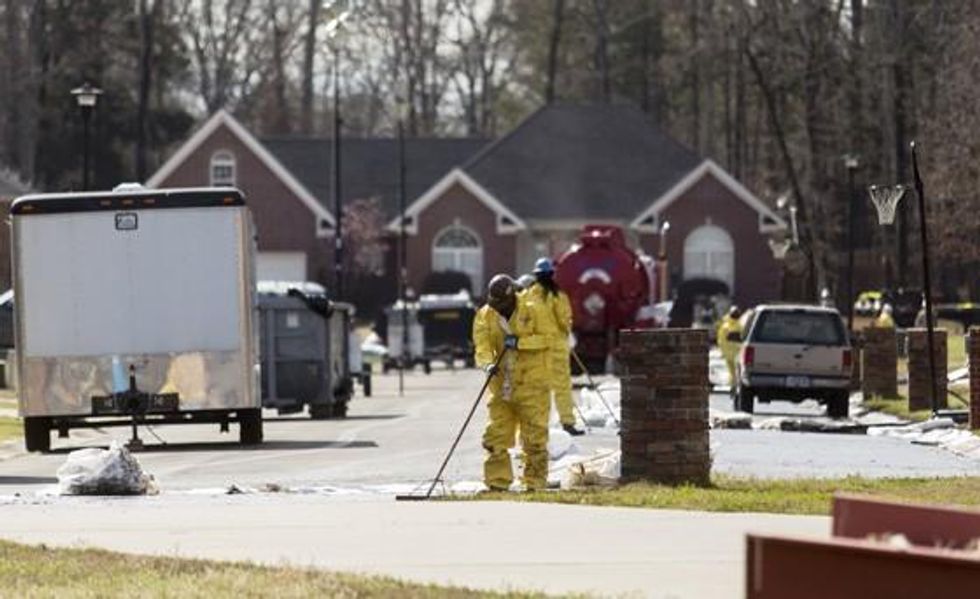
Exxon Mobil on Sunday continued to try to cleanup a major pipeline spill that poured thousands of barrels of heavy Canadian crude into a suburban Arkansas neighborhood Friday as opponents of tar sands oil development pointed to the incident as another reason not to build the Keystone XL line.
The 20-inch 'Pegasus' tar sands pipeline ruptured late Friday near Mayflower, Arkansas, spilling thousands of barrels of oil in what the U.S. Environmental Protection Agency is categorizing as a "major spill." Faulkner County Judge Allen Dodson said the EPA has estimated the spill at 84,000 gallons.
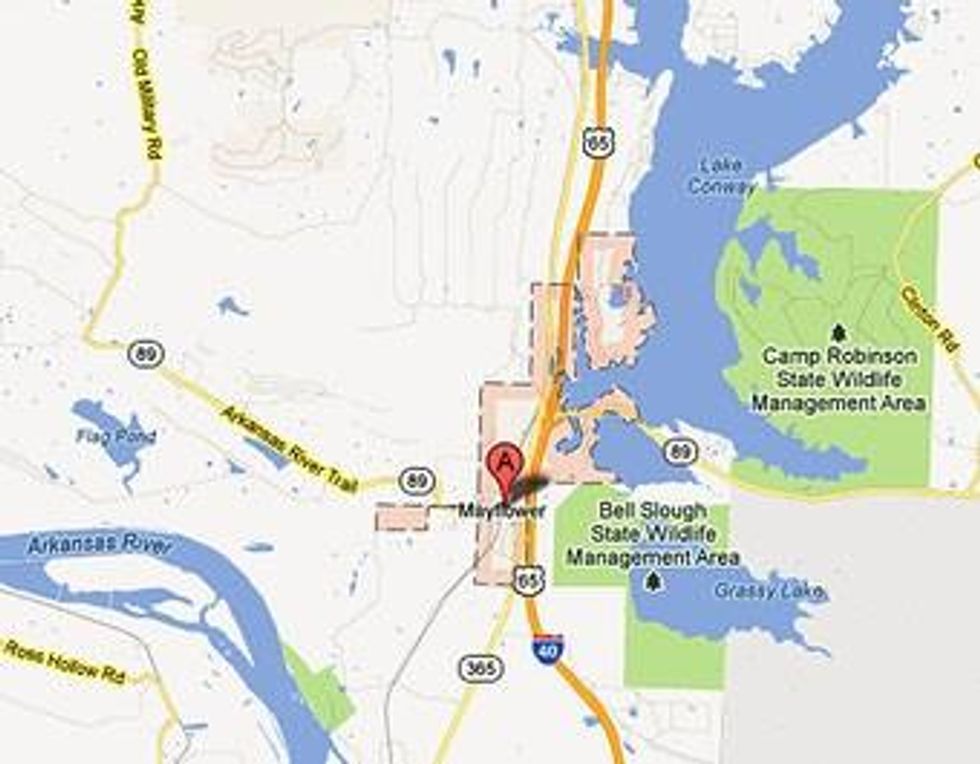
Local police said the line gushed oil for 45 minutes before being stopped, according to media reports. Mayflower police said the oil has not yet reached the nearby Lake Conway. The leak forced the evacuation of 22 homes in a subdivision.
Exxon Mobil said the pipeline was carrying western Canadian Wabasca Heavy crude at the time of the leak. An oil spill of more than 1,000 barrels into a Wisconsin field from an Enbridge pipeline last summer shut down that pipeline for 11 days.
The Arkansas spill drew fast reaction from opponents of the 800,000 barrel per day Keystone XL pipeline, which would carry heavy crude from Canada's tar sands to the U.S. Gulf Coast refining center.
Environmentalists have expressed concerns about the impact of developing the oil sands and say the crude is more corrosive to pipelines than conventional oil. On Wednesday, a train carrying heavy Canadian crude derailed in Minnesota, spilling 15,000 gallons of oil.
"Whether it's the proposed Keystone XL pipeline, or ... (the) mess in Arkansas, Americans are realizing that transporting large amounts of this corrosive and polluting fuel is a bad deal for American taxpayers and for our environment," said Representative Ed Markey, a Massachusetts Democrat.
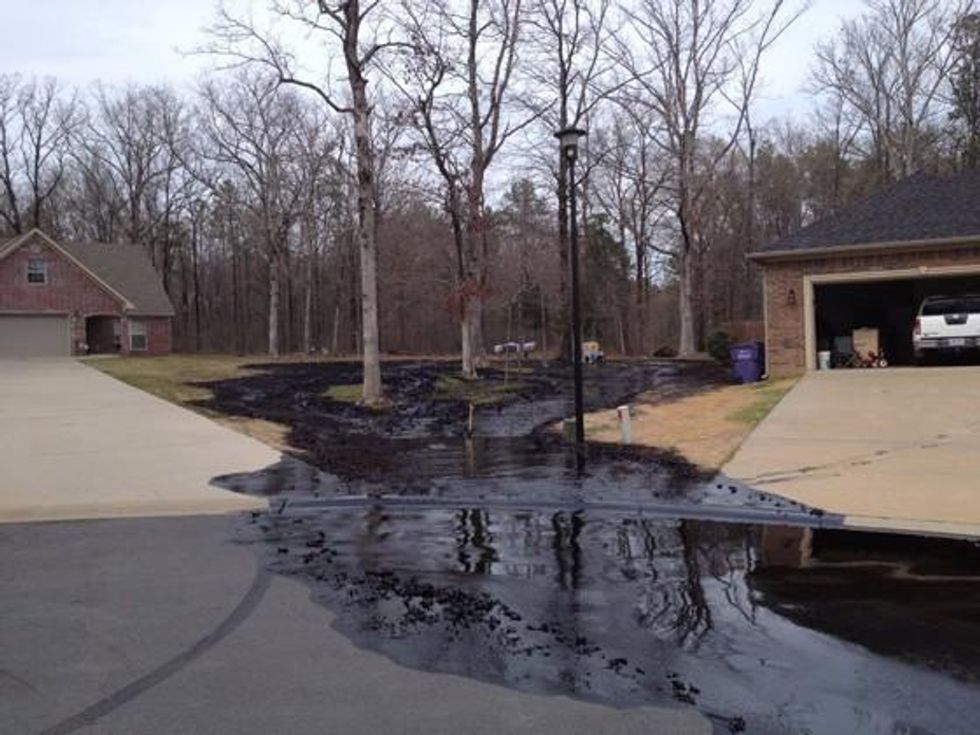
Exxon Mobil on Sunday continued to try to cleanup a major pipeline spill that poured thousands of barrels of heavy Canadian crude into a suburban Arkansas neighborhood Friday as opponents of tar sands oil development pointed to the incident as another reason not to build the Keystone XL line.
The 20-inch 'Pegasus' tar sands pipeline ruptured late Friday near Mayflower, Arkansas, spilling thousands of barrels of oil in what the U.S. Environmental Protection Agency is categorizing as a "major spill." Faulkner County Judge Allen Dodson said the EPA has estimated the spill at 84,000 gallons.
Local police said the line gushed oil for 45 minutes before being stopped, according to media reports. Mayflower police said the oil has not yet reached the nearby Lake Conway. The leak forced the evacuation of 22 homes in a subdivision.
Exxon Mobil said the pipeline was carrying western Canadian Wabasca Heavy crude at the time of the leak. An oil spill of more than 1,000 barrels into a Wisconsin field from an Enbridge pipeline last summer shut down that pipeline for 11 days.
The Arkansas spill drew fast reaction from opponents of the 800,000 barrel per day Keystone XL pipeline, which would carry heavy crude from Canada's tar sands to the U.S. Gulf Coast refining center.
Environmentalists have expressed concerns about the impact of developing the oil sands and say the crude is more corrosive to pipelines than conventional oil. On Wednesday, a train carrying heavy Canadian crude derailed in Minnesota, spilling 15,000 gallons of oil.
"Whether it's the proposed Keystone XL pipeline, or ... (the) mess in Arkansas, Americans are realizing that transporting large amounts of this corrosive and polluting fuel is a bad deal for American taxpayers and for our environment," said Representative Ed Markey, a Massachusetts Democrat.
Exxon Mobil on Sunday continued to try to cleanup a major pipeline spill that poured thousands of barrels of heavy Canadian crude into a suburban Arkansas neighborhood Friday as opponents of tar sands oil development pointed to the incident as another reason not to build the Keystone XL line.
The 20-inch 'Pegasus' tar sands pipeline ruptured late Friday near Mayflower, Arkansas, spilling thousands of barrels of oil in what the U.S. Environmental Protection Agency is categorizing as a "major spill." Faulkner County Judge Allen Dodson said the EPA has estimated the spill at 84,000 gallons.
Local police said the line gushed oil for 45 minutes before being stopped, according to media reports. Mayflower police said the oil has not yet reached the nearby Lake Conway. The leak forced the evacuation of 22 homes in a subdivision.
Exxon Mobil said the pipeline was carrying western Canadian Wabasca Heavy crude at the time of the leak. An oil spill of more than 1,000 barrels into a Wisconsin field from an Enbridge pipeline last summer shut down that pipeline for 11 days.
The Arkansas spill drew fast reaction from opponents of the 800,000 barrel per day Keystone XL pipeline, which would carry heavy crude from Canada's tar sands to the U.S. Gulf Coast refining center.
Environmentalists have expressed concerns about the impact of developing the oil sands and say the crude is more corrosive to pipelines than conventional oil. On Wednesday, a train carrying heavy Canadian crude derailed in Minnesota, spilling 15,000 gallons of oil.
"Whether it's the proposed Keystone XL pipeline, or ... (the) mess in Arkansas, Americans are realizing that transporting large amounts of this corrosive and polluting fuel is a bad deal for American taxpayers and for our environment," said Representative Ed Markey, a Massachusetts Democrat.