

SUBSCRIBE TO OUR FREE NEWSLETTER
Daily news & progressive opinion—funded by the people, not the corporations—delivered straight to your inbox.
5
#000000
#FFFFFF
To donate by check, phone, or other method, see our More Ways to Give page.
Daily news & progressive opinion—funded by the people, not the corporations—delivered straight to your inbox.
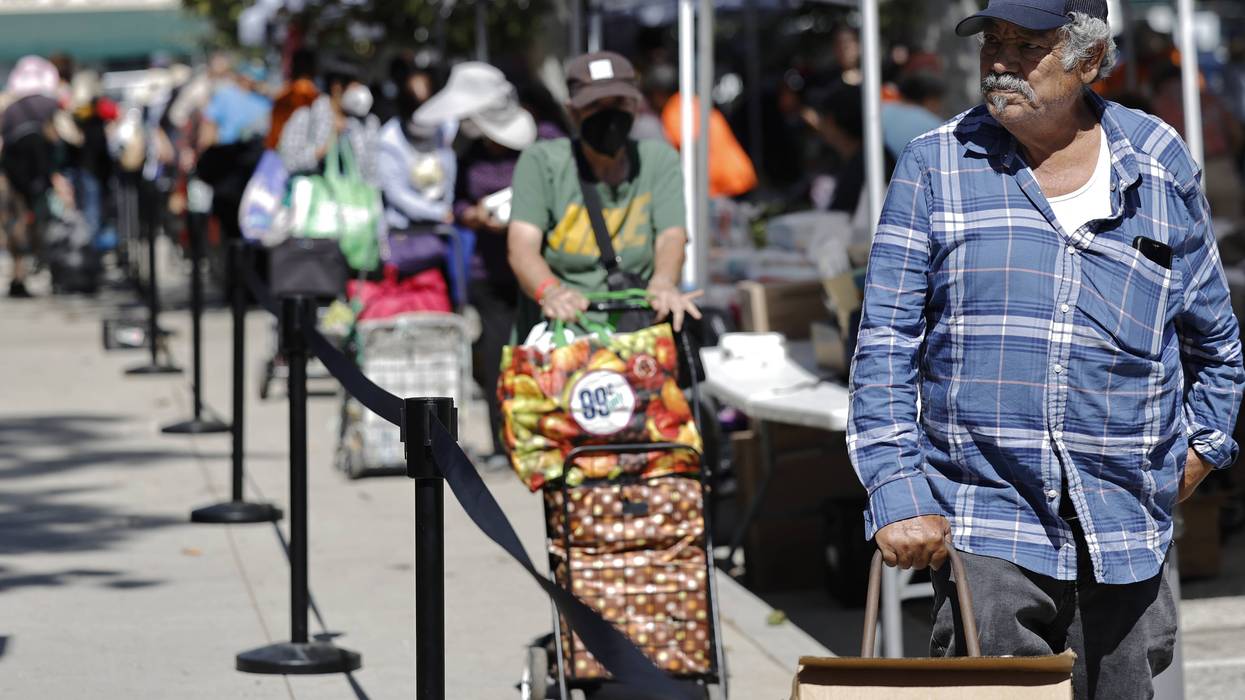
"States are absolutely contemplating a world in which SNAP isn’t available."
Several reports published this week highlight the brutal impact cuts made to the Supplemental Nutrition Assistance Program in Republicans' 2025 budget law are having on Americans' access to food.
A lengthy Tuesday report in The New York Times zeroed in on the bill's impact in Arizona, where roughly 440,000 people have been dropped from the program even though many of them are still eligible to receive assistance.
The GOP-passed One Big Beautiful Bill Act established severe penalties for states that have high error rates when awarding SNAP benefits, and Arizona has responded by vastly increasing the paperwork applicants must file to qualify for the program in order to avoid making mistakes that could result in the loss of federal funding.
According to the Times, this has created "bureaucratic chaos" that has caused many otherwise eligible people to lose aid.
"It can take months to reach besieged caseworkers, and offices have gone as far as asking people with panhandling income for verification from strangers dropping cash in their jar," reported the Times. "Arizonans losing SNAP say they are skipping meals, quarreling over food, and missing rent payments to restock pantry shelves."
One former SNAP beneficiary featured in the Times story was Dee McDonald, a 65-year-old cancer survivor who reported skipping meals to ensure that the three grandsons she's raising have enough to eat.
According to the Times, McDonald has been scrambling from one local food pantry to another to ensure there is enough food in the house for the whole family, a process she told the paper has left her "exhausted."
“I go to sleep thinking about what are we going to have,” McDonald said.
Michael Wisehart, director of the Arizona Department of Economic Security, told the Times that it's "frankly sickening to me the number of individuals" who are suffering due to the bureaucratic hurdles the state is enacting.
However, Wisehart said that if Arizona doesn't add these bureaucratic layers, it could risk seeing its SNAP program completely destroyed.
“It’s an existential threat,” he explained. “States are absolutely contemplating a world in which SNAP isn’t available."
Another state facing this dilemma is Arkansas, which the local news station KATV reported on Monday is scrambling to lower its SNAP error rate that, under new rules, could cost the state $55 million per year.
Keesa Smith-Brantley, executive director of Arkansas Advocates for Children and Families and former deputy director of the Arkansas Department of Human Services, told KATV that the financial penalties imposed on the state could create a downward spiral in which state officials have fewer resources to effectively lower the SNAP error rate.
"It is very concerning that we may not have a SNAP program in years to come if the state can't come up with the funding," said Smith-Brantley.
A Tuesday report in Axios examined how the GOP's SNAP cuts have impacted Virginia, where 100,000 fewer residents are now enrolled in the program compared to a year ago.
Aaron McClung, chief development officer at Feed More, an umbrella organization for food banks in the central part of the state, told Axios that visits to food pantries have increased by more than 20% since the passage of the GOP budget law last year.
While food banks have tried to fill the gap, McClung said, they are no substitute for SNAP, which he described as "the nation's most effective, dignified, and scalable tool for reducing food insecurity."
Jacqueline Mott, Virginia state manager for the Save the Children Action Network, expressed a similar sentiment, telling Axios that "charitable food assistance was never designed to replace SNAP."
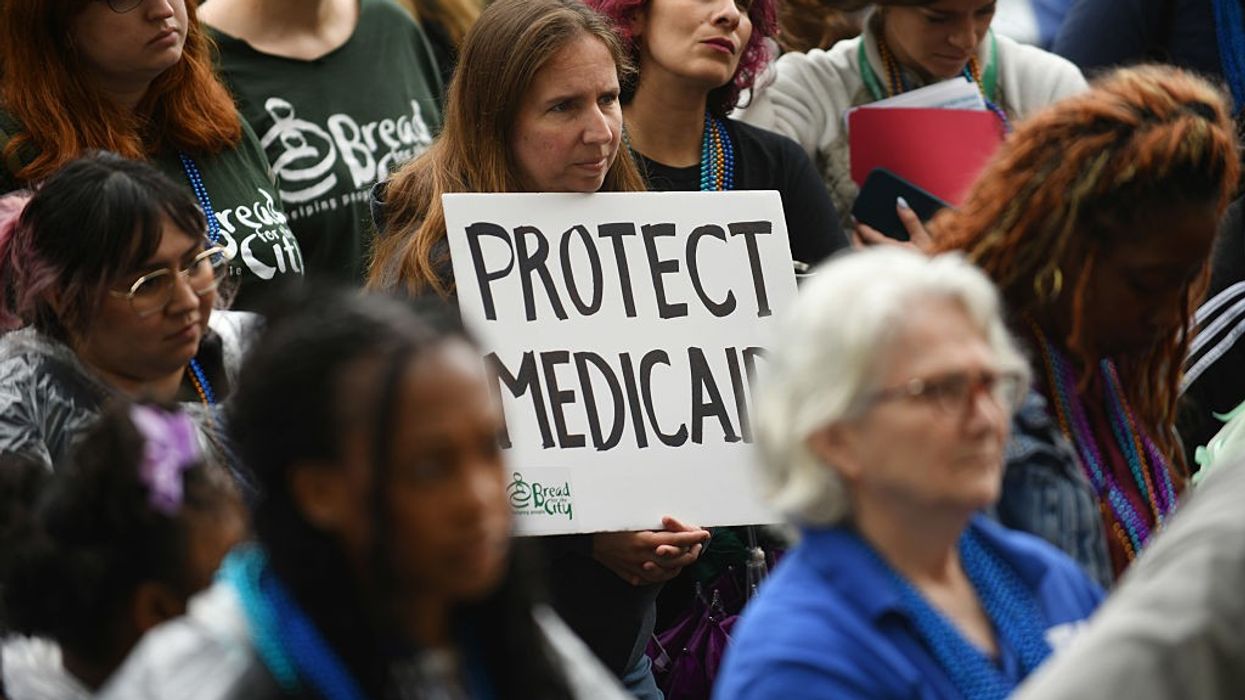
Wishful thinking and wildly unrealistic assumptions will not magically make a horrible policy a good one.
As I noted in an article earlier this month, the Congressional Budget Office (CBO) estimates that the federal government will save $911 billion over 10 years and that 10 million people will lose health insurance as a result of Medicaid changes in H.R.1, aka the One Big Beautiful Bill Act (OBBBA). This bill requires near-poor, able-bodied Medicaid beneficiaries with incomes currently above the poverty line but under thresholds that depend on family size — $22,025 for an individual or $45,360 for a family of four — to navigate a maze of red tape and reporting requirements twice a year to remain enrolled. Disabled people on Medicaid, including those with cancer or end stage renal disease, will have to prove that they are too disabled to work in order to waive the work requirement.
An analysis by health policy organization KFF found that in 2023, 64 percent of adults 19 to 64 years of age enrolled in Medicaid were working either full or part-time. Nearly 30 percent were not working because of caregiving responsibilities, disability or school attendance — barriers to employment that typically exempt people from work requirements in programs that mandate them. Most of the 8 percent who were not working were retired or unemployed. The result is that only a small share of Medicaid enrollees will lose access to the program because they do not meet work requirements. However, many more will lose coverage because of the difficulty of navigating the reporting requirements and the administrative red tape built into the OBBBA for this purpose.
In June 2026, HHS released interim regulations for the changes to Medicaid that states must implement by January 1, 2027. The regulations are much more severe than the requirements in H.R.1, and have upended work that states had already done to be ready to comply by the January 1 deadline. This has forced states to scramble to be ready in just six months, an extraordinarily short window to prepare for the large changes in reporting requirements. Disenrolling people by mistake may mean the difference between life and death for Medicaid enrollees. The rollout of the new work and massively burdensome reporting requirements is likely to be bumpy.
In conjunction with the release of the new eligibility and reporting requirements, the Department of Health and Human Services released a brief, prepared by the Office of the Assistant Secretary for Planning and Evaluation (ASPE), with the Orwellian title, “Medicaid Work Requirements Incentivize Employment and Are Estimated to Reduce Poverty.” The brief’s conclusion that pushing people off the Medicaid rolls will increase employment and reduce poverty is contradicted by an earlier assessment by the Congressional Budget Office (CBO). CBO found that mandating work requirements would decrease what the federal government pays for Medicaid, increase the number of people without health insurance, raise costs for states, and wouldn’t increase employment.
The four-and-a half page ASPE brief has few citations for its assertions about how cutting access to health insurance for poor people will magically produce jobs for those disenrolled from Medicaid. While the authors say they have reviewed three decades of literature on work requirements in social programs, and they have an online bibliography with more than 130 references, they cite only 10 papers in the brief. As NOTUS observes, the researchers that produced the 10 papers cited in the brief are crying foul, claiming that their studies are being misused, and in some cases are being used to support conclusions that are the opposite of what the studies show. In other cases, researchers complain that while the findings of their studies may not be distorted, crucial job search supports for job seekers in their studies that are not available to people facing disenrollment from Medicaid in 2027 are ignored in the ASPE brief.
As noted in a technical analysis of the ASPE brief published in Health Affairs, the brief assumes totally unrealistic employment effects. It considers two scenarios. In the first, all 5.8 million people on Medicaid — who the brief assumes will not meet the new work requirements and are not exempt from them — will increase their work effort. The report does not spell out where the 5.8 million figure comes from, but a back-of-the-envelope calculation suggests it includes about 4.2 million people enrolled in Medicaid who are working part-time and 1.6 million who are retired, unemployed or otherwise not working. The brief assumes that these Medicaid recipients will increase their hours of work at their current wage or at the average wage among similarly educated Medicaid-eligible individuals.
Part-time workers are assumed to increase their hours and those who are not working are assumed to find jobs. Unbelievably, the change in employment participation is assumed to be 100 percent in the first scenario. This is more than 23 times higher than the 4.2 percent increase the ASPE brief authors report for welfare-to-work experiments that, unlike Medicaid work requirements, involved cash assistance and provided people leaving welfare programs with substantial help for finding work.The help included employment services such as transportation and job search assistance and case management services to assist people in meeting work requirements. In the second scenario, the brief’s authors assume that 80 percent of the 5.8 million people they believe will not meet the work requirements will succeed in finding employment. This is a 57 percent increase in participation and is 13 times the welfare-to-work effect.
The reductions in poverty cited in the ASPE brief are not calculated independently, but follow from the entirely unrealistic assumptions about the increases in work participation. The earnings increase on average per family is $16,780 — a result of the built-in employment and wage assumptions. Net of the loss of benefits as their incomes rose, families of Medicaid recipients whose work participation rises experience an increase in resources or $12,034. In the first scenario, this reduces poverty by 2.9 million people; in the second, by 1.6 million.
The ASPE brief omits any mention of the one instance where a state — Arkansas — implemented work requirements in 2018. This is a glaring omission in a report on the effects of work requirements in Medicaid, and suggests the brief’s authors may not have wanted to report the disastrous results of this introduction of work requirements.
The application of work requirements to Medicaid is a new development and there are just a few empirical studies of the Arkansas case. A cutting edge 2026 analysis by Harvard Medical School researcher Yuji Mizushima found that total Medicaid participation declined sharply during the months in which the mandated work requirements were in effect. Mizushima examined two groups of people — those on Medicaid who were disenrolled because they didn’t meet the work requirement, and those in the general population who failed to enroll in Medicaid because of the work requirement. The author found that participation in Medicaid fell by about 28,810 adults — 18,164 who were disenrolled and more than 10,500 who did not apply or reapply for Medicaid. There was no discernible change in the number of hours worked and no increase in employment or in participation in the labor force of the Medicaid population in the months leading up to, during, or following the enforcement of the work mandate. This supports similar findings in research on the Arkansas experience in other studies. A year after Arkansas implemented work requirements, the poor results led a federal judge to pause and later to strike down the work requirement.
The introduction of work requirements in Medicaid in Arkansas during the first Trump administration led to a disastrous decline in access to health insurance for people who had relied on Medicaid for health care, but did not increase hours of work or employment. This stands in direct contradiction to the wishful thinking and wildly unrealistic assumptions embodied in the two scenarios in the ASPE brief, and raises unavoidable questions about why the authors failed to examine the Arkansas experience.
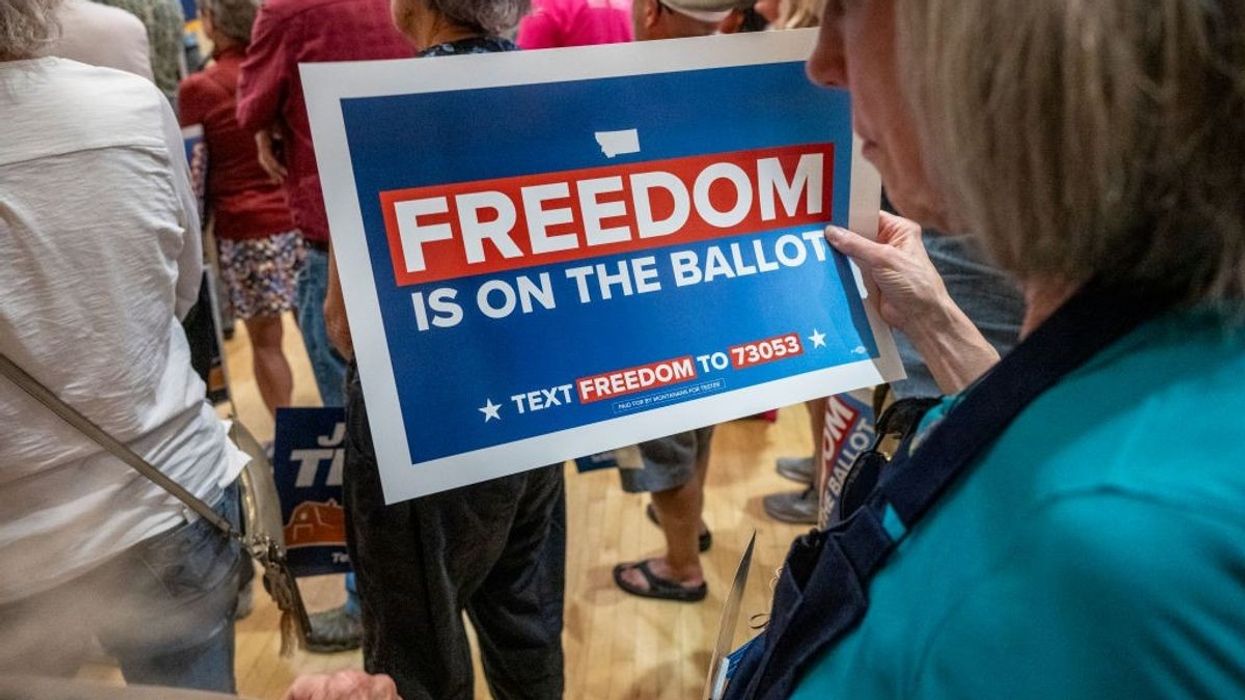
As Missouri House Republicans on Tuesday advanced a congressional map rigged for the GOP and new limits for citizen initiative petitions, an advocacy group that promotes progressive policies via direct democracy revealed that "extremist" legislators across the United States "escalated their efforts to dismantle the ballot measure process in 2025 by 95%."
The Fairness Project has "won 39 ballot measures to raise wages, protect abortion rights, stop predatory payday lenders, expand healthcare access, secure more paid time off, and other life-changing policies for more than 23 million people." The group's new report, Direct Democracy Under Assault, details recent GOP moves to thwart such progress.
"During the 2023 legislative session, 76 bills were introduced that would restrict or undermine the ballot initiative process, which was until then the highest number on record," according to the report. "For further perspective, only 33 ballot measure attack bills were tracked in 2017, and a grand total of 377 bills attacking ballot measure processes were proposed by state legislatures in the 23-year span between 2000 and 2023. To see 148 in a single year, 2025, is an extreme acceleration."
"Lawmakers have not just been toying with the idea of undermining ballot measure processes; they've been passing these attacks into law," the publication emphasizes. "As of June 2025, 51 bills altering the ballot measure process had already passed state houses. For comparison, the annual average of enacted attacks on direct democracy between 2018 and 2023 was 34 enacted bills. Once again, 2025 is a troubling outlier."
"The erosion of our democracy isn't just happening in the Oval Office; it's happening in our home states when politicians attack the ballot measure process."
This year's GOP-led efforts to limit direct democracy at the state level come as Republican US President Donald Trump has returned to power and swiftly engaged in various attacks on democracy, from gutting the federal government—including the voting rights unit at the Department of Justice—to issuing a series of unconstitutional executive orders.
"While citizens are rightfully focused on the horror unfolding in Washington, extremist politicians are taking advantage of the moment and attacking the most powerful tools voters have at their disposal to make their voices heard," said Kelly Hall, the Fairness Project's executive director. "The erosion of our democracy isn't just happening in the Oval Office; it's happening in our home states when politicians attack the ballot measure process and replace the will of the voters with their own political agendas."
State legislators have pursued a range of attacks on the ballot measure process. The report notes that "one common tactic—used in states like Ohio, Missouri, Florida, Arizona, and Arkansas—is raising the threshold for passage to a supermajority, making it harder for citizen-led initiatives to succeed."
"Other strategies include increasing signature requirements, imposing strict rules on how and where signatures can be gathered, limiting what issues a ballot measure can address, and imposing high costs on advocates attempting to use their direct democracy rights," the document continues.
Hall stressed that "this isn't reform; it's a calculated effort to strip voters of their constitutional right to shape policy."
While the project tracked bills across 15 states, the report gives special attention to eight "where especially aggressive efforts threaten to significantly erode voters' access to direct democracy." They are Arkansas, Florida, Missouri, Montana, North Dakota, Oklahoma, South Dakota, and Utah.
In Arkansas, for example, during the 2025 legislative session alone, state lawmakers imposed burdensome rules on local initiatives, "criminalized small mistakes," passed restrictions on ballot language, gave the attorney general veto power over petitions, and more. The report says that "taken together, these laws represent a coordinated and deeply undemocratic
effort to strip power from Arkansas voters and insulate elected officials from direct public accountability."
The League of Women Voters of Arkansas is fighting back, and in April filed a federal lawsuit against eight new laws that David Couch, the plaintiffs' lead attorney, said "weaponize bureaucracy to suppress citizen participation and violate the fundamental rights guaranteed by both the Arkansas and US Constitutions."
There's also litigation in Florida and Oklahoma, while in North Dakota, South Dakota, and Utah, voters will decide next year whether to raise the threshold for future constitutional amendments or citizen-initiated ballot measures from a simple majority to 60%.
"Every voter should be alarmed that politicians are systematically taking away our rights to make change through the ballot," said Hall. "This isn't a time to back down—in fact, these cowardly attacks only underscore the urgent need to defend ballot measures and, by extension, defend our democracy."

The Republican coalition targeted California and New York, both home to doctors who have been targeted by legal cases for allegedly providing abortion pills to patients in states with strict bans.
While a recently filed lawsuit in Texas jeopardizes the future of telehealth abortions, some Republican state attorneys general don't want the GOP-controlled Congress to wait for the results of that case, and this week urged leaders on Capitol Hill to consider passing federal legislation that would restrict doctors from shipping pills to patients to end their pregnancies.
Since the U.S. Supreme Court's right-wing majority ended nationwide abortion rights with Dobbs v. Jackson Women's Health Organization three years ago, anti-choice state lawmakers have ramped up efforts to restrict reproductive freedom. At the same time, some Democratic officials have enacted "shield laws" to protect in-state providers and traveling patients.
Led by Arkansas Attorney General Tim Griffin, 16 state AGs on Tuesday wrote to top congressional leaders from both parties, calling on them to "assess the constitutional authority it may have to preempt shield laws."
Griffin also sent cease-and-desist letters to two entities shipping abortion medication within the United States and two website companies that provide services to LifeOnEasyPills.org. Reporting on the AG's press conference, South Carolina Daily Gazette noted that "if the entities don't cease advertising abortion pills in Arkansas, Griffin said his office may bring a lawsuit against them for violating the state's deceptive trade practices law."
While Griffin also "said he believes what he is asking lawmakers to do is different from a federal abortion ban that the closely divided Congress has seemed hesitant to tackle," according to the Daily Gazette, advocates for reproductive rights disagreed.
Responding to the letter to Congress on social media, the advocacy group Reproductive Freedom for All shared a petition opposing a national abortion ban. It says that Republican President Donald Trump "has proven time and time again that he is out of touch with the 8 in 10 Americans who support protecting abortion rights."
"On the campaign trail he spewed whatever lies he could to get him reelected. Now he'll use the Project 2025 playbook to further restrict our right to access abortion, contraception, fertility treatments, and more," the petition warns. "We must stop him."
Yesterday, 16 Republican attorneys general sent a letter to congressional leadership urging them to override state telemedicine abortion shield laws.Sign the petition below to stand up to Republican lawmakers!act.reproductivefreedomforall.org/a/no-nationa...
[image or embed]
— Reproductive Freedom for All (@reproductivefreedomforall.org) July 30, 2025 at 3:48 PM
In addition to Griffin, the Tuesday letter is signed by the attorneys general of Alabama, Florida, Idaho, Indiana, Iowa, Kansas, Louisiana, Missouri, Nebraska, Oklahoma, South Carolina, South Dakota, Texas, West Virginia, and Wyoming.
The GOP coalition targeted two states, arguing that "when New York or California refuses to respect a criminal prosecution or a civil judgment against an individual who is accused of violating the abortion laws of another state, they are refusing to give full faith and credit to that state's judicial proceedings."
Last December, Texas Attorney General Ken Paxton announced a first-of-its-kind lawsuit against a provider in New York. He sued Dr. Margaret Daley Carpenter, co-founder of the Abortion Coalition for Telemedicine (ACT), for providing two drugs used in medication abortions—mifepristone and misoprostol—to a 20-year-old resident of Collin County.
In February, on the same day that Texas State District Judge Bryan Gantt ordered Carpenter to pay over $100,000 in fines and fees, Louisiana Attorney General Liz Murrill sought to extradite the ACT doctor. Her state classifies mifepristone and misoprostol as dangerous controlled substances.
While Republican Louisiana Gov. Jeff Landry signed the extradition warrant sought by Murrill and the district attorney, New York is one of nearly two dozen states with shield laws for reproductive healthcare, and its Democratic governor, Kathy Hochul, said that "I will not be signing an extradition order that came from the governor of Louisiana—not now, not ever."
On Monday, Paxton took legal action against Taylor Brucka, the clerk in Ulster County, New York, for refusing to make Carpenter pay the $100,000 penalty. Bruck told The Guardian that "it's really unprecedented for a clerk to be in this position" and "I'm just proud to live in a state that has something like the shield law here to protect our healthcare providers from out-of-state proceedings like this."
Meanwhile, another case involving a California doctor emerged in Texas earlier this month: A man filed a wrongful death lawsuit against Dr. Rémy Coeytaux for allegedly mailing to Galveston County medication that his girlfriend used to end her pregnancy. His lawyer is Jonathan Mitchell, an "anti-abortion legal terrorist" who previously served as the state's solicitor general and was the chief architect of its law that entices anti-choice vigilantes with $10,000 bounties to enforce a six-week ban.
Mary Ziegler, an abortion historian and law professor at the University of California, Davis, recently told Mother Jones that "the whole game for Jonathan Mitchell is to get into federal court... both because he wants to shut down doctors in shield law states, like everyone in the anti-abortion movement, and because he wants a federal court to weigh in on the Comstock Act," a dormant 1873 law that criminalized the shipping of "obscene" materials, including abortifacients.
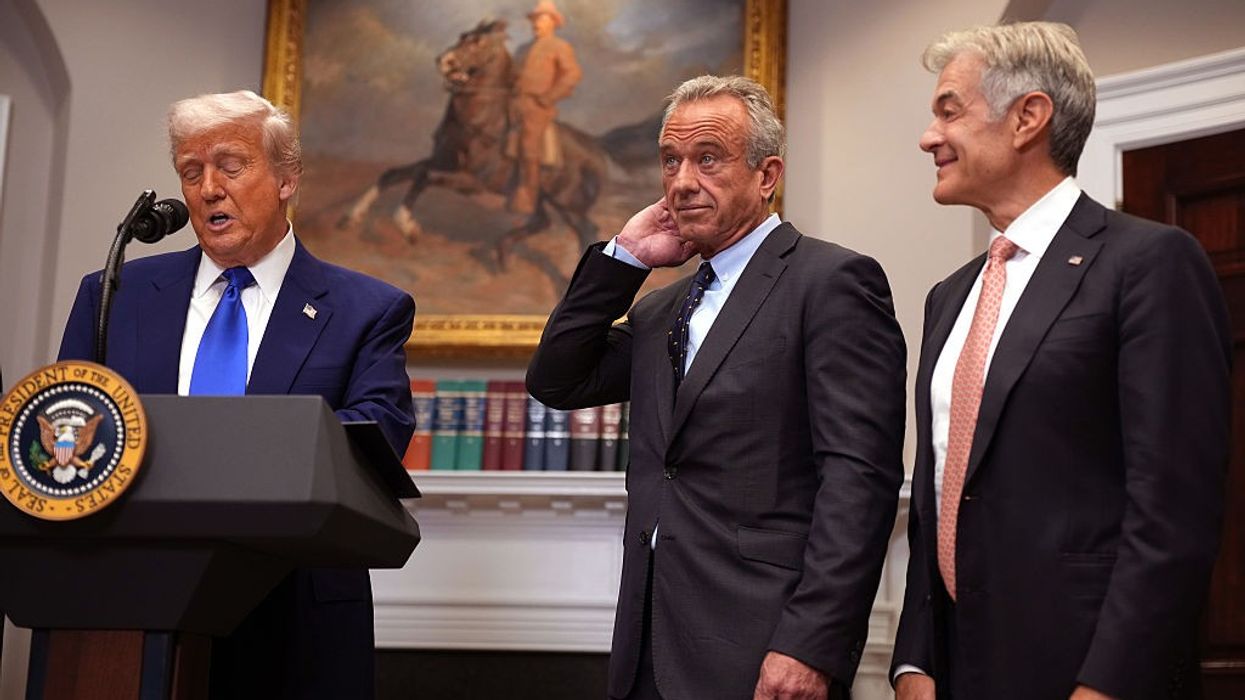
"Washington politicians are ignoring clear data and forcing reporting requirements on working Americans as a cynical ploy to kick working people off their healthcare."
Top Trump administration officials took to the pages of The New York Times on Wednesday to champion the idea of work requirements as Republican lawmakers attempt to impose such mandates on recipients of Medicaid and federal nutrition assistance—an effort that could result in millions losing benefits.
The new op-ed was authored by Health and Human Services Secretary Robert F. Kennedy Jr., Centers for Medicare and Medicaid Services Administrator Mehmet Oz, Agriculture Secretary Brooke Rollins, and Housing and Urban Development Secretary Scott Turner.
The Cabinet members endorsed "efforts to require able-bodied adults (defined as adults who have not been certified as physically or mentally unfit to work), with some exceptions, to get jobs" and urged Congress to "enact common-sense reforms into law."
Alarmingly, the Trump administration officials pointed to Clinton-era welfare reform as a model for "successful" policy change. They neglect to mention that extreme poverty more than doubled in the wake of the 1996 overhaul.
"The good news is that history shows us that work requirements work," the officials wrote.
Research and state-level experiments with work requirements belie that claim. Journalist Bryce Covert noted in response to the administration officials' op-ed that "there have been many, many studies on the impacts of work requirements—both in the 90s and today—and the clear consensus is that they deprive people of benefits without increasing employment."
Kennedy's net worth: $15 million. Oz's net worth: $315 million. Telling the poor they have to work harder for food, housing, and healthcare. www.nytimes.com/2025/05/14/o...
[image or embed]
— Bryce Covert (@brycecovert.bsky.social) May 14, 2025 at 8:45 AM
One study of Arkansas' brief implementation of Medicaid work requirements during the first Trump administration found "no evidence that the policy succeeded in its stated goal of promoting work and instead found substantial evidence of harm to healthcare coverage and access."
A recent review of the literature on Supplemental Nutrition Assistance Program (SNAP) work requirements similarly concluded that "the best evidence shows they do not increase employment."
That didn't stop congressional Republicans from making work requirements a centerpiece of their proposed cuts to Medicaid and SNAP. The GOP's proposed work requirements for Medicaid recipients—most of whom already work if they are able to—account for over $300 billion of the bill's projected spending cuts to the program over the next decade.
The Center on Budget and Policy Priorities (CBPP) said Tuesday that the Republican plans for SNAP and Medicaid would put millions of people at risk of losing benefits, in large part due to the administrative red tape that work requirements and reporting mandates inevitably bring.
The group cited research showing that "many people who lose SNAP are working or should have qualified for an exemption, but the bureaucratic red tape made documenting their employment or proving their exemption too difficult."
On Wednesday, Sen. Raphael Warnock (D-Ga.) released a report examining the impacts of Medicaid work requirements in Arkansas and Georgia.
"These two case studies are a cautionary tale," the report found. "They show that work reporting requirements are not effective. Instead of getting more people working, they simply kick people off their healthcare, many of whom were already working full-time."
In a statement, Warnock said research "shows that the best way to create jobs and grow the economy is to remove bureaucratic red tape that keeps working people from accessing healthcare."
"Instead, Washington politicians are ignoring clear data and forcing reporting requirements on working Americans as a cynical ploy to kick working people off their healthcare," said Warnock. "All of this so they can fund a tax cut for the ultra-wealthy."

"We do not need to—and indeed should not—turn public schools into Sunday schools."
A group of 42 Arkansas faith leaders on Monday called on the General Assembly to reject Republican-led legislation that would force every classroom in the state to display the Ten Commandments and the national motto, "In God We Trust."
"We are faith leaders from across Arkansas who value religious freedom for all. We urge you to vote against S.B. 433, which would require the display of a government-selected version of the Ten Commandments in every classroom of all elementary, secondary, and postsecondary schools and in every other public building or facility maintained with taxpayer funds," a letter to lawmakers signed by the 42 clerics states. The bill was passed by the state Senate on March 19 by a vote of 27-4.
"A government mandate that the Ten Commandments be displayed in all government buildings demeans religious freedom."
State Sen. Jim Dotson (R-34), one of the bill's primary sponsors, called the Ten Commandments "a historical reference point... that has basic things like you shall not kill, steal, commit adultery, those basic foundations of life that is good for everybody to keep front of mind so that we are hopefully living good lives."
However, the faith leaders—41 Christians and one Jew—said that "S.B. 433 is a misguided effort that undermines the faith and freedom we cherish."
"A government mandate that the Ten Commandments be displayed in all government buildings demeans religious freedom," their letter asserts. "The government oversteps its authority when it dictates an official state-approved version of any religious text. The government must respect the rights of individuals and faith communities to make decisions about the sacred texts that inform our religious understandings and practices."
"We do not need to—and indeed should not—turn public schools into Sunday schools," the signers continued. "We remain steadfast and united in affirming the values of religious freedom that are foundational to our democracy and will continue to push back against attempts to impose a singular religious viewpoint into our public institutions."
"Finally, we recognize that the Ten Commandments hold no religious meaning for thousands of Arkansans," the letter acknowledges. "The Ten Commandments are held in a different light for Arkansans who are Muslim, Hindu, Buddhist, Sikh, Unitarian Universalist, or who practice other religions or no religion at all."
Rev. Brittany Stillwell, associate pastor with students and families at Second Baptist Church in Little Rock, said in a statement that "as a Christian, I understand the Ten Commandments as holy and worthy of contemplation and I take them very seriously."
"They do not, however, belong in schools and other public spaces as a kitschy symbol of a shallow faith," she added. "I don't want the students I pastor to become desensitized to the holiness and reverence they are due. Religious liberty protects scripture from the whims of the government so that it might remain the elevated word from God we hold so dear."
Cooperative Baptist Fellowship director of advocacy Rev. Jennifer Hawks said that "growing up, I spent Easter weekends at my family's homestead in Bearden. My Arkansas aunts, uncles, and cousins played a crucial role in my spiritual formation and never needed the government to define for them Christian teachings or practices."
"When the state writes a CliffsNotes version of a religious text and mandates its use, we all lose," Hawks added, referring to the once-ubiquitous series of student study guides. "The state should not waste time trying to usurp our families and religious institutions. Leave religious instruction to us and don't turn public schools into Sunday schools."
Other Republican-controlled state legislatures have passed or introduced bills requiring the posting of the Ten Commandments in schools or other government buildings. Last year, Louisiana became the only state to fully enact such legislation. However, last November, a federal judge blocked the law, calling it "unconstitutional on its face and in all applications."
Groups including the ACLU and Freedom From Religion Foundation oppose such bills, and faith leaders in other states including Missouri and Texas have also urged lawmakers to reject bills similar to Arkansas' S.B. 433.
While campaigning last year, U.S. President Donald Trump—who critics say has violated at least half of the commandments—expressed support for mandatory classroom display of the divine dicta.
In June 2017, a Ten Commandments monument was installed on the grounds of the Arkansas State Capitol. A day later, Michael Tate Reed II drove his car into the granite slab, destroying it. The monument was rebuilt with concrete bollards added for protection. Reed—who hads previously wrecked a similar monument at Oklahoma's Capitol—was later acquitted on mental health grounds.
In response to the Arkansas monument, the Satanic Temple fought for and won the right to install a statue of Baphomet, a goat-headed, winged being, on the state Capitol grounds. The statue—which contains two children fawning over Baphomet—was unveiled in 2018.
"If you're going to have one religious monument up then it should be open to others," Satanic Arkansas co-founder Ivy Forrester
said at the time, "and if you don't agree with that then let's just not have any at all."

"The court has safeguarded the right of every Arkansan to access ideas and information without fear of censorship or prosecution," said the ACLU of Arkansas legal director.
In a blow to right-wing efforts to ban books and criminalize librarians, a federal judge on Monday struck down key provisions of an Arkansas law as unconstitutional—though the fight is far from over, with the Republican state attorney general planning to appeal.
Republican Gov. Sarah Huckabee Sanders signed Act 372 in March 2023. A few months later, U.S. District Judge Timothy Brooks temporarily blocked implementation of Sections 1 and 5 of the law—and on Monday, he ruled against them in a 37-page order.
Section 1 threatened Arkansas librarians and booksellers with up to a year in jail for providing minors with access to "harmful" materials. Brooks wrote that "if the General Assembly's purpose in passing Section 1 was to protect younger minors from accessing inappropriate sexual content in libraries and bookstores, the law will only achieve that end at the expense of everyone else's First Amendment rights."
"The law deputizes librarians and booksellers as the agents of censorship; when motivated by the fear of jail time, it is likely they will shelve only books fit for young children and segregate or discard the rest. For these reasons, Section 1 is unconstitutionally overbroad," added the judge, who also found the provision "unconstitutionally vague."
Section 5 created a process for challenging books in public libraries that critics called burdensome. Brooks found the provision unconstitutional because it is problematically vague and "unnecessarily imposes content-based restrictions on protected speech."
The state's Republican leaders plan to keep pushing for the law. Arkansas Attorney General Tim Griffin said in a statement to The Associated Press that "I respect the court's ruling and will appeal," and Huckabee Sanders vowed to work with him on that effort.
"This victory over totalitarianism is a testament to the courage of librarians, booksellers, and readers who refused to bow to intimidation."
Meanwhile, the broad coalition that took on Act 372—including booksellers, librarians, patrons, and professional associations—celebrated their latest legal victory, which comes as right-wing policymakers in other states work to force through similar policies.
"This was an attempt to 'thought police,' and this victory over totalitarianism is a testament to the courage of librarians, booksellers, and readers who refused to bow to intimidation," ACLU of Arkansas executive director Holly Dickson said in a statement. "Arkansans deserve a state where intellectual freedom thrives, and this ruling ensures that libraries remain sanctuaries for learning and exchange of ideas and information."
John Williams, the group's legal director, declared that "this ruling reaffirms what we have said all along—Act 372 is a dangerous and unconstitutional attack on free expression."
"Our libraries and bookstores are critical spaces for learning, exploration, and connection," Williams added. "By striking down these provisions, the court has safeguarded the right of every Arkansan to access ideas and information without fear of censorship or prosecution."
Democracy Forward also represented some members of the coalition battling the law, including the Arkansas Library Association.
"Laws like Arkansas' that seek to threaten librarians and booksellers with jail simply for doing their job are dangerous for people, communities, and our democracy," said Democracy Forward president and CEO Skye Perryman in a statement. "Our team is honored to represent librarians in Arkansas to stop this attempt to impede the freedom to read and we will meet further attempts in Arkansas and elsewhere with legal challenge."
Leaders of the American Booksellers Association, Association of American Publishers, Authors Guild, Freedom to Read Foundation, Comic Book Legal Defense Fund, WordsWorth Books, Pearl's Books, and WordsWorth Books said in a joint statement that "together with librarians, authors, publishers, booksellers, and readers everywhere, we applaud the court's carefully crafted decision upholding the constitutional right to access books."

"This effort has generated a wave of fiercely engaged Arkansas women," said one organizer. "We are outraged. We will not back down. And we will remember this in November."
Abortion rights defenders in Arkansas said Thursday it was "a dark day" after the state's Supreme Court ruled a ballot measure that would enshrine stronger reproductive rights protections for people in the state was ineligible for November election ballots.
The court ruled 4-3 in favor of arguments presented by Republican officials including Secretary of State John Thurston and Attorney General Tim Griffin, who said organizers with Arkansans for Limited Government (AFLG)—which submitted more than 101,000 signatures to secure the amendment for the ballot—had failed to correctly submit paperwork verifying that paid canvassers had been properly trained.
AFLG strategy director Rebecca Bobrow expressed agreement with Justice Karen Baker's dissent, which accused Thurston of making up statutory requirements "out of whole cloth" and of being "determined to keep this particular vote from the people" at all costs.
AFLG proposed an amendment that would have allowed people in Arkansas to obtain abortion care up to 18 weeks after fertilization, with additional exceptions for incest, rape, and fetal anomalies that would make it impossible for a fetus to survive after birth. Arkansas currently has one of the strictest abortion bans in the U.S., with abortion care allowed only in medical emergencies.
When Thurston rejected the group's petition last month, saying it had failed to submit an official statement regarding the training of its paid canvassers, AFLG sued to force the state to count all the signatures, which surpassed the 90,704 that were needed for the ballot initiative to be approved.
About 14,000 of the group's signatures were collected by paid canvassers, so the number of signatures gathered by unpaid volunteers—87,675—fell below the threshold.
As the Arkansas Times reported, the secretary of state's handbook on petitions states that an affidavit certifying that canvassers received training is a requirement for submitting petitions—but the three dissenting justices on Thursday wrote "that the actual statutory language appears to show that the paperwork oversight should not be fatal to the group's effort. And the handbook cannot overrule the law."
"Despite collecting signatures from more than 100,000 Arkansans—and despite the fact that the plain language of the statutes appeared to show that the review process for the petition should have continued—the court ruled that paperwork omission was fatal to the group's effort," wrote David Ramsey and Matt Campbell at the Arkansas Times. "For those following the case, this has always been the fear: Even if the law was on their side, the majority of the court opposes abortion. Ultimately the law is what the Supreme Court says it is. Among the grab-bag of flimsy arguments offered by Attorney General Tim Griffin, they found a couple they could stretch to suit the purpose of disqualifying the abortion petition."
Baker wrote in her dissent that "the majority has succeeded in its efforts to change the law in order to deprive the voters of the opportunity to vote on this issue, which is not the proper role of this court."
Compared to other ballot initiatives, she added, Thurston and the court's right-wing majority treated the abortion right amendment "differently for the sole purpose of preventing the people from voting on this issue."
Ramsey and Campbell wrote that AFLG could theoretically file a lawsuit in federal court challenging the ruling.
"But for procedural and timing reasons, that is extremely unlikely to help," they wrote. "In all likelihood, it's over: Citizens will not have the opportunity to vote to restore abortion rights in November."
Arkansas state Sen. Greg Leding (D-30) called the ruling "maddening and heartbreaking" and urged voters to consider abortion rights when they cast their ballots in November, regardless of whether the amendment is on ballots.
Bobrow told supporters that AFLG's fight "isn't over" despite the "infuriating" decision.
"We can't—and won't—rest until Arkansas women have access to safe, standard healthcare and the autonomy to make decisions about their bodies free from governmental interference," said Bobrow. "This effort has generated a wave of fiercely engaged Arkansas women. We are outraged. We will not back down. And we will remember this in November."

The limited ruling was called "a good start" by one pro-democracy group, as advocates hope to include an abortion rights amendment on November ballots.
Abortion rights advocates in Arkansas were cautiously optimistic Tuesday evening that the state government would count the signatures of more than 100,000 residents who signed petitions in support of an anti-forced pregnancy constitutional amendment, after the Arkansas Supreme Court issued a limited order calling on the secretary of state to begin the process.
Secretary of State John Thurston, a Republican, moved earlier this month to disqualify the petition that advocates had spent months gathering signatures for, claiming organizers had failed to provide information about paid signature-gatherers who had worked on the campaign run by Arkansans for Limited Government (AFLG).
On Tuesday evening, the court ruled that Thurston must begin "the initial count of signatures collected by volunteer canvassers according to A.C.A. 7-9-126(a)," but said nothing about whether signatures gathered by paid workers needed to be counted.
The order did not indicate whether Thurston is required to begin the second stage of the tallying process, in which his team would verify that the signatures are accurate and belong to Arkansas voters.
That stage would begin a "cure" period during which AFLG would be allowed to continue collecting signatures.
"We are heartened by this outcome, which honors the constitutional rights of Arkansans to participate in direct democracy."
AFLG turned in more than 101,000 signatures in time for the July 5 deadline, including an estimated 87,382 that were collected by volunteers and 14,143 gathered by paid workers, according to the Arkansas Times.
The state requires a petition for a constitutional amendment to have at least 90,704 signatures to qualify for the November election ballots—so if Thurston is required to count only the signatures collected by volunteers and does not have to initiate the cure period, AFLG's petition may fall short.
The state Supreme Court did leave open the possibility of an additional ruling on the matter, saying the panel "reserves the right to issue further orders and proceed in accordance with state law."
Despite the uncertainty, AFLG said in a statement that "the will of the people won" this round of the fight to ensure Arkansas residents can vote for abortion rights in November.
"On behalf of 101,000 Arkansas voters, 800 volunteers, and the AFLG team, we thank the court for upholding democracy in Arkansas," said the group. "We are heartened by this outcome, which honors the constitutional rights of Arkansans to participate in direct democracy, the voices of 101,000 Arkansas voters who signed the petition, and the work of hundreds of volunteers across the state who poured themselves into this effort."
The amendment proposed by AFLG would state that the Arkansas government "shall not prohibit, penalize, delay, or restrict abortion services within 18 weeks of fertilization" or in the cases of rape, incest, or "fatal fetal anomaly."
The pro-democracy group For AR People said the court's ruling was "a good start" and noted that at least three of the court's seven judges—Justices Courtney Hudson and Karen Baker and Chief Justice Dan Kemp—seemed "favorable to AFLG's arguments" that the count, the verification process, and the cure period should commence.
Matt Campbell of the Arkansas Times pointed out that AFLG could legally continue gathering signatures as they would during the cure period, before one officially begins.
"Just because a cure period was not explicitly granted doesn't mean AFLG cannot currently be gathering signatures," said Campbell. "The cure period just officially starts the clock, but signatures can be collected before that clock starts and still be valid."
AFLG said that although the matter is not entirely resolved, the court's decision was "reflective of our state motto: 'The People Rule.'"
"We look forward to that principle guiding the rest of the signature verification process," the group said.

"We will not back down," organizers of the initiative said in response to Republican Secretary of State John Thurston.
Reproductive rights advocates responded with outrage and vowed to fight after Arkansas' top election official on Wednesday moved to disqualify a proposed ballot initiative that—if approved by voters—would enshrine abortion access in the state's constitution.
Arkansans for Limited Government (ALG), the group behind the proposed constitutional amendment, refuted Republican Secretary of State John Thurston's claim that organizers failed to provide the state with a list of all paid canvassers who worked to gather petition signatures for the ballot measure, along with other required materials.
"We worked with the secretary of state's office during every step of the process to ensure that we followed all rules and regulations," ALG said in a statement responding to Thurston's letter to the group on Wednesday. "At multiple junctures—including on July 5 inside of the Capitol Building—we discussed signature submission requirements with the secretary of state's staff. In fact, the secretary of state's office supplied us with the affidavit paperwork, which we used. Until today, we had no reason not to trust that the paperwork they supplied us was correct and complete."
"The secretary of state, and the public, knows that we provided the state with a list of our paid canvassers and all of the required information associated with their employment," ALG added. "They know this because the list we provided to the secretary of state was FOIA'd and released by our opposition in an attempt to intimidate our supporters. Asserting now that we didn't provide required documentation regarding paid canvassers is absurd and demonstrably, undeniably incorrect."
Thurston claimed in his letter—which was immediately praised by anti-abortion lawmakers—that his staff counted 14,143 signatures gathered by paid canvassers, signatures that the official says should be tossed due to ALG's supposed failure to provide the state with a list of the canvassers.
If the 14,143 signatures collected by paid canvassers are subtracted from the 101,525 total signatures gathered by organizers, the abortion rights campaign would be left with 87,382 signatures. That's just over 3,300 short of the number required for a measure to appear on ballots in the GOP-led state, where abortion is almost completely banned.
"We will fight this ridiculous disqualification attempt with everything we have."
The proposed constitutional amendment, which would require just a simple-majority vote to pass, states that Arkansas officials "shall not prohibit, penalize, delay, or restrict abortion services within 18 weeks of fertilization" or in the cases of rape, incest, or "fatal fetal anomaly." Other state ballot initiatives that—unlike Arkansas'—have received support from national reproductive rights groups would protect abortion access up to 24 weeks.
ALG—whose name, according to The New York Times, represents "a bid to appeal to the state's libertarians and centrists"—said late Wednesday that "Arkansas law does not empower the secretary of state to make an unfounded legal interpretation, which is what he did today by summarily declaring that we have not completed the steps for qualification."
"We are owed a period to provide a hard copy of the statement, which has been emailed to their office more than a dozen times, if that is what's needed," the group said. "More than 101,000 Arkansans participated in this heroic act of direct democracy and stood up to loudly proclaim their support for access to healthcare. They deserve better than a state government that seeks to silence them."
"We will fight this ridiculous disqualification attempt with everything we have," ALG added. "We will not back down."
Arkansas is one of nearly a dozen states where an abortion rights initiative could be on the ballot in November.
Since the U.S. Supreme Court overturned Roe v. Wade in 2022, abortion rights have won every time they've been on the ballot directly—even in reliably red states such as Kansas and Kentucky.
That winning streak has intensified right-wing efforts to prevent abortion rights initiatives from making it to the ballot.
The Associated Press reported last month that tactics employed by anti-abortion groups and their GOP allies "include attempts to get signatures removed from initiative petitions, legislative pushes for competing ballot measures that could confuse voters, and monthslong delays caused by lawsuits over ballot initiative language."
"In South Dakota, lawmakers passed a bill allowing residents to withdraw their signatures on citizen-led petitions. This launched a comprehensive effort by anti-abortion groups to invalidate a proposed abortion rights ballot measure by encouraging endorsers to withdraw signatures," AP noted. "Meanwhile, opposition groups in Arizona, Colorado, Florida, and Nebraska have tried to create their own ballot amendments to codify existing abortion restrictions, though these efforts failed to gather enough signatures in Florida and Colorado."
In Arkansas, as The American Prospect's Gabrielle Gurley wrote Thursday, "canvassers had obtained almost 11,000 more signatures than state law required in 53 counties" even in the face of "verbal threats and doxxing that some of these activists had endured from abortion opponents."
"The campaign waged by the measure's opponents had featured all sorts of attempts to intimidate canvassers," Gurley added. "Opponents of the amendment had used the state's FOIA laws to find the addresses of the paid signature-gathers (ironically, a concurrent signature-gathering campaign to enshrine FOIA in the state constitution failed). Some canvassers were followed on their routes. One Little Rock police officer told canvassers that an order to move them off a public area where a food distribution was underway came from Republican Gov. Sarah Huckabee Sanders."