SUBSCRIBE TO OUR FREE NEWSLETTER
Daily news & progressive opinion—funded by the people, not the corporations—delivered straight to your inbox.
5
#000000
#FFFFFF
To donate by check, phone, or other method, see our More Ways to Give page.
Daily news & progressive opinion—funded by the people, not the corporations—delivered straight to your inbox.
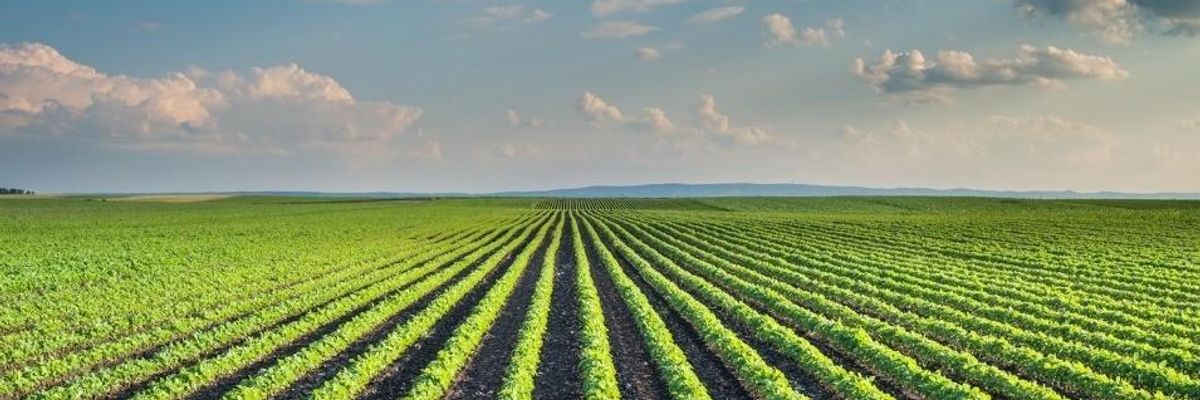
"Agroecology is the only solution we have to address the multiple crises we are facing." (Photo: Public domain)
The Climate Action Summit at the UN last month was widely considered a disappointment, failing to garner the kinds of government actions needed to address the climate crisis. Sadly, the same can be said for actions on agriculture and climate change, despite a well-publicized commitment of $790 million to "to enhance resilience of over 300 million small-scale food producers in the face of mounting climate impacts."
That is not because the investment isn't needed. It is, desperately. Small-scale farmers in developing countries are already bearing the brunt of climate change yet they have received little of the promised funding to help them adapt to drought, flooding, heat, and other climate changes.
These new initiatives won't bridge that gap. Just as government actions to date are proving far too weak to address the climate emergency, these agriculture programs support familiar measures that have thus far failed to help small-scale farmers. Some measures have left them even more vulnerable to climate change.
Many recognized that business as usual, in the face of climate change, is not an option. They moved beyond the failed policies of the present, endorsing agroecology as the kind of innovation farmers need to adapt to a rapidly changing climate. We need a more decisive shift. Fortunately, government leaders took a major step in that direction gather in Rome next last week at for a different summit, the annual meetings of the UN Committee on World Food Security (CFS). They will be discussing approved an expert report on agroecology, an innovative and cost-effective way a more promising innovation to address rising hunger and malnutrition while helping farmers adapt to climate change. A host of recent UN reports calls for just this sort of break.
"Agroecology is the only solution we have to address the multiple crises we are facing," said Aisha Ali Aii Shatou of the Alliance for Food Sovereignty in Africa to the government representatives at the summit.
When the solutions are part of the problem
The new $790-million agriculture initiative is driven by recommendations from the Global Commission on Adaptation (CGA), which is co-chaired by Bill Gates, former UN Secretary General Ban Ki-moon, and World Bank CEO Kristalina Georgieva. Its report, "Adapt Now: A Global Call for Leadership on Climate Resilience," has as one of its core initiatives enhancing the resilience of smallholder producers.
Unfortunately, the Commission largely doubles down on the misguided effort to "modernize" agriculture in developing countries by encouraging farmers to adopt precisely the sorts of fossil-fuel-intensive practices that have made agriculture one of the greatest contributors to global greenhouse-gas emissions. As I saw in researching my book, Eating Tomorrow, crop diversity and soil fertility often decline as a result.
In its recommendations, the commission includes agroecology only as an afterthought, warning that we need to improve "the evidence-base for the effectiveness of adopting different agroecological approaches" - as if we don't know enough yet to act.
They clearly hadn't read the new expert report on agroecology and other innovations for sustainable food systems, released July 3 by the CFS's High Level Panel of Experts. The expert report, two years in the making, is clear on the urgent need for change. "Food systems are at a crossroads. Profound transformation is needed," the summary begins. It goes on to present a wide range of evidence that such methods have been shown to simultaneously increase soil fertility, diet diversity, and food security for small-scale farmers.
Agroecology promotes just the kinds of soil-building practices that "agricultural modernization" often undermines. Multiple food crops are grown in the same field. Compost and manure, not fossil-fuel-based fertilizer, are used to fertilize fields. Biological pest control decreases pesticide use. Researchers work with farmers to improve the productivity of their seeds rather than replacing them with commercial seeds farmers need to buy every year and douse with fertilizer to make them grow. As the expert report documents, soil fertility increases over time, and so do food security and climate resilience.
Agroecology: a proven response to the failing policies of the present
The growing global interest in agroecology comes in response to the widespread failures of input-intensive programs like the Gates-inspired Alliance for a Green Revolution in Africa (AGRA). Fed by heavy doses of government subsidies for commercial seeds and synthetic fertilizers, AGRA has promoted monocultures of a few staple crops, decreased crop and diet diversity, undermined soil fertility, and produced disappointing gains in productivity and farmer incomes. Global Hunger Index scores remained in the "serious" to "alarming" category for 12 of the 13 AGRA countries.
The Intergovernmental Panel on Climate Change, in its influential report on "Climate Change and Land," echoed the urgent need for change and the direction that change should take: "[I]ncreasing the resilience of the food system through agroecology and diversification is an effective way to achieve climate change adaptation...."
Fortunately, in Rome government leaders were forward-looking. Many recognized that business as usual, in the face of climate change, is not an option. They moved beyond the failed policies of the present, endorsing agroecology as the kind of innovation farmers need to adapt to a rapidly changing climate.
As African farmer Aisha Ali Aii Shatou told the summit, "Agroecology allows small-scale producers a dignified life, producing affordable, healthy food in healthy conditions. It eliminates dependence on costly inputs and adopts practices which regenerate seeds and soils while mitigating and adapting to the effects of climate change."
The CFS next year will take up the challenge of translating this visionary report into practical policies.
Author attended the UN's Committee on World Food Security summit in Rome October 14-18 as a civil society delegate.
Dear Common Dreams reader, It’s been nearly 30 years since I co-founded Common Dreams with my late wife, Lina Newhouser. We had the radical notion that journalism should serve the public good, not corporate profits. It was clear to us from the outset what it would take to build such a project. No paid advertisements. No corporate sponsors. No millionaire publisher telling us what to think or do. Many people said we wouldn't last a year, but we proved those doubters wrong. Together with a tremendous team of journalists and dedicated staff, we built an independent media outlet free from the constraints of profits and corporate control. Our mission has always been simple: To inform. To inspire. To ignite change for the common good. Building Common Dreams was not easy. Our survival was never guaranteed. When you take on the most powerful forces—Wall Street greed, fossil fuel industry destruction, Big Tech lobbyists, and uber-rich oligarchs who have spent billions upon billions rigging the economy and democracy in their favor—the only bulwark you have is supporters who believe in your work. But here’s the urgent message from me today. It's never been this bad out there. And it's never been this hard to keep us going. At the very moment Common Dreams is most needed, the threats we face are intensifying. We need your support now more than ever. We don't accept corporate advertising and never will. We don't have a paywall because we don't think people should be blocked from critical news based on their ability to pay. Everything we do is funded by the donations of readers like you. When everyone does the little they can afford, we are strong. But if that support retreats or dries up, so do we. Will you donate now to make sure Common Dreams not only survives but thrives? —Craig Brown, Co-founder |
The Climate Action Summit at the UN last month was widely considered a disappointment, failing to garner the kinds of government actions needed to address the climate crisis. Sadly, the same can be said for actions on agriculture and climate change, despite a well-publicized commitment of $790 million to "to enhance resilience of over 300 million small-scale food producers in the face of mounting climate impacts."
That is not because the investment isn't needed. It is, desperately. Small-scale farmers in developing countries are already bearing the brunt of climate change yet they have received little of the promised funding to help them adapt to drought, flooding, heat, and other climate changes.
These new initiatives won't bridge that gap. Just as government actions to date are proving far too weak to address the climate emergency, these agriculture programs support familiar measures that have thus far failed to help small-scale farmers. Some measures have left them even more vulnerable to climate change.
Many recognized that business as usual, in the face of climate change, is not an option. They moved beyond the failed policies of the present, endorsing agroecology as the kind of innovation farmers need to adapt to a rapidly changing climate. We need a more decisive shift. Fortunately, government leaders took a major step in that direction gather in Rome next last week at for a different summit, the annual meetings of the UN Committee on World Food Security (CFS). They will be discussing approved an expert report on agroecology, an innovative and cost-effective way a more promising innovation to address rising hunger and malnutrition while helping farmers adapt to climate change. A host of recent UN reports calls for just this sort of break.
"Agroecology is the only solution we have to address the multiple crises we are facing," said Aisha Ali Aii Shatou of the Alliance for Food Sovereignty in Africa to the government representatives at the summit.
When the solutions are part of the problem
The new $790-million agriculture initiative is driven by recommendations from the Global Commission on Adaptation (CGA), which is co-chaired by Bill Gates, former UN Secretary General Ban Ki-moon, and World Bank CEO Kristalina Georgieva. Its report, "Adapt Now: A Global Call for Leadership on Climate Resilience," has as one of its core initiatives enhancing the resilience of smallholder producers.
Unfortunately, the Commission largely doubles down on the misguided effort to "modernize" agriculture in developing countries by encouraging farmers to adopt precisely the sorts of fossil-fuel-intensive practices that have made agriculture one of the greatest contributors to global greenhouse-gas emissions. As I saw in researching my book, Eating Tomorrow, crop diversity and soil fertility often decline as a result.
In its recommendations, the commission includes agroecology only as an afterthought, warning that we need to improve "the evidence-base for the effectiveness of adopting different agroecological approaches" - as if we don't know enough yet to act.
They clearly hadn't read the new expert report on agroecology and other innovations for sustainable food systems, released July 3 by the CFS's High Level Panel of Experts. The expert report, two years in the making, is clear on the urgent need for change. "Food systems are at a crossroads. Profound transformation is needed," the summary begins. It goes on to present a wide range of evidence that such methods have been shown to simultaneously increase soil fertility, diet diversity, and food security for small-scale farmers.
Agroecology promotes just the kinds of soil-building practices that "agricultural modernization" often undermines. Multiple food crops are grown in the same field. Compost and manure, not fossil-fuel-based fertilizer, are used to fertilize fields. Biological pest control decreases pesticide use. Researchers work with farmers to improve the productivity of their seeds rather than replacing them with commercial seeds farmers need to buy every year and douse with fertilizer to make them grow. As the expert report documents, soil fertility increases over time, and so do food security and climate resilience.
Agroecology: a proven response to the failing policies of the present
The growing global interest in agroecology comes in response to the widespread failures of input-intensive programs like the Gates-inspired Alliance for a Green Revolution in Africa (AGRA). Fed by heavy doses of government subsidies for commercial seeds and synthetic fertilizers, AGRA has promoted monocultures of a few staple crops, decreased crop and diet diversity, undermined soil fertility, and produced disappointing gains in productivity and farmer incomes. Global Hunger Index scores remained in the "serious" to "alarming" category for 12 of the 13 AGRA countries.
The Intergovernmental Panel on Climate Change, in its influential report on "Climate Change and Land," echoed the urgent need for change and the direction that change should take: "[I]ncreasing the resilience of the food system through agroecology and diversification is an effective way to achieve climate change adaptation...."
Fortunately, in Rome government leaders were forward-looking. Many recognized that business as usual, in the face of climate change, is not an option. They moved beyond the failed policies of the present, endorsing agroecology as the kind of innovation farmers need to adapt to a rapidly changing climate.
As African farmer Aisha Ali Aii Shatou told the summit, "Agroecology allows small-scale producers a dignified life, producing affordable, healthy food in healthy conditions. It eliminates dependence on costly inputs and adopts practices which regenerate seeds and soils while mitigating and adapting to the effects of climate change."
The CFS next year will take up the challenge of translating this visionary report into practical policies.
Author attended the UN's Committee on World Food Security summit in Rome October 14-18 as a civil society delegate.
The Climate Action Summit at the UN last month was widely considered a disappointment, failing to garner the kinds of government actions needed to address the climate crisis. Sadly, the same can be said for actions on agriculture and climate change, despite a well-publicized commitment of $790 million to "to enhance resilience of over 300 million small-scale food producers in the face of mounting climate impacts."
That is not because the investment isn't needed. It is, desperately. Small-scale farmers in developing countries are already bearing the brunt of climate change yet they have received little of the promised funding to help them adapt to drought, flooding, heat, and other climate changes.
These new initiatives won't bridge that gap. Just as government actions to date are proving far too weak to address the climate emergency, these agriculture programs support familiar measures that have thus far failed to help small-scale farmers. Some measures have left them even more vulnerable to climate change.
Many recognized that business as usual, in the face of climate change, is not an option. They moved beyond the failed policies of the present, endorsing agroecology as the kind of innovation farmers need to adapt to a rapidly changing climate. We need a more decisive shift. Fortunately, government leaders took a major step in that direction gather in Rome next last week at for a different summit, the annual meetings of the UN Committee on World Food Security (CFS). They will be discussing approved an expert report on agroecology, an innovative and cost-effective way a more promising innovation to address rising hunger and malnutrition while helping farmers adapt to climate change. A host of recent UN reports calls for just this sort of break.
"Agroecology is the only solution we have to address the multiple crises we are facing," said Aisha Ali Aii Shatou of the Alliance for Food Sovereignty in Africa to the government representatives at the summit.
When the solutions are part of the problem
The new $790-million agriculture initiative is driven by recommendations from the Global Commission on Adaptation (CGA), which is co-chaired by Bill Gates, former UN Secretary General Ban Ki-moon, and World Bank CEO Kristalina Georgieva. Its report, "Adapt Now: A Global Call for Leadership on Climate Resilience," has as one of its core initiatives enhancing the resilience of smallholder producers.
Unfortunately, the Commission largely doubles down on the misguided effort to "modernize" agriculture in developing countries by encouraging farmers to adopt precisely the sorts of fossil-fuel-intensive practices that have made agriculture one of the greatest contributors to global greenhouse-gas emissions. As I saw in researching my book, Eating Tomorrow, crop diversity and soil fertility often decline as a result.
In its recommendations, the commission includes agroecology only as an afterthought, warning that we need to improve "the evidence-base for the effectiveness of adopting different agroecological approaches" - as if we don't know enough yet to act.
They clearly hadn't read the new expert report on agroecology and other innovations for sustainable food systems, released July 3 by the CFS's High Level Panel of Experts. The expert report, two years in the making, is clear on the urgent need for change. "Food systems are at a crossroads. Profound transformation is needed," the summary begins. It goes on to present a wide range of evidence that such methods have been shown to simultaneously increase soil fertility, diet diversity, and food security for small-scale farmers.
Agroecology promotes just the kinds of soil-building practices that "agricultural modernization" often undermines. Multiple food crops are grown in the same field. Compost and manure, not fossil-fuel-based fertilizer, are used to fertilize fields. Biological pest control decreases pesticide use. Researchers work with farmers to improve the productivity of their seeds rather than replacing them with commercial seeds farmers need to buy every year and douse with fertilizer to make them grow. As the expert report documents, soil fertility increases over time, and so do food security and climate resilience.
Agroecology: a proven response to the failing policies of the present
The growing global interest in agroecology comes in response to the widespread failures of input-intensive programs like the Gates-inspired Alliance for a Green Revolution in Africa (AGRA). Fed by heavy doses of government subsidies for commercial seeds and synthetic fertilizers, AGRA has promoted monocultures of a few staple crops, decreased crop and diet diversity, undermined soil fertility, and produced disappointing gains in productivity and farmer incomes. Global Hunger Index scores remained in the "serious" to "alarming" category for 12 of the 13 AGRA countries.
The Intergovernmental Panel on Climate Change, in its influential report on "Climate Change and Land," echoed the urgent need for change and the direction that change should take: "[I]ncreasing the resilience of the food system through agroecology and diversification is an effective way to achieve climate change adaptation...."
Fortunately, in Rome government leaders were forward-looking. Many recognized that business as usual, in the face of climate change, is not an option. They moved beyond the failed policies of the present, endorsing agroecology as the kind of innovation farmers need to adapt to a rapidly changing climate.
As African farmer Aisha Ali Aii Shatou told the summit, "Agroecology allows small-scale producers a dignified life, producing affordable, healthy food in healthy conditions. It eliminates dependence on costly inputs and adopts practices which regenerate seeds and soils while mitigating and adapting to the effects of climate change."
The CFS next year will take up the challenge of translating this visionary report into practical policies.
Author attended the UN's Committee on World Food Security summit in Rome October 14-18 as a civil society delegate.