

SUBSCRIBE TO OUR FREE NEWSLETTER
Daily news & progressive opinion—funded by the people, not the corporations—delivered straight to your inbox.
5
#000000
#FFFFFF
To donate by check, phone, or other method, see our More Ways to Give page.


Daily news & progressive opinion—funded by the people, not the corporations—delivered straight to your inbox.
In 2006, when I told people that I was a socialist, they looked at me like I was crazy. To be a socialist was to be on the margins of American political life, wedded to a lost cause that disappointed millions. It was the political equivalent of being a Milli Vanilli fan.
A lot has changed in a decade. The financial crisis made the hope of shared prosperity for all even more fleeting. Capitalism, it seemed, had little to offer for a new generation. After years of dormancy, social movements are once again visible and active. Whatever their respective shortcomings, movements such as Occupy Wall Street, Black Lives Matter and the student uprising in Wisconsin captured the imaginations of millions.
Today, Sen. Bernie Sanders (I-Vt.), a democratic socialist, is perhaps the country's most popular politician. In the lead-up to this year's caucuses, 43 percent of Iowa Democrats said that they would use the word "socialist" to describe themselves. According to Pew polls, Americans between ages 18 and 29 have a more positive view of socialism than older generations.
Of course, socialists still have a long way to go. Many of the young people now trumpeting socialism aren't clear about what they mean by the word. It's safe to guess that they're referring broadly to the tattered social protections that do exist in the United States or to the more robust Scandinavian welfare states that Sanders often speaks of. Worker ownership of the means of production is not on the agenda for Sanders socialists just yet, nor are other questions about democratic control and social rights, ones key to the traditional socialist worldview.
But increased interest in socialism generally does make it clear that discontent with decades of stagnating wages and the pain caused by the 2008 economic crisis are starting to take a political form. Foreclosures, unemployment, debt burdens -- for millions of Sanders voters, these are no longer seen as individual problems or the result of personal mistakes. Instead, voters are responding to reassuring reminders that the difficulties they face are not their fault, and that they deserve more than they are getting. They look for collective solutions to social problems, rather than the "bootstrap" ones they've been sold for years.
Moreover, the rise of even a vague socialist sentiment calls upon the anger that many are feeling. Sanders not only suggests social-democratic policies that speak to economic and social insecurities, but he also rallies his supporters to a "political revolution" and names the forces and individuals that benefit from the way the country's resources are currently distributed -- big capitalists and their political allies, the people Sanders calls the "billionaire class."
The polarization that Sanders offers, a vision of class warfare to achieve political victories, captures emotions that could otherwise swing in the direction of right-wing populism and the scapegoats it offers -- immigrants, minorities and foreign countries. In many ways, the moral and political choice facing the next generation of American voters is one between Sanders and Donald Trump.
The role of socialism, then, is to offer an outlet and a direction for anger, to help in the struggle against those who would keep things as they are. Sanders's socialism calls for a bold set of solutions that would expand the welfare state. The tenor of these plans couldn't be more different from the tepid policy proposals -- like Obamacare or cap-and-trade -- that have flowed out of establishment liberalism for decades.
This all points to the emergence of a "Sanders Democrat," a group that is disproportionately young and calling for massive redistributions of wealth and power. Even if Sanders fades in the coming months, this group is poised to continue a long struggle inside and outside the Democratic Party. It's bad news for current Democratic leaders, but it's good news for those on the radical left who have been struggling in isolation, with little social base for their politics, for decades.
The Sanders Democrat might not be ready to storm the barricades with us yet, but this is a sound starting point that would been inconceivable 10 years ago. After all, if we can't win a majority for social-democratic politics in this country, we have no chance of winning a majority for anything more radical than that.
Dear Common Dreams reader, It’s been nearly 30 years since I co-founded Common Dreams with my late wife, Lina Newhouser. We had the radical notion that journalism should serve the public good, not corporate profits. It was clear to us from the outset what it would take to build such a project. No paid advertisements. No corporate sponsors. No millionaire publisher telling us what to think or do. Many people said we wouldn't last a year, but we proved those doubters wrong. Together with a tremendous team of journalists and dedicated staff, we built an independent media outlet free from the constraints of profits and corporate control. Our mission has always been simple: To inform. To inspire. To ignite change for the common good. Building Common Dreams was not easy. Our survival was never guaranteed. When you take on the most powerful forces—Wall Street greed, fossil fuel industry destruction, Big Tech lobbyists, and uber-rich oligarchs who have spent billions upon billions rigging the economy and democracy in their favor—the only bulwark you have is supporters who believe in your work. But here’s the urgent message from me today. It's never been this bad out there. And it's never been this hard to keep us going. At the very moment Common Dreams is most needed, the threats we face are intensifying. We need your support now more than ever. We don't accept corporate advertising and never will. We don't have a paywall because we don't think people should be blocked from critical news based on their ability to pay. Everything we do is funded by the donations of readers like you. When everyone does the little they can afford, we are strong. But if that support retreats or dries up, so do we. Will you donate now to make sure Common Dreams not only survives but thrives? —Craig Brown, Co-founder |
In 2006, when I told people that I was a socialist, they looked at me like I was crazy. To be a socialist was to be on the margins of American political life, wedded to a lost cause that disappointed millions. It was the political equivalent of being a Milli Vanilli fan.
A lot has changed in a decade. The financial crisis made the hope of shared prosperity for all even more fleeting. Capitalism, it seemed, had little to offer for a new generation. After years of dormancy, social movements are once again visible and active. Whatever their respective shortcomings, movements such as Occupy Wall Street, Black Lives Matter and the student uprising in Wisconsin captured the imaginations of millions.
Today, Sen. Bernie Sanders (I-Vt.), a democratic socialist, is perhaps the country's most popular politician. In the lead-up to this year's caucuses, 43 percent of Iowa Democrats said that they would use the word "socialist" to describe themselves. According to Pew polls, Americans between ages 18 and 29 have a more positive view of socialism than older generations.
Of course, socialists still have a long way to go. Many of the young people now trumpeting socialism aren't clear about what they mean by the word. It's safe to guess that they're referring broadly to the tattered social protections that do exist in the United States or to the more robust Scandinavian welfare states that Sanders often speaks of. Worker ownership of the means of production is not on the agenda for Sanders socialists just yet, nor are other questions about democratic control and social rights, ones key to the traditional socialist worldview.
But increased interest in socialism generally does make it clear that discontent with decades of stagnating wages and the pain caused by the 2008 economic crisis are starting to take a political form. Foreclosures, unemployment, debt burdens -- for millions of Sanders voters, these are no longer seen as individual problems or the result of personal mistakes. Instead, voters are responding to reassuring reminders that the difficulties they face are not their fault, and that they deserve more than they are getting. They look for collective solutions to social problems, rather than the "bootstrap" ones they've been sold for years.
Moreover, the rise of even a vague socialist sentiment calls upon the anger that many are feeling. Sanders not only suggests social-democratic policies that speak to economic and social insecurities, but he also rallies his supporters to a "political revolution" and names the forces and individuals that benefit from the way the country's resources are currently distributed -- big capitalists and their political allies, the people Sanders calls the "billionaire class."
The polarization that Sanders offers, a vision of class warfare to achieve political victories, captures emotions that could otherwise swing in the direction of right-wing populism and the scapegoats it offers -- immigrants, minorities and foreign countries. In many ways, the moral and political choice facing the next generation of American voters is one between Sanders and Donald Trump.
The role of socialism, then, is to offer an outlet and a direction for anger, to help in the struggle against those who would keep things as they are. Sanders's socialism calls for a bold set of solutions that would expand the welfare state. The tenor of these plans couldn't be more different from the tepid policy proposals -- like Obamacare or cap-and-trade -- that have flowed out of establishment liberalism for decades.
This all points to the emergence of a "Sanders Democrat," a group that is disproportionately young and calling for massive redistributions of wealth and power. Even if Sanders fades in the coming months, this group is poised to continue a long struggle inside and outside the Democratic Party. It's bad news for current Democratic leaders, but it's good news for those on the radical left who have been struggling in isolation, with little social base for their politics, for decades.
The Sanders Democrat might not be ready to storm the barricades with us yet, but this is a sound starting point that would been inconceivable 10 years ago. After all, if we can't win a majority for social-democratic politics in this country, we have no chance of winning a majority for anything more radical than that.
In 2006, when I told people that I was a socialist, they looked at me like I was crazy. To be a socialist was to be on the margins of American political life, wedded to a lost cause that disappointed millions. It was the political equivalent of being a Milli Vanilli fan.
A lot has changed in a decade. The financial crisis made the hope of shared prosperity for all even more fleeting. Capitalism, it seemed, had little to offer for a new generation. After years of dormancy, social movements are once again visible and active. Whatever their respective shortcomings, movements such as Occupy Wall Street, Black Lives Matter and the student uprising in Wisconsin captured the imaginations of millions.
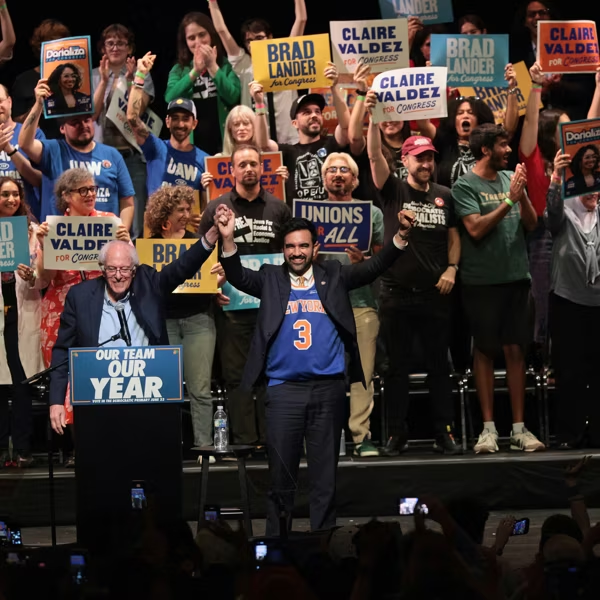
Today, Sen. Bernie Sanders (I-Vt.), a democratic socialist, is perhaps the country's most popular politician. In the lead-up to this year's caucuses, 43 percent of Iowa Democrats said that they would use the word "socialist" to describe themselves. According to Pew polls, Americans between ages 18 and 29 have a more positive view of socialism than older generations.
Of course, socialists still have a long way to go. Many of the young people now trumpeting socialism aren't clear about what they mean by the word. It's safe to guess that they're referring broadly to the tattered social protections that do exist in the United States or to the more robust Scandinavian welfare states that Sanders often speaks of. Worker ownership of the means of production is not on the agenda for Sanders socialists just yet, nor are other questions about democratic control and social rights, ones key to the traditional socialist worldview.
But increased interest in socialism generally does make it clear that discontent with decades of stagnating wages and the pain caused by the 2008 economic crisis are starting to take a political form. Foreclosures, unemployment, debt burdens -- for millions of Sanders voters, these are no longer seen as individual problems or the result of personal mistakes. Instead, voters are responding to reassuring reminders that the difficulties they face are not their fault, and that they deserve more than they are getting. They look for collective solutions to social problems, rather than the "bootstrap" ones they've been sold for years.
Moreover, the rise of even a vague socialist sentiment calls upon the anger that many are feeling. Sanders not only suggests social-democratic policies that speak to economic and social insecurities, but he also rallies his supporters to a "political revolution" and names the forces and individuals that benefit from the way the country's resources are currently distributed -- big capitalists and their political allies, the people Sanders calls the "billionaire class."
The polarization that Sanders offers, a vision of class warfare to achieve political victories, captures emotions that could otherwise swing in the direction of right-wing populism and the scapegoats it offers -- immigrants, minorities and foreign countries. In many ways, the moral and political choice facing the next generation of American voters is one between Sanders and Donald Trump.
The role of socialism, then, is to offer an outlet and a direction for anger, to help in the struggle against those who would keep things as they are. Sanders's socialism calls for a bold set of solutions that would expand the welfare state. The tenor of these plans couldn't be more different from the tepid policy proposals -- like Obamacare or cap-and-trade -- that have flowed out of establishment liberalism for decades.
This all points to the emergence of a "Sanders Democrat," a group that is disproportionately young and calling for massive redistributions of wealth and power. Even if Sanders fades in the coming months, this group is poised to continue a long struggle inside and outside the Democratic Party. It's bad news for current Democratic leaders, but it's good news for those on the radical left who have been struggling in isolation, with little social base for their politics, for decades.
The Sanders Democrat might not be ready to storm the barricades with us yet, but this is a sound starting point that would been inconceivable 10 years ago. After all, if we can't win a majority for social-democratic politics in this country, we have no chance of winning a majority for anything more radical than that.