SUBSCRIBE TO OUR FREE NEWSLETTER
Daily news & progressive opinion—funded by the people, not the corporations—delivered straight to your inbox.
5
#000000
#FFFFFF
To donate by check, phone, or other method, see our More Ways to Give page.
In the lead-up to the war in Iraq, President George W. Bush made a promise. "The Iraqi people can be certain of this," he said. "The United States is committed to helping them build a better future." A decade later, his successor, Barack Obama, seemed to suggest the U.S. had kept its end of the bargain. On the 10th anniversary of the invasion, he lauded U.S. troops who, he insisted, gave the Iraqi people "an opportunity to forge their own future after many years of hardship."
A promise made, a promised kept. Mission accomplished, right?
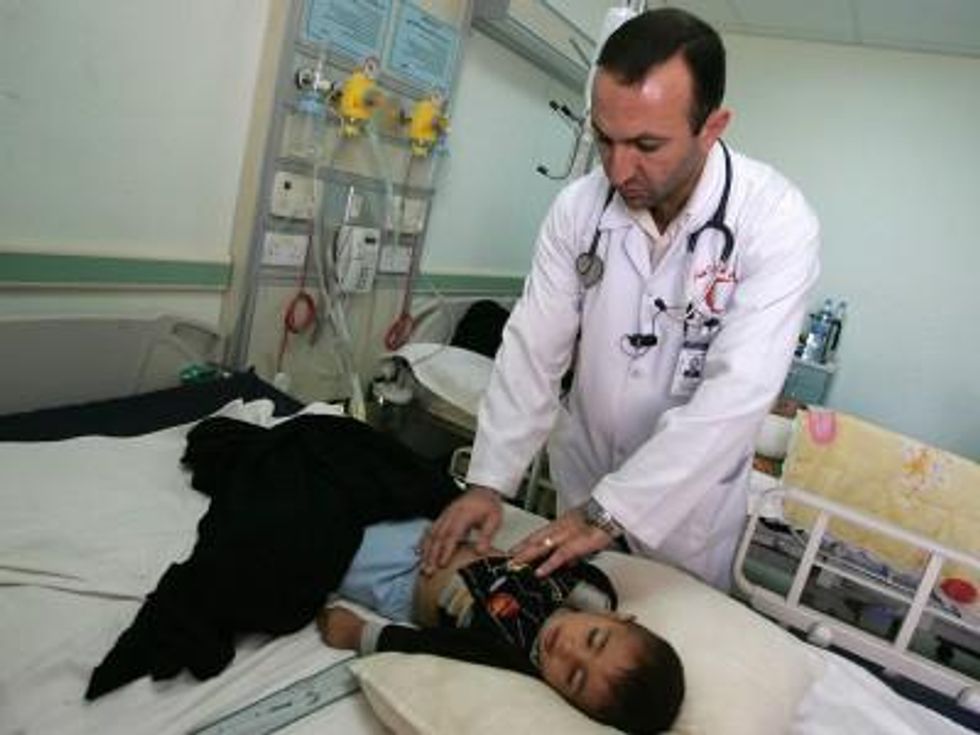
But what happened to the "better future" for the untold number of Iraqis who died in the charnel house that resulted from the American invasion? Where can we find the "better future" of the nine-year-old girl killed by an air strike in Baghdad's Al-Nasser marketplace on March 28, 2003? Or the 12-year-old boy killed by a car bomb in Al-Ula market in Baghdad's Sadr City on July 1, 2006? Or Dawoud Nouri's eight-year-old daughter who was beheaded in Kirkuk on April 21, 2007? What happened to their opportunities "to forge their own future"?
According to a recent report from the Costs of War Project at Brown University, at least 123,000-134,000 Iraqi civilians have died "as a direct consequence of the war's violence since the March 2003 invasion." In fact, while the U.S. military left Iraq in 2011 and war supporters have advanced a counterfeit history of success there -- owing to then-General (now disgraced former CIA director) David Petraeus's military "surge" of 2007 -- the war's brutal legacy lives on. Last year, the casualty watchdog group Iraq Body Count tallied 4,570 Iraqi civilian deaths from violence, a small increase over the death toll from 2011.
And on the day of Obama's 10th anniversary announcement, car bombs and other attacks killed and wounded hundreds in the Iraqi capital Baghdad alone. Add to these numbers the countless wounded of the last decade and the approximately 2.8 million Iraqis who, to this day, remain refugees outside the country or internally displaced within it and the words of both presidents ring hollow indeed.
In the lead-up to the war in Iraq, President George W. Bush made a promise. "The Iraqi people can be certain of this," he said. "The United States is committed to helping them build a better future." A decade later, his successor, Barack Obama, seemed to suggest the U.S. had kept its end of the bargain. On the 10th anniversary of the invasion, he lauded U.S. troops who, he insisted, gave the Iraqi people "an opportunity to forge their own future after many years of hardship."
A promise made, a promised kept. Mission accomplished, right?
But what happened to the "better future" for the untold number of Iraqis who died in the charnel house that resulted from the American invasion? Where can we find the "better future" of the nine-year-old girl killed by an air strike in Baghdad's Al-Nasser marketplace on March 28, 2003? Or the 12-year-old boy killed by a car bomb in Al-Ula market in Baghdad's Sadr City on July 1, 2006? Or Dawoud Nouri's eight-year-old daughter who was beheaded in Kirkuk on April 21, 2007? What happened to their opportunities "to forge their own future"?
According to a recent report from the Costs of War Project at Brown University, at least 123,000-134,000 Iraqi civilians have died "as a direct consequence of the war's violence since the March 2003 invasion." In fact, while the U.S. military left Iraq in 2011 and war supporters have advanced a counterfeit history of success there -- owing to then-General (now disgraced former CIA director) David Petraeus's military "surge" of 2007 -- the war's brutal legacy lives on. Last year, the casualty watchdog group Iraq Body Count tallied 4,570 Iraqi civilian deaths from violence, a small increase over the death toll from 2011.
And on the day of Obama's 10th anniversary announcement, car bombs and other attacks killed and wounded hundreds in the Iraqi capital Baghdad alone. Add to these numbers the countless wounded of the last decade and the approximately 2.8 million Iraqis who, to this day, remain refugees outside the country or internally displaced within it and the words of both presidents ring hollow indeed.
In the lead-up to the war in Iraq, President George W. Bush made a promise. "The Iraqi people can be certain of this," he said. "The United States is committed to helping them build a better future." A decade later, his successor, Barack Obama, seemed to suggest the U.S. had kept its end of the bargain. On the 10th anniversary of the invasion, he lauded U.S. troops who, he insisted, gave the Iraqi people "an opportunity to forge their own future after many years of hardship."
A promise made, a promised kept. Mission accomplished, right?
But what happened to the "better future" for the untold number of Iraqis who died in the charnel house that resulted from the American invasion? Where can we find the "better future" of the nine-year-old girl killed by an air strike in Baghdad's Al-Nasser marketplace on March 28, 2003? Or the 12-year-old boy killed by a car bomb in Al-Ula market in Baghdad's Sadr City on July 1, 2006? Or Dawoud Nouri's eight-year-old daughter who was beheaded in Kirkuk on April 21, 2007? What happened to their opportunities "to forge their own future"?
According to a recent report from the Costs of War Project at Brown University, at least 123,000-134,000 Iraqi civilians have died "as a direct consequence of the war's violence since the March 2003 invasion." In fact, while the U.S. military left Iraq in 2011 and war supporters have advanced a counterfeit history of success there -- owing to then-General (now disgraced former CIA director) David Petraeus's military "surge" of 2007 -- the war's brutal legacy lives on. Last year, the casualty watchdog group Iraq Body Count tallied 4,570 Iraqi civilian deaths from violence, a small increase over the death toll from 2011.
And on the day of Obama's 10th anniversary announcement, car bombs and other attacks killed and wounded hundreds in the Iraqi capital Baghdad alone. Add to these numbers the countless wounded of the last decade and the approximately 2.8 million Iraqis who, to this day, remain refugees outside the country or internally displaced within it and the words of both presidents ring hollow indeed.