SUBSCRIBE TO OUR FREE NEWSLETTER
Daily news & progressive opinion—funded by the people, not the corporations—delivered straight to your inbox.
5
#000000
#FFFFFF
To donate by check, phone, or other method, see our More Ways to Give page.
Daily news & progressive opinion—funded by the people, not the corporations—delivered straight to your inbox.
Timing is everything, the old adage goes. And so I couldn't help get suspicious when the media circus around Reverend Jeremiah Wright just happened to run in prime time between the Pennsylvania primary and tomorrow's Indiana and North Carolina contests. The Reverend has the right to speak out, of course -- but why do it precisely when it could exert maximum damage on Obama's campaign?
I'm not the only one asking this question. The photograph of Bill Clinton talking to the Reverend at his famous "I have sinned" White House prayer breakfast in 1998 is circulating widely on the internet. New York Daily News columnist Errol Louis revealed last week that the coordinator of Wright's appearance at the National Press Club was Barbara Reynolds, a Hillary Clinton supporter. Club President Sylvia Smith responded in a press release that Wright was invited in March because he is "a news-making public figure" and that Reynolds, as a member of the Speakers Committee, "was asked to coordinate the event because she knew Wright or had a contact in his church."
Perhaps Wright was just taking advantage of an opportunity to make his case, first with Bill Moyers, then with the NAACP in Detroit, then in the grand finale with National Press Club. But if he has any interest in seeing Obama win the nomination, it was singularly bad timing.
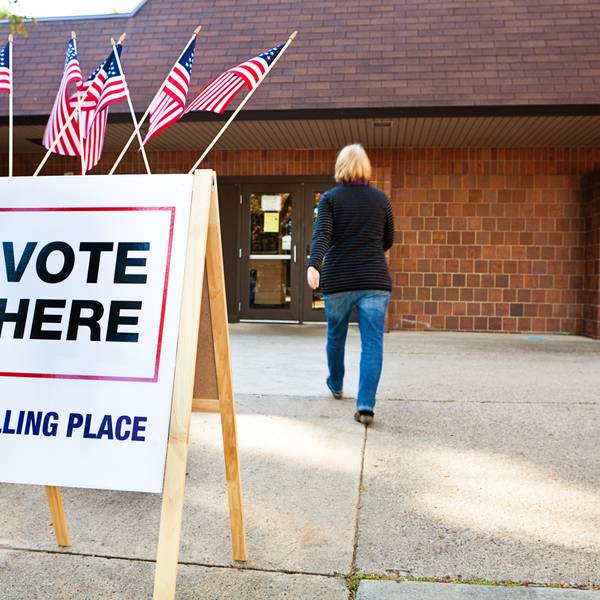
And timing is everything, which brings me to my second point. In the midst of last week's Reverend Wright media circus, something else much more important happened. In a 6-to-3 vote, the Supreme Court upheld Indiana's voter identification law, arguing that its photo ID requirement does not place an unconstitutional burden on the right to vote. According to the ACLU, which challenged the law before the court, the decision "has broad national significance with the 2008 election underway." Indiana is one of over 20 states that have passed restrictive voter ID laws, and the decision gives a green light to other states considering similar legislation.
Such laws are likely to have the most severe impact on voters who are poor, elderly, or members of racial minorities. That's why Democrats tend to be against them, and Republicans for them. This critical decision generated remarkably little news or commentary. This Sunday's New York Times, for example, left it to a few letters to the editor to criticize it, while amply covering yet again ... the Reverend Jeremiah Wright.
I'm not suggesting a conspiracy here. I don't know if the Clinton campaign had anything to do with Wright's prime-time appearances, though I certainly hope some intrepid investigative journalists are looking into it. Nor am I suggesting that the media coverage of Wright was intentionally designed to overshadow the Court's decision on voting rights. But it had that effect, and that worries me.
It also worries me that we live in a political culture where so much attention centers on religion. Is it really so important where Obama went to church and who was his pastor? I'm old fashioned. I believe in the separation of church and state. The last time I looked that secular principle was still enshrined in the Constitution, along with the right of universal suffrage.
Dear Common Dreams reader, It’s been nearly 30 years since I co-founded Common Dreams with my late wife, Lina Newhouser. We had the radical notion that journalism should serve the public good, not corporate profits. It was clear to us from the outset what it would take to build such a project. No paid advertisements. No corporate sponsors. No millionaire publisher telling us what to think or do. Many people said we wouldn't last a year, but we proved those doubters wrong. Together with a tremendous team of journalists and dedicated staff, we built an independent media outlet free from the constraints of profits and corporate control. Our mission has always been simple: To inform. To inspire. To ignite change for the common good. Building Common Dreams was not easy. Our survival was never guaranteed. When you take on the most powerful forces—Wall Street greed, fossil fuel industry destruction, Big Tech lobbyists, and uber-rich oligarchs who have spent billions upon billions rigging the economy and democracy in their favor—the only bulwark you have is supporters who believe in your work. But here’s the urgent message from me today. It's never been this bad out there. And it's never been this hard to keep us going. At the very moment Common Dreams is most needed, the threats we face are intensifying. We need your support now more than ever. We don't accept corporate advertising and never will. We don't have a paywall because we don't think people should be blocked from critical news based on their ability to pay. Everything we do is funded by the donations of readers like you. When everyone does the little they can afford, we are strong. But if that support retreats or dries up, so do we. Will you donate now to make sure Common Dreams not only survives but thrives? —Craig Brown, Co-founder |
Timing is everything, the old adage goes. And so I couldn't help get suspicious when the media circus around Reverend Jeremiah Wright just happened to run in prime time between the Pennsylvania primary and tomorrow's Indiana and North Carolina contests. The Reverend has the right to speak out, of course -- but why do it precisely when it could exert maximum damage on Obama's campaign?
I'm not the only one asking this question. The photograph of Bill Clinton talking to the Reverend at his famous "I have sinned" White House prayer breakfast in 1998 is circulating widely on the internet. New York Daily News columnist Errol Louis revealed last week that the coordinator of Wright's appearance at the National Press Club was Barbara Reynolds, a Hillary Clinton supporter. Club President Sylvia Smith responded in a press release that Wright was invited in March because he is "a news-making public figure" and that Reynolds, as a member of the Speakers Committee, "was asked to coordinate the event because she knew Wright or had a contact in his church."
Perhaps Wright was just taking advantage of an opportunity to make his case, first with Bill Moyers, then with the NAACP in Detroit, then in the grand finale with National Press Club. But if he has any interest in seeing Obama win the nomination, it was singularly bad timing.
And timing is everything, which brings me to my second point. In the midst of last week's Reverend Wright media circus, something else much more important happened. In a 6-to-3 vote, the Supreme Court upheld Indiana's voter identification law, arguing that its photo ID requirement does not place an unconstitutional burden on the right to vote. According to the ACLU, which challenged the law before the court, the decision "has broad national significance with the 2008 election underway." Indiana is one of over 20 states that have passed restrictive voter ID laws, and the decision gives a green light to other states considering similar legislation.
Such laws are likely to have the most severe impact on voters who are poor, elderly, or members of racial minorities. That's why Democrats tend to be against them, and Republicans for them. This critical decision generated remarkably little news or commentary. This Sunday's New York Times, for example, left it to a few letters to the editor to criticize it, while amply covering yet again ... the Reverend Jeremiah Wright.
I'm not suggesting a conspiracy here. I don't know if the Clinton campaign had anything to do with Wright's prime-time appearances, though I certainly hope some intrepid investigative journalists are looking into it. Nor am I suggesting that the media coverage of Wright was intentionally designed to overshadow the Court's decision on voting rights. But it had that effect, and that worries me.
It also worries me that we live in a political culture where so much attention centers on religion. Is it really so important where Obama went to church and who was his pastor? I'm old fashioned. I believe in the separation of church and state. The last time I looked that secular principle was still enshrined in the Constitution, along with the right of universal suffrage.
Timing is everything, the old adage goes. And so I couldn't help get suspicious when the media circus around Reverend Jeremiah Wright just happened to run in prime time between the Pennsylvania primary and tomorrow's Indiana and North Carolina contests. The Reverend has the right to speak out, of course -- but why do it precisely when it could exert maximum damage on Obama's campaign?
I'm not the only one asking this question. The photograph of Bill Clinton talking to the Reverend at his famous "I have sinned" White House prayer breakfast in 1998 is circulating widely on the internet. New York Daily News columnist Errol Louis revealed last week that the coordinator of Wright's appearance at the National Press Club was Barbara Reynolds, a Hillary Clinton supporter. Club President Sylvia Smith responded in a press release that Wright was invited in March because he is "a news-making public figure" and that Reynolds, as a member of the Speakers Committee, "was asked to coordinate the event because she knew Wright or had a contact in his church."
Perhaps Wright was just taking advantage of an opportunity to make his case, first with Bill Moyers, then with the NAACP in Detroit, then in the grand finale with National Press Club. But if he has any interest in seeing Obama win the nomination, it was singularly bad timing.
And timing is everything, which brings me to my second point. In the midst of last week's Reverend Wright media circus, something else much more important happened. In a 6-to-3 vote, the Supreme Court upheld Indiana's voter identification law, arguing that its photo ID requirement does not place an unconstitutional burden on the right to vote. According to the ACLU, which challenged the law before the court, the decision "has broad national significance with the 2008 election underway." Indiana is one of over 20 states that have passed restrictive voter ID laws, and the decision gives a green light to other states considering similar legislation.
Such laws are likely to have the most severe impact on voters who are poor, elderly, or members of racial minorities. That's why Democrats tend to be against them, and Republicans for them. This critical decision generated remarkably little news or commentary. This Sunday's New York Times, for example, left it to a few letters to the editor to criticize it, while amply covering yet again ... the Reverend Jeremiah Wright.
I'm not suggesting a conspiracy here. I don't know if the Clinton campaign had anything to do with Wright's prime-time appearances, though I certainly hope some intrepid investigative journalists are looking into it. Nor am I suggesting that the media coverage of Wright was intentionally designed to overshadow the Court's decision on voting rights. But it had that effect, and that worries me.
It also worries me that we live in a political culture where so much attention centers on religion. Is it really so important where Obama went to church and who was his pastor? I'm old fashioned. I believe in the separation of church and state. The last time I looked that secular principle was still enshrined in the Constitution, along with the right of universal suffrage.