

SUBSCRIBE TO OUR FREE NEWSLETTER
Daily news & progressive opinion—funded by the people, not the corporations—delivered straight to your inbox.
5
#000000
#FFFFFF
To donate by check, phone, or other method, see our More Ways to Give page.
Daily news & progressive opinion—funded by the people, not the corporations—delivered straight to your inbox.
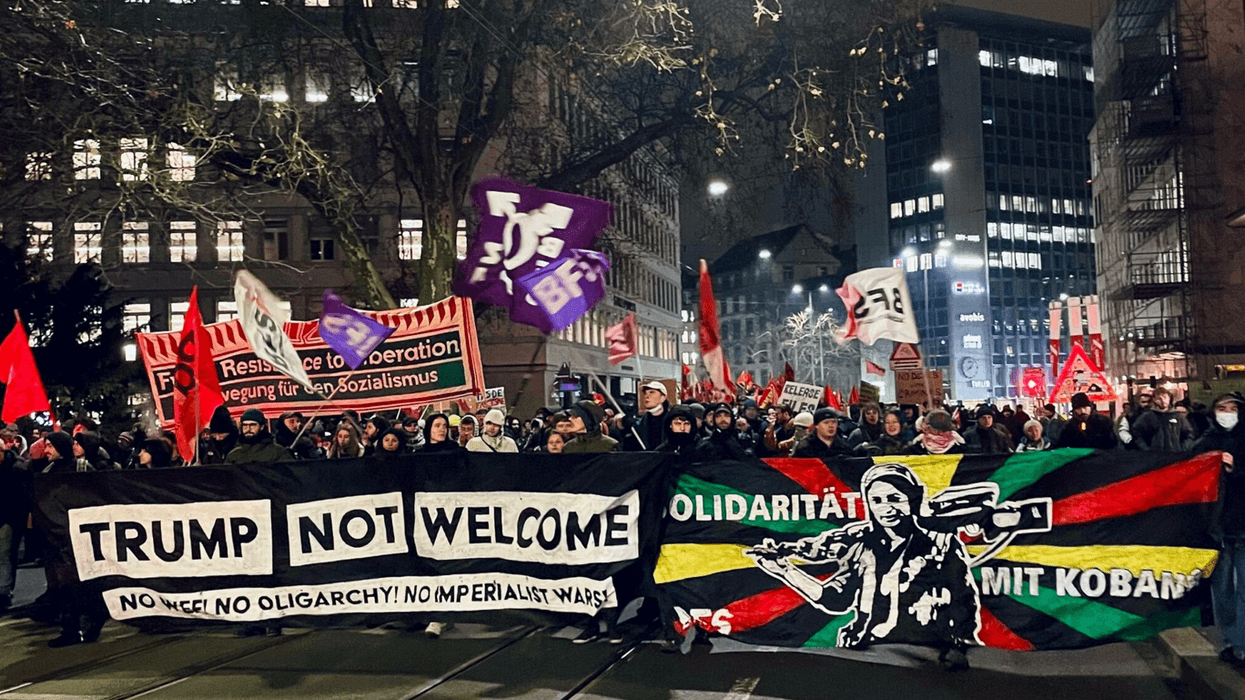
"When fascists, oligarchs, and warmongers gather in Davos, it is our duty to take to the streets," said the rally's main organizer.
Demonstrators in Zürich were blasted with a water cannon in subfreezing weather on Monday as they protested the pending arrival of US President Donald Trump, traveling to Switzerland this week to attend the annual World Economic Forum's gathering of global elites in Davos.
Chants of "Fuck Trump!" echoed through the streets of Zürich as thousands of demonstrators, some holding placards with messages like "Put Trumpster in the Dumpster" and "Trump Not Welcome," marched through Switzerland's largest city Monday night.
Participants protested the interconnected crises of capitalism, the worsening climate emergency, US imperialism, and the Trump administration's deadly anti-immigrant purge. They also condemned Iran's slaughter of protesters, the ongoing Gaza genocide, and attacks on Kurds in Syria. According to the Movement for Socialism (BFS)—the rally's main organizer—the Zürich protest was the largest of its kind since 2018, when Trump first attended the summit during his first term.
"In the tow of Donald Trump, a horror cabinet of warmongers, autocrats and corporate bosses will be in Davos," BFS said ahead of Monday's rally. "It is our political and moral obligation to resist the world of Trump and consorts."
[Zürich] Tausende Menschen lautstark und kämpfertisch auf der Strasse gegen Trump und das WEF! Gegen die Welt der Imperialismen!#TrumpStillNotWelcome #Antifa #smashWEF #FckTrump
[image or embed]
— sozialismus.ch (@sozialismus.ch) January 19, 2026 at 12:44 PM
Some demonstrators burned American flags to protest Trump's ongoing war-making and imperialist foreign policy, including the bombing of numerous nations, the recent unlawful military assault on Venezuela, and the illegal kidnapping of President Nicolás Maduro and his wife, Cilia Flores. There was particular ire over Trump's incessant threats to acquire the autonomous Danish territory of Greenland by any means necessary, including armed invasion.
According to police, some demonstrators set off firecrackers and smoke bombs along the march, while some protesters vandalized businesses and other property. Some people who took part in an "unauthorized" protest after the main march ended were blasted with a police water cannon, despite an air temperature of approximately 30°F (-1°C). People waving flags and symbols of Kurdish independence in Rojava were seen defiantly advancing as they were hosed down.
Police then fired rubber-coated steel bullets and tear gas at protesters after some of demonstrators allegedly pelted officers with objects including stones and fireworks.
The Swiss news site 20 Minuten reported dozens of people injured, including three police officers.
Hundreds of protesters also rallied in Davos, where they chanted slogans including, "The oceans are rising and so are we!" and held placards with messages like, "No War Profiteering!"
Bus stop ads with a photo of Elon Musk, Jeff Bezos, and Mark Zuckerberg with the caption, "Hey Davos Billionaires: Shut Up and Pay Your Tax" were seen around Davos and Zürich.
The same images and message were printed on a massive banner that was laid out in a field near Zürich's airport for arriving WEF attendees to see.
Dieses riesige Protest-Banner wurde heute im Anflugbereich des Flughafens Zürich ausgerollt, wo die #WEF Teilnehmer landen: «Hallo Davos-Milliardäre [[ Ihr seid das Problem ]] Haltet einfach die Klappe und zahlt eure Steuern!»@weforum.org
[image or embed]
— Jürg Vollmer (@juergvollmer.ch) January 20, 2026 at 1:56 AM
There were no reports of any violence at the Davos demonstration.
Ahead of Monday's protests, BFS asserted that Trump stands for oligarchy, patriarchy, fossil fuels, rising fascism, war, and imperialism.
Trump "represents a world in which the right of the fittest applies, in which genocides, wars of aggression, war crimes, regime-change operations, and economic blackmail constitute the means of international policy to maintain and expand imperialist systems of power and exploitation," the organization said.
"The WEF has always stood for the same world," it continued. "It is the world of capitalism [and] the increasingly right-wing authoritarian and violent character of this world, as it crystallizes in figures such as Trump."
"But there is also another world," BFS added. "It is worth fighting for this world. Let us organize ourselves together with all anti-fascist forces against the world of Trump and consorts!"
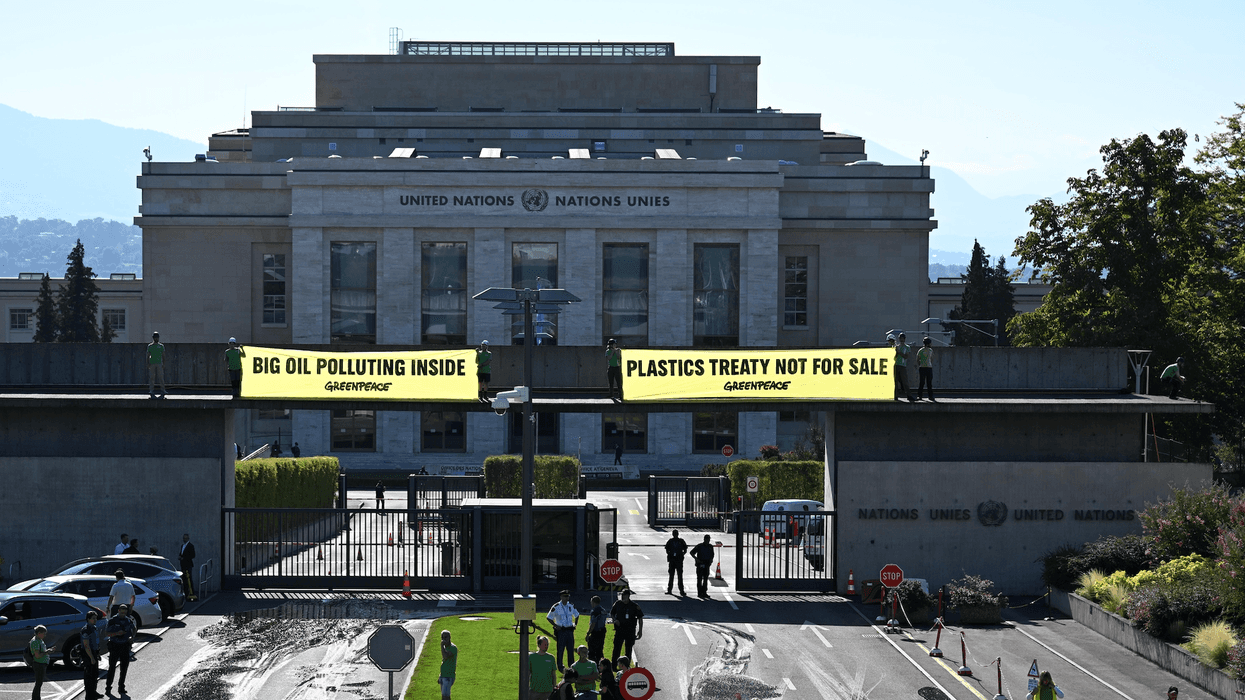
"Corporate polluters that created this problem must not be allowed to stop the world from solving it," argued one Greenpeace campaigner.
With representatives from 175 nations gathered in Geneva, Switzerland for the final round of talks on a global plastics treaty, Greenpeace campaigners on Thursday created a symbolic trail of black oil and hung massive banners over the entrance to the event venue demanding the expulsion of fossil fuel industry lobbyists from the summit.
Greenpeace said 22 activists from 10 European nations climbed to the roof of the Palais des Nations, where the United Nations conference is taking place, to unfurl banners reading "Big Oil Polluting Inside" and "Plastics Treaty Not for Sale."
The environmental advocacy group said that fossil fuel and chemical industry lobbyists outnumbered scientists 4-to-1 at the talks.
"Each round of negotiations brings more oil and gas lobbyists into the room," Graham Forbes, who is leading Greenpeace's delegation to the summit, said in a statement. "Fossil fuel and petrochemical giants are polluting the negotiations from the inside, and we're calling on the U.N. to kick them out."
"Governments must not let a handful of backwards-looking fossil fuel companies override the clear call from all of civil society—including Indigenous peoples, frontline communities, youth activists, and many responsible businesses—demanding a strong agreement that cuts plastic production," Forbes added.
The huge presence of these plastic-loving lobbyists threatens the Global Plastics Treaty.They don’t want real solutions, all they want is more profits.Tell the UN to kick them out of the plastics talks now👇act.gp/4licpMq
[image or embed]
— Greenpeace UK (@greenpeaceuk.bsky.social) August 7, 2025 at 8:55 AM
In 2022, participating nations agreed to draft a legally binding global treaty to reduce waste and toxic chemicals in some plastics contain; however, no such agreement has been reached.
"It is clear that the plastics treaty negotiators have a mountain to climb to reach an agreement by August 14th," Friends of the Earth International said Tuesday, referring to the summit's end date. "There remain substantive differences between the vast majority of states that want action and the few blockers looking to prolong the era of plastics."
There is strong opposition to curbing plastic production from the fossil fuel industry—99% of plastic is made from petrochemicals—and oil-producing countries including Russia, Saudi Arabia, and the United States.
Reuters reported Wednesday that the Trump administration sent letters to some countries participating in the Geneva talks urging them to reject "impractical global approaches such as plastic production targets or bans and restrictions on plastic additives or plastic products."
Oil producer pressure, Trump rollbacks threaten global treaty on plastics pollution. Plastics are derived from fossil fuels. www.reuters.com/sustainabili...
[image or embed]
— Antonia Juhasz (@antoniajuhasz.bsky.social) August 5, 2025 at 6:46 AM
Greenpeace noted that "the fossil fuel industry and its political allies are pushing hard to weaken the treaty's ambition."
According to the group:
If they succeed, plastic production could triple by 2050, fueling more environmental destruction, climate chaos, and harm to human health. A recent report from Greenpeace U.K. revealed that companies like Dow, ExxonMobil, BASF, Chevron Phillips, Shell, SABIC, and INEOS continue to ramp up plastic production. Since the global plastics treaty process began in November 2022, these seven companies have expanded plastic production capacity by 1.4 million tons. Over the same time period, they have also produced enough plastic to fill an estimated 6.3 million garbage trucks, or five-and-a-half trucks every minute. These companies also reaped enormous profits, with Dow alone earning an estimated US$5.1 billion from plastics, while sending at least 21 lobbyists into treaty negotiations.
A study published this week in the British medical journal The Lancet estimated that plastics are responsible for more than $1.5 trillion in "health-related economic losses" worldwide annually.
"These impacts fall disproportionately upon low-income and at-risk populations," the study's authors wrote. "The principal driver of this crisis is accelerating growth in plastic production—from 2 megatons (Mt) in 1950, to 475 Mt in 2022; that is projected to be 1,200 Mt by 2060."
Friends of the Earth International campaigner Sam Cossar-Gilbert noted that "coastlines across the Global South are drowning in plastic waste that isn't ours."
"Shipped in from wealthy nations under the guise of 'recycling,' the plastic waste trade forces marginalized communities to absorb the consequences of someone else's convenience," he added. "This is not just environmental degradation—it's environmental injustice. We refuse to accept false solutions that sacrifice frontline communities and the environment."
Forbes asserted that "this is a battle for our survival."
"Corporate polluters that created this problem must not be allowed to stop the world from solving it," he added. "Governments must show courage and deliver a strong treaty that puts people and planet first, not short-term corporate profits."
"Trump's definition of 'winning' is hitting the American people with ever-higher taxes," said economist Dean Baker.
U.S. President Donald Trump on Thursday used emergency authority to impose high tariff rates on imports from dozens of American trading partners, including Canada—a move that economists criticized as a senseless approach to global trade that will further increase costs for consumers who are already struggling to get by.
Trump outlined the new tariff rates in executive orders signed just ahead of his arbitrary August 1 deadline for U.S. trading partners to negotiate a deal with the White House, whose erratic, aggressive, and legally dubious approach has alarmed world leaders.
Under the president's new orders, Canadian goods that are not covered by the U.S.-Mexico-Canada Agreement (USMCA) will face 35% import duties, while steel and aluminum imports will face a 50% tariff rate.
Trump claimed Canada "has failed to cooperate in curbing the ongoing flood of fentanyl and other illicit drugs." But Canadian Prime Minister Mark Carney hit back in a statement early Friday, noting that Canada "accounts for only 1% of U.S. fentanyl imports and has been working intensively to further reduce these volumes."
"While we will continue to negotiate with the United States on our trading relationship, the Canadian government is laser-focused on what we can control: building Canada strong," Carney added. "Canadians will be our own best customer, creating more well-paying careers at home, as we strengthen and diversify our trading partnerships throughout the world."
Economist Brad Setser said that while the impact of the higher tariff on Canadian imports could be muted because of the exemption of USMCA-covered products such as oil, the 35% rate is still "insane" and "dumb."
"Same with the high tariff on Switzerland. Crazy," Setser wrote, pointing to the 39% rate for Switzerland imports. "This isn't just protectionism, it is bad protectionism—and will have all sorts of unintended consequences."
The new tariff rates for Canadian goods will take effect Friday while the higher rates for other nations such as Brazil (50%), India (25%), and Vietnam (20%) won't kick in until next week "to give Customs and Border Protection officials time to prepare," The Washington Post reported. Customs and Border Protection collects tariffs, which are effectively taxes paid by importers—who often pass those costs onto consumers in the form of higher prices.
"Trump's definition of 'winning' is hitting the American people with ever-higher taxes," Dean Baker, senior economist at the Center for Economic and Policy Research, wrote late Thursday.
Recent U.S. economic data indicates that Trump's tariffs are already putting upward pressure on prices—and companies are using the president's trade chaos as an excuse to drive up prices further and pad their bottom lines.
The Tax Foundation noted earlier this week that "a variety of food imports" will be impacted by Trump's tariffs, likely leading to "higher food prices for consumers." More than 80% of Americans are already concerned about the price of groceries and many are struggling to stay afloat, according to survey data released Thursday by The Century Foundation.
Baker warned Thursday that even nations that have agreed to trade frameworks with the U.S. are not out of the woods.
"Deals are meaningless to Trump. He'll break them in a second any time he feels like it," Baker wrote. "I trust everyone negotiating with Trump understands that fact."
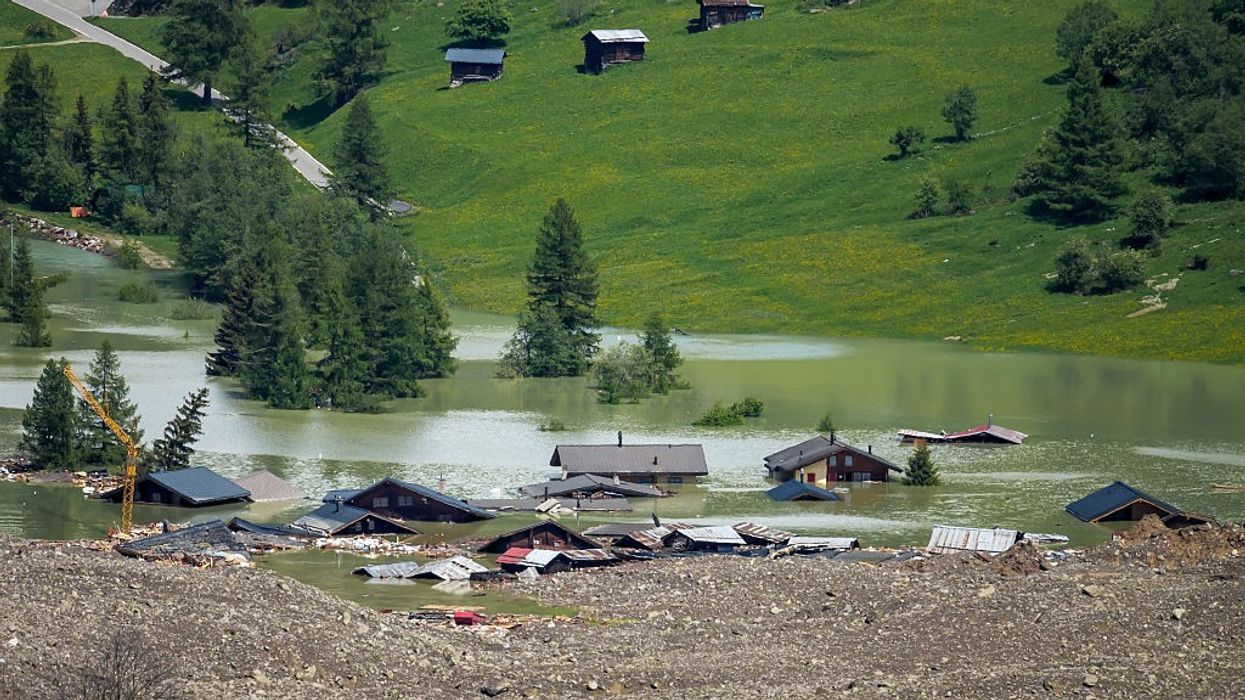
"What happened to Birch Glacier is what we would expect from rising temperatures in the Alps and elsewhere," one scientist said.
Thawing permafrost exacerbated by human-caused global heating is the likely culprit behind a massive glacier collapse that buried nearly the entire Swiss town of Blatten, one scientist said Thursday while warning of the likelihood of similar disasters in the future.
The alpine hamlet of 300 inhabitants—who were evacuated earlier amid warning signs of disaster—was almost completely wiped out on Wednesday after the Birch Glacier, located in the Lötschental Valley in northern Switzerland, collapsed. The glacial avalanche, laden with boulders and other debris, cascaded down the mountainside and into the village, obliterating everything in its path. Local officials said around 90% of Blatten was buried.
"We've lost our village," Blatten Mayor Matthias Bellwald told reporters. "The village is under rubble. We will rebuild."
before and after today’s glacier collapse that buried 90% of blatten, switzerland
[image or embed]
— ian bremmer ( @ianbremmer.com) May 28, 2025 at 3:01 PM
While there are no verified casualties from the disaster, one 64-year-old man has been reported missing.
Mathieu Morlighem, a glaciologist at Dartmouth College in New Hampshire, told ABC News that permafrost thaw under and along the sidewalls surrounding the glacier likely caused the collapse.
"What happened to Birch Glacier is what we would expect from rising temperatures in the Alps and elsewhere," he explained. "I think we can expect more events like this in the future."
As ABC News reported:
Glaciers in Switzerland have lost almost 40% of their volume since 2000, and the loss is accelerating, according to the Swiss Federal Institute for Forest, Snow, and Landscape Research. Record-high summer temperatures in 2022 and 2023 caused a 10% glacial ice loss in the country.
Experts warn that Switzerland's glaciers could disappear completely by 2100 due to the climate emergency.
As Common Dreams reported in March, the crisis is planetary and is predicted to adversely affect nearly 2 billion people who depend upon glaciers for agricultural irrigation and drinking water.
"Most of the world's glaciers, including those in mountains, are melting at an accelerated rate worldwide," a United Nations Educational, Scientific, and Cultural Organization report published earlier this year warned. "Combined with accelerating permafrost thaw, declining snow cover, and more erratic snowfall patterns... this will have significant and irreversible impacts on local, regional, and global hydrology, including water availability."
The Swiss collapse happened a day before Thursday's opening of the
High-Level International Conference on Glaciers' Preservation in Tajikistan, which aims to "highlight the vital role of glaciers in maintaining global ecological balance and addressing water-related challenges."

"The climate surrounding freedom of speech in Europe is becoming increasingly toxic, and we should all be concerned," said one U.N. expert on Palestinian rights.
Two days after Swiss authorities detained Ali Abunimah, the executive director of the independent Palestine-focused news outlet Electronic Intifada, press freedom advocates in the United States demanded to know why the Trump administration had not spoken out about the U.S. citizen's arrest.
"If the U.S. State Department values free speech, it must publicly condemn the arrest of American journalist Ali Abunimah by Swiss authorities and do everything possible to secure his immediate release," said Freedom of the Press Foundation on the social media platform X.
Abunimah was arrested Saturday in Zurich, where he had been scheduled to give a speech on Palestinian history and the Israeli occupation. Electronic Intifada (EI) said in a statement that the journalist "was questioned by police for an hour before being allowed to enter the country."
The arrest "appears to be part of a growing backlash from Western governments against expressions of solidarity with the Palestinian people," said the group.
EI cited the cases of several activists and journalists who were arrested, subjected to raids, or charged last year under "counter-terror" powers of the British government. Asa Winstanley, an associate editor with EI, was among those whose homes were raided; Winstanley was accused of "encouragement of terrorism."
Swiss police said Abunimah was subject to an "entry ban."
While the White House has been silent thus far about Abunimah's arrest, Francesca Albanese, the United Nations special rapporteur on the situation of human rights in the Palestinian Territory occupied since 1967, was among those who urged a "prompt investigation" into the matter
Irene Khan, U.N. special rapporteur on freedom of expression and opinion, also called Abunimah's detention "shocking" and called on the Swiss government to investigate.
EI said Abunimah has had access to legal counsel since Saturday. The website, which was founded in 2001, has reported extensively on Israel's apartheid policies in the occupied Palestinian territories, including its recent violent escalations against Gaza and the West Bank.
"Speaking out against injustice in Palestine is not a crime," said EI on Saturday. "Journalism is not a crime."
A spokesperson for the U.S. Embassy in Bern, Switzerland told Al Jazeera it was providing standard consular assistance after learning of Abunimah's arrest, but did not comment further.
Journalist Rania Khalek of BreakThrough News condemned the silence of corporate media outlets in the United States.
"Not a single mainstream western media outlet has covered" Abunimah's detention, said Khalek.
Human rights lawyer Craig Mokhiber—who resigned from his position in the U.N. Office of the High Commissioner for Human Rights in October 2023, saying the U.N. was failing to prevent genocide in Gaza—said Sunday that the social media platform X was blocking him from sharing a petition in support of Abunimah.
"This is not only an attempt to silence Ali Abunimah as an individual, but the manifestation of a wider campaign of repressing and intimidating those who dare speak up for for Palestinian human rights and against their genocide, fitting into a pattern of racism and Islamophobia," reads the petition, started by Swiss Action for Human Rights.
The group said the arrest is part of a broader effort "to silence the truth and deny the oppression of the Palestinian people, attacking free speech and waging a war on journalism."
Euro-Med Human Rights Monitor said Abunimah's "arbitrary arrest gives the false impression that showing solidarity with the victims of the Israeli occupation peacefully is now illegal."
"The action taken by Swiss authorities is extremely concerning, as it marks an unprecedented low level of respect for human rights, particularly in a nation that has long been known for upholding democratic principles and protecting fundamental liberties. Targeting journalists and human rights advocates is indicative of a significant decline in European governments' dedication to upholding human rights and freedom of expression," said the group.
"The Swiss authorities must immediately and unconditionally release Ali Abunimah," Euro-Med Monitor added, "and ensure respect for his legal and human rights."
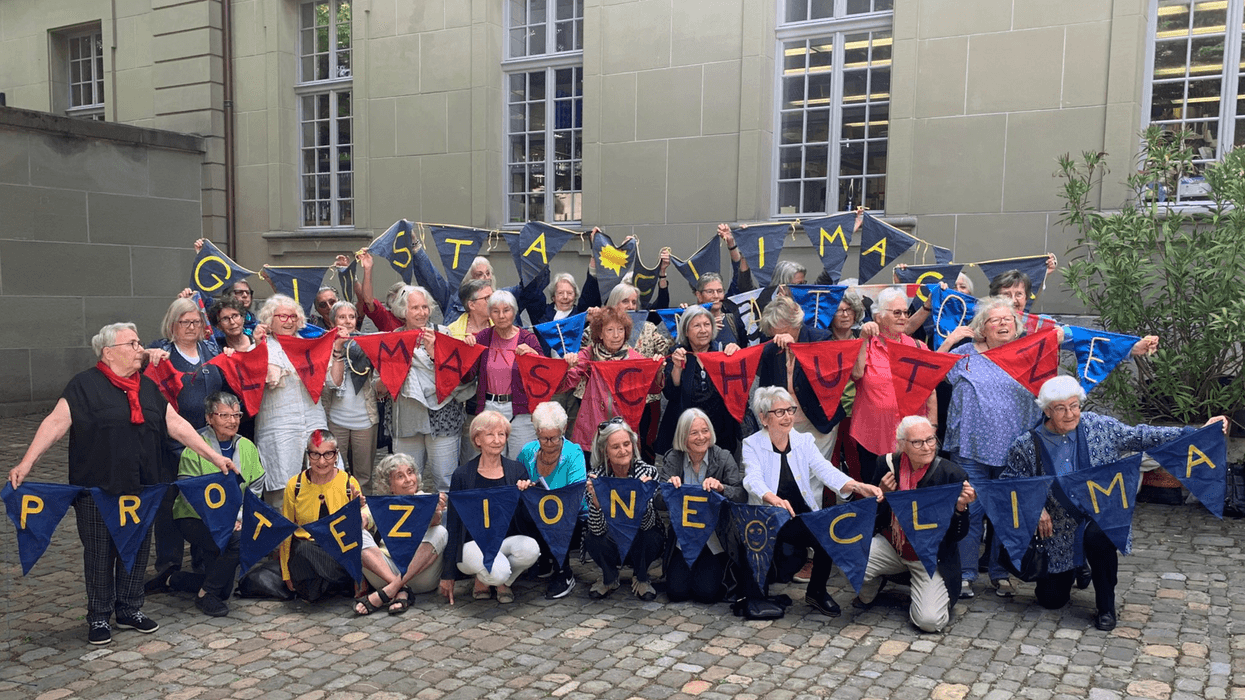
"The declaration is an attempt to continue to prevent human rights climate protection for political reasons, rather than recognizing that climate change is a scientific reality that affects everyone," said Greenpeace Switzerland.
Swiss women elders who recently won a landmark climate case said that they feel betrayed by their federal lawmakers, who voted Wednesday to disregard the court ruling.
The European Court of Human Rights (ECtHR) ruled in April that the Swiss government violated senior citizens' human rights by refusing to heed scientists' climate warnings and swiftly phase out fossil fuel production.
However, on Wednesday the National Council—Switzerland's lower legislative chamber—voted 111-72 to essentially ignore the court's decision, which some lawmakers condemned as judicial overreach. This followed a 31-11 vote by the Council of States, the upper legislative chamber, on a similar measure earlier this month.
"Climate and health are intrinsically linked; good health and a safe climate go hand in hand."
"We are appalled by this decision which feels like both a betrayal of older women but is also out of step with humankind's collective responsibility to tackle climate change for the benefits of vulnerable groups and the future of all humankind," said Pia Hollenstein, a retired nurse and member of KlimaSeniorinnen, the group of women ages 64 and older who sued their government for failing to take adequate action to stop the planet from heating 1.5°C, the more ambitious target of the Paris agreement.
"As a nurse, I have seen how climate and health are intrinsically linked; good health and a safe climate go hand in hand," she added.
Responding to Wednesday's vote, Greenpeace Switzerland said that "the declaration is an attempt to continue to prevent human rights climate protection for political reasons, rather than recognizing that climate change is a scientific reality that affects everyone."
Switzerland's Alpine climate is particularly vulnerable the effects of global heating, which is mainly caused by burning fossil fuels. Studies have shown that the country's glaciers—a key water source for millions of Europeans—could disappear by the end of the century if warming isn't curbed.
At least one lawmaker who voted to flout the ECtHR ruling attacked KlimaSeniorinnen members. Jean-Luc Addor of the right-wing Swiss People's Party dismissed the activists as "just a bunch of... 'boomeuses',"—or female Baby Boomers—"who are trying to deny our children the living conditions they have enjoyed all their lives."
However, Véronique Boillet, a member of the Swiss Human Rights Institute and a law professor at the University of Lausanne, said in a statement: "The binding nature of the rulings of the European Court of Human Rights is the heart of the European human rights system. It is the element that makes this system unique and a model worldwide."
"It is not for the Swiss Parliament to decide when a judgment has been implemented and when further measures are necessary," she continued. "It is normal that courts set certain objectives, as the ECtHR did for Swiss politics. It is also a sign of a functioning system of checks and balances."
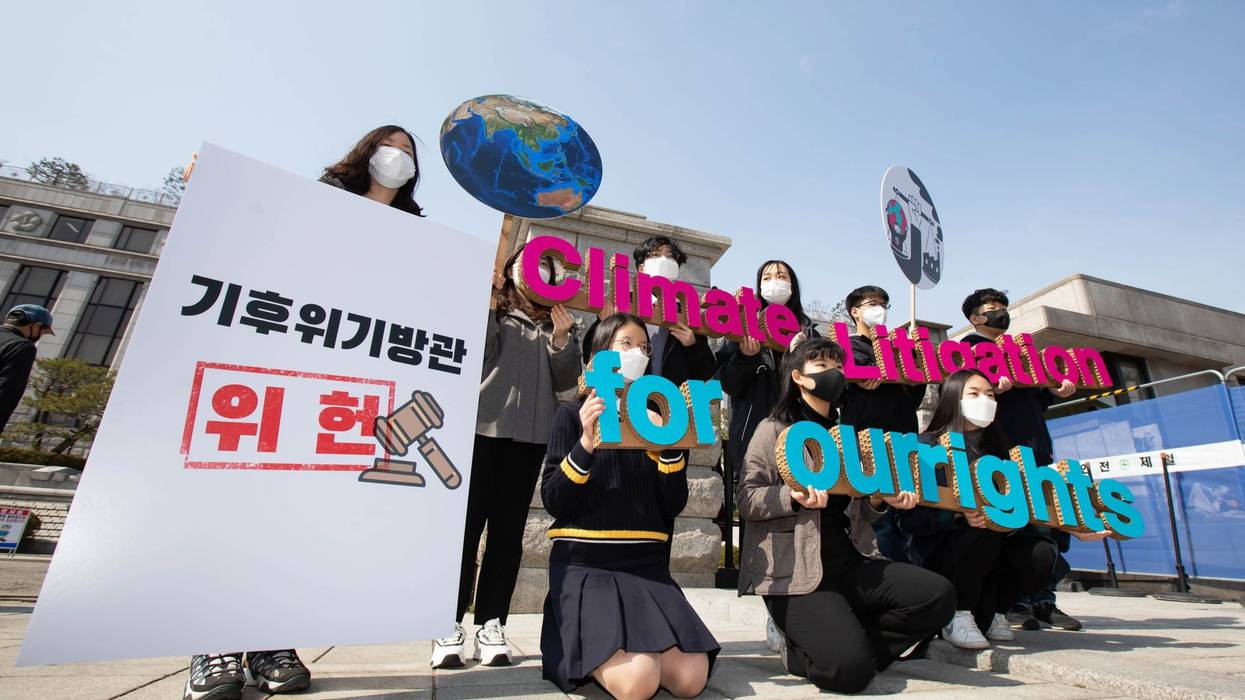
"Carbon emission reduction keeps getting pushed back as if it is homework that can be done later," said one plaintiff's mother. "But that burden will be what our children have to bear eventually."
One of South Korea's two highest courts on Tuesday began hearing Asia's first-ever youth-led climate lawsuit, which accuses the country's government of failing to protect citizens from the effects of the worsening, human-caused planetary emergency.
Nineteen members of the advocacy group Youth4ClimateAction filed a constitutional complaint in March 2020 accusing the South Korean government of violating their rights to life, the "pursuit of happiness," a "healthy and pleasant environment," and to "resist against human extinction."
The lawsuit also notes "the inequality between the adult generation who can enjoy the relatively pleasant environment and the youth generation who must face a potential disaster from climate change," as well as the government's obligation to prevent and protect citizens from environmental disasters.
"South Korea's current climate plans are not sufficient to keep the temperature increase within 1.5°C, thus violating the state's obligation to protect fundamental rights," the plaintiffs said in a statement.
South Korea's Constitutional Court began hearing a case that accuses the government of having failed to protect 200 people, including dozens of young environmental activists and children, by not tackling climate change https://t.co/XRIGE23KGM pic.twitter.com/snvqBaGGe9
— Reuters (@Reuters) April 23, 2024
Signatories to the 2015 Paris agreement committed to "holding the increase in global average temperature to well below 2°C above preindustrial levels and pursuing efforts to limit the temperature increase to 1.5°C."
According to the United Nations Environment Program's (UNEP) most recent Emissions Gap Report, the world must slash greenhouse gas emissions by 28% before 2030 to limit warming to 2°C above preindustrial levels and 42% to halt warming at 1.5°C. UNEP said that based on current policies and practices, the world is on track for 2.9°C of warming by the end of the century.
A summary of the lawsuit notes that South Korea is the fifth-largest greenhouse gas (GHG) emitter among Organization for Economic Cooperation and Development nations, and that the government is constitutionally obligated to protect Koreans from the climate emergency.
Instead, the plaintiffs argue, the Korean Parliament "gave the government total discretion to set the GHG reduction target without providing any specific guidelines." Furthermore, they contend that the government's downgraded reduction targets fall "far short of what is necessary to satisfy the temperature rise threshold acknowledged by the global community."
Lee Donghyun, the mother of one of the plaintiffs, told Reuters: "Carbon emission reduction keeps getting pushed back as if it is homework that can be done later. But that burden will be what our children have to bear eventually."
The South Korean case comes on the heels of a landmark ruling by the European Court of Human Rights (ECHR), which found that Switzerland's government violated senior citizens' human rights by refusing to heed scientists' warnings to swiftly phase out fossil fuel production.
The ECHR ruled on the same day that climate cases brought by a former French mayor and a group of Portuguese youth were inadmissible.
Courts in Australia, Brazil, and Peru also have human rights-based climate cases on their dockets.
In the United States, a state judge in Montana ruled last year in favor of 16 young residents who argued that fossil fuel extraction violated their constitutional right to "a clean and healthful environment."
Meanwhile, the Biden administration is trying to derail a historic youth-led climate lawsuit against the U.S. government.
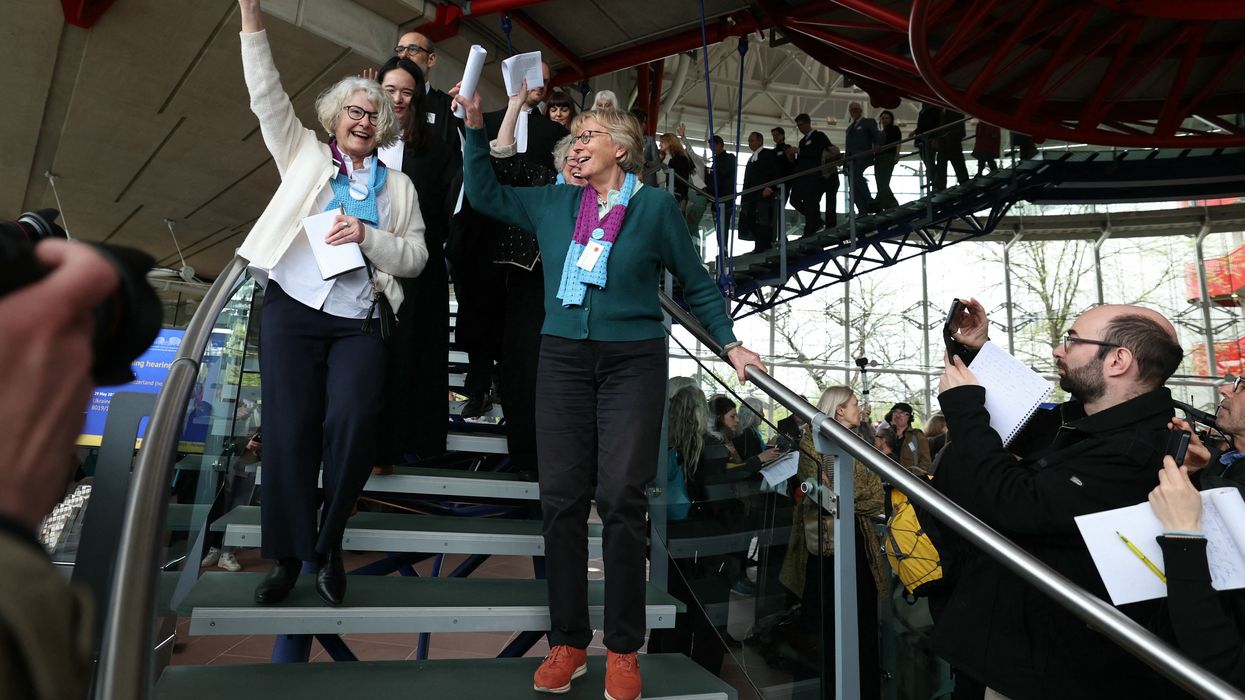
"This ruling is a call to action for the climate movement—we will not stop demanding action from governments on their clear obligations, set out in this ruling, to prevent climate catastrophe," said one attorney.
A decision handed down by one of the European Union's top courts on Tuesday should signal to governments across the bloc and beyond that their time may soon be up when it comes to delaying climate action, as the panel ruled the Swiss government has violated the human rights of its senior citizens by refusing to abide by scientists' warnings and swiftly phase out fossil fuel production.
The European Court of Human Rights (ECHR) announced its decisions in three separate climate cases, including one brought by the KlimaSeniorinnen, or Senior Women for Climate Protection, in Switzerland.
The group of about 2,400 women aged 64 and up argued last year that the Swiss government has violated their rights by failing to reduce greenhouse gas emissions enough to stop intensifying heatwaves and other climate impacts from affecting citizens.
The plaintiffs cited research showing that older women are particularly vulnerable to heat-related illnesses and death.
Switzerland has pledged to cut planet-heating fossil fuel emissions by 50% from 1990 levels by the end of the decade. In 2021 voters rejected a proposal to tax airline tickets and fuel to help the country meet its goal.
According to the Swiss Federal Office of Meteorology and Climatology, Switzerland is warming at twice the rate of the global average.
The Climate Action Tracker has classified Swiss climate policies and actions as "insufficient," partially because it has implemented agreements with other countries to offset its domestic emissions in an attempt to reach net zero emissions by 2050.
Gerry Liston, an attorney representing another group of litigants from Portugal, told The New York Times that the ECHR's acknowledgment that Switzerland's policies are not based in science was especially significant.
"No European government's climate policies are aligned with anything near" the Paris climate agreement's goal of limiting planetary heating to 1.5°C, Liston said, "so it will be clear to those working on climate litigation in those countries that there is now a clear basis to bring a case in their national courts."
Joie Chowdhury, senior attorney for the Center for International Environmental Law, said the ruling—the first by an international human rights court on governments' climate inaction—is likely "to influence climate action and climate litigation across Europe and far beyond."
"Today's historic judgment... leaves no doubt: The climate crisis is a human rights crisis, and states have human rights obligations to act urgently and effectively and in line with the best available science to prevent further devastation and harm to people and the environment," said Chowdhury. "The ruling reinforces the vital role of courts—both international and domestic—in holding governments to their legal obligations to protect human rights from environmental harm. It also affirms the power and courage of those who speak out and dare to demand a livable future for all."
The other two cases on which the ECHR ruled Tuesday, finding them "inadmissable," were brought by a former mayor of a town in France and a group of six Portuguese children and young people, ranging in age from 12-25.
Damien Carême, former mayor of Grande-Synthe and now a member of the European Parliament for the Green Party, argued France had taken insufficient steps to protect the coastal town from flooding. The ECHR ruled that the case was not admissible because Carême no longer lives in Grande-Synthe.
The six Portuguese plaintiffs had argued that the effects of fossil fuel-driven planetary heating—including heatwaves and wildfires—have and will continue to affect their lives and wellbeing. The court ruled the group had not exhausted all its legal options in Portugal.
The Global Legal Action Network (GLAN), which represented the Portuguese group, said the court's decision was still "a win for all generations," because the court made clear that "government failure to rapidly cut emissions is a violation of human rights."
"This ruling is a call to action for the climate movement—we will not stop demanding action from governments on their clear obligations, set out in this ruling, to prevent climate catastrophe," said GLAN.
The Council of Europe's 46 members, which includes all 27 E.U. countries, are bound by the ECHR's rulings, and the verdict opens the countries up to similar cases in national courts.
Delta Merner, lead scientist at the Science Hub for Climate Litigation at the Union of Concerned Scientists, said the court's mixed rulings "underscore how difficult it can be for impacted communities to demonstrate in a legal setting what science has clearly shown for decades: the direct connection between heat-trapping emissions, climate change, and the extreme weather impacts they are experiencing such as heatwaves and wildfires."
"The uphill battle for climate accountability persists as vulnerable communities bravely challenge entrenched political, economic, and legal systems that have historically prioritized the fossil fuel industry and private interests," said Merner. "The courts still have a critical role to play in holding high-emitting entities accountable for their role in the climate crisis, helping to address historical responsibility for the release of heat-trapping emissions resulting in climate injustice, and protecting human rights for current and future generations."
The ECHR has had six other climate cases on hold pending the decisions handed down Tuesday, including one against the Norwegian government. Plaintiffs in that case argue Norway violated human rights by issuing new licenses for oil and gas drilling in the Barents Sea beyond 2035.
Scientists and the International Energy Agency have said in recent years that there's no place for new fossil fuel production on a pathway to limiting planetary heating to 1.5°C.
Courts in Australia, Brazil, Peru, and South Korea are also considering human rights-based climate cases.
Despite the ECHR's mixed rulings, Merner called the decision regarding Switzerland "groundbreaking."
"This ruling highlights the undeniable link between government climate policies and the fundamental rights to life and family," said Merner. "With extreme weather events like heatwaves becoming more frequent and intense due to fossil fuel exacerbated climate change, this landmark judgment sends a clear message: Governments must strengthen their efforts to combat climate change, not just as a matter of environmental policy, but as a crucial aspect of protecting human rights."

"It is the people who have the power in Switzerland," one union leader said.
In a move that pensioners rights group Avivo called "a historic victory for retirees," Swiss voters on Sunday voted to boost their pension by one-month's payment.
At the same time, voters rejected a measure to raise the retirement age from 65 to 66. The vote marks the first time in Switzerland's history that its people have voted directly to increase their own benefits, and one expert said the break with the past could be a response to the government bailout of Credit Suisse in 2023.
"Many think that the entrepreneurs and managers have broken the unwritten Swiss social contract: That managers are modest with bonuses and debauchery and the people are modest with social demands," Michael Hermann, who leads the Sotomo poll, told newspaper SonntagsZeitung. "People have been angry for a long time about the behavior of corporations, managers, tax evaders. So you often hear now: 'If they help themselves, then we also want something for us.'"
" Democracy is alive and kicking in Switzerland."
The pension plan measure will see pensioners receive a 13th payment every November, as is already the case for Swiss paychecks, as BBC News explained. Currently, pensioners are paid between $1,393 and $2,760 a month, which many argue is not enough given Switzerland's high cost of living. Zurich tied with Singapore as the most expensive city in the world, according to a November report by the Economic Intelligence Unit.
"I'm retired now and so obviously I would like a bit more," 65-year-old Zurich voter Mery told Reuters. "It should allow me to give a little something to my grandchildren."
The extra payments will start in 2026.
The measure needed both a majority of voters and a majority of cantons to pass, which it secured with 58.24% of voters and 16 out of 26 cantons, according to Le Monde.
The increase was backed by left parties and the Swiss Trade Union Federation and opposed by business interests and the center-right government and parliament, who argued it would be difficult to pay for. This makes the yes vote especially surprising, as historically Swiss voters have not acted against government advice on financial matters. For example, they rejected previous proposals to shorten the work week and increase the number of vacation days.
"Democracy is alive and kicking in Switzerland," said Interior Minister Elisabeth Baume-Schneider.
Lukas Golder of polling firm gfs.bern, reports Reuters, told SRF that the vote was "a huge milestone from a union perspective."
Head of the Swiss Trade Union Federation Pierre-Yves Maillard, told RTS that the vote sent "a wonderful message to all those who have worked hard all of their lives" and proved that "it is the people who have the power in Switzerland," according to Le Monde.
The proposal to raise the retirement age by one year and tie it to life-expectancy was rejected by 74.72% of voters. Turnout for the election was high for a Swiss plebiscite, at more than 58%.
The election comes amid a push to raise the retirement age in other countries. France's Emmanuel Macron faced massive protests when he upped that country's retirement age from 62 to 64.
U.S. Republican presidential candidate Nikki Haley has called for raising the retirement age for workers who are now in their 20s.
"They should plan on their retirement age being increased, yes," Haley said of younger workers during a January 10 debate.

How much — in our current 21st-century plutocratic climate — can our richest now get away with?
Collecting signatures takes energy, and young people in Switzerland seem to have an abundance of just that. The young who belong to the youth wing of Switzerland’s Social Democratic Party earlier this month — after a two-year campaign — deposited over 140,000 signatures at the Federal Chancellery in Bern.
Why go to all that effort? Activists in Switzerland’s Young Socialists group want to seriously tax the huge inheritances their nation’s fabulously rich routinely pass on to family and friends. The 140,000 signatures the activists’ “For the Future” initiative has collected add up to much more than enough to place on the Swiss ballot a proposition that would, if enacted, subject all inheritances over 50 million Swiss francs — the equivalent of about $57.3 million — to a 50 percent tax.
The proceeds from that tax — an estimated $6.8 billion a year — would enable what the “For the Future” initiative is calling a “socially equitable financing of climate protection.” Swiss federal and canton authorities would be able to use the billions in proceeds from the proposed tax on everything from developing renewable energy to boosting public transportation.
All this Swiss activist interest in curbing the wealth of the wealthy should come as no surprise. Switzerland currently boasts more billionaires per capita than all but two of the world’s political nation states.
Swiss billionaires range from Rafaela Aponte-Diamant and Gianluigi Aponte, shipping magnates worth $29.4 billion each who share 54th place on the Forbes real-time world billionaire list, to Stephane Bonvin, a real-estate king who sits in 2,394th place with a fortune worth a mere $1.1 billion.
On that same Forbes billionaire list, all the way down at the bottom, sits South Korea’s Lee Jay-hyun in 2,532nd place. Lee just happens to boast a bio that touches all the billionaire bases, encompassing everything from corruption and corporate power to inherited grand fortune and political clout.
Lee’s granddad, for starters, founded the Samsung global electronics empire. That gave Lee a head-start in life that surely didn’t hurt his climb to the top of the CJ Group, the giant food and beverage conglomerate that Lee currently chairs.
Back in 2014, Lee held that same corporate power position. But a South Korean court that year found Lee, then his nation’s tenth-richest man, guilty of embezzling $156 million and stashing that tidy sum offshore. The judge in the case, citing Lee’s “social status and social responsibility,” ruled he deserved a “tough punishment” and sentenced him to four years in prison — on top of a stiff fine.
Lee ended up never having to serve that prison sentence. In 2016, “after gathering diverse opinions to unite our people and overcome an economic crisis,” South Korea’s Justice Ministry announced that the nation’s president had decided to pardon the then 56-year-old Lee in honor of the nation’s upcoming Liberation Day holiday.
VENI VIDI VICI - Sundance Film Festival 2024 Teaserwww.youtube.com
That a man of awesome means can get away with committing a major crime comes, of course, as no surprise to those of us who have watched our global rich bounce all the way back and then some from the “dark” days of the mid-20th century, a time when the developed world’s highest incomes faced tax rates of up to 91 percent.
How much — in our current 21st-century plutocratic climate — can our richest now get away with? They can, two Austrian filmmakers posit, get away with murder. Literally.
The two filmmakers, Daniel Hoesl and Julia Niemann, gave their latest collaboration a world premiere last month at the Sundance Film Festival.
“We always follow the money,” says Hoesl, the screenwriter of their just-released Veni Vidi Vici.
And the money this time led them to the story of Amon Maynard, a lavishly endowed billionaire who enjoys hunting humans.
“Decked in the epitome of rich-people elegance, Maynard seems to be the kind of man who has never heard no for an answer,” writes film critic Jose Solís in the journal Film Stage. “Killing a person doesn’t even seem to thrill him much as a fetish — it’s just something else he does in his free time.”
And what does Solis see as the “craziest thing” about Hoesl and Niemann’s “pitch-black satire about a wealthy family with a predilection for human-hunting”? The film, he notes, just “doesn’t seem that crazy.”
Why should it? As filmmaker Hoesl puts it: “Didn’t some country’s president say something like ‘I could kill someone on Fifth Avenue but still get elected?’”