

SUBSCRIBE TO OUR FREE NEWSLETTER
Daily news & progressive opinion—funded by the people, not the corporations—delivered straight to your inbox.
5
#000000
#FFFFFF
To donate by check, phone, or other method, see our More Ways to Give page.
Daily news & progressive opinion—funded by the people, not the corporations—delivered straight to your inbox.
"Banks keep telling us they’re committed to climate. Then they abandon their own policies the moment political pressure mounts. Voluntary pledges have had their chance. We need binding rules—not promises.”
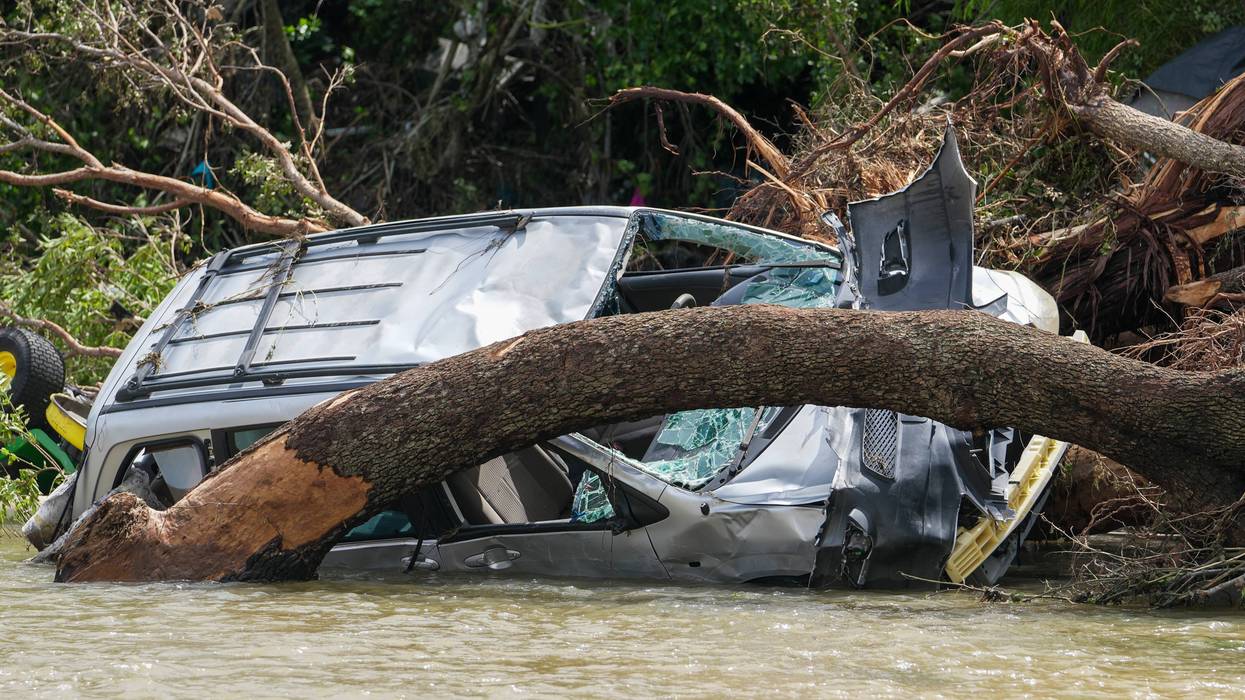
Calls for an end to oil, gas, and coal extraction grew louder in 2025 as the impact of fossil-fueled planetary heating was starkly illustrated by devastating wildfires across the Los Angeles area, deadly flash floods in Texas, a European heatwave that was blamed for the deaths of more than 24,000 people, and cyclones and floods that killed thousands.
But as climate action groups demanded that governments and financial institutions end support for fossil fuel projects and companies last year, according to a report released Monday by several organizations, the world's largest banks only committed more financing to projects like the Mountain Valley Pipeline, a planned liquefied natural gas (LNG) "boom" in the Philippines, and fracking in the Permian Basin.
Last year, according to Banking on Climate Chaos—released by groups including the Rainforest Action Network, Sierra Club, and Oil Change International—the world's largest financial institutions committed $906 billion in financing to fossil fuel companies, representing an 8% increase over funding the previous year.
The groups emphasized that the banks financed pollution-causing oil, gas, and coal projects even as they made "voluntary commitments" to “aligning their lending, investment, and capital markets activities with net-zero greenhouse gas emissions by 2050," as a now-defunct United Nations-backed scheme called the Net-Zero Banking Alliance (NZBA) pledged.
More than a decade after countries agreed to the Paris climate accord and pledged to take action in a push to avert planetary heating over 1.5°C above pre-industrial temperatures, the report notes, "banks maintain and are expected to uphold climate policies independent of the NZBA."
However, it continues, "the collapse of the NZBA—culminating in its cessation of operations in October 2025—freed banks to further unwind from climate targets and other elements of their climate strategies."
"Notably, throughout 2025 and the first half of 2026, banks have further weakened their commitments to uphold 1.5˚C temperature rise limits, widened loopholes, and undercut sector policies for coal, oil, and gas energy or power supply primarily by removing or diluting exclusion criteria and commitments. Most policy changes in the past year were downgrades of existing policies rather than improvements," reads the report.
"Voluntary commitments aren’t working. No major oil and gas company is doing anything even close to what is needed to hold global heating to 1.5°C, and voluntary banking sector pledges like the Net Zero Banking Alliance aren’t cutting their pipeline of cash."
Diogo Silva, campaign lead for BankTrack and a co-author of the report, said: "Banks keep telling us they’re committed to climate. Then they abandon their own policies the moment political pressure mounts. Voluntary pledges have had their chance. We need binding rules—not promises.”
Banking on Climate Chaos highlights the banks that spent the most money investing in fossil fuel projects, with JPMorgan Chase named the leading financier of oil, coal, and gas. The Wall Street firm spent $58 billion in 2025, the same year it also "weakened" its own climate policy.
"Of the 15 North American banks in scope, 12 now have no meaningful fossil fuel commitments," said Rainforest Action network. "JPMorgan Chase and Goldman Sachs abandoned their coal and Arctic exclusions entirely, converting them into case-by-case due diligence standards."
JPMorgan Chase is one of three US banks listed in the top five fossil fuel backers; Bank of America financed the second-largest amount of pollution-causing projects at $47 billion, while Citigroup poured more than $45 billion into fossil fuels. Two Japanese institutions, Mitsubishi UFJ Financial Group and Mizuho Financial, were also in the top five.
With President Donald Trump taking executive action last year aimed at pressuring companies to back fossil fuel interests and "disregard social or environmental considerations," the report notes, US banks' share of all global fossil fuel financing increased to 32%, representing "the single largest source of fossil capital in the world." In 2021, US banks provided 28% of fossil fuel investment.
Trump has also aggressively pushed for more coal production since taking office for his second term in January 2025, and financing for coal mining expansion surged 77% in 2025, to $84 billion. Funding for coal power also grew by 40%, with companies pouring $81 billion into coal-fired plants.
Even when asked about the report's findings, top banks pointed to their own voluntary commitments to finance renewable energy projects and "achieve net zero financed emissions by 2050," as a spokesperson for Citigroup said to The Guardian.
The spokesperson said the bank "supports clients in the low‑carbon transition while recognizing the real need for secure, affordable and reliable energy today. We are committed to... advancing our $1 trillion sustainable finance goal, with a focus on balancing the transition with global energy resilience”.
David Tong, global industry campaign manager for Oil Change International and a co-author of the report, warned that "every dollar of finance for oil and gas helps an industry of war profiteers squeeze out short-term profits, further trapping communities into paying higher fossil fuel energy bills, fueling war and conflict, and burning all our futures."
"Voluntary commitments aren’t working. No major oil and gas company is doing anything even close to what is needed to hold global heating to 1.5°C, and voluntary banking sector pledges like the Net Zero Banking Alliance aren’t cutting their pipeline of cash," he said. "Instead, banks have injected over staggering $900 billion into fossil fuel financing in 2025 alone. Governments must step in and take urgent action to hold financial institutions and fossil fuel companies accountable for their role in the climate crisis.”
Since the Paris climate agreement, the report says, banks have poured a staggering $8.7 trillion into the fossil fuel industry, with the "Dirty Dozen," as the authors call the 12 largest fossil fuel financial backers, providing nearly 40% of all investment for coal, oil, and gas extraction.
The report makes demands of banks, calling on them to "exclude all finance for fossil fuel expansion immediately" and "require robust, 1.5°C-aligned transition plans from all existing fossil fuel clients"—but emphasizes that governments must compel financial institutions to end financing for oil, gas, and coal.
"After two consecutive years of fossil fuel finance increases by global banks—especially the increase in fossil fuel expansion finance and the continued backtracking from banks on their climate pledges—it is clear that the banking sector will not voluntarily take the necessary steps to transition out of fossil fuel finance at the pace and scale needed for the world to deliver on the Paris Agreement goals," reads the report.
Instead, it says, governments must mandate transition planning by banks, private equity holders, insurers, and other companies; make polluters pay for climate damages; ensure public finance institutions are subject to transparent reporting and legal accountability to international standards, and rapidly wind down supply-side fossil fuel subsidies, tax exemptions, subsidies, guarantees or other public assistance for new oil, gas, and coal projects.
"A decade after Paris, just twelve banks now drive more than a third of the world’s fossil fuel financing—proof that this is no longer a problem of markets, but of a small set of decision-makers making active choices," said Niko Lusiani, research director for Rainforest Action Network. "They are choosing to lock in an energy system that hands record profits to a few fossil firms while passing the costs onto the three of every four people on Earth who depend on imported fuel."
"The good news is that what a handful of banks built," said Lusiani, "governments and people worldwide have the power to change.”
Oreo may seem harmless. But when palm oil is sourced from destroyed rainforest or land taken without consent, the cost is not just environmental—it is human.
Oreo is marketed as “milk’s favorite cookie.” But behind that familiar blue package is a supply chain tied to rainforest destruction and violence against the people who defend their land.
Mondelēz International, the corporate giant that makes Oreo, has built a global snack empire worth nearly $40 billion a year. Its products line grocery shelves across the country. What most consumers never see is the palm oil that goes into those products—or the damage connected to its production.
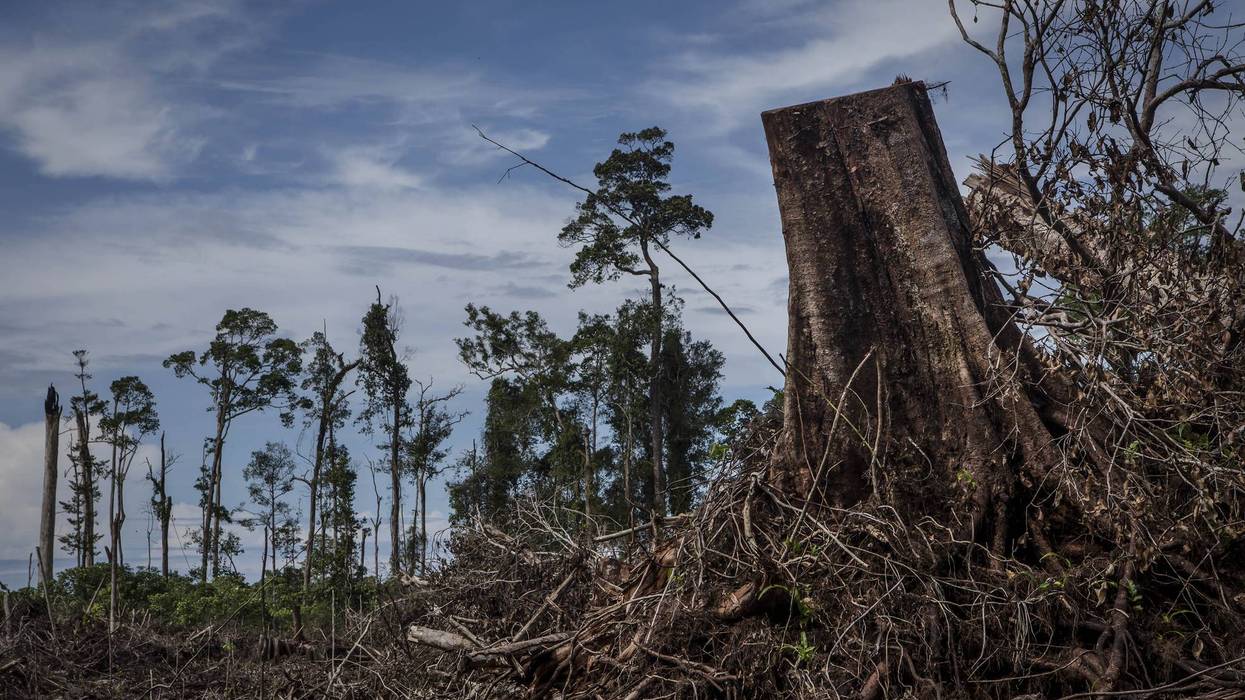
Palm oil expansion remains one of the leading drivers of tropical deforestation. It is also linked to land grabs, intimidation, and violence against Indigenous and local communities who resist losing their forests.
According to Rainforest Action Network’s 2025 Keep Forests Standing Scorecard, Mondelēz ranked last among major consumer goods companies on deforestation and human rights safeguards. The company scored just 4 out of 24 possible points. Most alarming, it received zero points for having a public policy protecting Human Rights Defenders—people who face threats, criminalization, and violence for standing up to destructive development.
Communities should not be displaced for cookies.
Between 2015 and 2024, more than 6,400 attacks and over 1,000 killings of land and environmental defenders were documented worldwide. Industrial agriculture is a major driver of this violence.
These defenders are farmers, Indigenous leaders, journalists, teachers, and community members. They are protecting forests that stabilize the climate, regulate rainfall, and support biodiversity found nowhere else on Earth. They are also protecting their homes.
Mondelēz has been exposed more than once for sourcing palm oil linked to illegal deforestation in Indonesia’s Leuser Ecosystem—often called the “Orangutan Capital of the World.” The Leuser region is one of the last places on Earth where critically endangered species including rhinos, elephants, tigers, and orangutans still coexist in the wild. It is also home to Indigenous communities who depend on intact forests for survival.
Satellite monitoring continues to show forest loss in protected areas within this ecosystem. That means safeguards are failing.
Mondelēz promotes its “Snacking Made Right” campaign as proof of sustainability leadership. But marketing language does not stop chainsaws. Without enforceable policies and independent monitoring, companies continue to profit while forests fall.
The absence of a Human Rights Defender policy is not a minor oversight. It sends a message through the supply chain that violence and intimidation are not red lines. When corporations fail to adopt zero-tolerance policies against threats and criminalization, suppliers operate with fewer consequences.
This is not just about environmental damage. It is about whether communities have the right to say no when their land is targeted for development. It is about Free, Prior, and Informed Consent. It is about whether corporate profit outweighs human safety.
Deforestation is accelerating the climate crisis. Tropical rainforests absorb carbon and cool the planet. When they are cleared, that stored carbon is released, intensifying global warming. From stronger hurricanes to prolonged droughts and wildfires, the effects are already visible.
Corporations that rely on forest-risk commodities have the power to change this trajectory. Mondelēz could require full traceability for its palm oil supply. It could suspend suppliers linked to deforestation or violence. It could adopt a clear, public Human Rights Defender policy with zero tolerance for intimidation and criminalization. It could require proof that communities have granted Free, Prior, and Informed Consent before land is developed.
Instead, it continues business as usual.
Oreo may seem harmless. But when palm oil is sourced from destroyed rainforest or land taken without consent, the cost is not just environmental—it is human.
Communities should not be displaced for cookies. Forest defenders should not risk their lives so multinational corporations can maintain margins.
Mondelēz has the size and influence to shift industry standards. What it lacks is the political will.
Protecting forests starts with protecting the people who defend them. Until companies like Mondelēz adopt enforceable policies that prioritize human rights and end deforestation in their supply chains, their sustainability claims will ring hollow.
Consumers deserve snacks that do not come at the expense of forests and communities. And the people risking their lives to protect the planet deserve more than silence from the corporations profiting from their land.
"The time for climate justice is now, and that means ending fossil fuel investment at its source and holding banks and financial institutions accountable," said one Native American environmental activist.
The 16th annual Banking on Climate Chaos report, which was released Tuesday, found that dozens of the world's biggest banks committed $869 billion to firms engaged in fossil fuels in 2024—a "tremendous" increase from the overall fossil fuel financing that was recorded the year prior, according to the authors of the study.
The report comes a few months after the World Meteorological Organization announced a new milestone in the climate crisis: Not only was 2024 the warmest year in a 175-year observational period, reaching a global surface temperature of roughly 1.55°C above the preindustrial average for the first time, but each of the past 10 years was also individually the 10 warmest on record.
The new report analyzed the globe's 65 largest banks by assets according to S&P Global's annual rankings and was authored by several climate-focused groups, including Rainforest Action Network (RAN), Sierra Club, Indigenous Environmental Network (IEN), and others.
The report has been endorsed by hundreds of organizations in dozens of countries, according to a statement from RAN, and all banks in the report were given the opportunity to review the financing attributed to them prior to the report's release.
Big picture, the report shows that Wall Street investment banks and other financial institutions are "complicit in the climate crisis," according to Tom BK Goldtooth, executive director of the Indigenous Environmental Network and study co-author.
"The time for climate justice is now, and that means ending fossil fuel investment at its source and holding banks and financial institutions accountable," Goldtooth added.
The bank financing compiled in the report includes things such as the role banks play in facilitating bond issuances or their lending of money, according to the methodology section. Banks play a crucial role in enabling fossil fuel production because, as senior research strategist at RAN Caleb Schwarz explained, fossil fuel companies are quite rich but they don't have enough capital to finance their projects solely on their own.
Fossil fuel financing had been in on the decline between 2021 and 2023, dropping by $215 billion during that time period to $707 billion—meaning the rise in 2024 is a turnaround of over $162 billion.
"This growth in fossil fuel finance is troubling because new fossil fuel infrastructure locks in more decades of fossil fuel dependence," according to the report. "While various macroeconomic and political factors likely influenced specific decisions, at the end of the day, what matters is the outcome: Banks poured even more money into the expansion of the fossil fuel industry, despite the clear societal need for them to do the opposite."
Other topline findings include that the 65 banks featured in the report have committed $7.9 trillion in fossil fuel financing since 2016, and over two-thirds of the banks upped their fossil fuel financing between 2023 and 2024.
The world's biggest offender when it comes to fossil fuel financing in 2024 was JPMorgan Chase, which tallied $53.5 billion in fossil fuel financing, per the report. Bank of America came in second place.
"This should be a wake-up call to national governments and regional supervisory bodies that they need to step in," said Allison Fajans-Turner, bank engagement and policy lead at RAN and one of the co-authors of the report, on Tuesday. "Banks are not policing themselves. Regulators need to set rules to manage the financial risk that banks are putting into the system."
The authors of the report lay out several demands for banks, including that they drop all finance for fossil fuel expansion, adopt "binding and mandatory emissions reduction targets for upstream, midstream, and downstream fossil fuels," and increase financing for a "just transition," among others.
"Chubb has the potential to lead the industry and raise the bar for AIG and Liberty Mutual to follow suit," said one campaigner.
Climate, environmental, and Indigenous rights defenders on Tuesday welcomed news that global insurance giant Chubb dropped out of a highly controversial methane gas project on the Texas Gulf Coast after months of grassroots community pressure.
The Sunrise Project published an insurance certificate obtained via a public information act request showing that Chubb is no longer insuring the Rio Grande liquefied natural gas (LNG) terminal in Brownsville. Houston-based NextDecade—which touts itself as a "sustainable LNG" company—says Phase I of Rio Grande LNG is currently under construction and that the 984-acre site "will be the largest privately funded infrastructure project in Texas."
In addition to exacerbating the climate emergency, Rio Grande LNG threatens land and sites sacred to the Carrizo/Comecrudo Tribe, which opposes the project.
"When you do the due diligence and understand Indigenous rights, this project is a no-go," Carrizo/Comecrudo Tribe of Texas Chair Juan Mancias said in a statement. "Investors and major banks have dropped Rio Grande LNG, and now insurers are following suit because the claims of the fossil fuel companies can't be trusted—here, or anywhere in Texas."
According to the Sunrise Project:
This is the latest setback for the not-yet-built project that would harm the coastal landscape of the Rio Grande Valley as one of the last pristine areas of the Texas coastline—a haven for wildlife, fishing, tourism, and recreation and home to Latine and Indigenous communities—into an industrial methane export hub. Years of campaigning was a likely factor in the insurer backing away. Five banks—SMBC, Société Générale, Credit Suisse, and privately, two additional banks—committed to not financing the project after pressure from community leaders.
Community members voiced the impacts that the methane terminal's gas storage tanks, flare stacks, pipelines, and explosion risks pose to the Port of Brownsville, including the city of Brownsville and those known as the "Laguna Madre": Port Isabel, South Padre Island, Laguna Vista, Long Island Village, and Laguna Heights. The cumulative impacts on soils, air and water quality, community health, vegetation, wildlife, threatened and endangered species, tourism, commercial fisheries, and noise would be significant.
"We tell companies the truth about these projects that would be an environmental disaster for our South Texas community. It feels good to be heard," said Bekah Hinojosa of the South Texas Environmental Network. "I expect other insurers like AIG and Sompo to drop next because the LNG facility, the pipeline, the company—they're losers with a dangerous project."
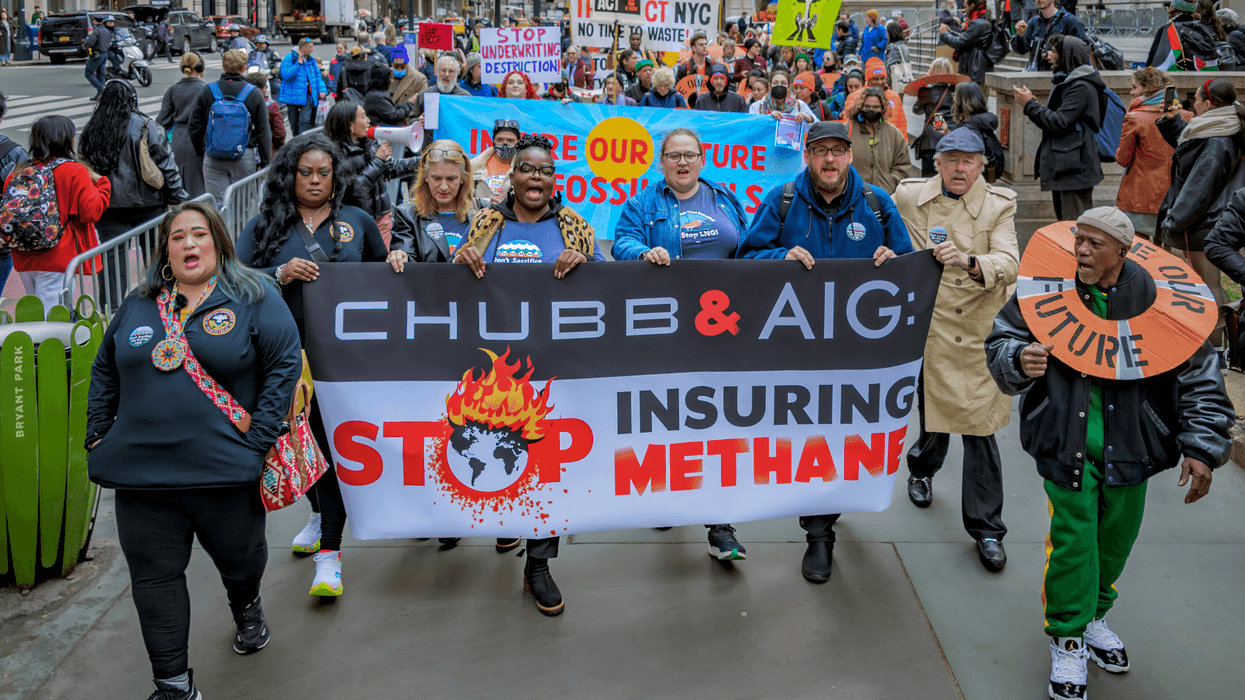
In June, hundreds of Gulf Coast residents traveled to Chubb's New York office to protest the company's insurance of fossil fuel projects including Rio Grande LNG, Texas LNG, Freeport LNG, and Cameron LNG. Six activists were arrested for blocking the main entrance to Chubb's building. The protest—one of several targeting fossil fuel funders and insurers—was part of the Summer of Heat, a civil disobedience campaign aimed at getting Wall Street to stop funding planet-heating oil, gas, and coal projects.
Ethan Nuss of Rainforest Action Network (RAN) asserted that "Chubb is showing some promising leadership by pulling out of Rio Grande LNG."
"Now Chubb must take the next step of becoming a true climate leader and stop insuring all methane," Nuss added. "Now Chubb must take the next step of becoming a true climate leader and stop insuring all methane. Chubb has the potential to lead the industry and raise the bar for AIG and Liberty Mutual to follow suit."
In February, RAN and the consumer advocacy group Public Citizen published a report revealing that at least 35 different insurance companies were underwriting Rio Grande LNG. The report named Chubb and AIG as the world's two most prolific insurers of fossil fuel projects.
"AIG has tripped over itself to insure Rio Grande LNG in the wake of Chubb's exit," Public Citizen insurance campaigner Rick Morris said on Tuesday.
"This move is the latest in a long pattern of insuring and investing in fossil fuels that shows AIG's climate and human rights commitments aren't worth the paper they're written on," he added. "We have one message for AIG: We won't stop fighting until you drop these disastrous projects."
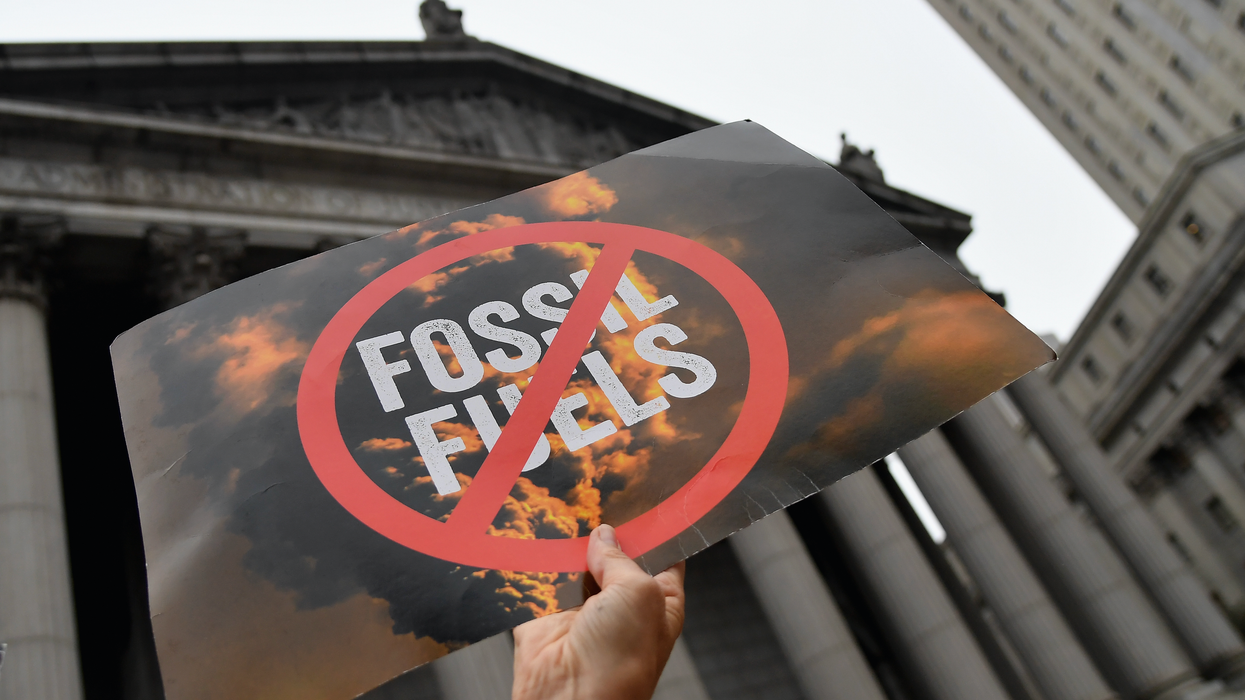
Eleven groups united on Thursday, "calling on lobbyists to pick a side in the climate fight."
Weeks after a public interest watchdog unveiled the deep ties the fossil fuel industry maintains to numerous industries in the U.S.—with universities, technology firms, and insurance companies employing many of the same lobbyists as the oil and gas sector—nearly a dozen climate justice groups on Thursday issued a call for governments and institutions across the country to "fire" their fossil fuel lobbyists.
F Minus, the research group behind a database released last month showing that more than 1,500 lobbyists have worked both for fossil fuel companies and local governments, schools, and other businesses, was joined by organizations including 350.org, Food & Water Watch, and the Rainforest Action Network (RAN) on Thursday in issuing the demand.
The groups warned that lobbyists employed by companies like Amazon and State Farm; cities including Minneapolis and Park City, Utah; and institutions such as Omaha Public Schools and the University of Washington are "playing both sides of the climate crisis by lobbying on behalf of oil, gas, and coal companies at the same time they are lobbying on behalf of communities and businesses being harmed by the climate crisis."
The lobbyists in question, they said, must choose between taking money from the industry international scientists agree is causing planetary heating, extreme weather, and other effects of the climate emergency, or working on behalf of the nation's communities.
"Hiring a fossil fuel lobbyist is radically at odds with fighting the climate crisis," said James Browning, executive director of F Minus. "It's time to talk to these lobbyists in a language they understand—money—and force them to choose between getting paid to work for the perpetrators of the climate crisis or its victims."
The group revealed last month that universities which have bowed to significant pressure in recent years to divest from fossil fuels are still employing lobbyists that work to promote the pollution-causing industry's interests.
Johns Hopkins University, for example, divested from coal in 2017 but still employs lobbyists for NRG Energy and Holcim Participation, which both have "substantial coal interests."
"Young people will live with the climate crisis the longest and experience some of its worst impacts," said the groups Thursday. "Yet hundreds of colleges and public school districts employ lobbyists whose work on behalf of fossil fuel companies is making the crisis worse. We call on educational institutions to cut ties with these lobbyists."
The groups also noted that a number of cities whose residents are at risk of climate impacts continue to work with fossil fuel lobbyists. Minneapolis' plan to cut city emissions by 80% by 2050 is at odds with the fact that it shares a lobbyist with Enbridge, the Canadian oil company whose pipeline in Wisconsin was ordered to be partially shut down in June due to its risk of causing an environmental disaster on tribal land.
Minneapolis and other cities that employ fossil fuel lobbyists "must end those relationships now—and throw all resources behind lobbying 100% for climate solutions and climate policy progress," said Deborah McNamara, co-executive director of ClimateVoice, which also signed the statement.
"The imperative to act on behalf of climate action and climate policy progress is clear," she added. "At every turn we must be proactive in building new systems, calling out the misalignments in our current systems, and ensuring that all of our activities align with climate leadership and action."
The groups also noted that Amazon has employed fossil fuel lobbyists in 27 states while signing onto an international industry pledge to reach net-zero carbon emissions by 2040, and insurance companies including Liberty Mutual, Berkshire Hathaway, and State Farm work with lobbyists in dozens of states—even as the insurance industry has increasingly withdrawn from operating in states and communities facing extreme weather events.
"Liberty Mutual is sharing lobbyists with the fossil fuel industry and it shares a board member with Exxon," said Mary Lovell, energy finance campaigner at RAN. "They deny coverage for homeowners and businesses while providing coverage for fossil fuel projects in the same areas."
The lobbyists' ties to universities, cities, and companies relied on by millions of Americans enable them to "cloak a radical pro-pollution agenda in respectability," said the groups.
"All of these organizations and their constituents face a harrowing climate future unless we do more to check the power of the fossil fuel industry," they added. "Fire its lobbyists."

Will the insurance giant's top executive continue to unlock the fossil fuel industry's plans to ramp up coal, oil, and gas extraction, or instead adopt policies to accelerate a just energy transition?
You have likely never heard of him, but Tim Sweeney just became a critical decision maker when it comes to the fate of the fossil fuel industry's global expansion plans. As of January 1, 2023, Sweeney is the new CEO of Boston-based insurance giant Liberty Mutual, which is one of the biggest coal, oil, and gas insurers in the world.
Without the policies that Liberty Mutual and other big insurers provide, new fossil fuel projects like offshore drilling rigs, liquefied natural gas (LNG) export terminals, and oil and gas pipelines, cannot be constructed. Liberty also invests $2.3 billion of its premiums – that’s the money it collects for car, home, and other insurance policies – into fossil fuel companies.
From day one, new CEO Tim Sweeney must choose: will he continue to unlock the fossil fuel industry’s plans to ramp up coal, oil, and gas extraction, or instead adopt policies to accelerate a just energy transition?
Activists in Boston visited Liberty Mutual’s headquarters this week to congratulate Sweeney on the new role and ask him if he will step up as a climate leader. They handed out flyers to employees headed into work and plastered posters around the area, with our questions: “Which side are you on, Sweeney?” and “What is your plan?” – but have yet to get a response.
Our New Year’s Resolutions for Sweeney
With the first day of 2023 also Sweeney’s first day on the new job, Rainforest Action Network (RAN) and partners in the Insure Our Future campaign are calling on him to adopt these New Year's resolutions to ensure a safe and healthy planet for all:
With these resolutions, Liberty Mutual would catapult from being a global laggard on climate to a global leader. Insure Our Future’s sixth annual Scorecard on Insurance, Fossil Fuels, and the Climate Emergency, released in October 2022, found that Liberty Mutual’s fossil fuel insurance policies earned just 0.4 out of 10 points. Of 30 large insurance companies, it ranked near the bottom, even behind US peers like AIG and The Hartford. But with Sweeney now in charge, Liberty has the opportunity to change course and demonstrate what real, credible action looks like.
Sweeney’s Commitment to Diversity, Equity, and Inclusion
Throughout his career, Sweeney has been a champion for diversity, equity, and inclusion (DEI) within Liberty. However, he has yet to extend his DEI analysis to recognize that fossil expansion projects, in addition to climate impacts, disproportionately harm communities of color in the US and globally.
For years, frontline and Indigenous leaders have reached out to Liberty executives directly, asking to discuss the risks of projects Liberty is insuring or at risk of insuring on their lands, cultures, and livelihoods. They have been met with silence from the company.
It remains to be seen if Sweeney will live up to his DEI rhetoric and come to the table and listen to the communities who are being impacted by Liberty’s business decisions. As the leadership transition unfolds, we’ll be watching Liberty’s response on these specific projects (and others) very closely to see where Sweeney lands:
An Opportunity for Bold Leadership
Sweeney isn’t the only new executive at Liberty Mutual. Alongside him, a team of Liberty Mutual senior officials moved into new roles at the start of this year, and they’ve clearly got their work cut out for them. Liberty is already taking an economic toll from the impacts of climate change, experiencing among the highest catastrophe losses among US insurers this year, due to Hurricane Ian and other climate-fueled disasters.
This should be an issue that hits close to home for Sweeney, who is from Lowell, MA and works out of Liberty Mutual’s Boston headquarters. These flagship offices in Back Bay are at risk of flooding if temperatures warm beyond 3ºC, given how vulnerable large swaths of the city are to sea-level rise. As a company proud of its Boston roots, Liberty Mutual must tackle its contribution to the climate crisis to protect its own offices, its city, and the global climate.
Which side are you on, Tim Sweeney? Will you continue to enable the fossil fuel industry’s expansion agenda through Liberty’s insurance and investment portfolio, or will you step up in 2023?

Wednesday is Finance Day at COP27, the United Nations climate summit in Sharm El-Sheikh, Egypt, and the advocacy group Rainforest Action Network published a report exposing how major U.S. banks are financing hundreds of billions of dollars worth of fossil fuel projects--even as they tout their purported commitment to a low-carbon future.
"Global banks' top fossil fuel clients amount to a rogues' gallery of bad actors."
"The world's climate and energy scientists have set forth a clear mandate: In order to maintain a livable planet and prevent the global average temperature from increasing more than 1.5degC, we must rapidly and dramatically decrease greenhouse gas emissions," the RAN report--entitled Wall Street's Dirtiest Secret: How Fossil Fuel Expansion Depends on Big Bank Finance--states.
"To meet this goal, the vast majority of oil, gas, and coal must stay in the ground," the publication continues. "We must phase out production of some oil and gas reserves before they are fully exploited. We must stop building new infrastructure that relies on fossil fuels."
The paper notes that "the top six U.S. banks financed $445 billion to the top 100 companies expanding in oil, gas, and coal globally since the Paris climate agreement," and that financing from the institutions--JPMorgan Chase, Bank of America, Citigroup, Wells Fargo, Morgan Stanley, and Goldman Sachs--"accounts for a whopping 33% of the funding provided" to the world's 60 leading banks, as determined by their assets.
According to the report:
Fossil fuel expansion is an important litmus test for the seriousness of banks' climate commitments. In 2021, over 100 banks signed on to the Net-Zero Banking Alliance, thereby committing to achieving net-zero emissions by 2050, transparent emissions reporting, and interim targets for a transition to a low-carbon future. But virtually every single one of the world's top banks by assets continues to fund fossil fuel expansion.
Many banks justify business-as-usual financing to their fossil fuel clients by assuring the public that they are working with their clients to transition away from fossil fuels. But global banks' top fossil fuel clients amount to a rogues' gallery of bad actors. The clients--including Exxon, Saudi Aramco, BP, Shell, and TotalEnergies--not only are not transitioning away from fossil fuels, these companies are some of the world's biggest expanders.
RAN research manager April Merleaux said in a statement that the report shows "exactly how much the top U.S. banks contribute to the expansion of fossil fuels."
"Companies aiming for a sustainable future must reconcile their aspirations with their profit motives," she added. "Banks say a lot, but unless their financial actions are drastically altered we can't take them seriously when it comes to climate. Billions must be invested in a just transition, not in polluters' endless expansion of fossil fuels and their short-term profits."
The new report is endorsed by groups including Giniw Collective, Indigenous Environmental Network, Mazaska Talks, BankTrack, Healthy Gulf, Louisiana Bucket Brigade, Oil Change International, Reclaim Finance, Sierra Club, the Sunset Project, Urgewald, and the Vessel Project of Louisiana.
Paddy McCully, senior analyst at Paris-based Reclaim Finance, said in a statement that "the outsized role of Wall Street in driving fossil fuel expansion globally is deeply alarming."
"U.S. banks lack policies even to stop finance to the companies expanding coal mines and power--while globally more than 40 banks, investors, and insurers have already stopped financing coal developers," McCully added. "Given the U.S.' historic responsibility for CO2 levels in the atmosphere, climate justice means that the U.S. financial sector must lead a massive redirection of funding from fossil fuels to clean energy."
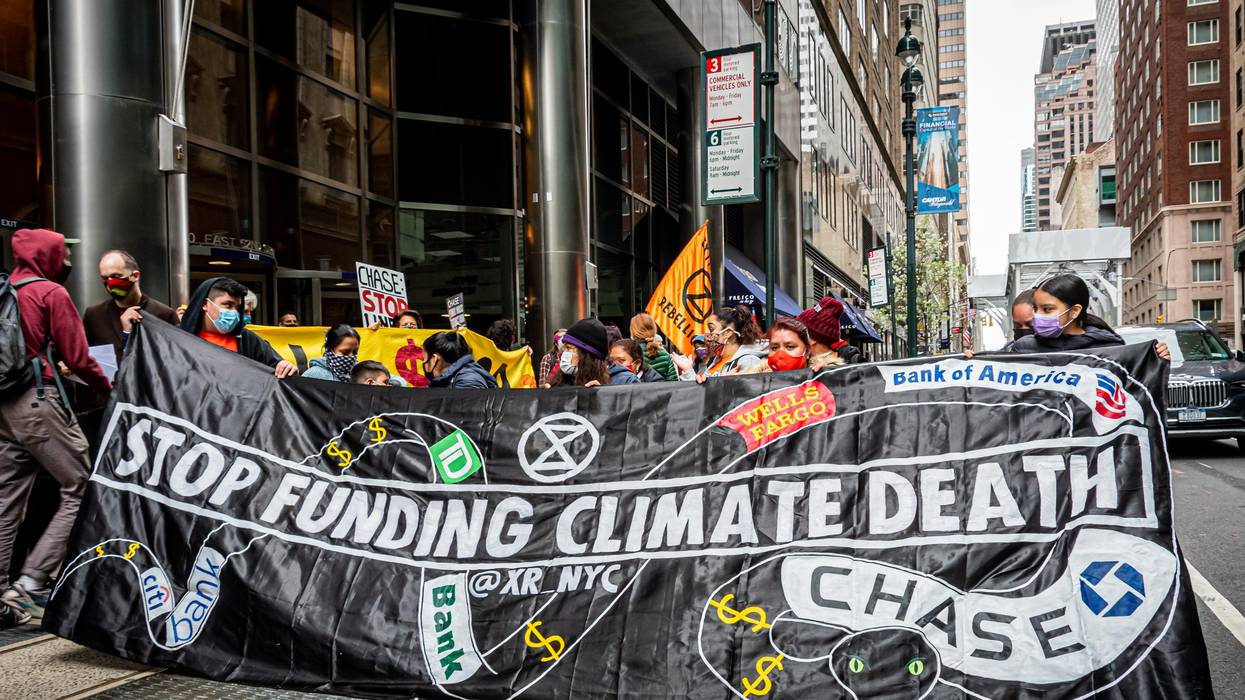
Hundreds of organizations announced plans on Thursday to launch a mass mobilization this fall aimed at holding accountable those that allow destructive fossil fuel extraction to continue, specifically the Wall Street banks that have poured more than $1 trillion into oil and gas projects in recent years.
The Stop the Money Pipeline coalition, which includes more than 200 climate action groups, called on people across the U.S. to join "Blame Wall Street" public actions that are already planned in New York, Los Angeles, San Francisco, and other cities where campaigners will "connect the dots between the extreme weather events harming communities and the corporations fueling the climate crisis."
"There are plenty of people to be angry at: fossil fuel companies, which exist to make massive profits off of poisoning our air, water, and planet," Alec Connon and Arielle Swernoff, organizers with Stop the Money Pipeline, wrote at Common Dreams Thursday. "Politicians, who are bought and sold by wealthy tycoons, and whose climate policy--years in the making--was still riddled with giveaways to the fossil fuel industry. And finally: Wall Street."
As the Rainforest Action Network showed in a report released earlier this year, since the Paris climate agreement was forged in 2015, JPMorgan Chase has invested $382 billion in fossil fuel projects. Citigroup is the second-largest funder of oil and gas extraction, pouring $285 billion into projects, and Wells Fargo follows close behind at $275 billion.
Bank of America, Barclays, TD, and Morgan Stanley are also part of what the report labeled the "Dirty Dozen" and are among the banks Stop the Money Pipeline will target with their "Blame Wall Street" campaign this fall.
Fossil fuel companies also rely on insurance to build their infrastructure, and BlackRock and Vanguard are two of the largest investors in oil and gas projects, Connon and Swernoff wrote.
"These companies could stop the flow of money to fossil fuels today, but they are choosing greed instead," they said. "When we look around at the devastation caused by heat, flooding, hurricanes, and climate disaster, and we think about who to blame, Wall Street should sit at the top of the list."
This fall, the Stop the Money Pipeline will welcome anyone concerned about the climate crisis, extreme weather like the monsoons that recently caused unprecedented flooding and killed more than 1,000 people in Pakistan, and the fossil fuel investments made by banks that millions of Americans rely on to join or organize public actions across the country.
"Wherever you live--and regardless of whether you're new to activism or have been organizing for years--we want to support you in organizing to hold the funders of climate chaos accountable," wrote Connon and Swernoff, noting that Stop the Money Pipeline will be offering training and 1:1 coaching for anyone new to organizing.
Although Pakistan is responsible for just 0.3% of greenhouse gas emissions in the Earth's atmosphere, they said, it is currently suffering a humanitarian disaster induced by the fossil fuel-driven heating of the planet.
Catastrophes like Pakistan's, Europe's historic drought, and the drying-up of China's rivers and lakes "are happening because of a political and economic system designed to make some (mostly white, mostly male) people exceptionally rich from extracting and burning fossil fuels, while the rest of the world is left to suffer," wrote Connon and Swernoff.
"It's time to get angry, take to the streets, and hold those responsible for the climate crisis responsible," they wrote.
The coalition is also planning to hold an organizing call on September 7 to explain how advocates can organize "Blame Wall Street" demonstrations in their own communities.

A coalition of progressive groups on Thursday urged President Joe Biden to appoint "a real climate leader" to head the Federal Reserve.
"You can't consider Fed leadership without asking how it's doing on the biggest risk to the financial system--the climate crisis," David Arkush, Climate Program director at Public Citizen, said in a statement.
"We demand bold policies that shift power away from fossil fuel billionaires toward our communities, and call on President Biden to nominate a real climate leader who will re-imagine the role of the Fed in climate recovery."
--Tracey Lewis, 350.orgThe Federal Reserve is currently chaired by Jerome Powell, a Republican who was appointed to the board in 2012 by former President Barack Obama and appointed chair by former President Donald Trump.
As Politico noted Tuesday, there's been swelling pressure from the left for Biden not to reappoint Powell for the position. Powell's term ends in February 2022, though Biden is expected to announce a decision as early as late summer about who he's picking to be in that role after February.
"The Fed appointment," Politico reported, "will be the most consequential personnel decision left for Biden in his first term." The outlet continued:
Winning the confidence of investors and businesses will drive economic decisions into the 2022 midterm elections. With razor-thin majorities in Congress, the Fed also could be the lone force providing government support for the economy in the second half of Biden's term if he loses control of either chamber of Congress.
Powell is not without supporters on left. Economist Dean Baker, for example, wrote Wednesday that Powell "brought about a remarkable shift in Fed policy," and welcomed his view of running "the economy in a way that as many people as possible can have job."
The groups behind the new call, however--including 350.org, Climate Hawks Vote, Oil Change International, Public Citizen, Rainforest Action Network, Revolving Door Project, and Sierra Club--say Powell's failure to act sufficiently on the addressing the climate crisis merits his removal.
In their statement, the groups cite as evidence the D- grade the Fed received in the "Green Central Bank Scorecard" released (pdf) in March by U.K.-based group Positive Money.
A supplement (pdf) to that scorecard, authored by Yevgeny Shrago, policy counsel in Public Citizen's Climate Program, accuses the Fed of having "used the magnitude of the [climate crisis] as a call to gather facts and wait for development of better modeling of climate financial risk instead of deploying its authorities to address the issue and learn by doing."
The groups echoed that line of criticism in statements Thursday.
"If the Fed did not begin moving aggressively on Day One of the Biden administration (if not long before that), then the Fed is contributing to the climate crisis," said RL Miller, political director at Climate Hawks Vote. "There is no room any more for baby steps."
Tracey Lewis, senior climate finance policy analyst with 350.org, added, "As Fed chair, Jerome Powell continues to finance climate destruction."
"Instead of supporting Black and Brown communities fighting on the frontlines of Covid-19, racial and economic injustice, and climate devastation who need support to rebuild and recover," said Lewis, "Powell's Fed bailed out the planet-killing fossil fuel industry to the tune of billions."
"We demand bold policies that shift power away from fossil fuel billionaires toward our communities, and call on President Biden to nominate a real climate leader who will re-imagine the role of the Fed in climate recovery," she said.
The demands Thursday are directed at Biden, but Powell himself was urged last month to take greater action to protect the economy from climate risks. A letter to Powell, signed by dozens of groups including ones behind Thursday's demand, read in part:
The [Federal Reserve] Board should not be in the business of rescuing fossil fuel companies without a plan to phase out their contributions to greenhouse gas pollution in accordance with a 1.5degC pathway. Not only did the board buy risky fossil-fuel assets in 2020 without any conditions; its corporate bond purchases were heavily overweight in the energy sector (defined as oil/gas and coal value chain companies exclusively). In addition, over 13% of loans purchased through the Main Street Lending Program to date are for fossil fuels, compared to just 1% for clean energy. Separately, over $1 billion (19.5%) of the Secondary Market Corporate Credit Facility portfolio is composed of bonds from the energy or utilities sector. This is completely the wrong direction. The board must stop exacerbating the climate crisis with its own bond purchases and other rescue programs.
In a statement at the time, 350's Lewis said, "It's unthinkable that banks are still financing new fossil fuel development when we are crystal clear that we are on a path to climate chaos."
"The Federal Reserve must do its job, steering the economy away from disaster by ending fossil fuel finance," she said.

Climate campaigners on Tuesday denounced financial investment giants BlackRock and Vanguard for supporting the planet-killing status quo at Wells Fargo, one of the largest private funders of fossil fuel projects in the world.
BlackRock and Vanguard, which respectively own a 7% and 7.6% stake in the Wall Street financial corporation, are believed to have voted in favor of the bank's chairman, Charles Noski, at the company's annual meeting Tuesday.
"While acknowledgments and commitments may mark a change in thinking within BlackRock and Vanguard, it is action that is needed to curb the climate crisis."
--BlackRock's Big Problem campaign
The two companies have not released public statements regarding their votes, but with Noski winning 94% of the vote, it is "highly improbable for either Vanguard or BlackRock to have voted against him given their share of the vote," said the BlackRock's Big Problem campaign.
Instead of supporting Noski, said campaigners at Sierra Club and other climate action groups, BlackRock and Vanguard should have rejected a chairman under whose leadership Wells Fargo has poured $223 billion into fossil fuel projects just in the last five years. The bank is the top Wall Street investor in fracking infrastructure, and has been a major funder of the Keystone XL and Dakota Access pipelines.
Climate action advocates expressed outrage particularly at BlackRock--the largest asset manager in the world--which has for months claimed it will push the companies it helps control to address the climate crisis in their business plans.
"Wells Fargo has fallen significantly behind the curve when it comes to meeting the moment on climate action, and today it falls even further," said Ben Cushing, a campaign manager at Sierra Club. "Today, BlackRock and Vanguard did not live up to their rhetoric on climate action. We will be monitoring other pivotal shareholder votes closely and hope to see the largest investors step up to hold corporations accountable for their climate failures."
BlackRock acknowledged in its 2021 Stewardship Expectations report that "voting against directors, when we make clear to the company our rationale and expectations, is an effective tool for encouraging positive outcomes," and in January the asset manager said when its companies and directors are "not moving with sufficient speed and urgency" to combat the planetary emergency, it will vote against their re-election.
Under pressure this year, Wells Fargo set a goal of net zero fossil fuel emissions from the projects it finances by 2050. Campaigners said Tuesday it has not done nearly enough to ensure it will stop funding pollution-causing infrastructure.
"Today, BlackRock and Vanguard faced a major test on climate, and they failed," said Jason Opena Disterhoft, senior campaigner at Rainforest Action Network Climate. "They endorsed the management of the world's #3 fossil bank, and #1 fracking bank, with the weakest coal exit policy among its US peers. By giving a thumbs up to Wells Fargo's record on fossil fuels, BlackRock and Vanguard have shown how low a bar they're setting for climate action."
BlackRock, the coalition said, has "huge power and influence in major corporations--including major polluters and their funders. That influence can make or break climate action."
"While acknowledgments and commitments may mark a change in thinking within BlackRock and Vanguard, it is action that is needed to curb the climate crisis," the BlackRock's Big Problem campaign added. "So this shareholder season, as the world looks toward COP26, the United Nations Climate Change Conference in November 2021, their default position must be to vote in favor of pro-climate shareholder resolutions and against corporate boards when a company doesn't have a clear climate transition plan."
Climate activists have held demonstrations this month at BlackRock's international offices, including in London, New York, Zurich, and San Francisco. More demonstrations are planned for the coming weeks.
"The banking, energy, and utility sectors have the greatest potential to shape corporate climate action and protect long-term shareholder value, and there are climate critical shareholder votes happening in each this spring," said the groups.
"We'll be watching," they added.