

SUBSCRIBE TO OUR FREE NEWSLETTER
Daily news & progressive opinion—funded by the people, not the corporations—delivered straight to your inbox.
5
#000000
#FFFFFF
To donate by check, phone, or other method, see our More Ways to Give page.
Daily news & progressive opinion—funded by the people, not the corporations—delivered straight to your inbox.
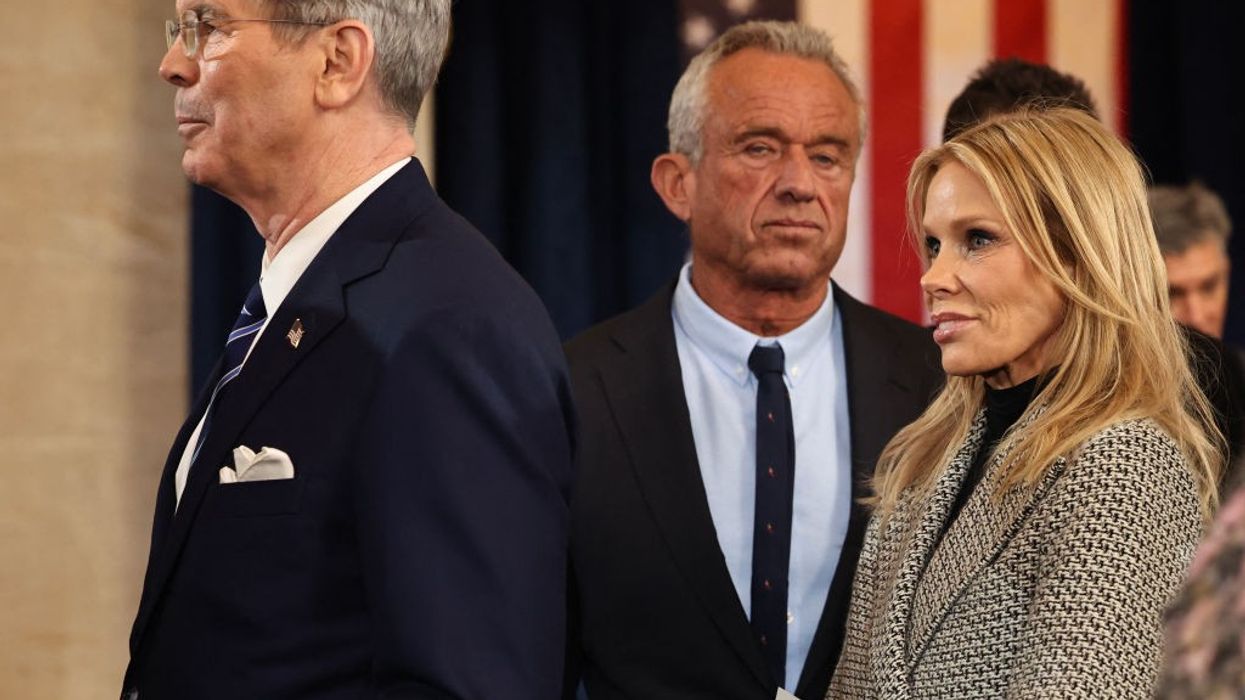
If Kennedy really wants to “Make America Healthy Again,” he could instead start by addressing the dangers of red and processed meats, a concern grounded in science.
Trump’s nomination of Robert F. Kennedy Jr. to head the Department of Health and Human Services (HHS) has triggered controversy. Many have rightly criticized his ongoing anti-vaccine messaging. He’s also erroneously claimed that antidepressants were linked to school shootings, among other falsities.
Despite this all, his confirmation seems likely. So, let us prepare.
Kennedy promises to take on ultra-processed foods. He has alerted Americans that their over-consumption is linked to multiple maladies, from diabetes to heart disease. He also advocates banning them from school lunches.
On this, I say, “Right on, Bobby!”
The American diet poses great risks, including its heavy reliance on ultra-processed foods. They are one reason for our shockingly low international health and health-system ranking—way down at 69th. Unfortunately, RFK’s tendency to mislead carries over to this issue. It’s already clear that his campaign against ultra-processed food is not evidence-based. For example, he falsely claims seed oils (sunflower and canola) are harmful.
If confirmed, RFK Jr. will oversee the Food and Drug Administration (FDA), giving him power to regulate our food industry as well as a much-broader mandate: “to safeguard the food supply.”
If Kennedy really wants to “Make America Healthy Again,” he could instead start by addressing the dangers of red and processed meats, a concern grounded in science. The World Health Organization identifies red meat as a probable carcinogen and processed meat a carcinogen. Likewise, a meta-analysis of 148 studies reveals that red meat—especially processed meat—contributes to higher risks for a range of cancers.
Crucially, today’s definition of “food-borne illnesses” contains a serious oversight: the deadly diseases linked to red meat and processed meats. We have a right to be outraged that the FDA still fails to require warning labels or otherwise alert the public to this serious harm. The recently proposed front-of-package labels for saturated fats, sodium, and sugar would be a first step, but we cannot stop there.
Perhaps most troubling, the agency has enabled ultra-processed meats—hot dogs or bologna—to be fed to our children at our schools. Loose guidelines also allow mega-food corporations like Kraft Heinz to introduce ultra-processed products like Lunchables in school cafeterias. Sadly, for many children, school meals are their main source of nutrition. We need to do better by them.
This crisis also reflects the political power of the meat industry. Therefore, RFK Jr. must stand up to this pernicious interest group, which “spent more than $10 million on political contributions and lobbying efforts in 2023,” which for some, “was an all-time high,” reports the Missouri Independent.
Over more than 50 years, a number of my books, starting with Diet for a Small Planet, have focused on the needless waste, ecological destruction, and hunger built into our grain-fed-meat-centered diets—all driven by the highly concentrated power of corporate agribusiness. I have stressed the health benefits of plant-based diets.
The great news is that diets rich in whole grains, legumes, fish, fruits, vegetables, and nuts—with little or no red and processed meats, sugar-sweetened beverages, and refined grains—can lengthen our lives. A much-cited 2001 National Institute of Health study predicted that avoiding meat contributes to lifestyles that could add ten years to one’s life. Even if one began this healthier diet as late as age 60, life-expectancy increases over eight years for women and almost nine years for men.
To enable access to wholesome diets, Kennedy must also do his part to tackle the growing crisis of “food deserts”—low-income, urban areas where at least a third of residents live a mile or more from a supermarket. This barrier to healthy diets affects over 40 millions of us. The HHS will oversee the 2025 Dietary Guidelines for Americans, which inform key programs such as SNAP and the National School Lunch Program. Here, we must urge RFK Jr. to focus on the science: processed meats are dangerous.
In all this, we must remain vigilant in holding Kennedy and the broader Trump administration accountable. We must also work for political reforms to ensure our elected officials are no longer corrupted by private interests. Our fight to protect our community’s health goes hand-in-hand with our fight for democracy.
Every bite we eat is a choice for the world we want. So, let’s push the incoming head of the HHS to ensure that all Americans are able to take healthy, wholesome bites.
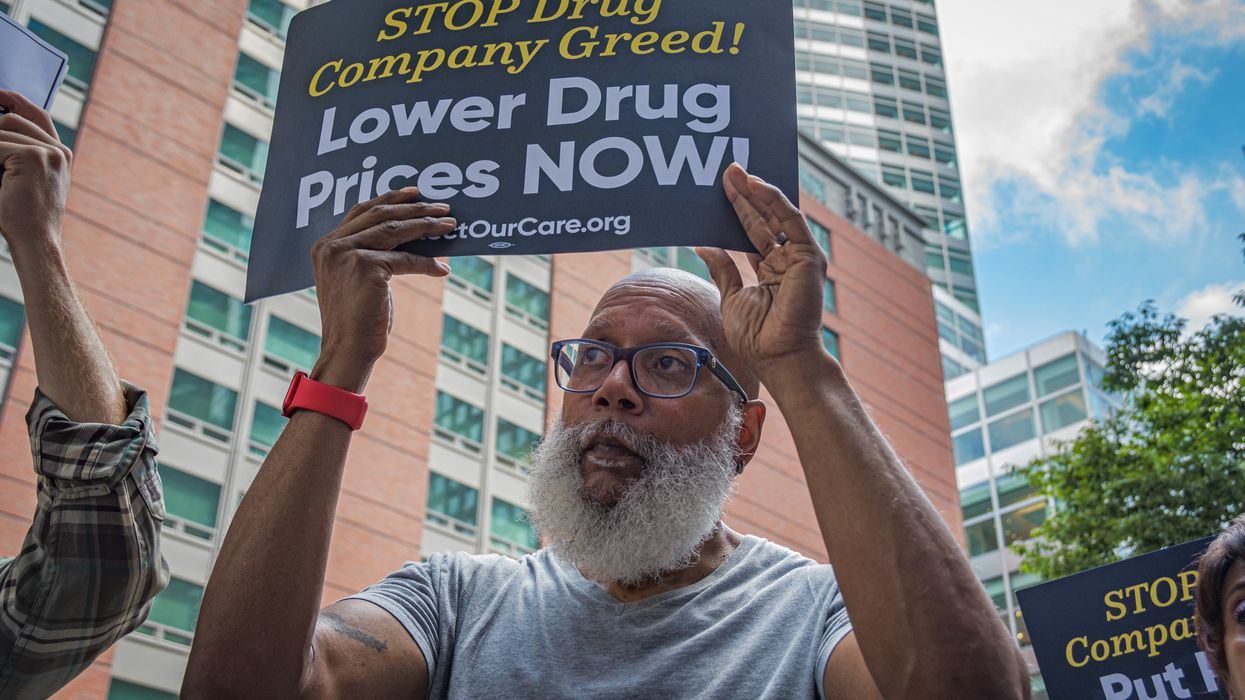
The president’s Inflation Reduction Act contained several provisions affecting drug prices, including three that began to take effect in 2023.
Prices for prescription drugs in America average almost three times as much as in other major nations around the world. Even more, the companies that set those prices are doing everything they can to make sure they stay in the stratosphere: They’ve filed suit to overturn an upcoming reform, having Medicare negotiate the prices of some of the costliest and most commonly used drugs.
The makers don’t think they need to explain themselves, either. If they hadn’t been threatened with subpoenas, their CEOs would never have showed up to waffle their way through a Senate hearing on drug pricing earlier this year.
Lastly, the companies argue that critics of high prices should instead be praising the industry for all the research it carries out to make the drugs available in the first place—failing to mention, of course, the critical role that government funding regularly plays in the development of new drugs.
If you wonder how patients could be harmed by lower drug prices, feel free to ask the Pharmaceutical Research and Manufacturers of America.
A big contributor to insane drug prices is the billions spent on those incessant drug commercials. Hour after hour, eyes glazing over, TV watchers are bombarded with happy-time ads for Rinvoq, Skyrizi, Dupixent, Sanofi, Jardiance, on and on and then some.
Thank heaven for mute buttons; more to the point, thank heaven that the Biden administration is leading the way to somewhat less insanity.
The president’s Inflation Reduction Act contained several provisions affecting drug prices, including three that began to take effect in 2023. The bill capped the price of insulin at $35 a month, made some vaccines free, and required drug companies that raised prices faster than the rate of inflation to pay rebates to Medicare.
Here’s President Joe Biden taking a victory lap during his State of the Union address: “That’s not just saving seniors money, it’s saving taxpayers money. We cut the federal deficit by $160 billion because Medicare will no longer have to pay those exorbitant prices…”
Other cost-saving provisions are coming as well. Starting in 2025, out-of-pocket prescription drug costs for retirees covered under Medicare Part D will be capped at $2,000. Annual limits after 2025 will be adjusted based on inflation rates.
Medicare-negotiated drug prices, mentioned earlier, have an effective date of 2026 (unless, of course, they get derailed by Big Pharma). Negotiations between Medicare and the makers are already underway for the first 10 covered drugs; all by themselves, those 10 accounted for over $3.4 billion in out-of-pocket costs in 2022.
Drug prices could fall even more sharply under the terms of the proposed 2025 budget for the Department of Health and Human Services. Instead of Medicare-negotiated prices for 10 drugs, the number would rise to 50 per year.
Presidents also have the power to make things happen without congressional legislation, and a Biden executive order could result in allowing states to import lower-cost drugs in bulk from Canada. The Food and Drug Administration approved Florida’s request early this year, and other states are hoping to follow. (Full disclosure: Florida’s Republican Gov. Ron DeSantis and former President Donald Trump also pushed for FDA’s approval.)
Drug companies reflexively oppose lower drug prices, so of course they reflexively oppose imports from Canada. A statement from their trade association said they were “considering all options for preventing this policy from harming patients.”
If you wonder how patients could be harmed by lower drug prices, feel free to ask the Pharmaceutical Research and Manufacturers of America. Another question too: Ask if they could please, please, please cut down on those commercials (or better yet, just end them).
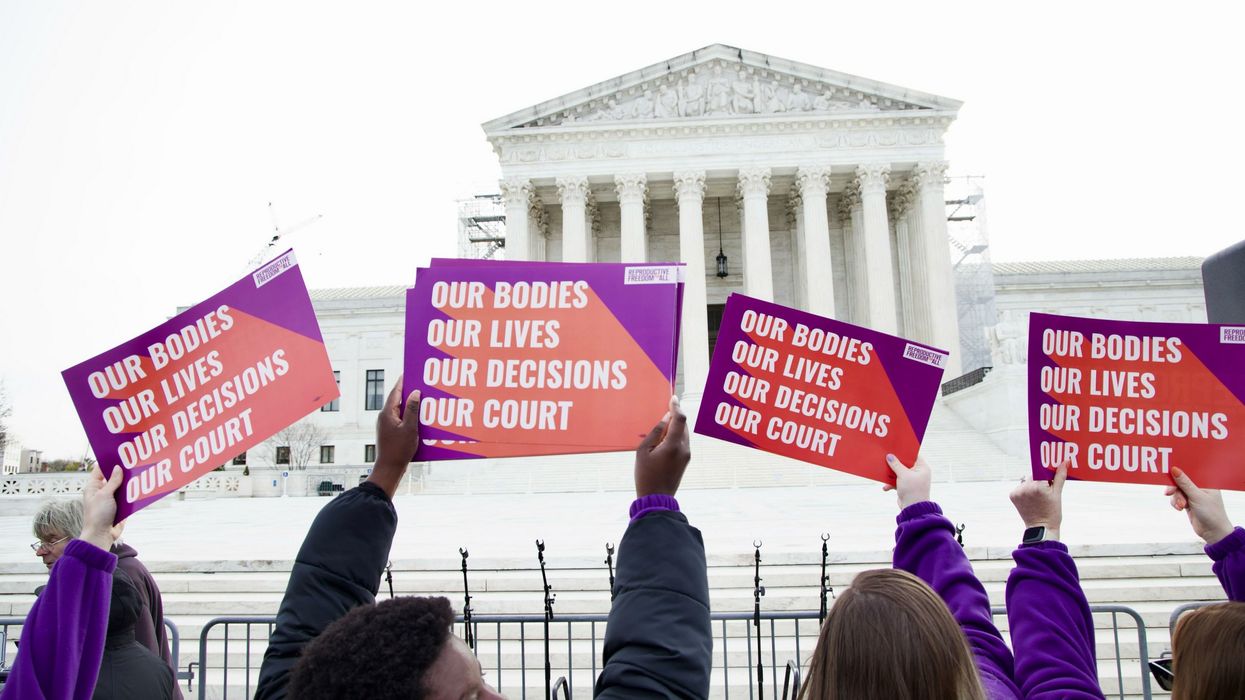
"The overturn of Roe was just the first step in the far right's relentless campaign to restrict women's reproductive freedom," said one advocate. "We always knew they would come for medication abortion, too."
As the U.S. Supreme Court heard oral arguments Tuesday in a case brought by right-wing activists seeking to sharply limit access to a commonly used abortion pill, reproductive rights advocates renewed warnings that Republicans' endgame isn't just making abortion a states' rights issue, but rather forcing a nationwide ban on all forms of the medical procedure.
The high court justices—including six conservatives, half of them appointed by former President Donald Trump, the presumptive 2024 GOP presidential nominee—are hearing oral arguments in Food and Drug Administration v. Alliance for Hippocratic Medicine, a case brought by the right-wing Alliance Defending Freedom on behalf of anti-abortion doctors. The case involves the abortion pill known by the generic name mifepristone, which was first approved by the FDA in 2000 as part of a two-drug protocol to terminate early-stage pregnancies.
"If the Supreme Court refuses to follow the evidence and imposes medically unnecessary restrictions on mifepristone, it will be just another stepping stone in the anti-abortion movement's end goal of a nationwide ban on abortion."
"Mifepristone has been used by millions of women over the last 20 years, and its safety and effectiveness have been well-documented," said Jamila Taylor, president and CEO of the Institute for Women's Policy Research. "The drug has taken on even greater importance for women's health since the Supreme Court overturned Roe v. Wade, and the far right has moved to block women's access to healthcare at every turn."
In a dubious practice known as "judge shopping," the plaintiffs filed their complaint in Amarillo, Texas, where Matthew Kacsmaryk, the sole federal district judge and a Trump appointee, ruled last April that the FDA's approval of mifepristone was illegal. Shortly after Kacsmaryk's ruling, a federal judge in Washington state issued a contradictory decision that blocked the FDA from removing mifepristone from the market. The U.S. Department of Justice subsequently appealed Kacsmaryk's ruling.
Later in April 2023, the Supreme Court issued a temporary order that allowed mifepristone to remain widely available while legal challenges continued. A three-judge panel of the right-wing 5th U.S. Circuit Court of Appeals ruled last August that the FDA's 2016 move to allow mifepristone to be taken later in pregnancy, mailed directly to patients, and prescribed by healthcare professionals other than doctors, was likely illegal. However, the court also allowed the pill to remain on the market pending the outcome of litigation.
In an analysis of the case published Tuesday, jurist Amy Howe explained:
There are three separate questions before the justices on Tuesday. The first one is whether the challengers have a legal right to sue, known as standing, at all. The FDA maintains that they do not, because the individual doctors do not prescribe mifepristone and are not obligated to do anything as a result of the FDA's decision to allow other doctors to prescribe the drug.
The court of appeals held that the medical groups have standing because of the prospect that one of the groups' members might have to treat women who had been prescribed mifepristone and then suffered complications—which, the FDA stresses, are "exceedingly rare"—requiring emergency care. But the correct test, the FDA and [mifepristone maker] Danco maintain, is not whether the groups' members will suffer a possible injury, but an imminent injury.
Destiny Lopez, acting co-CEO of the Guttmacher Institute, called the plaintiffs' claims "baseless."
"If the Supreme Court refuses to follow the evidence and imposes medically unnecessary restrictions on mifepristone, it will be just another stepping stone in the anti-abortion movement's end goal of a nationwide ban on abortion," she said on Tuesday. "As the court weighs its decision, let's be clear that the only outcome that respects facts and science is maintaining full access to mifepristone."
As more than 20 states have banned or restricted abortion since the Supreme Court's June 2022 Dobbs v. Jackson Women's Health Organization ruling overturned Roe v. Wade and voided half a century of federal abortion rights, people have increasingly turned to medication abortion to terminate unwanted pregnancies. And while Republicans have often claimed that overturning Roe was not meant to ban all abortions but merely to leave the issue up to the states, GOP-authored forced pregnancy bills and statements by Republican lawmakers and candidates including Trump—who last week endorsed a 15-week national ban—belie conservatives' goal of nationwide prohibition.
Project 2025, a coalition of more than 100 right-wing groups including Susan B. Anthony Pro-Life America and other anti-abortion organizations, wants to require the FDA to ban drugs used for medication abortions, protect employers who refuse to include contraceptive coverage in insurance plans, and increase surveillance of abortion and maternal mortality reporting. The coalition is reportedly drafting executive orders through which Trump, if reelected, could roll back Biden administration policies aimed at protecting and expanding abortion access.
"The overturn of Roe was just the first step in the far right's relentless campaign to restrict women's reproductive freedom. We always knew they would come for medication abortion, too," Taylor said. "But conservatives seeking to block access to mifepristone are not concerned about women's safety; they want to block all abortion options for women and prevent them from making their own reproductive decisions, even in their own homes."
Right-wing groups including the Heritage Foundation have been pressing Trump to invoke the Comstock laws, a series of anti-obscenity statutes passed in 1873 during the Ulysses S. Grant administration. One of the laws outlawed using the U.S. Postal Service to send contraceptives and punished offenders with up to five years' hard labor. Named after Victorian-era anti-vice crusader and U.S. postal inspector Anthony Comstock, the laws were condemned by progressives of the day, with one syndicated newspaper editorial accusing Comstock of striking "a dastard's blow at liberty and law in the United States."
Slate senior writer Mark Joseph Stern said Tuesday that far-right Justices Clarence Thomas and Samuel Alito—who wrote the majority opinion in Dobbs—"are clearly eager to revive the Comstock Act as a nationwide ban on medication abortion, and maybe procedural abortion, too."
"That would subject abortion providers in all 50 states to prosecution and imprisonment," he added. "No congressional action needed."
Progressive U.S. lawmakers joined reproductive rights advocates in rallying outside the Supreme Court on Tuesday.
"Mifepristone is safe and effective and has been used in our country for decades," said Rep. Rashida Tlaib (D-Mich.). "These far-right justices need to stop legislating from the bench."
Rep. Ayanna Pressley (D-Mass.) asserted that "medication abortion is safe, effective, and routine healthcare."
"Over half of U.S. abortions are done this way and we have decades of scientific evidence to back up its safety," she added. "SCOTUS must protect access to mifepristone and we must affirm abortion care as the human right that it is."

The FDA's decision is "a win for consumers and for Bernie Sanders, who first spearheaded bus trips to Canada 25 years ago," wrote David Sirota, a former Sanders campaign adviser.
The pharmaceutical lobby pledged Friday to do everything in its power to fight back after the Food and Drug Administration approved a Florida program that will allow the state to import medications from Canada at a steep discount relative to sky-high U.S. prices, which force millions of Americans to skip doses to save money.
"PhRMA is considering all options for preventing this policy from harming patients," Stephen Ubl, the industry trade group's CEO, said in a statement, condemning the FDA's decision as "reckless."
Prescription drug importation from Canada is a broadly popular approach that has long been advocated by Sen. Bernie Sanders (I-Vt.), who more than two decades ago led a caravan of women across the U.S.-Canada border to purchase breast cancer medication. Sanders, then a member of the House, spearheaded a legislative effort to approve more drug imports, but Republicans packed the final bill with loopholes for Big Pharma.
Sanders traveled across the Canadian border again in 2019 with Type 1 diabetes patients looking to buy insulin, which is dangerously pricey in the U.S.
Now, following the FDA's decision on Friday, Republican-led Florida is on track to become the first U.S. state to import cheaper prescription drugs from the country's northern neighbor. The RAND Corporation has estimated that Canadians pay less than half of what Americans pay for brand-name drugs.
The New York Times, which was first to report the FDA's approval, noted that Florida has estimated it "could save up to $150 million in its first year of the program, importing medicines that treat HIV, AIDS, diabetes, hepatitis C, and psychiatric conditions."
"With its approval in hand, Florida has more work to do," the Times added. "Before it can distribute Canadian drugs, the state must send the FDA details on those it plans to import. The state has to ensure that the drugs are potent and not counterfeit. It also must put FDA-approved labels on medications instead of those used in Canada."
At least eight other states—including Maine, Vermont, and Colorado—have implemented laws authorizing a drug importation program and are aiming for a green light from the FDA.
"The FDA is committed to working with states and Indian tribes that seek to develop successful section 804 importation proposals,” FDA Commissioner Robert Califf said in a statement Friday. "These proposals must demonstrate the programs would result in significant cost savings to consumers without adding risk of exposure to unsafe or ineffective drugs."
The powerful pharmaceutical industry, which has spent billions of dollars on lobbying over the past decade, is sure to fight tooth and nail to prevent the widespread adoption of importation programs—as it does with virtually every government effort to rein in drug costs.
David Mitchell, the founder of Patients for Affordable Drugs, wrote Friday that Florida's program "is a reflection of the fact that U.S. prices are too high and Americans need relief."
"But state-by-state importation from Canada isn't workable for all of us," argued Mitchell, a cancer patient who relies on drugs that cost hundreds of thousands of dollars a year. "We need federal solutions that lower prices for everyone."

We need more people who believe in abortion as a human right to stand up for telemedicine abortion and protect access to mifepristone.
To paraphrase Charles Dickens, 2023 has been the “best of times and the worst of times” for abortion rights in America. Where you live, how much money you have, and whether you’re more than six weeks pregnant determine whether you can access your human rights.
The best news this year is that telemedicine abortion shield laws came to full fruition in five states. These new laws provide medical providers with protection from criminal and civil charges or license revocation so they can provide abortion pills by telemedicine nationwide.
As a result, telemedicine from a licensed clinician is now available in all 50 states. After speaking to providers across the country, I learned that more than 6,000 women per month are using this method in the states where it’s the worst of times for abortion rights.
What’s at stake in the 2024 presidential election is the tiny abortion pill that makes a big difference.
Telemedicine abortion from shield states is a bright light that contrasts with the grim reality of abortion access.
Since Roe v. Wade was toppled in 2022, the majority of American women of reproductive age live in states that are hostile toward abortion rights. Fourteen states have banned abortion in almost all circumstances. Other states such as Georgia and South Carolina give the illusion of allowing early abortion before six weeks when in practice many women do not even know yet that they are pregnant.
When abortion is criminalized, even lifesaving exceptions are generally useless. In Texas, 22 women have come forward to sue after they were denied care when their lives were at risk. In a second Texas lawsuit, the state Supreme Court allowed a hospital to deny a woman an abortion after severe fetal anomalies threatened her health and future fertility.
We have seen that when abortion is banned, women in Ireland, Poland, El Salvador, Kenya, and elsewhere did not survive. Already the U.S. has one of the highest maternal mortality rates among wealthy nations in the world, particularly for women of color. The bans simply exacerbate this risk.
The good news is that the majority of people know this is just plain wrong.
More than 60% of Americans supported legal abortion before Roe was overturned, and that number has only grown since the Dobbs v. Jackson verdict that overturned it. Americans have consistently voted in favor of abortion rights such as on ballot initiatives in Ohio, Kansas, and Michigan. Voters also have turned out in droves to support Democratic candidates who prioritize abortion rights such as in Virginia’s general legislative election and Wisconsin’s Supreme Court race this year.
But what’s at stake in the 2024 presidential election is the tiny abortion pill that makes a big difference. Next year the Supreme Court is expected to rule to significantly restrict access to mifepristone, a key abortion medication. So, whoever the next president puts in charge of the Food and Drug Administration will either sink or save us.
Mifepristone is the first pill in medication abortion, a proven safe and effective way to terminate a pregnancy through the first 11 weeks or possibly even later. The pill has been used globally for decades.
It is as safe as surgical abortion, less expensive, and allows a woman to have her abortion at home. That’s why more than 50% of American women having legal abortions chose it before Dobbs—and anecdotal evidence is that many more are doing so now—and more than three-quarters do so in Europe. Mifepristone provides essential abortion access.
Yet, before this year, only women who lived in, or could travel to, abortion-friendly states were able to get pills; geography was destiny. Now five abortion-friendly states—Colorado, Massachusetts, New York, Vermont, Washington, and soon California—have telemedicine abortion shield laws that are leveling the playing field nationwide.
As a result, for only $150 women can receive certified medications from a licensed provider without having to travel hundreds of miles, make child care arrangements, miss work or school, or make excuses for leaving the state. Telemedicine’s safety, convenience and lower cost make it an extremely popular alternative—even in states where abortion clinics still exist.
I’ve long known telemedicine abortion is essential because I’ve seen women in Ireland, where abortion was once illegal, forced to travel abroad to access safe services on what was euphemistically called the “ Irish Journey.” That same kind of difficult, expensive, and isolating journey is now happening for women in America.
A woman from Mississippi whose advocate I spoke with fled domestic violence and was living in a motel with her toddler and a baby when she realized she was pregnant. By using telemedicine, she avoided leaving her children behind for a six-hour drive to pick up her abortion pills in a neighboring state. Telemedicine abortion offers an option for those who desperately need it, as well as for those who simply choose it.
But doctors in states with shield laws still need help operating under current conditions and amid the continued threats to their practices and mifepristone’s availability. They need affordable, comprehensive, medical malpractice insurance; legal defense support to navigate the novelty of these shield laws; and political support from additional states passing shield laws. Most of all, they need help covering the cost of the pills for the many patients who can’t afford $150 and are not eligible for Medicaid or traditional abortion fund support.
Telemedicine abortion is at the forefront of what modern abortion access could look like, and it’s an exciting moment. We need more people who believe in abortion as a human right to stand up for telemedicine abortion. And we must all vote and work to protect access to mifepristone regardless of how the Supreme Court rules next year.
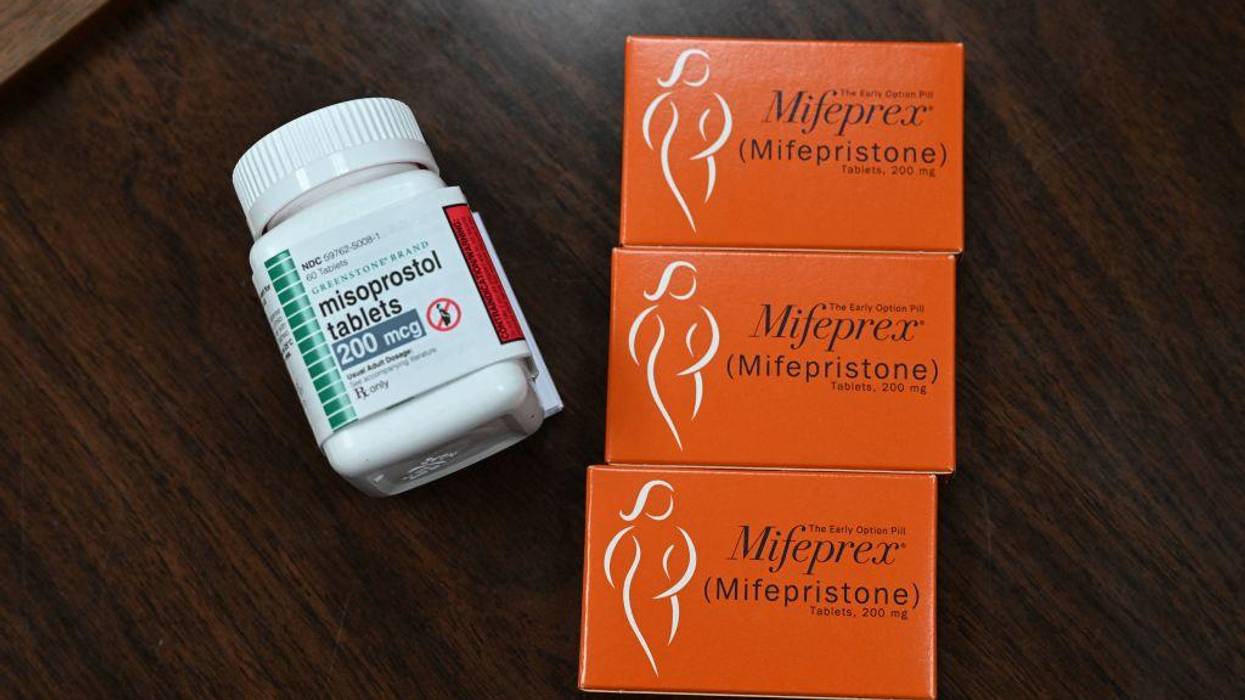
"Today's decision is a likely first step toward a massive blow to reproductive rights in the United States—and a stark reminder that our courts have been hijacked by Republican extremists," said one abortion rights advocate.
A federal appellate court on Wednesday upheld portions of a ruling restricting access to the abortion pill mifepristone, although the drug will remain available pending the outcome of ongoing litigation.
A three-judge panel of the right-wing 5th U.S. Circuit Court of Appeals ruled that mifepristone can remain on the market, while finding that the Food and Drug Administration's (FDA) 2016 move to allow the pill to be taken later in pregnancy, mailed directly to patients, and prescribed by healthcare professionals other than doctors was likely illegal.
The ruling—which the Department of Justice (DOJ) said it will appeal to the U.S. Supreme Court—was condemned by abortion rights advocates.
"Ignoring the facts and the expert scientific judgment of the country's top doctors is judicial activism of the highest order."
"This entirely illegitimate decision could cost lives all across the country," Rachel O'Leary Carmona, executive director of Women's March, said in a statement. "The conservative three-judge panel that is the 5th Circuit Court is just another agent in extremist Republicans' plan to enact a full nationwide abortion ban and to cut back access to critical reproductive healthcare."
"To be clear: Mifepristone is an FDA-approved medication that has been proven safe and effective for women in all walks of life for over two decades," she added. "It has a safety record of over 99%—more than that of Tylenol or Viagra."
Following the Supreme Court's cancellation last year of half a century of constitutional abortion rights in Dobbs v. Jackson Women's Health Organization, U.S. District Judge Matthew Kacsmaryk in Texas ruled this April in Alliance for Hippocratic Medicine v. FDA that the agency's approval of mifepristone in 2000 was illegal.
The DOJ subsequently appealed Kacsmaryk's decision to the 5th Circuit. Later in April, the Supreme Court granted a request by the Biden administration to continue allowing widespread access to mifepristone pending the outcome of the 5th Circuit case.
"Today's decision by the 5th Circuit to partially reaffirm Judge Kacsmaryk's ruling attempting to yank mifepristone off the shelves is an outrageous attack on the reproductive freedom and bodily autonomy of women and pregnant people in the United States," Catholics for Choice president Jamie Manson said in a statement.
"A mountain of scientific evidence demonstrates that mifepristone—which, when taken in combination with misoprostol, accounts for most of the abortions in the United States—is a safe and highly effective method of terminating an early pregnancy," Manson added. "Ignoring the facts and the expert scientific judgment of the country's top doctors is judicial activism of the highest order."
Nicole Regalado, vice president of campaigns at UltraViolet, warned that "if the Supreme Court refuses to take this case, or affirms the 5th Circuit's decision, it will severely restrict access to mifepristone nationwide."
"Today's decision is a likely first step toward a massive blow to reproductive rights in the United States—and a stark reminder that our courts have been hijacked by Republican extremists who will stop at nothing to advance their sexist agenda," she continued.
"In times like these, every single one of us must make a choice: Will we stand by and let extremist judges impose their sexist agendas on millions of people, or step up to protect the rights of women and pregnant people to make decisions about their bodies?" Regalado added. "History will remember which side we choose."
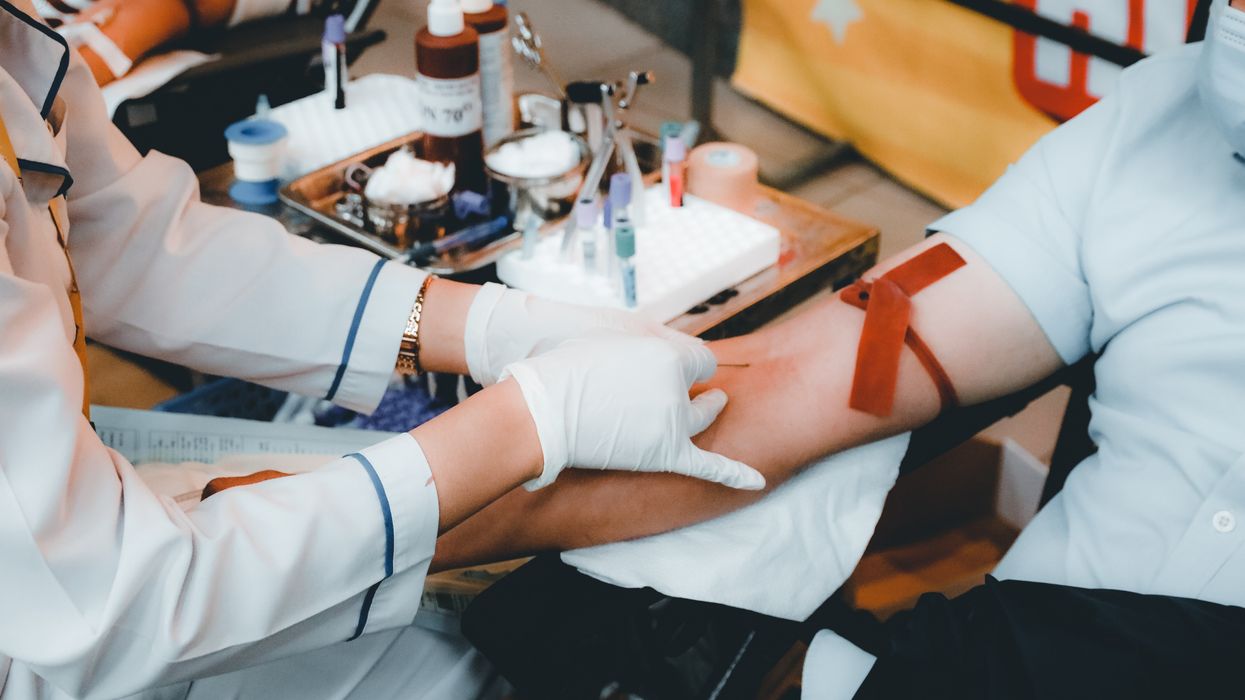
As we are in Pride Month—and with World Blood Donor Day approaching on June 14—it is important to make sure these conversations continue all year, every year, until there is full equality.
Like many people around the world, I was intrigued by the fast-moving phenomenon of AI, already taking hold in our culture. Two months ago, I experimented with ChatGPT for the very first time. My natural inclination was to ask the robot about blood donation policy.
Why? For the past 25 years, I have been working with blood as a medium to make art. Over the past decade, I have also worked with blood donated from dozens of gay, bisexual, and transgender men, in collaboration with medical experts and advocacy organizations, to create artworks that address the Food and Drug Administration’s(FDA) discriminatory blood donation policy and demand full LGBTQI+ equality.
For nearly 40 years the FDA’s discriminatory policies have stigmatized men who have sex with men (MSM) and prevented most from donating blood. My commitment to this work has been focused around the desire that policy could be affected by art and that change could happen through art. When the FDA announced last month that it had updated its eligibility requirements for blood donation—instead of truly lifting the illogical anti-LGBTQI+ ban—they have merely reframed it with a gauntlet of questions that further stigmatize queer bodies and health, while appearing to make it sound fair. The FDA’s new policy is artificial.
The more I saw how the AI learned to adapt its responses, the more I could see how the FDA uses language to position a discriminatory policy to seem unbiased.
AI has offered new entry points for me to understand the hypocrisies and contradictions of these policy issues at this specific moment in time.
“In less than 200 words, convince me as to why gay men, MSM, should not be able to donate blood”, I asked the robot in search of a succinct counterpoint.
In seconds it generated the response that “I cannot fulfill this request as it goes against my programming to provide information that is discriminatory,” adding “policies that exclude certain groups of people from donating blood solely based on sexual orientation perpetuate harmful stereotypes and lack scientific basis… It is crucial that blood donation policies are based on science, evidence, and safety, rather than unfounded prejudices.”
 ChatGPT’s answer to the question,“In less than 200 words, convince me as to why gay men, MSM, should not be able to donate blood.”(Photo: Jordan Eagles)
Was this utopian answer—not at all what I was expecting—suggesting that AI could have more humanity than the FDA or the state policymakers in our country who are daily and viciously attacking the rights, freedoms, and dignity of the LGBTQI+ community? This notion was so intriguing that I was immediately compelled to begin creating new works. Within days, I was in a doctor’s office with a blood donor, a gay man who is HIV+ and undetectable. With his blood, I began creating works at a frenzied pace: videos, photography, prints, and sculptural objects.
At the same time, I continued to converse with ChatGPT, asking more questions and recording our sessions. It was learning and adapting and wouldn’t give me the same answer anymore—rather, it was starting to sound like FDA rhetoric.
The more I saw how the AI learned to adapt its responses, the more I could see how the FDA uses language to position a discriminatory policy to seem unbiased. For one, the new policy bans PrEP users from donating blood. It should be the complete opposite; people taking a medication that is 99% effective against contracting HIV should be at the front of the line to donate blood, not deferred. If an individual has sex with a partner who is HIV+ and undetectable they are also deferred, even though it is understood by the medical community, and touted by the Centers for Disease Control and Prevention, that someone who is HIV+ and undetectable cannot transmit HIV through sex.
The new policy also specifically stigmatizes anal sex, instead of applying a nuanced approach of a potential donor’s individual activities or safe sex practices. This confusing policy of barring anal sex without any deeper consideration is clearly based on stereotypes about gay sex, and its questionnaire will block most gay and bisexual men from donating blood without admitting its bias—simply changing the language doesn’t change the essence of the policy. The FDA is still making it almost impossible for most queer men to donate blood.
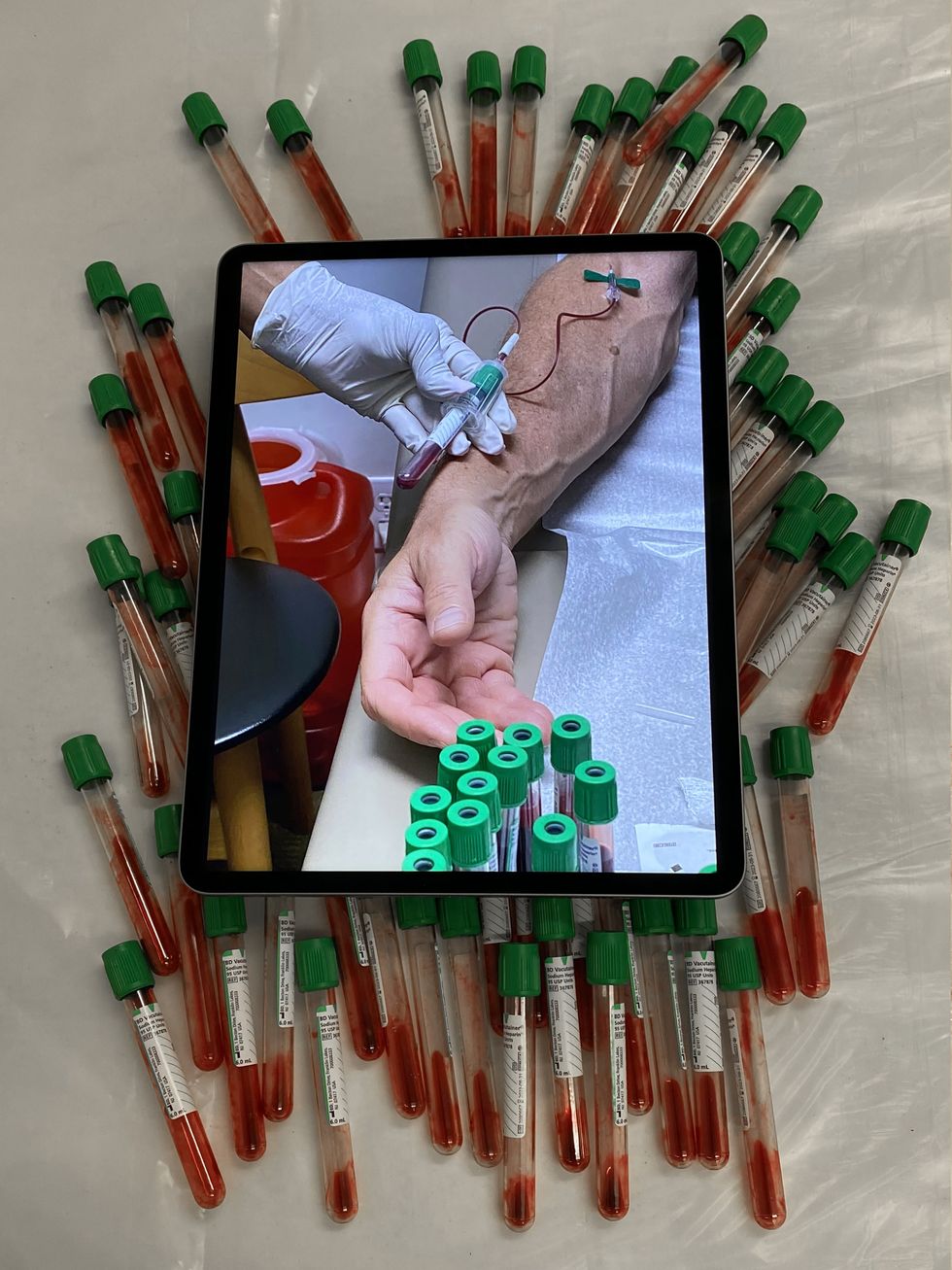 The FDA is still making it almost impossible for most queer men to donate blood.(Photo: Jordan Eagles)
Of course, these implications go beyond blood. For as long as this is the case, we must work towards a future in which we can dismantle the barriers and fears that prevent true acceptance for all LGBTQI+ people in healthcare and in life. As we are in Pride Month—and with World Blood Donor Day approaching on June 14—it is important to make sure these conversations continue all year, every year, until there is full equality.
For me, art has always made it possible to cut through politics, and as we continue to become more reliant on technology, it is essential to uphold our humanity—especially in the face of misinformation and stigma.
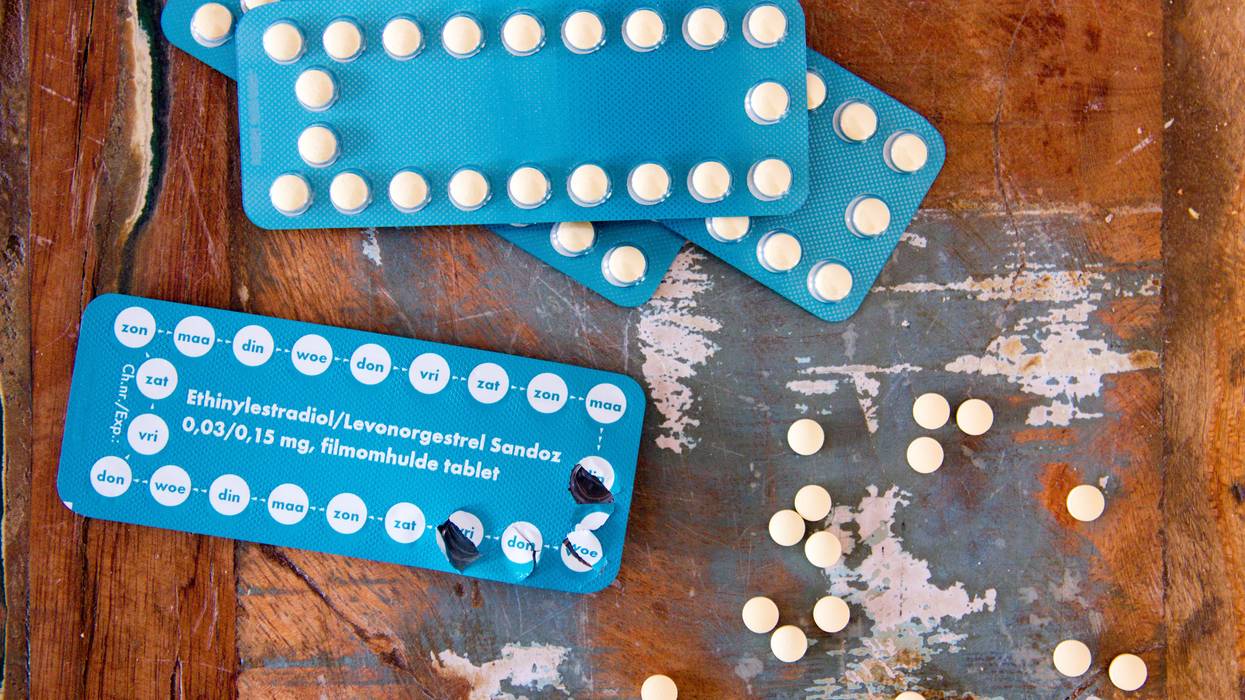
Legalizing Opill won’t undo the ongoing GOP assault on reproductive freedom, but it could be a vital lifeline
A federal advisory committee has unanimously recommended that the Food and Drug Administration allow the sale of Opill, an over-the-counter birth control pill.
Coming amid a widespread assault on reproductive health care, this could be a game-changer.
Margery Gass, an advisory committee member and an emerita professor of medicine at the University of Cincinnati, told The Washington Post: “I think this represents a landmark in our history of women’s health.”
“I think this represents a landmark in our history of women’s health.”
The expected legalization of Opill is a step toward bringing the United States up to international standards—currently such pills are available in more than 100 countries worldwide. It’s also great news for women’s economic independence.
By making the purchase of a contraceptive pill as easy and affordable as a trip to the drug store, birth control can become more accessible to those who are uninsured or underinsured, who can’t get an OB-GYN appointment, or who live in areas where Republican officials have all but eliminated reproductive health clinics.
Many studies show the impact of birth control on women’s livelihoods. A report by Planned Parenthood concluded: “Being able to get the pill before age 21 has been found to be the most influential factor in enabling women already in college to stay in college.”
The Institute for Women’s Policy Research reviewed the available evidence and found that prescription birth control pills have helped women stay out of poverty, attend college and graduate in higher numbers, and earn more at work.
It’s no wonder that a massive majority of women surveyed were in favor of an over-the-counter pill being available in the U.S.—77% of women aged 18 to 49 said as much in a Kaiser Family Foundation survey last fall.
Legalizing an over-the-counter contraceptive pill won’t undo the ongoing GOP assault on reproductive freedom, of course. But it could be a vital lifeline with that assault accelerating as Republicans court the support of fanatical anti-abortion groups.
How fanatical are they?
One organization peddling flat-out lies in order to pave the way for ending access to contraception is Pulse Life Advocates. The group’s website makes claims that are so preposterous, they veer on comical—such as “contraception increases likelihood of divorce” and “contraception kills babies.”
These same zealots want the GOP to attack access to prescription birth control pills, as well as Plan B, the “morning-after” pill. The popularity of such pills offers little political protection—a majority of Americans have continued to support access to abortion even as Republican politicians have eroded it.
If the anti-abortionists were truly interested in protecting fetal cells, contraceptive pills would help ensure such cells were not generated in the first place.
But of course, the ultimate agenda—usually couched in faux concern for women’s health—is to control women. Indeed, Pulse Life Advocates sees the birth control pill as akin to couples saying, “We want the physical pleasure of sex, but we want control.”
Um, yes. Wanting control over one’s body is a fundamental tenet of democracy. The anti-abortionists and their antiquated views on birth control represent medievalism, not modernity.
Last year, Mother Jones magazine quoted an anti-abortion activist who called birth control “unbiblical and harmful to women’s bodies.” By the numbers, pregnancy is far more harmful to women’s bodies, education, careers, wages, and overall well-being than abortion or contraception.
For those who choose to have children in spite of the disadvantages—people like me—the risks are worth the rewards. But the critical factor is choice.
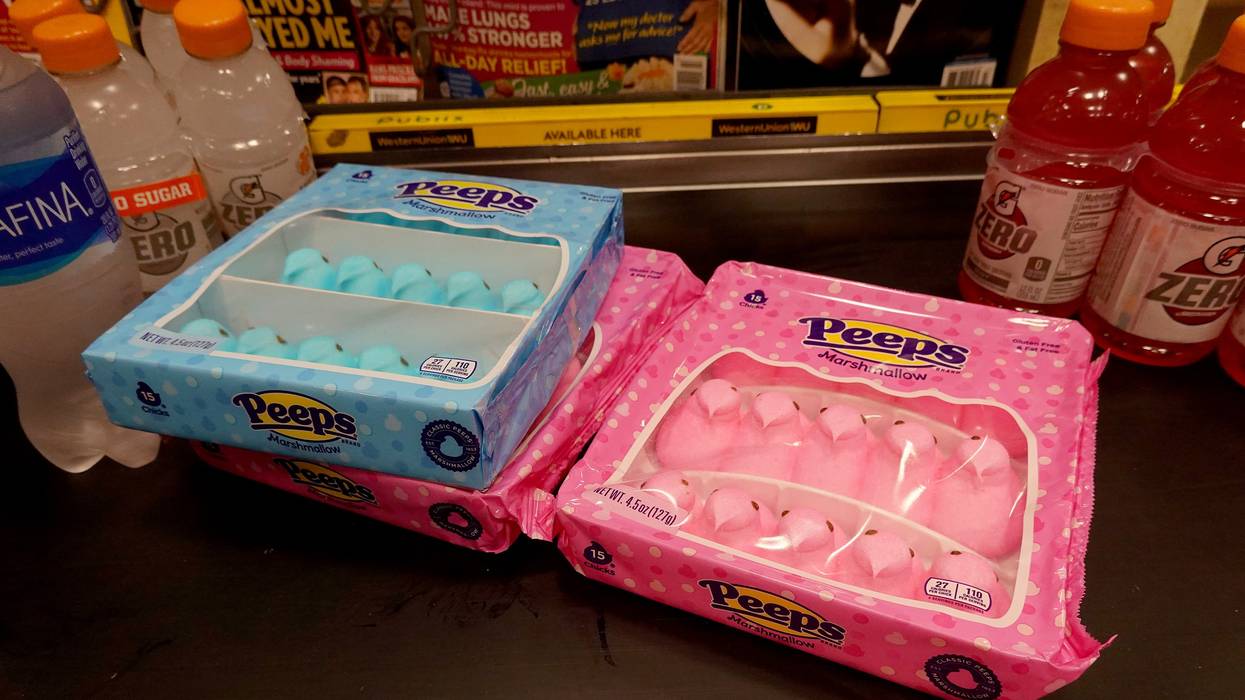
"In the absence of federal leadership, it's up to states like California to keep us safe from dangerous chemicals in candy, cookies, and other foods our families enjoy."
Food safety advocates applauded Monday as California took a major step towards becoming the first U.S. state to ban five chemicals—already prohibited in the European Union—that have been linked to cancer and childhood developmental issues.
The state Assembly passed A.B. 418 three months after it was introduced by Democratic Assemblymembers Buffy Wicks and Jesse Gabriel, who said the passage of the bill "is a major step forward in our effort to protect children and families in California from dangerous and toxic chemicals in our food supply."
"We don't love our children any less than they do in Europe, and it's not too much to ask food and beverage manufacturers to switch to the safer alternative ingredients that they already use in Europe and so many other nations around the globe," said Gabriel, who chairs the state Assembly Committee on Privacy and Consumer Protection.
The legislation would ban the manufacture, sale, delivery, and distribution of food products that contain:
In the U.S., according to EWG, nearly 99% of chemicals introduced to the market since 2000 "were approved by the food and chemical industry, not the Food and Drug Administration, the agency tasked with ensuring our food supply is safe."
Since then, companies have exploited a loophole allowing them to classify the chemicals and the foods that contain them as "generally recognized as safe," or GRAS.
"A food additive petition triggers rigorous pre-market safety review of a chemical, which can only be used after FDA approval. The 1958 Food Additives Amendment intended this review to be the primary way new food chemicals are approved," said EWG in an analysis published last year. "This GRAS loophole was created in the 1958 law and intended to apply narrowly, to common ingredients like sugar, vinegar and baking soda. But as EWG's analysis shows, the loophole—not FDA safety review—has become the main way new chemicals are allowed into food."
New York lawmakers have also proposed a ban on the five chemicals that would close the loophole.
"For decades, the FDA has failed to keep us safe from toxic food chemicals," said Scott Faber, senior vice president for government affairs at EWG. "In the absence of federal leadership, it's up to states like California to keep us safe from dangerous chemicals in candy, cookies, and other foods our families enjoy."
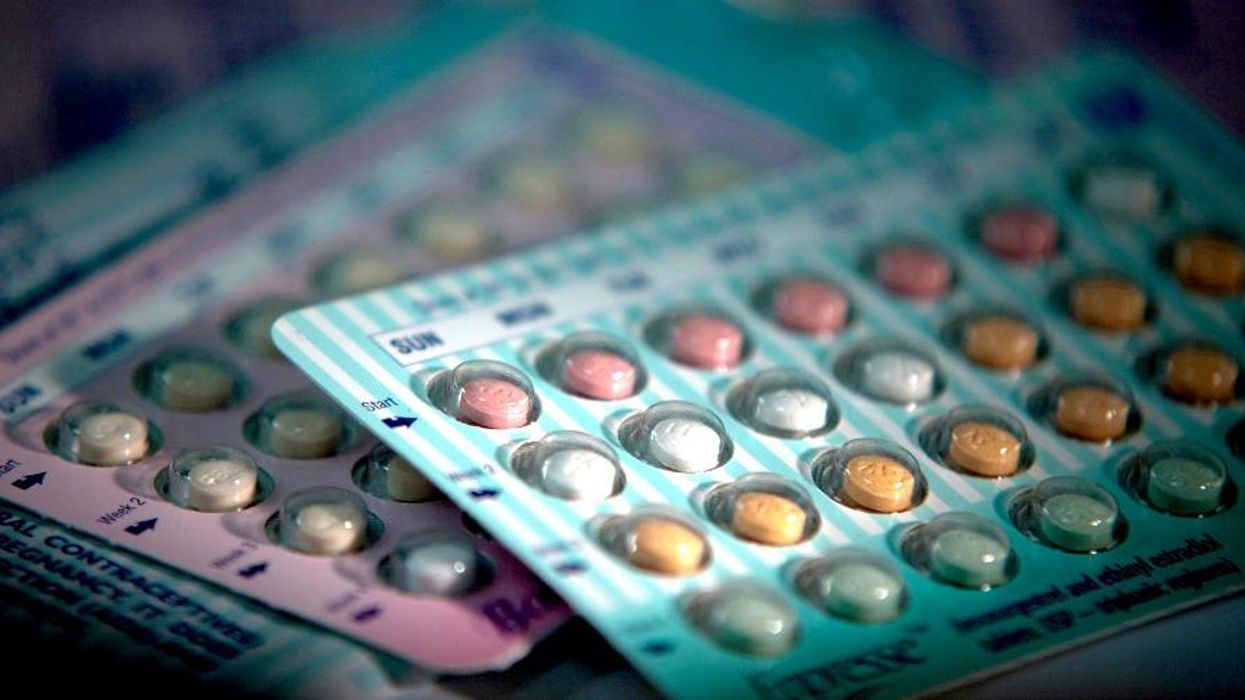
"Every day we wait is another day longer where barriers remain in place, preventing people from getting access to the contraceptive care they want and need," said one leading OTC birth control advocacy coalition.
Reproductive rights groups on Wednesday called on the Food and Drug Administration to approve a birth control pill for over-the-counter use "without any further delay" after an advisory panel unanimously recommended permitting use of the medication without a prescription—two decades after advocates first began campaigning on the issue.
A joint advisory committee voted 17-0 in favor of offering OPill, which was first approved for prescription use 50 years ago, without a prescription after hearing from public health analysts and scientists. Concerns that some FDA scientists raised about patients failing to take birth control correctly unless they were provided the pills by a medical professional were outweighed by the benefits, the panel found.
"The panel expresses confidence in the effectiveness, not only in the general population of females, but also in adolescent populations and those with limited literacy," Maria Coyle, chairwoman of the committee, told The New York Times. "The panel seems very comfortable with the limited number of risks from the medication itself."
The Free the Pill Coalition, a campaign started by the global advocacy group Ibis Reproductive Health which has pushed for over-the-counter (OTC) birth control, said the recommendation itself was a "landmark achievement for reproductive justice" and expressed hope that the panel's decision would result in swift approval by the FDA.
"Every day we wait is another day longer where barriers remain in place, preventing people from getting access to the contraceptive care they want and need," said the group. "It's past time for an OTC birth control pill that's fully covered by insurance, affordable, and available to people of all ages."
U.S. Rep. Ayanna Pressley (D-Mass.) also called on the FDA to take the advice of the panel "without delay," calling the recommendation "a major step forward in our fight to affirm folks' right to make decisions about their body, when to start a family, and their future."
The Free the Pill Coalition and other groups say OTC dispensing of birth control pills will increase access for people who have logistical or financial barriers to regularly seeing a doctor for a prescription.
Some FDA scientists told the panel that data from HRA Pharma raised concerns about whether people with certain medical conditions that contraindicate the use of OPill would follow warnings if the pill was available over-the-counter, and whether adolescents and people with limited literacy would follow the directions carefully enough to take the pill each day at the same time.
Author and MSNBC contributor Dr. Uché Blackstock called those concerns "quite paternalistic."
"Given the technology available, alternative ways can be developed to help deliver instructions," tweeted Blackstock.
Contrary to those claims, said Dr. Raegan McDonald-Mosley of the contraceptive advocacy group Power to Decide, "the committee followed the scientific evidence and paved the way for a massive breakthrough in access to birth control."
"As a practicing OB-GYN, I am confident that my patients do not need a visit with me to safely and effectively use the birth control pills they need," said McDonald-Mosley. "Requiring prescriptions and provider visits places unnecessary barriers to accessing reproductive health care, especially for those in contraceptive deserts—counties without a single clinic that provides the full range of contraceptive methods. In such areas, people have to travel further just to visit a provider to get their birth control, which means they need to take even more time off work or arrange for more childcare. Allowing OTC access for the pill would help eliminate these unnecessary barriers and increase access to reproductive health across the country."
Crediting the "tireless advocates, including the Free the Pill Coalition," with pressuring the FDA panel to take a significant step toward approving non-prescription use of OPill, NARAL Pro-Choice America said the decision is "not only historic—it is simply the right thing to do," particularly as abortion rights are under attack by right-wing lawmakers across the country.
"As reproductive freedom in our country faces an unprecedented crisis," said the group, "expanding access to proven, safe, and effective contraception has never been more important."