

SUBSCRIBE TO OUR FREE NEWSLETTER
Daily news & progressive opinion—funded by the people, not the corporations—delivered straight to your inbox.
5
#000000
#FFFFFF
To donate by check, phone, or other method, see our More Ways to Give page.
Daily news & progressive opinion—funded by the people, not the corporations—delivered straight to your inbox.
More than a dozen former interrogators have told Secretary of Defense Robert Gates
that a 2006 regulation human rights advocates have long sought to
overturn may severely hamper the ability of U.S. interrogators to
question terrorism suspects and individuals captured on the battlefield.
In a letter to Gates, 14 interrogators - including those who have
questioned high level Al Qaeda suspects and led the nation's high value
detainee interrogation operations - note that the restrictions "make it
very difficult, in all but the most sensitive situations, for U.S.
interrogators to create an environment of trust and protection that is
often necessary to gain the cooperation of certain detainees, especially
those who have been identified as 'high value.'"
At issue is an appendix added to the manual in 2006. The
interrogators wrote to Gates that the appendix - known as Appendix M -
"places unnecessary restrictions on an effective interrogation technique
known as 'separation.'" Since it was adopted, rights advocates have
asked the Pentagon to eliminate the appendix, noting that it contains
guidelines that could be construed as permitting U.S. interrogators to
use sleep deprivation and sensory deprivation techniques on high value
detainees. The interrogators urged Gates to eliminate the appendix
altogether.
Signatories to the letter include Ali Soufan, a leading FBI
interrogator who questioned high level Al Qaeda suspects such as Abu
Zubaydah; Steve Kleinman, a leading author of the 2006 Defense Science
Board Educing Information report which the Obama administration
has used to help chart interrogation policy; and COL Stuart Herrington,
an intelligence officer who ran high value detainee interrogation
operations for the U.S. Army in Vietnam, Panama, and Iraq
Human Rights First is a non-profit, nonpartisan international human rights organization based in New York and Washington D.C. Human Rights First believes that building respect for human rights and the rule of law will help ensure the dignity to which every individual is entitled and will stem tyranny, extremism, intolerance, and violence.

"America is strongest when we lead with our values, not when we demand immunity from them."
Days after Secretary of State Marco Rubio vowed to "dismantle” the International Criminal Court, Rep. Ilhan Omar hit back on Wednesday with a resolution urging the US to join the international war crimes tribunal for the first time.
The Democrat from Minnesota was the first member of Congress to push back against the Trump administration's pledge that it would “systematically disable” the ICC's “ability to operate, target American servicemen or officials, or otherwise threaten American sovereignty.”
“The ICC is a crucial tool for justice in places where victims have nowhere else to turn,” Omar told The Guardian. “If we truly believe in human rights and the rule of law, we should strengthen international justice—not undermine it. The United States should lead by example and show that no one is above the law.”
The United States is not a party to the Rome Statute, which established the ICC in 1998. But during President Donald Trump's second term, his administration has waged war on the body, specifically over its investigations into Israeli officials, including Prime Minister Benjamin Netanyahu, and investigations into US personnel over alleged war crimes in Afghanistan.
It has imposed sanctions on most of the court's leadership, as well as on those who have "materially assisted" ICC investigations it opposes, including lawyers and human rights groups that have provided evidence.
The administration has also reportedly demanded that the court amend the Rome Statute to ensure that Trump and members of his administration, as well as Israeli officials, cannot be investigated or prosecuted.
Rubio's pledge to dismantle the court has drawn widespread condemnation from human rights advocates.
Agnès Callamard, the secretary general of Amnesty International, said that “in trying to discredit the court, Rubio instead highlights its very purpose: ensuring accountability when those with the power to act choose not to.”
"His arguments read like a tacit admission of wrongdoing," she said, "suggesting concerns that US officials could one day be held accountable for actions that may amount to crimes under international law, including deporting people to torture in El Salvador’s prisons or the campaign of extrajudicial killings in the Caribbean and Eastern Pacific."
She said, "The only reason he would have to fear the ICC is if US officials have committed such crimes outside the United States and the US government is unwilling to hold them genuinely accountable.”
Omar's resolution came as a pair of advocacy organizations launched a lawsuit against Trump and other top administration officials alleging that they illegally "muzzle[d] Palestine advocacy" in violation of the First Amendment when they sanctioned human rights groups that called for investigations into US and Israeli nationals over war crimes in Gaza.
While Rubio has denounced the court's very existence as a threat to “every aspect of [America’s] political and legal system," and argued that it could lead to the prosecution of US soldiers simply for serving in the military, Omar said this was "simply not true."
"The ICC is an international court of last resort, intended to prosecute only the most horrific crimes—war crimes, genocide, and crimes against humanity—when countries are unable or unwilling to do so themselves," she said. "The best way to avoid ICC scrutiny is simple: don't commit atrocity crimes, and if credible allegations arise, investigate them transparently and hold those responsible accountable."
Omar has introduced two previous resolutions calling on the US to ratify the Rome Statute and join the ICC in 2020 and 2022. Neither of them was brought to the floor for a vote, though the latter one had nine Democratic cosponsors.
Announcing plans for a new resolution on Monday, she said, "I urge my colleagues who believe in justice and human rights to join me."
She said: "America is strongest when we lead with our values, not when we demand immunity from them. If we respect human rights, uphold the rule of law, and hold ourselves to the same standards we ask of others, we have nothing to fear from the ICC.”
"The US government should shut it down, conduct independent investigations into all abuses and deaths in custody, and put an end to mass deportations and mandatory immigration detention."
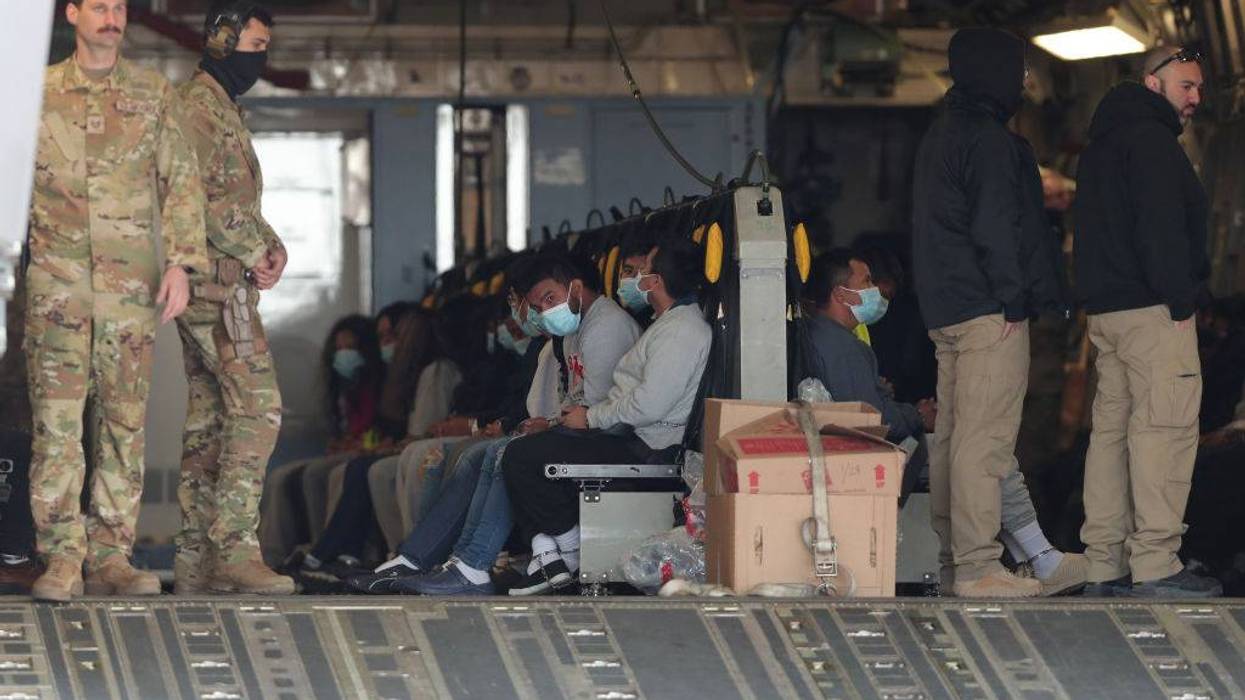
The ACLU and Human Rights Watch on Wednesday released a joint report documenting abusive treatment of immigrants at the largest immigration detention facility in the US.
The groups' report focuses on Camp East Montana, located on Fort Bliss in El Paso, Texas, which can hold up to 5,000 detainees.
In total, the groups interviewed 71 detainees at the facility, along with four family members of detainees, and five legal service providers.
According to the report, people detained at Camp East Montana have suffered from "conditions of confinement that amounted to enforced disappearance, cruel, degrading and inhuman treatment, excessive use of force including one extrajudicial killing, life-threatening medical neglect, barriers to legal representation, and coercive third-country removals."
Detainees said that the camp's unsanitary conditions—which the report says include "overcrowded housing areas, bathrooms covered in feces and urine, and living quarters flooded with dirty water and dust"—have led them to develop infections and other health complications for which they have been regularly refused treatment.
One woman who spoke with investigators said that she is now at risk of permanent blindness after guards and nurses denied her request for emergency medical care, the report notes.
A Honduran immigrant identified as "Ismael M," who was detained at the camp for over five months, told investigators that conditions there were so terrible that he often had suicidal thoughts.
"I’ve gone a month without seeing the sun," said Ismael. "I am forced to live in filth... I have been taken from my family, from my home, and I know that no matter how long they keep me here, they will end up deporting me. I'm so afraid I will get killed once I am sent back. That is why I left."
Detainees also described regular beatings by guards at the facility.
A Cuban detainee identified as "Ricardo H" told investigators that he was beaten by guards simply for demanding to be fed.
"I didn’t get breakfast that day," Ricardo explained. "Our lunch is usually distributed at noon. By 1:30 pm the guards had not handed our meals out. Our meals were ready, the guards placed the food cart in front of us and were refusing to serve it. I protested verbally, I told them I was hungry and that I was human. I needed food. They ignored me so I kicked the metal door out of desperation."
This led to several officers opening his cell and beating him, he said.
"A lieutenant grabbed me by the shirt and slammed me to the ground," he said. "Six officers restrained me with my face down. I still have severe pain in my ear and in my right collarbone. They also stomped on my neck."
A Venezuelan detainee identified as "Armando G" said that he was beaten by guards after he went on hunger strike to protest food that he said was "not nourishing and was making us sick."
"I was tackled to the ground by seven guards," said Armando. "One of them was choking me, another pulled my hair and slammed my head on the ground. They were dragging me on the ground like a rag doll."
Angélica César, Aryeh Neier Fellow at Human Rights Watch and the ACLU, said the groups' report shows the camp is "a human rights disaster."
"The US government should shut it down," said César, "conduct independent investigations into all abuses and deaths in custody, and put an end to mass deportations and mandatory immigration detention."
"The bottom line is this: Seniors who choose traditional Medicare should not have their care blocked by AI," said one campaigner.
Advocates for seniors on Wednesday urged US senators to vote for a resolution that, if passed, would block a new Trump administration pilot program under which claims by patients seeking certain healthcare services through traditional Medicare would be reviewed by private companies using artificial intelligence to deny care.
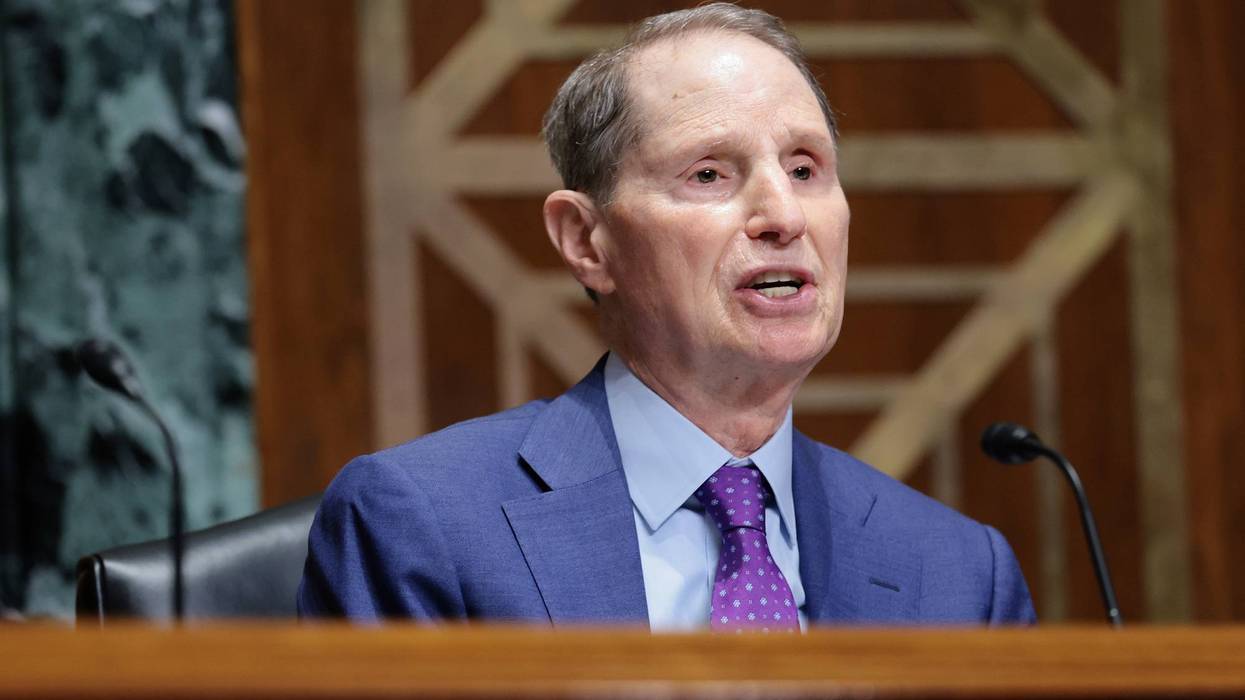
Upper chamber lawmakers are set to vote Thursday on a resolution introduced by Sen. Ron Wyden (D-Ore.) and supported by 20 Democratic colleagues and Sen. Bernie Sanders (I-Vt.) to stop the US Centers for Medicare and Medicaid Services' so-called Wasteful and Inappropriate Service Reduction (WISeR) Model.
CMS claims WISeR "helps protect American taxpayers by leveraging enhanced technologies, such as artificial intelligence (AI) and machine learning, along with human clinical review, to ensure timely and appropriate Medicare payment for select items and services."
What CMS doesn't mention—and what alarms a growing number of physicians and advocates—about the voluntary model is that AI-assisted reviews could contribute to inappropriate care denials, despite the required human review. Private Medicare Advantage healthcare profiteers have been using AI to deny care for years.
Critics argue that, even if a human must sign off, AI will effectively drive many of the recommendations, making it easier and faster to deny or delay care. They also warn of inevitable financial incentives tied to reducing Medicare spending, raising concerns that AI would likely be used as a cost-cutting tool.
"WISeR is not wise at all. It is a dangerous, profit-motivated experiment that allows private third parties to use artificial intelligence to delay and deny seniors’ medical care," Social Security Works executive director Alex Lawson said Wednesday. "Under the WISeR pilot program, which went live in January 2026, reports already show Medicare beneficiaries are waiting 2 to 4 times longer to access certain care."
"This is just one more example of the harm that Republicans’ disastrous healthcare agenda has already waged on American patients," he continued. "Last year, Republicans slashed $1 trillion in Medicaid and Affordable Care Act spending to line their cronies’ pockets. Now, they are importing the worst parts of Medicare Advantage—automated care denials—into traditional Medicare."
"The bottom line is this: Seniors who choose traditional Medicare should not have their care blocked by AI," Lawson added.