

SUBSCRIBE TO OUR FREE NEWSLETTER
Daily news & progressive opinion—funded by the people, not the corporations—delivered straight to your inbox.
5
#000000
#FFFFFF
To donate by check, phone, or other method, see our More Ways to Give page.
Daily news & progressive opinion—funded by the people, not the corporations—delivered straight to your inbox.
Kevin Kamps, Beyond Nuclear, 240.462.3216 /
Debbie Grinnell, C-10, 978.465.6646
A
coalition of dozens of national and grassroots environmental and safe
energy organizations has filed an official petition for rulemaking with
the U.S. Nuclear Regulatory Commission (NRC) urging safety and security
upgrades on high-level radioactive waste containers. The petitioners
include national groups Alliance for Nuclear Accountability, Beyond
Nuclear, Friends of the Earth, Greenpeace, Nuclear Age Peace
Foundation, Nuclear Information and Resource Service, Physicians for
Social Responsibility, Public Citizen, and SUN DAY Campaign, as well as
numerous grassroots groups across the country.
The
groups call upon NRC to strengthen quality assurance rules on the
design and manufacture of dry storage casks. These outdoor concrete and
steel silos are used at most atomic reactors across the country to
store irradiated nuclear fuel. The groups cite the risks of disastrous
releases of radioactivity into the air, soil, and water due to
accidents, attacks, or eventual leakage, and demand that safeguards be
strengthened. The petition is posted on the Beyond Nuclear home page, www.beyondnuclear.org.
The
petition for rulemaking was initiated by the C-10 Foundation, a
watchdog group based in Massachusetts within ten miles of New
Hampshire's Seabrook nuclear power station. NRC recently approved
Seabrook owner Florida Power and Light's request to install dry cask
storage. But C-10's research indicated that the NRC regulations for the
design, construction, and certification of dry storage casks are
woefully inadequate
"NRC
continues to certify casks based on technical design criteria for a
twenty-year deployment, when in fact they will actually store
high-level radioactive waste on-site at reactors indefinitely, many
decades into the future," said Debbie Grinnell, C-10 Foundation
Research Assistant and author of the petition for rulemaking.
"As
the federal government fails to protect the public against the risks
associated with high-level radioactive wastes, states will inevitably inherit
the problem," Grinnell added. "These risks will continue on long after
the reactors are shut down and decommissioned. Funding will be needed
for generations to come to manage these forever deadly radioactive
wastes," Grinnell concluded.
The 104
operating atomic reactors across the U.S. each generate 20 to 30 tons
of irradiated nuclear fuel each year. At least 60,000 tons have
accumulated to date in the U.S. Since the indoor waste storage pools at
almost 80 of the 104 reactors are already filled to capacity, nuclear
utilities have turned to outdoor dry cask storage. More than two dozen
permanently shut down reactors, and even several completely dismantled
nuclear power plants, still store the high-level radioactive wastes
they generated on site in dry casks, since the U.S. lacks a national repository.
As of
three years ago, the most recent data readily available to the public,
nearly 800 dry casks had already been loaded at 36 nuclear power plant
sites. An additional 13 nuclear plants were poised to begin installing
dry casks. NRC estimates that by 2015, almost all operating reactors
will have established dry cask storage. Each dry cask contains over 200
times the long-lasting radioactivity released by the Hiroshima atomic
bomb.
"Industry
and even NRC inspectors themselves have blown the whistle on widespread
safety problems with radioactive waste storage casks around the
country," said Kevin Kamps at Beyond Nuclear in Takoma Park, Maryland.
"Yet, even despite their own safety staff warning the casks violate
codes and regulations, the NRC continues to rubberstamp approval for
their extended use. If and when these casks fail, the result could be
disastrous in terms of harm to human health and environmental
contamination."

"The truth is, Susan Collins doesn't serve us, she serves Donald Trump," said Platner. "She serves her corporate donors and the corrupt political system that has rigged the economy against us."
Graham Platner, a veteran and oyster farmer vowing to champion the working class against what he's called the "spineless and corrupt" political establishment, officially became the Democratic Party's nominee in the critical race to unseat five-term Republican Sen. Susan Collins, winning more than 70% of the vote in Tuesday's closely watched primary.
"I love every single one of you, everyone who has shown up at a town hall, who has knocked on a door, who cast their vote—not for me, but for a vision of a life in Maine that you can afford, a life of dignity, and a government that actually serves its people," Platner said in his victory speech. "The truth is, Susan Collins doesn't serve us, she serves Donald Trump. She serves the Epstein class. She serves her corporate donors and the corrupt political system that has rigged the economy against us. She does not serve us, and so we will defeat Susan Collins."
Platner's main primary opponent, Democratic Gov. Janet Mills, suspended her campaign in late April as the progressive political newcomer trounced her in polling, fundraising, and enthusiasm. But in the days leading up to Tuesday's contest, Mills reminded Maine voters that she was still on the ballot amid reporting about Platner's past relationships.
Last week, The New York Times published a story in which a Republican operative who dated Platner more than a decade ago accused him of physical abuse—an allegation that the candidate denied categorically.
With more than 80% of ballots tallied in Tuesday's race, Mills has received around 35,100 votes—over 94,000 fewer than Platner.
During his speech late Tuesday in Blue Hill, Maine, Platner accused "national pundits and the political establishment" of "looking for that one story, that one headline, that one moment in my life that they can define the campaign by."
"But in trying so hard to understand me, they fail to understand that this is not about me at all," he said. "This is a movement about us, about the far too many working far too hard in struggling far too much at the hands of the ruling class."
Platner: The national pundits, the political establishment, they keep looking for that one story, that one headline, that one moment in my life that they can define the campaign by. But in trying so hard to understand me, they failed to understand that this is not about me at… pic.twitter.com/BK5Zj4VB7h
— Acyn (@Acyn) June 10, 2026
Platner then turned his attention to Collins, the incumbent Republican senator who is widely characterized as a "moderate" despite her role in destroying Roe v. Wade and advancing President Donald Trump's deeply unpopular agenda. Collins' reelection bid has been backed by a flood of dark money and billionaire donations that are expected to grow in the months ahead.
"Susan Collins may have started her career decades ago in Washington with good intentions, but she has become just as spineless and corrupt as the establishment she now serves," said Platner. "If you are an independent voice, why do you vote with Donald Trump 95% of the time? If you're so bipartisan, why are you the deciding vote to put Brett Kavanaugh on the Supreme Court? The deciding vote to defund our healthcare and our hospitals? Why did you rubber stamp the greatest redistribution of wealth from the working class from the working class to the ruling class in the history of our nation?"
"Susan Collins is only bipartisan when it doesn't matter," Platner added.
Progressive supporters of Platner's campaign applauded his victory in Tuesday's primary, with Sen. Bernie Sanders (I-Vt.)—the first prominent lawmaker to back Platner's Senate bid—declaring that "together, we will defeat oligarchy and create an economy that works for all, not just the few."
Ezra Levin, co-executive director of Indivisible, an advocacy group that endorsed Platner last month, said that Maine voters "have made their voices heard, and they are looking to fight back against special interests and push for new leadership this November."
"This result shows the momentum of voters who are choosing a different path and are looking for new leadership—one that will fight for them, not against them," said Levin. "As we look toward November, we are excited to flip this Senate seat, oust Sen. Susan Collins, and help Graham Platner bring meaningful representation to Maine."
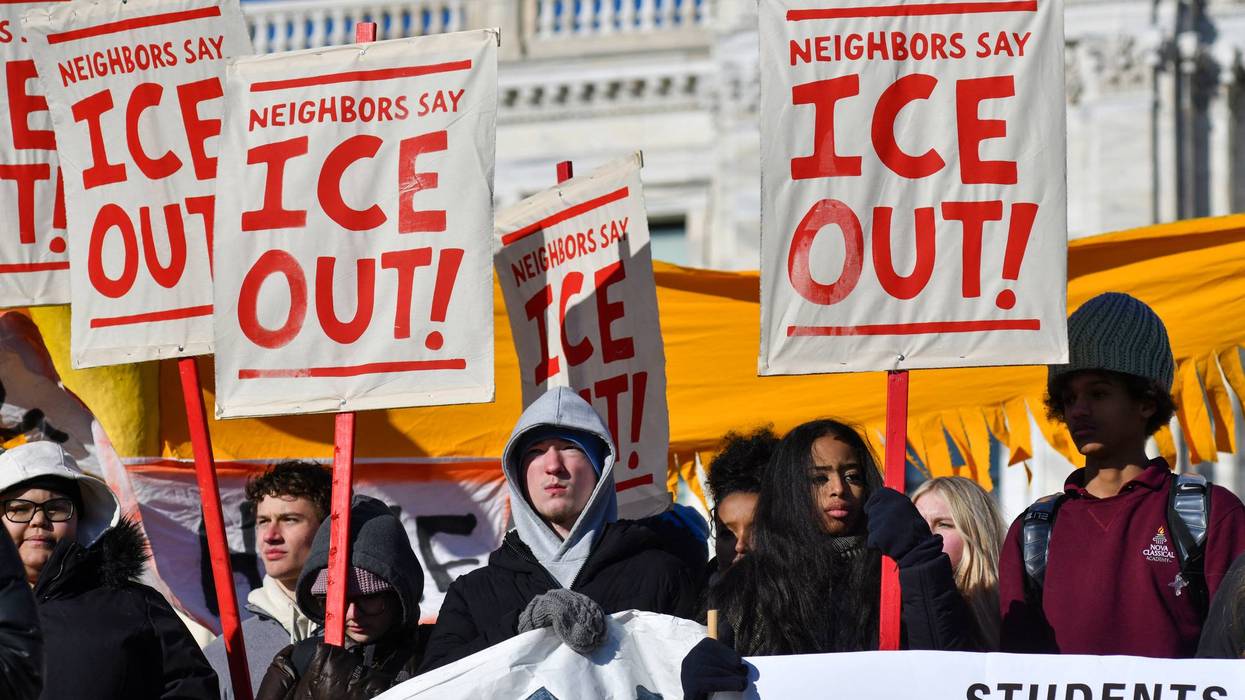
“Congressional Republicans gifting ICE with billions of extra dollars of funding while Americans are struggling to make ends meet is an outrage," said one critic of the Trump-backed move.
The Republican-controlled House of Representatives on Tuesday narrowly approved nearly $70 billion in new funding for US Department of Homeland Security agencies responsible for the Trump administration's anti-immigrant crackdown, a move denounced by Democrats and advocacy groups.
The Secure America Act—a budget reconciliation bill approved last week by the Senate, where it was introduced by Sen. Lindsey Graham (R-SC)—passed the House by a vote of 214-212. Every Republican present voted for the bill, while every Democrat in the chamber and Independent Rep. Kevin Kiley of California voted against it.
The legislation provides funding for the Department of Homeland Security (DHS), Immigration and Customs Enforcement (ICE), and Customs and Border Protection (CBP) through the end of President Donald Trump's term. The bill now heads to Trump's desk for his signature.
"In the final months of their House majority, House Republicans are doubling down on their failed approach: blank checks for ICE and not one cent to make things cheaper for working families," Congressional Progressive Caucus Chair Greg Casar (D-Texas) said following Tuesday's vote.
"The day after threatening to cut Social Security and Medicare, they are sending billions to Trump’s mass deportation machine—which still has $100 billion sitting in the bank," he added. "The Republican Congress is a disaster for working Americans. When Democrats take back power, we must repeal this funding.”
Rep. Maxwell Frost (D-Fla.) said on X: "The House GOP just voted to give ICE and CBP $70 BILLION. Instead of investing in you and ensuring you can afford your healthcare, groceries, or rent—they chose to hand $70 BILLION to agencies operating without any guardrails while terrorizing and brutalizing our communities."
Civil society groups also blasted House Republicans after the vote.
“Congressional Republicans gifting ICE with billions of extra dollars of funding while Americans are struggling to make ends meet is an outrage," said Lisa Gilbert, co-president of the consumer advocacy group Public Citizen, which decried what it called "a vote for cruelty and corruption."
“Trump’s ICE has proven that it is dangerous and out of control," Gilbert added. "Today’s vote is... a vote against the Constitution and the safety of our communities and neighbors. Shame on congressional Republicans for ramrodding through this egregious funding.”
FWD.us President Todd Schulte said, "At a time when voters remain rightly outraged at ICE, providing hundreds of billions of dollars to ICE and CBP to terrorize communities and tear families apart while the cost of living rises and healthcare funding is slashed is both a stunning policy failure, and incredibly unpopular with voters."
ACLU senior policy counsel Kate Voigt said in a statement that "it is unconscionable that the House would vote to write yet another blank check for ICE and Border Patrol’s campaign of chaos without any reforms. Over the past several months we’ve seen these abusive agencies kill our neighbors, harass and racially profile people, and tear thousands of families apart."
More than 50 people have died in DHS custody since Trump returned to office, with experts asserting that many of the deaths were preventable. Detained immigrants have reported beatings and sexual abuse, medical neglect, hunger and inedible food, and denial of access to attorneys, and other mistreatment.
DHS officers have killed Americans Renee Good and Alex Pretti and Mexican national Silverio Villegas González, and have wounded numerous other people during Trump's second term.
ICE detainees across the nation are resisting abuse in detention centers across the nation through hunger strikes and other civil disobedience, as well as via lawsuits.

"These are tiny and piecemeal steps which will not prevent Israel from continuing to act with impunity in its genocide and crimes against the Palestinian people," said one group.
While some advocates for Palestinian rights welcomed Tuesday's joint announcement by a group of Western nations of new sanctions targeting "extremist" Israeli settlers amid their escalating ethnic cleansing efforts in the illegally occupied West Bank, many others called the measures inadequate and urged stronger action against Israel's government for enabling settler violence.
The foreign ministers of Australia, Canada, France, Norway, and the United Kingdom issued a joint statement announcing "coordinated action to introduce sanctions and other measures to hold extremist settlers accountable for the horrific levels of settler violence against Palestinian civilians."
France joined the other four nations and New Zealand—which is coordinating sanctions with the group—in banning Israeli Finance Minister Bezalel Smotrich, who seeks to annex the West Bank and Gaza and lives in the illegal settlement of Kedumim, from entering their countries. Members of the coalition also slapped an entry ban on four leaders of settler organizations and 21 individual settlers.
"We are today imposing new sanctions against those responsible for intensifying colonization and violence in the West Bank," French Foreign Minister Jean-Noël Barrot said on social media. "Smotrich actively promotes the annexation of the West Bank, which he openly claims, the creation of new settlements in the West Bank, the recolonization of Gaza, the economic collapse of the Palestinian Authority, and its deleterious consequences on the Palestinian population."
British Foreign Minister Yvette Cooper said Tuesday during a speech in Parliament that “settler expansion and violence is illegal and a fundamental threat to the viability of a two-state solution, and to long-term peace and security for Palestinians and Israelis.”
"I have strengthened our business risk guidance to make it clear and unambiguous: If you are a British citizen or business, you should not conduct any economic and financial activities in illegal Israeli settlements,” Cooper added.
Coalition countries previously banned Israeli National Security Minister Itamar Ben-Gvir from entry. The International Criminal Court in The Hague has reportedly requested arrest warrants for Smotrich and Ben-Gvir for the crime of apartheid related to their plans, backed by the Trump administration in the United States, to expand illegal settler colonies in the West Bank and annex the occupied territory. The ICC issued warrants in 2024 for the arrest of Israeli Prime Minister Benjamin Netanyahu and Yoav Gallant, his former defense minister, for alleged crimes against humanity and war crimes in Gaza.
"Extremist violent settlers, with the backing of their supporters, continue to attack Palestinians and abuse their human rights," Tuesday's announcement states. "They use violence to displace Palestinians, destroy property, and perpetuate the illegal settlement enterprise, undermining the viability of the state of Palestine and the prospects for peaceful coexistence."
"For too long, violent settlers have been able to act with near impunity, and settlement expansion and creation of outposts continue with the support and facilitation of the government of Israel," the ministers said. "In some cases, settler violence takes place under the protection of Israel’s security forces. We continue to urge the government of Israel to take action to ensure meaningful accountability for violence in the West Bank."
The statement noted that the five countries "have all taken the historic decision to recognize the state of Palestine, reflecting the rights of the Palestinian people and as part of our common efforts to protect the viability of the two-state solution."
"Today, we are acting together again in support of the same objectives," the ministers asserted. "We stand ready to take more action if the government of Israel does not take urgent steps to address the situation on the ground."
Many Palestinians and their advocates said the sanctions don't go far enough.
“While this is a step in the right direction, it is woefully inadequate," Palestinian Ambassador to the UK Husam Zomlot said on social media. “We are beyond words of condemnation. Israel has demonstrated, time and again, its disregard for international law."
"Words without action are not diplomacy. It is abdicating responsibilities," Zomlot continued. “What is needed now is clear: a ban on settlement products, comprehensive sanctions on those profiting from illegal settlements and the state sponsoring them, and guarantees that British companies, banks, and financial institutions are not contributing to Israel’s illegal occupation.“
"Justice cannot wait," the ambassador added. "The time for meaningful action is now.”
Amnesty International UK crisis response manager Kristyan Benedict called the new sanctions "a step, but not enough."
"If ministers are serious about sanctioning those 'who support and sponsor violence against Palestinian communities in the West Bank', they must act on the reality that settlements and settler violence are state policy—directed and funded from the top," Benedict argued.
“Targeting settler financing networks while the ministers who run this campaign face no consequences is not meaningful accountability—it leaves the architects untouched," he stressed, calling on the UK government to also sanction Netanyahu, Gallant, current Israeli Defense Minister Israel Katz, and Settlement Minister Orit Strock.
“The legal obligation is clear, but the political will is still not strong enough," Benedict added. "Successive UK governments have failed to take meaningful action to stop Israel's crimes and those that enable them. That failure sends a dangerous message that Palestinian lives are not valued and that unlawful occupation and apartheid are acceptable. This must end now.”
The Palestine Solidarity Campaign said in a statement that "whilst any move towards additional sanctions is correct, these are tiny and piecemeal steps which will not prevent Israel from continuing to act with impunity in its genocide and crimes against the Palestinian people."
"In addition to these limited sanctions, the government has announced that it will ‘firmly advise’ British businesses against illegal activity, sending the disgraceful message that acting according to international law is optional," PSC added.
This week, around 140 Labour members of UK Parliament urged Cooper to take “urgent, concrete action to counter the escalation of violations against Palestinians” by “ending trade with illegal Israeli settlements.”
Adil Haque, executive editor at Just Security and distinguished professor at Rutgers Law School in New Jersey, said on X: "Better something than nothing, but if the aim is the removal of *all* illegal settlements, then targeted sanctions against a few groups and individuals will not do much."
Iranian-Canadian journalist Samira Mohyeddin replied to a social media post from Canadian Foreign Minister Anita Anand saying her country's government "continues to oppose the expansion of settlements," asking, "How?"
"How do you oppose them? Sanction ISRAEL," Mohyeddin asserted. "Those supporting the settlers are the Israeli state. Those who are arming them are the Israeli state. And it is Canadian Zionist charities that are funding them."
Israel's Ministry of Foreign Affairs said the country's government "firmly rejects the disgraceful measures adopted by foreign governments against Israeli citizens, entities, and a government minister," accusing the six nations of attempting to “impose a political stance regarding the right of Jews to settle in the Land of Israel and concerning the Israeli-Palestinian conflict—camouflaged as measures against violence.”
The ministry also blasted what it called the countries' "resounding failure" to "combat the antisemitism that is rampant in their own countries,” adding that “anti-Israeli policies of the kind adopted today only serve to fuel that antisemitism.”
In July 2024, the International Court of Justice—where Israel is currently facing a genocide case related to the Gaza war, which has left more than 250,000 Palestinians dead or wounded—found the occupation of Palestine to be an illegal form of apartheid that must be ended as soon as possible. The ICJ also ruled that Israeli settler colonization of the West Bank amounts to annexation, also a crime under international law.
Efforts by the Israeli government, military, and settlers to expand West Bank settlement activity have accelerated dramatically since the Hamas-led attack of October 7, 2023. With the world's attention focused on Israel's genocidal assault on Gaza, Israeli soldiers and settlers have ramped up the ethnic cleansing of Palestinians from the occupied territory.
Attacks on West Bank Palestinians, including pogroms carried out by mobs of settlers protected and sometimes joined by Israeli troops, have killed at least 1,098 Palestinians between October 7, 2023 and May 18, according to the UN agency for Palestinian refugees. At least 240 of the slain victims were children.
Israeli settlers frequently attack Palestinian homes, businesses, and farms, and other critical infrastructure. The attackers burn homes, destroy crops, kill or steal livestock, and sometimes forcibly expel residents. Journalists who document the assaults and international activists trying to protect locals from the rampaging assailants have also been attacked.