SUBSCRIBE TO OUR FREE NEWSLETTER
Daily news & progressive opinion—funded by the people, not the corporations—delivered straight to your inbox.
5
#000000
#FFFFFF
To donate by check, phone, or other method, see our More Ways to Give page.
Daily news & progressive opinion—funded by the people, not the corporations—delivered straight to your inbox.
In an interview Friday with a Christian radio show, President Donald Trump backed his chief strategist Steve Bannon in calling the media "the opposition party."
"I think the media is the opposition party in many ways," the president said on "The Brody File," a program on the Christian Radio Network. "I'm not talking about everybody, but a big portion of the media, the dishonesty, total deceit, and deception. It makes them certainly partially the opposition party, absolutely."
"I say they treat me so unfairly it's hard to believe that I won," Trump told host David Brody. "But the fortunate thing about me is I have a big voice. I have a voice that people understand. And you see it now."
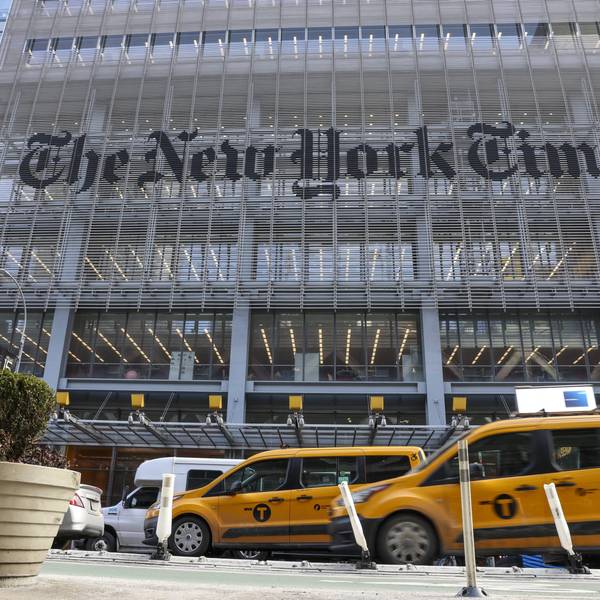
Trump's comments show support for a statement made by Bannon on Wednesday, when the former executive chair of Breitbart News told the New York Times that "the media should be embarrassed and humiliated and keep its mouth shut and just listen for a while."
"I want you to quote this," Bannon told the Times. "The media here is the opposition party. They don't understand this country. They still do not understand why Donald Trump is the president of the United States."
Bannon was one of several Breitbart staffers to join Trump's administration directly from the rightwing media outlet.
Press freedom organization Reporters Without Borders/Reporters Sans Frontieres (RSF) cautioned just this week that the president's attacks against the media are "reminiscent of an authoritarian government."
"It is clear that Trump views the media as his number one enemy and is taking every single opportunity to try to weaken their credibility," said Margaux Ewen, advocacy and communications director for RSF North America, in a press statement. "RSF reminds Trump's administration that the press does not provide public relations for the president, but reports the truth in order to hold government officials accountable, despite statements to the contrary from White House Press Secretary Sean Spicer."
Spicer was slammed last week for lying about the size of Trump's inauguration crowds. White House senior official Kellyanne Conway attempted to defend his claims by calling them "alternative facts," which likewise drew widespread criticism.
"The simultaneous attacks on the press for so called 'inaccurate' reporting and the use of what the administration calls 'alternative facts' to counter this reporting are reminiscent of an authoritarian government's tactics," said Delphine Halgand, director of RSF North America.
Trump has also blamed the media for inciting protests against his win in November.
The president's comments signal that his administration will continue its war against the media, which Trump declared on his first full day in office. He described them as "among the most dishonest human beings on earth" during a meeting with the CIA and is reportedly considering banning journalists from the White House--a notable break with tradition that, as former cabinet secretary and renowned columnist Robert Reich put it, evokes hints of tyranny.
Dear Common Dreams reader, It’s been nearly 30 years since I co-founded Common Dreams with my late wife, Lina Newhouser. We had the radical notion that journalism should serve the public good, not corporate profits. It was clear to us from the outset what it would take to build such a project. No paid advertisements. No corporate sponsors. No millionaire publisher telling us what to think or do. Many people said we wouldn't last a year, but we proved those doubters wrong. Together with a tremendous team of journalists and dedicated staff, we built an independent media outlet free from the constraints of profits and corporate control. Our mission has always been simple: To inform. To inspire. To ignite change for the common good. Building Common Dreams was not easy. Our survival was never guaranteed. When you take on the most powerful forces—Wall Street greed, fossil fuel industry destruction, Big Tech lobbyists, and uber-rich oligarchs who have spent billions upon billions rigging the economy and democracy in their favor—the only bulwark you have is supporters who believe in your work. But here’s the urgent message from me today. It's never been this bad out there. And it's never been this hard to keep us going. At the very moment Common Dreams is most needed, the threats we face are intensifying. We need your support now more than ever. We don't accept corporate advertising and never will. We don't have a paywall because we don't think people should be blocked from critical news based on their ability to pay. Everything we do is funded by the donations of readers like you. When everyone does the little they can afford, we are strong. But if that support retreats or dries up, so do we. Will you donate now to make sure Common Dreams not only survives but thrives? —Craig Brown, Co-founder |
In an interview Friday with a Christian radio show, President Donald Trump backed his chief strategist Steve Bannon in calling the media "the opposition party."
"I think the media is the opposition party in many ways," the president said on "The Brody File," a program on the Christian Radio Network. "I'm not talking about everybody, but a big portion of the media, the dishonesty, total deceit, and deception. It makes them certainly partially the opposition party, absolutely."
"I say they treat me so unfairly it's hard to believe that I won," Trump told host David Brody. "But the fortunate thing about me is I have a big voice. I have a voice that people understand. And you see it now."
Trump's comments show support for a statement made by Bannon on Wednesday, when the former executive chair of Breitbart News told the New York Times that "the media should be embarrassed and humiliated and keep its mouth shut and just listen for a while."
"I want you to quote this," Bannon told the Times. "The media here is the opposition party. They don't understand this country. They still do not understand why Donald Trump is the president of the United States."
Bannon was one of several Breitbart staffers to join Trump's administration directly from the rightwing media outlet.
Press freedom organization Reporters Without Borders/Reporters Sans Frontieres (RSF) cautioned just this week that the president's attacks against the media are "reminiscent of an authoritarian government."
"It is clear that Trump views the media as his number one enemy and is taking every single opportunity to try to weaken their credibility," said Margaux Ewen, advocacy and communications director for RSF North America, in a press statement. "RSF reminds Trump's administration that the press does not provide public relations for the president, but reports the truth in order to hold government officials accountable, despite statements to the contrary from White House Press Secretary Sean Spicer."
Spicer was slammed last week for lying about the size of Trump's inauguration crowds. White House senior official Kellyanne Conway attempted to defend his claims by calling them "alternative facts," which likewise drew widespread criticism.
"The simultaneous attacks on the press for so called 'inaccurate' reporting and the use of what the administration calls 'alternative facts' to counter this reporting are reminiscent of an authoritarian government's tactics," said Delphine Halgand, director of RSF North America.
Trump has also blamed the media for inciting protests against his win in November.
The president's comments signal that his administration will continue its war against the media, which Trump declared on his first full day in office. He described them as "among the most dishonest human beings on earth" during a meeting with the CIA and is reportedly considering banning journalists from the White House--a notable break with tradition that, as former cabinet secretary and renowned columnist Robert Reich put it, evokes hints of tyranny.
In an interview Friday with a Christian radio show, President Donald Trump backed his chief strategist Steve Bannon in calling the media "the opposition party."
"I think the media is the opposition party in many ways," the president said on "The Brody File," a program on the Christian Radio Network. "I'm not talking about everybody, but a big portion of the media, the dishonesty, total deceit, and deception. It makes them certainly partially the opposition party, absolutely."
"I say they treat me so unfairly it's hard to believe that I won," Trump told host David Brody. "But the fortunate thing about me is I have a big voice. I have a voice that people understand. And you see it now."
Trump's comments show support for a statement made by Bannon on Wednesday, when the former executive chair of Breitbart News told the New York Times that "the media should be embarrassed and humiliated and keep its mouth shut and just listen for a while."
"I want you to quote this," Bannon told the Times. "The media here is the opposition party. They don't understand this country. They still do not understand why Donald Trump is the president of the United States."
Bannon was one of several Breitbart staffers to join Trump's administration directly from the rightwing media outlet.
Press freedom organization Reporters Without Borders/Reporters Sans Frontieres (RSF) cautioned just this week that the president's attacks against the media are "reminiscent of an authoritarian government."
"It is clear that Trump views the media as his number one enemy and is taking every single opportunity to try to weaken their credibility," said Margaux Ewen, advocacy and communications director for RSF North America, in a press statement. "RSF reminds Trump's administration that the press does not provide public relations for the president, but reports the truth in order to hold government officials accountable, despite statements to the contrary from White House Press Secretary Sean Spicer."
Spicer was slammed last week for lying about the size of Trump's inauguration crowds. White House senior official Kellyanne Conway attempted to defend his claims by calling them "alternative facts," which likewise drew widespread criticism.
"The simultaneous attacks on the press for so called 'inaccurate' reporting and the use of what the administration calls 'alternative facts' to counter this reporting are reminiscent of an authoritarian government's tactics," said Delphine Halgand, director of RSF North America.
Trump has also blamed the media for inciting protests against his win in November.
The president's comments signal that his administration will continue its war against the media, which Trump declared on his first full day in office. He described them as "among the most dishonest human beings on earth" during a meeting with the CIA and is reportedly considering banning journalists from the White House--a notable break with tradition that, as former cabinet secretary and renowned columnist Robert Reich put it, evokes hints of tyranny.