SUBSCRIBE TO OUR FREE NEWSLETTER
Daily news & progressive opinion—funded by the people, not the corporations—delivered straight to your inbox.
5
#000000
#FFFFFF
To donate by check, phone, or other method, see our More Ways to Give page.
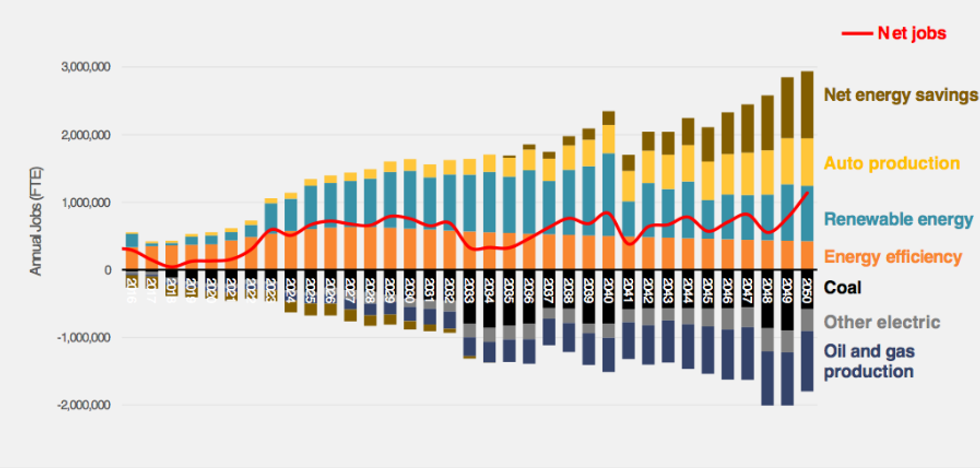
According to a new report published this week, the U.S. can reduce greenhouse gas emissions by 80 percent by 2050 while creating half a million jobs a year and lowering energy costs for consumers. This can be achieved simply by limiting the use of fossil fuels and allowing the renewables sector to continue to grow at its current pace.
The report, The Clean Energy Future: Protecting the Climate, Creating Jobs and Saving Money (pdf), refutes claims that meeting the Intergovernmental Panel onClimate Change (IPCC) targets for greenhouse gas (GHG) reductions would take a toll on the economy and introduces an energy platform that would:
"This report presents a practical, realistic way for the United States to address the climate crisis and proves that we don't have to choose between jobs and the environment," said May Boeve, executive director of the environmental action group 350.org, which helped craft the report along with the Labor Network for Sustainability and Synapse Energy Economics.
The report states that most of the jobs created from the program would occur in the construction and manufacturing industries, such as electric auto production. That will serve three separate but intertwining purposes--supporting economic growth, concentrating job creation in sectors that have a high proportion of workers of color, and helping unite environmental and labor advocates, who occasionally spar over their respective causes.
"We don't have to choose between jobs and the environment."
--May Boeve, 350.org
"For unions and other jobs advocates, climate protection is also a great jobs program," the report states. "This program will help bring together environmental and labor advocates around their common interest in putting Americans to work saving the earth's climate."
"The workers displaced from fossil fuel industries are not cardboard cutouts," the report continues. "They have done hard, dirty and dangerous jobs that kept our lights on and our cars moving for all the years before we recognized the need for a different energy future. In addition to our thanks, they deserve a just transition, with assistance in training and placement in new jobs, or retirement with dignity."
Industry accounts for 18 percent of carbon emissions in the U.S. alone, largely emanating from manufacturing chemicals, primary metals, paper, and cement, the report states. Switching to recyclable materials and investing in renewables will contribute to reducing greenhouse gases by 80 percent by 2050.
However, the crux of the report focuses on its potential impact on the job market and uniting environmentalists and labor advocates.
"This report is good news for American workers," said Joe Uehlein, founder of the Labor Network. "Protecting the climate has often been portrayed as threatening American workers' jobs and the U.S. economy. But this report shows that a clean energy future will produce more jobs than 'business as usual' with fossil fuels."
The report concludes: "The Clean Energy Future represents a pathway away from climate destruction that is also far better for workers and consumers than our current pathway based on fossil fuels. Should we let greed and inertia prevent us from taking it?"
According to a new report published this week, the U.S. can reduce greenhouse gas emissions by 80 percent by 2050 while creating half a million jobs a year and lowering energy costs for consumers. This can be achieved simply by limiting the use of fossil fuels and allowing the renewables sector to continue to grow at its current pace.
The report, The Clean Energy Future: Protecting the Climate, Creating Jobs and Saving Money (pdf), refutes claims that meeting the Intergovernmental Panel onClimate Change (IPCC) targets for greenhouse gas (GHG) reductions would take a toll on the economy and introduces an energy platform that would:
"This report presents a practical, realistic way for the United States to address the climate crisis and proves that we don't have to choose between jobs and the environment," said May Boeve, executive director of the environmental action group 350.org, which helped craft the report along with the Labor Network for Sustainability and Synapse Energy Economics.
The report states that most of the jobs created from the program would occur in the construction and manufacturing industries, such as electric auto production. That will serve three separate but intertwining purposes--supporting economic growth, concentrating job creation in sectors that have a high proportion of workers of color, and helping unite environmental and labor advocates, who occasionally spar over their respective causes.
"We don't have to choose between jobs and the environment."
--May Boeve, 350.org
"For unions and other jobs advocates, climate protection is also a great jobs program," the report states. "This program will help bring together environmental and labor advocates around their common interest in putting Americans to work saving the earth's climate."
"The workers displaced from fossil fuel industries are not cardboard cutouts," the report continues. "They have done hard, dirty and dangerous jobs that kept our lights on and our cars moving for all the years before we recognized the need for a different energy future. In addition to our thanks, they deserve a just transition, with assistance in training and placement in new jobs, or retirement with dignity."
Industry accounts for 18 percent of carbon emissions in the U.S. alone, largely emanating from manufacturing chemicals, primary metals, paper, and cement, the report states. Switching to recyclable materials and investing in renewables will contribute to reducing greenhouse gases by 80 percent by 2050.
However, the crux of the report focuses on its potential impact on the job market and uniting environmentalists and labor advocates.
"This report is good news for American workers," said Joe Uehlein, founder of the Labor Network. "Protecting the climate has often been portrayed as threatening American workers' jobs and the U.S. economy. But this report shows that a clean energy future will produce more jobs than 'business as usual' with fossil fuels."
The report concludes: "The Clean Energy Future represents a pathway away from climate destruction that is also far better for workers and consumers than our current pathway based on fossil fuels. Should we let greed and inertia prevent us from taking it?"
According to a new report published this week, the U.S. can reduce greenhouse gas emissions by 80 percent by 2050 while creating half a million jobs a year and lowering energy costs for consumers. This can be achieved simply by limiting the use of fossil fuels and allowing the renewables sector to continue to grow at its current pace.
The report, The Clean Energy Future: Protecting the Climate, Creating Jobs and Saving Money (pdf), refutes claims that meeting the Intergovernmental Panel onClimate Change (IPCC) targets for greenhouse gas (GHG) reductions would take a toll on the economy and introduces an energy platform that would:
"This report presents a practical, realistic way for the United States to address the climate crisis and proves that we don't have to choose between jobs and the environment," said May Boeve, executive director of the environmental action group 350.org, which helped craft the report along with the Labor Network for Sustainability and Synapse Energy Economics.
The report states that most of the jobs created from the program would occur in the construction and manufacturing industries, such as electric auto production. That will serve three separate but intertwining purposes--supporting economic growth, concentrating job creation in sectors that have a high proportion of workers of color, and helping unite environmental and labor advocates, who occasionally spar over their respective causes.
"We don't have to choose between jobs and the environment."
--May Boeve, 350.org
"For unions and other jobs advocates, climate protection is also a great jobs program," the report states. "This program will help bring together environmental and labor advocates around their common interest in putting Americans to work saving the earth's climate."
"The workers displaced from fossil fuel industries are not cardboard cutouts," the report continues. "They have done hard, dirty and dangerous jobs that kept our lights on and our cars moving for all the years before we recognized the need for a different energy future. In addition to our thanks, they deserve a just transition, with assistance in training and placement in new jobs, or retirement with dignity."
Industry accounts for 18 percent of carbon emissions in the U.S. alone, largely emanating from manufacturing chemicals, primary metals, paper, and cement, the report states. Switching to recyclable materials and investing in renewables will contribute to reducing greenhouse gases by 80 percent by 2050.
However, the crux of the report focuses on its potential impact on the job market and uniting environmentalists and labor advocates.
"This report is good news for American workers," said Joe Uehlein, founder of the Labor Network. "Protecting the climate has often been portrayed as threatening American workers' jobs and the U.S. economy. But this report shows that a clean energy future will produce more jobs than 'business as usual' with fossil fuels."
The report concludes: "The Clean Energy Future represents a pathway away from climate destruction that is also far better for workers and consumers than our current pathway based on fossil fuels. Should we let greed and inertia prevent us from taking it?"