SUBSCRIBE TO OUR FREE NEWSLETTER
Daily news & progressive opinion—funded by the people, not the corporations—delivered straight to your inbox.
5
#000000
#FFFFFF
To donate by check, phone, or other method, see our More Ways to Give page.
Daily news & progressive opinion—funded by the people, not the corporations—delivered straight to your inbox.
File this under unsurprising, but nefarious nonetheless.
Members of U.S. Congress who vote against mandatory labeling for genetically modified (GMO) products receive three times as much funding from the food and agriculture lobbies as their colleagues, according to new reporting from Open Secrets, a project of the Center for Responsive Politics.
At 230 Republicans and 45 Democrats, that averages roughly $108,900 per member to support HR 1599--officially titled the Safe and Accurate Food Labeling Act of 2015 but known by its opponents as the DARK (Deny Americans the Right to Know) Act. HR 1599 passed with 275 to 150 votes.
Meanwhile, co-sponsors of the anti-labeling bill "received six-figure dollar amounts from providers of agricultural services and products...during the 2014 election cycle. That put them high among the top 20 recipients of funds from the industry," Open Secrets reports.
Among those lawmakers are Reps. Collin Peterson (D-Minn.), Frank Lucas (R-Okla.), Rodney Davis (R-Ill.), Mike Conaway (R-Texas), and Kurt Schrader (D-Ore.), most of whom also sit on the House Agriculture Committee.
As Common Dreams reported last Thursday, HR1599 "was backed by the food industry, including the Grocery Manufacturers Association and Monsanto Company, which have poured money into defeating GMO labeling initiatives."
Open Secrets continues:
Reps. Mike Pompeo (R-Kan.) and G.K. Butterfield (D-N.C.), two original sponsors of the legislation, were the top two current House members receiving the most money from the Grocery Manufacturers Association in 2014. The grocery manufacturers -- who have spent $4.1 million lobbying on all issues so far this year, almost as much as they spent in all of 2014 -- have lobbied on the bill more than any other organization, mentioning the measure on 14 lobbying reports this year.
After the Grocery Manufacturers Association, PepsiCo Inc ($2.5 million in overall lobbying this year) and Monsanto Co ($2.6 million) have mentioned the bill most frequently.
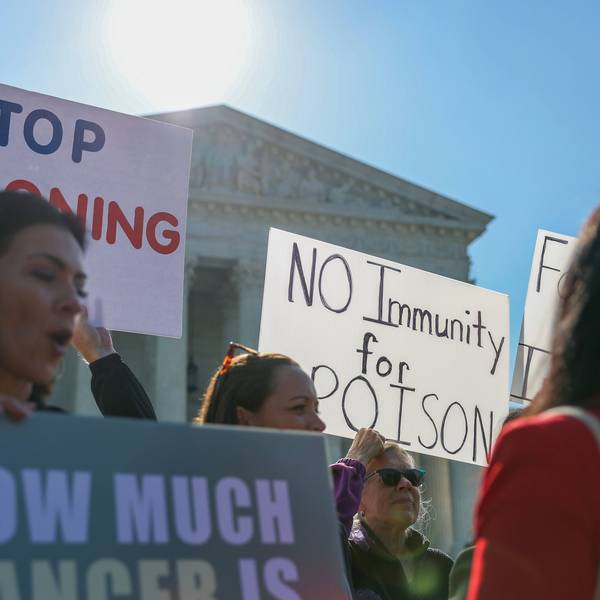
Food and environmental activists called for the Senate to vote down HR 1599 when it reaches the chamber.
"Passage of this bill is an attempt by Monsanto and its agribusiness cronies to crush the democratic decision-making of tens of millions of Americans. Corporate influence has won and the voice of the people has been ignored," Andrew Kimbrell, executive director of Center for Food Safety, said last week.
Added Ronnie Cummins, international director of the Organic Consumers Association, "It's time to hold every member of Congress accountable. Either they stand with Monsanto and Big Food in support of the DARK Act, or they stand with the overwhelming majority of their constituents for truthful labeling and consumer choice."
Dear Common Dreams reader, It’s been nearly 30 years since I co-founded Common Dreams with my late wife, Lina Newhouser. We had the radical notion that journalism should serve the public good, not corporate profits. It was clear to us from the outset what it would take to build such a project. No paid advertisements. No corporate sponsors. No millionaire publisher telling us what to think or do. Many people said we wouldn't last a year, but we proved those doubters wrong. Together with a tremendous team of journalists and dedicated staff, we built an independent media outlet free from the constraints of profits and corporate control. Our mission has always been simple: To inform. To inspire. To ignite change for the common good. Building Common Dreams was not easy. Our survival was never guaranteed. When you take on the most powerful forces—Wall Street greed, fossil fuel industry destruction, Big Tech lobbyists, and uber-rich oligarchs who have spent billions upon billions rigging the economy and democracy in their favor—the only bulwark you have is supporters who believe in your work. But here’s the urgent message from me today. It's never been this bad out there. And it's never been this hard to keep us going. At the very moment Common Dreams is most needed, the threats we face are intensifying. We need your support now more than ever. We don't accept corporate advertising and never will. We don't have a paywall because we don't think people should be blocked from critical news based on their ability to pay. Everything we do is funded by the donations of readers like you. When everyone does the little they can afford, we are strong. But if that support retreats or dries up, so do we. Will you donate now to make sure Common Dreams not only survives but thrives? —Craig Brown, Co-founder |
File this under unsurprising, but nefarious nonetheless.
Members of U.S. Congress who vote against mandatory labeling for genetically modified (GMO) products receive three times as much funding from the food and agriculture lobbies as their colleagues, according to new reporting from Open Secrets, a project of the Center for Responsive Politics.
At 230 Republicans and 45 Democrats, that averages roughly $108,900 per member to support HR 1599--officially titled the Safe and Accurate Food Labeling Act of 2015 but known by its opponents as the DARK (Deny Americans the Right to Know) Act. HR 1599 passed with 275 to 150 votes.
Meanwhile, co-sponsors of the anti-labeling bill "received six-figure dollar amounts from providers of agricultural services and products...during the 2014 election cycle. That put them high among the top 20 recipients of funds from the industry," Open Secrets reports.
Among those lawmakers are Reps. Collin Peterson (D-Minn.), Frank Lucas (R-Okla.), Rodney Davis (R-Ill.), Mike Conaway (R-Texas), and Kurt Schrader (D-Ore.), most of whom also sit on the House Agriculture Committee.
As Common Dreams reported last Thursday, HR1599 "was backed by the food industry, including the Grocery Manufacturers Association and Monsanto Company, which have poured money into defeating GMO labeling initiatives."
Open Secrets continues:
Reps. Mike Pompeo (R-Kan.) and G.K. Butterfield (D-N.C.), two original sponsors of the legislation, were the top two current House members receiving the most money from the Grocery Manufacturers Association in 2014. The grocery manufacturers -- who have spent $4.1 million lobbying on all issues so far this year, almost as much as they spent in all of 2014 -- have lobbied on the bill more than any other organization, mentioning the measure on 14 lobbying reports this year.
After the Grocery Manufacturers Association, PepsiCo Inc ($2.5 million in overall lobbying this year) and Monsanto Co ($2.6 million) have mentioned the bill most frequently.
Food and environmental activists called for the Senate to vote down HR 1599 when it reaches the chamber.
"Passage of this bill is an attempt by Monsanto and its agribusiness cronies to crush the democratic decision-making of tens of millions of Americans. Corporate influence has won and the voice of the people has been ignored," Andrew Kimbrell, executive director of Center for Food Safety, said last week.
Added Ronnie Cummins, international director of the Organic Consumers Association, "It's time to hold every member of Congress accountable. Either they stand with Monsanto and Big Food in support of the DARK Act, or they stand with the overwhelming majority of their constituents for truthful labeling and consumer choice."
File this under unsurprising, but nefarious nonetheless.
Members of U.S. Congress who vote against mandatory labeling for genetically modified (GMO) products receive three times as much funding from the food and agriculture lobbies as their colleagues, according to new reporting from Open Secrets, a project of the Center for Responsive Politics.
At 230 Republicans and 45 Democrats, that averages roughly $108,900 per member to support HR 1599--officially titled the Safe and Accurate Food Labeling Act of 2015 but known by its opponents as the DARK (Deny Americans the Right to Know) Act. HR 1599 passed with 275 to 150 votes.
Meanwhile, co-sponsors of the anti-labeling bill "received six-figure dollar amounts from providers of agricultural services and products...during the 2014 election cycle. That put them high among the top 20 recipients of funds from the industry," Open Secrets reports.
Among those lawmakers are Reps. Collin Peterson (D-Minn.), Frank Lucas (R-Okla.), Rodney Davis (R-Ill.), Mike Conaway (R-Texas), and Kurt Schrader (D-Ore.), most of whom also sit on the House Agriculture Committee.
As Common Dreams reported last Thursday, HR1599 "was backed by the food industry, including the Grocery Manufacturers Association and Monsanto Company, which have poured money into defeating GMO labeling initiatives."
Open Secrets continues:
Reps. Mike Pompeo (R-Kan.) and G.K. Butterfield (D-N.C.), two original sponsors of the legislation, were the top two current House members receiving the most money from the Grocery Manufacturers Association in 2014. The grocery manufacturers -- who have spent $4.1 million lobbying on all issues so far this year, almost as much as they spent in all of 2014 -- have lobbied on the bill more than any other organization, mentioning the measure on 14 lobbying reports this year.
After the Grocery Manufacturers Association, PepsiCo Inc ($2.5 million in overall lobbying this year) and Monsanto Co ($2.6 million) have mentioned the bill most frequently.
Food and environmental activists called for the Senate to vote down HR 1599 when it reaches the chamber.
"Passage of this bill is an attempt by Monsanto and its agribusiness cronies to crush the democratic decision-making of tens of millions of Americans. Corporate influence has won and the voice of the people has been ignored," Andrew Kimbrell, executive director of Center for Food Safety, said last week.
Added Ronnie Cummins, international director of the Organic Consumers Association, "It's time to hold every member of Congress accountable. Either they stand with Monsanto and Big Food in support of the DARK Act, or they stand with the overwhelming majority of their constituents for truthful labeling and consumer choice."