SUBSCRIBE TO OUR FREE NEWSLETTER
Daily news & progressive opinion—funded by the people, not the corporations—delivered straight to your inbox.
5
#000000
#FFFFFF
To donate by check, phone, or other method, see our More Ways to Give page.
Daily news & progressive opinion—funded by the people, not the corporations—delivered straight to your inbox.
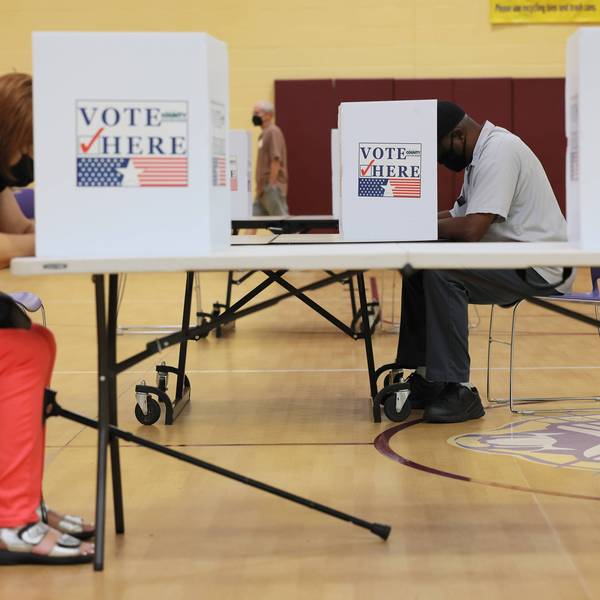
Missouri voters in August will decide whether to add an electronic privacy provision to the state constitution, giving telecommunications the same protections that currently prevent police officers from searching through people's paper documents, mailboxes, homes, and possessions without a warrant.
The Missouri House of Representatives voted 114-28 to put Amendment 9 (PDF) on the ballot. The measure would protect "all electronic communications and data from unreasonable searches and seizures," and states that all warrants must give "probable cause, supported by written oath or affirmation."
"It is essential to our freedoms and liberty that the laws of this state have provisions in place protecting the privacy of its citizens," said Sen. Rob Schaaf (R-34), who sponsored the bill. "As technology continues to advance and concerns grow regarding government intrusion in the digital age, this proposed amendment would bring our state constitution into the 21st Century."
Amendment 9 has overwhelming cross-party support from both politicians and activists. The ACLU of Missouri called it a "common sense measure," stating that current privacy protections are "quaint and obsolete" in the face of new technologies and government power.
"Government surveillance programs have gone too far, sweeping in massive amounts of data on ordinary Americans, and giving law enforcement unfettered access to too many of our private communications. This violates the Constitution's protections against unreasonable search and seizure," the ACLU-MO said.
The measure also got support from groups that focus on opposing federal regulations. The Tenth Amendment Center noted that current laws on electronic privacy have not kept up with new technologies. "Our correspondence and other 'papers' don't become less sensitive simply because we store them in electronic form," Michael Maharrey, national communications director of the Tenth Amendment Center, said in a press release.
The bill has "national implication," Maharrey said. "We have the potential to blanket the country with constitutional provisions specifically extending privacy protection to electronic information and data. This would ensure state-level respect for privacy rights and address a practical effect of federal spying, regardless of how things play out in Congress or in federal courts."
Last month, the U.S. Supreme Court ruled that police must have warrants to search the cell phones of people they arrest.
"Modern cellphones are not just another technological convenience," Chief Justice John Roberts wrote for the unanimous court decision. "With all they contain and all they may reveal, they hold for many Americans the privacies of life."
But the ruling only concerned cell phones of criminal suspects, rather than all electronic communications of every U.S. citizen, which government agencies are still able to track with "broad authority... to a disturbing extent," ACLU-MO stated.
"Privacy protections under the Missouri Constitution need to be modernized to catch up to advances in technology that not only have radically altered the way people communicate and store information but also greatly enhanced the ability of government to snoop into the private affairs of its citizens," said Rep. Jeanne Kirkton (D-91). "One need look no farther than the [NSA]'s mass collection of the electronic data and communications of millions of Americans without a warrant or even suspicion that any individual has committed a crime."
Only one state Senator voted against Amendment 9. Sen. Maria Chappelle-Nadal (D-14) said the proposal "could hamstring the courts when there may be more nuance required in interpreting what is 'private communication'."
"This idea that we can either be safe or free is just a false dichotomy," Jeffrey Mittman, executive director of ACLU-MO, told KSDK last month. And he argued that the proposed amendment only enforces existing standards of legal procedures. "In the same way that our government shouldn't be able to look at our snail mail without a warrant, the government shouldn't be able to look through our email without a warrant," Mittman told the St. Louis Post Dispatch.
Rep. Paul Curtman (R-109) agreed, telling the Missouri legislature that the bill is a logical extension of the Fourth Amendment. "It makes perfect sense that if our hard-copy data is protected from unwarranted searches and seizures, that our electronic data also should be," Curtman said during a recent session.
If the measure passes, Missouri will join a handful of states, including Texas and Maine, that have added broad electronic privacy measures to their state constitutions.
Dear Common Dreams reader, It’s been nearly 30 years since I co-founded Common Dreams with my late wife, Lina Newhouser. We had the radical notion that journalism should serve the public good, not corporate profits. It was clear to us from the outset what it would take to build such a project. No paid advertisements. No corporate sponsors. No millionaire publisher telling us what to think or do. Many people said we wouldn't last a year, but we proved those doubters wrong. Together with a tremendous team of journalists and dedicated staff, we built an independent media outlet free from the constraints of profits and corporate control. Our mission has always been simple: To inform. To inspire. To ignite change for the common good. Building Common Dreams was not easy. Our survival was never guaranteed. When you take on the most powerful forces—Wall Street greed, fossil fuel industry destruction, Big Tech lobbyists, and uber-rich oligarchs who have spent billions upon billions rigging the economy and democracy in their favor—the only bulwark you have is supporters who believe in your work. But here’s the urgent message from me today. It's never been this bad out there. And it's never been this hard to keep us going. At the very moment Common Dreams is most needed, the threats we face are intensifying. We need your support now more than ever. We don't accept corporate advertising and never will. We don't have a paywall because we don't think people should be blocked from critical news based on their ability to pay. Everything we do is funded by the donations of readers like you. When everyone does the little they can afford, we are strong. But if that support retreats or dries up, so do we. Will you donate now to make sure Common Dreams not only survives but thrives? —Craig Brown, Co-founder |
Missouri voters in August will decide whether to add an electronic privacy provision to the state constitution, giving telecommunications the same protections that currently prevent police officers from searching through people's paper documents, mailboxes, homes, and possessions without a warrant.
The Missouri House of Representatives voted 114-28 to put Amendment 9 (PDF) on the ballot. The measure would protect "all electronic communications and data from unreasonable searches and seizures," and states that all warrants must give "probable cause, supported by written oath or affirmation."
"It is essential to our freedoms and liberty that the laws of this state have provisions in place protecting the privacy of its citizens," said Sen. Rob Schaaf (R-34), who sponsored the bill. "As technology continues to advance and concerns grow regarding government intrusion in the digital age, this proposed amendment would bring our state constitution into the 21st Century."
Amendment 9 has overwhelming cross-party support from both politicians and activists. The ACLU of Missouri called it a "common sense measure," stating that current privacy protections are "quaint and obsolete" in the face of new technologies and government power.
"Government surveillance programs have gone too far, sweeping in massive amounts of data on ordinary Americans, and giving law enforcement unfettered access to too many of our private communications. This violates the Constitution's protections against unreasonable search and seizure," the ACLU-MO said.
The measure also got support from groups that focus on opposing federal regulations. The Tenth Amendment Center noted that current laws on electronic privacy have not kept up with new technologies. "Our correspondence and other 'papers' don't become less sensitive simply because we store them in electronic form," Michael Maharrey, national communications director of the Tenth Amendment Center, said in a press release.
The bill has "national implication," Maharrey said. "We have the potential to blanket the country with constitutional provisions specifically extending privacy protection to electronic information and data. This would ensure state-level respect for privacy rights and address a practical effect of federal spying, regardless of how things play out in Congress or in federal courts."
Last month, the U.S. Supreme Court ruled that police must have warrants to search the cell phones of people they arrest.
"Modern cellphones are not just another technological convenience," Chief Justice John Roberts wrote for the unanimous court decision. "With all they contain and all they may reveal, they hold for many Americans the privacies of life."
But the ruling only concerned cell phones of criminal suspects, rather than all electronic communications of every U.S. citizen, which government agencies are still able to track with "broad authority... to a disturbing extent," ACLU-MO stated.
"Privacy protections under the Missouri Constitution need to be modernized to catch up to advances in technology that not only have radically altered the way people communicate and store information but also greatly enhanced the ability of government to snoop into the private affairs of its citizens," said Rep. Jeanne Kirkton (D-91). "One need look no farther than the [NSA]'s mass collection of the electronic data and communications of millions of Americans without a warrant or even suspicion that any individual has committed a crime."
Only one state Senator voted against Amendment 9. Sen. Maria Chappelle-Nadal (D-14) said the proposal "could hamstring the courts when there may be more nuance required in interpreting what is 'private communication'."
"This idea that we can either be safe or free is just a false dichotomy," Jeffrey Mittman, executive director of ACLU-MO, told KSDK last month. And he argued that the proposed amendment only enforces existing standards of legal procedures. "In the same way that our government shouldn't be able to look at our snail mail without a warrant, the government shouldn't be able to look through our email without a warrant," Mittman told the St. Louis Post Dispatch.
Rep. Paul Curtman (R-109) agreed, telling the Missouri legislature that the bill is a logical extension of the Fourth Amendment. "It makes perfect sense that if our hard-copy data is protected from unwarranted searches and seizures, that our electronic data also should be," Curtman said during a recent session.
If the measure passes, Missouri will join a handful of states, including Texas and Maine, that have added broad electronic privacy measures to their state constitutions.
Missouri voters in August will decide whether to add an electronic privacy provision to the state constitution, giving telecommunications the same protections that currently prevent police officers from searching through people's paper documents, mailboxes, homes, and possessions without a warrant.
The Missouri House of Representatives voted 114-28 to put Amendment 9 (PDF) on the ballot. The measure would protect "all electronic communications and data from unreasonable searches and seizures," and states that all warrants must give "probable cause, supported by written oath or affirmation."
"It is essential to our freedoms and liberty that the laws of this state have provisions in place protecting the privacy of its citizens," said Sen. Rob Schaaf (R-34), who sponsored the bill. "As technology continues to advance and concerns grow regarding government intrusion in the digital age, this proposed amendment would bring our state constitution into the 21st Century."
Amendment 9 has overwhelming cross-party support from both politicians and activists. The ACLU of Missouri called it a "common sense measure," stating that current privacy protections are "quaint and obsolete" in the face of new technologies and government power.
"Government surveillance programs have gone too far, sweeping in massive amounts of data on ordinary Americans, and giving law enforcement unfettered access to too many of our private communications. This violates the Constitution's protections against unreasonable search and seizure," the ACLU-MO said.
The measure also got support from groups that focus on opposing federal regulations. The Tenth Amendment Center noted that current laws on electronic privacy have not kept up with new technologies. "Our correspondence and other 'papers' don't become less sensitive simply because we store them in electronic form," Michael Maharrey, national communications director of the Tenth Amendment Center, said in a press release.
The bill has "national implication," Maharrey said. "We have the potential to blanket the country with constitutional provisions specifically extending privacy protection to electronic information and data. This would ensure state-level respect for privacy rights and address a practical effect of federal spying, regardless of how things play out in Congress or in federal courts."
Last month, the U.S. Supreme Court ruled that police must have warrants to search the cell phones of people they arrest.
"Modern cellphones are not just another technological convenience," Chief Justice John Roberts wrote for the unanimous court decision. "With all they contain and all they may reveal, they hold for many Americans the privacies of life."
But the ruling only concerned cell phones of criminal suspects, rather than all electronic communications of every U.S. citizen, which government agencies are still able to track with "broad authority... to a disturbing extent," ACLU-MO stated.
"Privacy protections under the Missouri Constitution need to be modernized to catch up to advances in technology that not only have radically altered the way people communicate and store information but also greatly enhanced the ability of government to snoop into the private affairs of its citizens," said Rep. Jeanne Kirkton (D-91). "One need look no farther than the [NSA]'s mass collection of the electronic data and communications of millions of Americans without a warrant or even suspicion that any individual has committed a crime."
Only one state Senator voted against Amendment 9. Sen. Maria Chappelle-Nadal (D-14) said the proposal "could hamstring the courts when there may be more nuance required in interpreting what is 'private communication'."
"This idea that we can either be safe or free is just a false dichotomy," Jeffrey Mittman, executive director of ACLU-MO, told KSDK last month. And he argued that the proposed amendment only enforces existing standards of legal procedures. "In the same way that our government shouldn't be able to look at our snail mail without a warrant, the government shouldn't be able to look through our email without a warrant," Mittman told the St. Louis Post Dispatch.
Rep. Paul Curtman (R-109) agreed, telling the Missouri legislature that the bill is a logical extension of the Fourth Amendment. "It makes perfect sense that if our hard-copy data is protected from unwarranted searches and seizures, that our electronic data also should be," Curtman said during a recent session.
If the measure passes, Missouri will join a handful of states, including Texas and Maine, that have added broad electronic privacy measures to their state constitutions.