SUBSCRIBE TO OUR FREE NEWSLETTER
Daily news & progressive opinion—funded by the people, not the corporations—delivered straight to your inbox.
5
#000000
#FFFFFF
To donate by check, phone, or other method, see our More Ways to Give page.
Daily news & progressive opinion—funded by the people, not the corporations—delivered straight to your inbox.
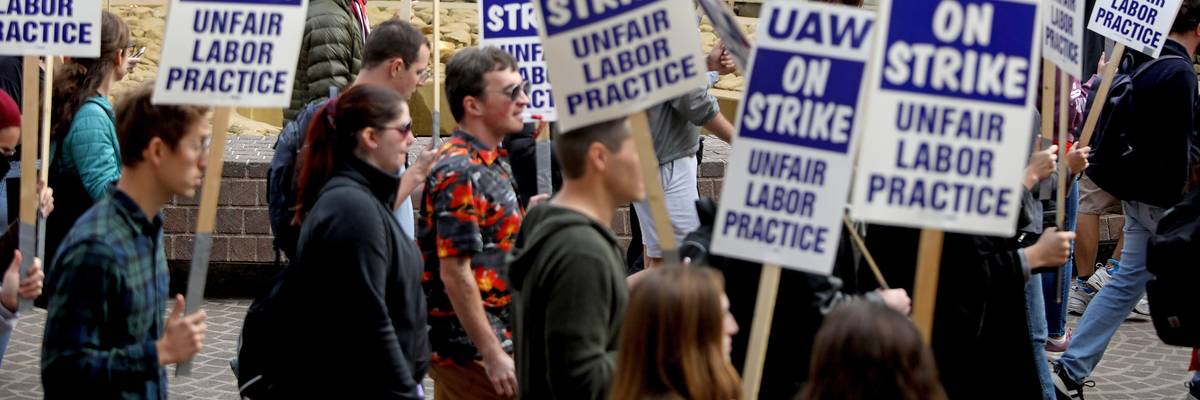
University of California academic workers strike walking the picket line on the Campus of the University of California, Los Angeles on Monday, Nov. 28, 2022 in Los Angeles, CA. (Photo: Gary Coronado / Los Angeles Times via Getty Images)
Last year, lid manufacturer Tecnocap illegally slashed health benefits for workers at its Glen Dale, West Virginia plant.
When employers like Tecnocap break the law, workers rely on the NLRB to enforce their rights. But a funding crisis imperils that mission at a time more and more Americans need the agency's protection.
Workers began delaying doctor's appointments. Others were forced to delve deeply into their pockets--one even put thousands of dollars of chemotherapy charges on credit cards to save his wife's life.
Lisa Wilds, president of United Steelworkers Local 152M, assured her colleagues that the company would be held accountable. And it was. This past August, the National Labor Relations Board (NLRB) ordered Tecnocap to reinstate the old health plan and reimburse workers, with interest, for all expenses they incurred.
When employers like Tecnocap break the law, workers rely on the NLRB to enforce their rights. But a funding crisis imperils that mission at a time more and more Americans need the agency's protection.
The NLRB hasn't gotten a budget increase since 2014, even though its workload skyrocketed in the wake of the pandemic. Union drives, overseen by the NLRB, increased 53 percent this year as workers banded together for higher wages, affordable health care, and paid sick leave.
Along the way, the NLRB stepped in to save the jobs of workers illegally fired for union activity, force companies to bargain in good faith, and prohibit employers from spying on and demeaning workers. "There is no way to put into words the value and importance of the NLRB," explained Wilds, who stands to recoup about $7,000 in medical expenses.
This was just one of numerous times she and her co-workers turned to the NLRB. In 2018, for example, Tecnocap illegally locked out workers for nine days during contract negotiations. The NLRB ruled the lockout illegal and ordered Tecnocap to pay the workers lost wages, plus interest.
Victories like these benefit workers across the country because they warn employers to toe the line. If one employer gets away with breaking the law, Wilds noted, others will attempt shenanigans of their own. "It spreads like a disease," noted Wilds, who worries that cost-cutting at the NLRB will give unscrupulous employers an advantage.
The NLRB warned of these very risks in a recent letter calling on Congress to address its "urgent funding needs." The agency had more than 1,700 employees in 2010, but that's fallen to about 1,200. That means slower investigations, delayed relief for workers, and eventually higher penalties for employers, the NLRB warns, as "as interest, backpay, and other harms continue to accrue."
Workers need a strong NLRB now more than ever. In recent months, workers filed dozens of unfair labor practice charges about employers who illegally subcontracted work to avoid unions or shut down stores, restaurants, factories, and other workplaces when workers began exercising their labor rights.
Members of USW Local 4040 at HCL, a Google contractor, experienced a similar form of retaliation in 2019.
While in negotiations for a first contract, workers noticed that the company failed to fill vacancies on Pittsburgh-based work teams even while it kept adding similar positions in Poland. "It started looking pretty fishy to us," recalled Local 4040 President Stefan Sidelnick.
The union filed unfair labor practice charges with the NLRB, which demanded that the company restore the work shifted overseas and negotiate in good faith. "It kind of lit a fire under the company's feet," Sidelnick said. Union members and HCL ultimately reached a contract that protects staffing levels at the Pittsburgh location.
Only a robustly funded and staffed NLRB can continue to protect workers' livelihoods. Wilds said her co-workers have peace of mind just knowing the agency is standing watch for them. "Are you going to go into battle with a tank or are you going into battle with a stick?" she asked. "That's the difference."
Dear Common Dreams reader, It’s been nearly 30 years since I co-founded Common Dreams with my late wife, Lina Newhouser. We had the radical notion that journalism should serve the public good, not corporate profits. It was clear to us from the outset what it would take to build such a project. No paid advertisements. No corporate sponsors. No millionaire publisher telling us what to think or do. Many people said we wouldn't last a year, but we proved those doubters wrong. Together with a tremendous team of journalists and dedicated staff, we built an independent media outlet free from the constraints of profits and corporate control. Our mission has always been simple: To inform. To inspire. To ignite change for the common good. Building Common Dreams was not easy. Our survival was never guaranteed. When you take on the most powerful forces—Wall Street greed, fossil fuel industry destruction, Big Tech lobbyists, and uber-rich oligarchs who have spent billions upon billions rigging the economy and democracy in their favor—the only bulwark you have is supporters who believe in your work. But here’s the urgent message from me today. It's never been this bad out there. And it's never been this hard to keep us going. At the very moment Common Dreams is most needed, the threats we face are intensifying. We need your support now more than ever. We don't accept corporate advertising and never will. We don't have a paywall because we don't think people should be blocked from critical news based on their ability to pay. Everything we do is funded by the donations of readers like you. When everyone does the little they can afford, we are strong. But if that support retreats or dries up, so do we. Will you donate now to make sure Common Dreams not only survives but thrives? —Craig Brown, Co-founder |
Last year, lid manufacturer Tecnocap illegally slashed health benefits for workers at its Glen Dale, West Virginia plant.
When employers like Tecnocap break the law, workers rely on the NLRB to enforce their rights. But a funding crisis imperils that mission at a time more and more Americans need the agency's protection.
Workers began delaying doctor's appointments. Others were forced to delve deeply into their pockets--one even put thousands of dollars of chemotherapy charges on credit cards to save his wife's life.
Lisa Wilds, president of United Steelworkers Local 152M, assured her colleagues that the company would be held accountable. And it was. This past August, the National Labor Relations Board (NLRB) ordered Tecnocap to reinstate the old health plan and reimburse workers, with interest, for all expenses they incurred.
When employers like Tecnocap break the law, workers rely on the NLRB to enforce their rights. But a funding crisis imperils that mission at a time more and more Americans need the agency's protection.
The NLRB hasn't gotten a budget increase since 2014, even though its workload skyrocketed in the wake of the pandemic. Union drives, overseen by the NLRB, increased 53 percent this year as workers banded together for higher wages, affordable health care, and paid sick leave.
Along the way, the NLRB stepped in to save the jobs of workers illegally fired for union activity, force companies to bargain in good faith, and prohibit employers from spying on and demeaning workers. "There is no way to put into words the value and importance of the NLRB," explained Wilds, who stands to recoup about $7,000 in medical expenses.
This was just one of numerous times she and her co-workers turned to the NLRB. In 2018, for example, Tecnocap illegally locked out workers for nine days during contract negotiations. The NLRB ruled the lockout illegal and ordered Tecnocap to pay the workers lost wages, plus interest.
Victories like these benefit workers across the country because they warn employers to toe the line. If one employer gets away with breaking the law, Wilds noted, others will attempt shenanigans of their own. "It spreads like a disease," noted Wilds, who worries that cost-cutting at the NLRB will give unscrupulous employers an advantage.
The NLRB warned of these very risks in a recent letter calling on Congress to address its "urgent funding needs." The agency had more than 1,700 employees in 2010, but that's fallen to about 1,200. That means slower investigations, delayed relief for workers, and eventually higher penalties for employers, the NLRB warns, as "as interest, backpay, and other harms continue to accrue."
Workers need a strong NLRB now more than ever. In recent months, workers filed dozens of unfair labor practice charges about employers who illegally subcontracted work to avoid unions or shut down stores, restaurants, factories, and other workplaces when workers began exercising their labor rights.
Members of USW Local 4040 at HCL, a Google contractor, experienced a similar form of retaliation in 2019.
While in negotiations for a first contract, workers noticed that the company failed to fill vacancies on Pittsburgh-based work teams even while it kept adding similar positions in Poland. "It started looking pretty fishy to us," recalled Local 4040 President Stefan Sidelnick.
The union filed unfair labor practice charges with the NLRB, which demanded that the company restore the work shifted overseas and negotiate in good faith. "It kind of lit a fire under the company's feet," Sidelnick said. Union members and HCL ultimately reached a contract that protects staffing levels at the Pittsburgh location.
Only a robustly funded and staffed NLRB can continue to protect workers' livelihoods. Wilds said her co-workers have peace of mind just knowing the agency is standing watch for them. "Are you going to go into battle with a tank or are you going into battle with a stick?" she asked. "That's the difference."
Last year, lid manufacturer Tecnocap illegally slashed health benefits for workers at its Glen Dale, West Virginia plant.
When employers like Tecnocap break the law, workers rely on the NLRB to enforce their rights. But a funding crisis imperils that mission at a time more and more Americans need the agency's protection.
Workers began delaying doctor's appointments. Others were forced to delve deeply into their pockets--one even put thousands of dollars of chemotherapy charges on credit cards to save his wife's life.
Lisa Wilds, president of United Steelworkers Local 152M, assured her colleagues that the company would be held accountable. And it was. This past August, the National Labor Relations Board (NLRB) ordered Tecnocap to reinstate the old health plan and reimburse workers, with interest, for all expenses they incurred.
When employers like Tecnocap break the law, workers rely on the NLRB to enforce their rights. But a funding crisis imperils that mission at a time more and more Americans need the agency's protection.
The NLRB hasn't gotten a budget increase since 2014, even though its workload skyrocketed in the wake of the pandemic. Union drives, overseen by the NLRB, increased 53 percent this year as workers banded together for higher wages, affordable health care, and paid sick leave.
Along the way, the NLRB stepped in to save the jobs of workers illegally fired for union activity, force companies to bargain in good faith, and prohibit employers from spying on and demeaning workers. "There is no way to put into words the value and importance of the NLRB," explained Wilds, who stands to recoup about $7,000 in medical expenses.
This was just one of numerous times she and her co-workers turned to the NLRB. In 2018, for example, Tecnocap illegally locked out workers for nine days during contract negotiations. The NLRB ruled the lockout illegal and ordered Tecnocap to pay the workers lost wages, plus interest.
Victories like these benefit workers across the country because they warn employers to toe the line. If one employer gets away with breaking the law, Wilds noted, others will attempt shenanigans of their own. "It spreads like a disease," noted Wilds, who worries that cost-cutting at the NLRB will give unscrupulous employers an advantage.
The NLRB warned of these very risks in a recent letter calling on Congress to address its "urgent funding needs." The agency had more than 1,700 employees in 2010, but that's fallen to about 1,200. That means slower investigations, delayed relief for workers, and eventually higher penalties for employers, the NLRB warns, as "as interest, backpay, and other harms continue to accrue."
Workers need a strong NLRB now more than ever. In recent months, workers filed dozens of unfair labor practice charges about employers who illegally subcontracted work to avoid unions or shut down stores, restaurants, factories, and other workplaces when workers began exercising their labor rights.
Members of USW Local 4040 at HCL, a Google contractor, experienced a similar form of retaliation in 2019.
While in negotiations for a first contract, workers noticed that the company failed to fill vacancies on Pittsburgh-based work teams even while it kept adding similar positions in Poland. "It started looking pretty fishy to us," recalled Local 4040 President Stefan Sidelnick.
The union filed unfair labor practice charges with the NLRB, which demanded that the company restore the work shifted overseas and negotiate in good faith. "It kind of lit a fire under the company's feet," Sidelnick said. Union members and HCL ultimately reached a contract that protects staffing levels at the Pittsburgh location.
Only a robustly funded and staffed NLRB can continue to protect workers' livelihoods. Wilds said her co-workers have peace of mind just knowing the agency is standing watch for them. "Are you going to go into battle with a tank or are you going into battle with a stick?" she asked. "That's the difference."