SUBSCRIBE TO OUR FREE NEWSLETTER
Daily news & progressive opinion—funded by the people, not the corporations—delivered straight to your inbox.
5
#000000
#FFFFFF
To donate by check, phone, or other method, see our More Ways to Give page.
Daily news & progressive opinion—funded by the people, not the corporations—delivered straight to your inbox.
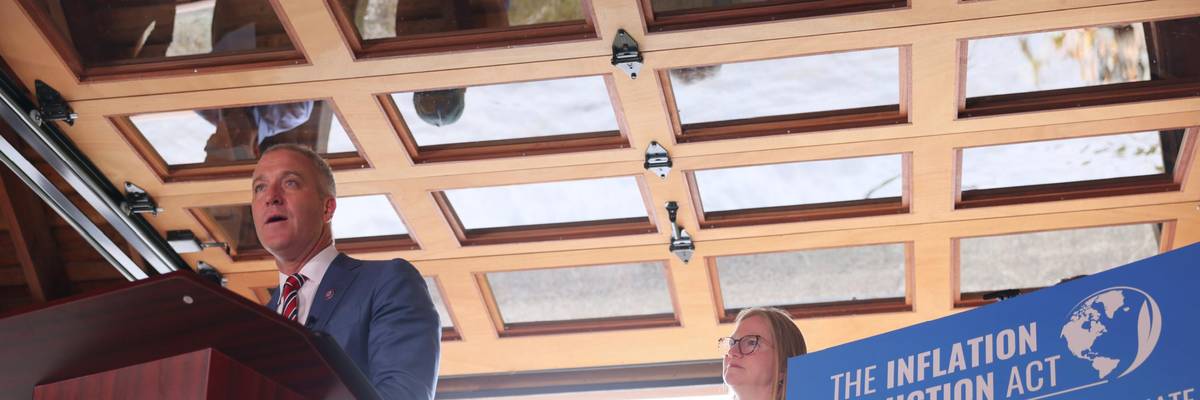
Rep. Sean Patrick Maloney (D-NY) speaks during a press conference on the the Inflation Reduction Act at Glynwood Boat House on August 17, 2022 in Cold Spring, New York. (Photo: Michael M. Santiago/Getty Images)
President Biden and the Democrats are celebrating the passage of the Inflation Reduction Act, a stripped down version of the Build Back Better agenda.
The Inflation Reduction Act isn't everything we should have gotten. But it still takes a significant step forward on climate, creates millions of jobs, offers critical help for seniors and low-income families, and brings a little more fairness to our grossly unfair tax system.
The new bill will help reduce inflation, address climate change, and ease economic hardship--a little, over time, and with conditions. But that's still a big deal.
This smaller yet still sweeping new law makes landmark investments in climate, jobs, and health care, which it funds entirely by taxing big corporations and going after wealthy tax cheats. That's going to make a huge difference for working people while still reducing the deficit.
For starters, the bill marks the largest investment in clean energy in the history of this country.
It invests $370 billion over 10 years in greening our economy. It will reduce U.S. carbon emissions 40 percent by 2030, help poor and low-income people retrofit and electrify their homes, and clean up pollution in poor communities. And it will create 9 million new jobs over the next decade, especially in the communities that need them most.
The bill will also bring health care costs down.
It allows Medicare, for the first time, to negotiate the prices of certain expensive medications. Notably, insulin costs will be capped at $35 per month, and out of pocket drug prices for those receiving Medicare will be capped annually at $2,000.
This will help many seniors weather inflation and could bring down drug prices across the entire market--especially if Medicare gets to negotiate over more drugs in the future. These price controls won't kick in right away, however, so the immediate effect on household costs isn't clear.
What is immediate, though, is that millions of people will now avoid a drastic increase in Affordable Care Act premiums that would have put health coverage suddenly out of reach this fall. And vaccines will be free for adults covered by federal health programs.
Finally, all of this is funded by imposing a minimum tax of 15 percent on the biggest corporations, levying a small tariff on corporations that buy back their own stock instead of investing in workers, and giving the IRS resources to track down tax-dodging elites.
Unfortunately, there are drawbacks. At Senator Joe Manchin's (D-WV) insistence, the bill also includes big giveaways to the fossil fuel industry. And the original Build Back Better agenda would have gone much further to relieve the inflationary pressures families face.
Notably, it would have made the improved Child Tax Credit permanent. Created in the 2021 American Rescue Plan Act, that credit gave $250 to $300 per child, per month to families making up to $150,000 annually. It cut child poverty by 40 percent in its first months and was on track to reach the 50 percent mark before it expired.
The bigger bill also would have provided free universal preschool, subsidized child care, and made critical investments in education, health care, housing, food assistance, and more. All of it was paid for by fixing a tax system that had been rigged by corporations and the wealthiest.
Unfortunately, all Republican lawmakers--plus Democrats Manchin and Kyrsten Sinema of Arizona--derailed that legislation.
So the Inflation Reduction Act isn't everything we should have gotten. But it still takes a significant step forward on climate, creates millions of jobs, offers critical help for seniors and low-income families, and brings a little more fairness to our grossly unfair tax system.
It should be a first step--not the last.
Many climate justice organizations are now calling for Biden to declare a national climate emergency, which would enable him to set a better course for reducing carbon emissions than this bill alone. Other advocates are going to keep fighting for those bigger investments from Build Back Better.
Eventually, more and better legislation must pass. But the Inflation Reduction Act is a mostly laudable, necessary start.
Dear Common Dreams reader, It’s been nearly 30 years since I co-founded Common Dreams with my late wife, Lina Newhouser. We had the radical notion that journalism should serve the public good, not corporate profits. It was clear to us from the outset what it would take to build such a project. No paid advertisements. No corporate sponsors. No millionaire publisher telling us what to think or do. Many people said we wouldn't last a year, but we proved those doubters wrong. Together with a tremendous team of journalists and dedicated staff, we built an independent media outlet free from the constraints of profits and corporate control. Our mission has always been simple: To inform. To inspire. To ignite change for the common good. Building Common Dreams was not easy. Our survival was never guaranteed. When you take on the most powerful forces—Wall Street greed, fossil fuel industry destruction, Big Tech lobbyists, and uber-rich oligarchs who have spent billions upon billions rigging the economy and democracy in their favor—the only bulwark you have is supporters who believe in your work. But here’s the urgent message from me today. It's never been this bad out there. And it's never been this hard to keep us going. At the very moment Common Dreams is most needed, the threats we face are intensifying. We need your support now more than ever. We don't accept corporate advertising and never will. We don't have a paywall because we don't think people should be blocked from critical news based on their ability to pay. Everything we do is funded by the donations of readers like you. When everyone does the little they can afford, we are strong. But if that support retreats or dries up, so do we. Will you donate now to make sure Common Dreams not only survives but thrives? —Craig Brown, Co-founder |
President Biden and the Democrats are celebrating the passage of the Inflation Reduction Act, a stripped down version of the Build Back Better agenda.
The Inflation Reduction Act isn't everything we should have gotten. But it still takes a significant step forward on climate, creates millions of jobs, offers critical help for seniors and low-income families, and brings a little more fairness to our grossly unfair tax system.
The new bill will help reduce inflation, address climate change, and ease economic hardship--a little, over time, and with conditions. But that's still a big deal.
This smaller yet still sweeping new law makes landmark investments in climate, jobs, and health care, which it funds entirely by taxing big corporations and going after wealthy tax cheats. That's going to make a huge difference for working people while still reducing the deficit.
For starters, the bill marks the largest investment in clean energy in the history of this country.
It invests $370 billion over 10 years in greening our economy. It will reduce U.S. carbon emissions 40 percent by 2030, help poor and low-income people retrofit and electrify their homes, and clean up pollution in poor communities. And it will create 9 million new jobs over the next decade, especially in the communities that need them most.
The bill will also bring health care costs down.
It allows Medicare, for the first time, to negotiate the prices of certain expensive medications. Notably, insulin costs will be capped at $35 per month, and out of pocket drug prices for those receiving Medicare will be capped annually at $2,000.
This will help many seniors weather inflation and could bring down drug prices across the entire market--especially if Medicare gets to negotiate over more drugs in the future. These price controls won't kick in right away, however, so the immediate effect on household costs isn't clear.
What is immediate, though, is that millions of people will now avoid a drastic increase in Affordable Care Act premiums that would have put health coverage suddenly out of reach this fall. And vaccines will be free for adults covered by federal health programs.
Finally, all of this is funded by imposing a minimum tax of 15 percent on the biggest corporations, levying a small tariff on corporations that buy back their own stock instead of investing in workers, and giving the IRS resources to track down tax-dodging elites.
Unfortunately, there are drawbacks. At Senator Joe Manchin's (D-WV) insistence, the bill also includes big giveaways to the fossil fuel industry. And the original Build Back Better agenda would have gone much further to relieve the inflationary pressures families face.
Notably, it would have made the improved Child Tax Credit permanent. Created in the 2021 American Rescue Plan Act, that credit gave $250 to $300 per child, per month to families making up to $150,000 annually. It cut child poverty by 40 percent in its first months and was on track to reach the 50 percent mark before it expired.
The bigger bill also would have provided free universal preschool, subsidized child care, and made critical investments in education, health care, housing, food assistance, and more. All of it was paid for by fixing a tax system that had been rigged by corporations and the wealthiest.
Unfortunately, all Republican lawmakers--plus Democrats Manchin and Kyrsten Sinema of Arizona--derailed that legislation.
So the Inflation Reduction Act isn't everything we should have gotten. But it still takes a significant step forward on climate, creates millions of jobs, offers critical help for seniors and low-income families, and brings a little more fairness to our grossly unfair tax system.
It should be a first step--not the last.
Many climate justice organizations are now calling for Biden to declare a national climate emergency, which would enable him to set a better course for reducing carbon emissions than this bill alone. Other advocates are going to keep fighting for those bigger investments from Build Back Better.
Eventually, more and better legislation must pass. But the Inflation Reduction Act is a mostly laudable, necessary start.
President Biden and the Democrats are celebrating the passage of the Inflation Reduction Act, a stripped down version of the Build Back Better agenda.
The Inflation Reduction Act isn't everything we should have gotten. But it still takes a significant step forward on climate, creates millions of jobs, offers critical help for seniors and low-income families, and brings a little more fairness to our grossly unfair tax system.
The new bill will help reduce inflation, address climate change, and ease economic hardship--a little, over time, and with conditions. But that's still a big deal.
This smaller yet still sweeping new law makes landmark investments in climate, jobs, and health care, which it funds entirely by taxing big corporations and going after wealthy tax cheats. That's going to make a huge difference for working people while still reducing the deficit.
For starters, the bill marks the largest investment in clean energy in the history of this country.
It invests $370 billion over 10 years in greening our economy. It will reduce U.S. carbon emissions 40 percent by 2030, help poor and low-income people retrofit and electrify their homes, and clean up pollution in poor communities. And it will create 9 million new jobs over the next decade, especially in the communities that need them most.
The bill will also bring health care costs down.
It allows Medicare, for the first time, to negotiate the prices of certain expensive medications. Notably, insulin costs will be capped at $35 per month, and out of pocket drug prices for those receiving Medicare will be capped annually at $2,000.
This will help many seniors weather inflation and could bring down drug prices across the entire market--especially if Medicare gets to negotiate over more drugs in the future. These price controls won't kick in right away, however, so the immediate effect on household costs isn't clear.
What is immediate, though, is that millions of people will now avoid a drastic increase in Affordable Care Act premiums that would have put health coverage suddenly out of reach this fall. And vaccines will be free for adults covered by federal health programs.
Finally, all of this is funded by imposing a minimum tax of 15 percent on the biggest corporations, levying a small tariff on corporations that buy back their own stock instead of investing in workers, and giving the IRS resources to track down tax-dodging elites.
Unfortunately, there are drawbacks. At Senator Joe Manchin's (D-WV) insistence, the bill also includes big giveaways to the fossil fuel industry. And the original Build Back Better agenda would have gone much further to relieve the inflationary pressures families face.
Notably, it would have made the improved Child Tax Credit permanent. Created in the 2021 American Rescue Plan Act, that credit gave $250 to $300 per child, per month to families making up to $150,000 annually. It cut child poverty by 40 percent in its first months and was on track to reach the 50 percent mark before it expired.
The bigger bill also would have provided free universal preschool, subsidized child care, and made critical investments in education, health care, housing, food assistance, and more. All of it was paid for by fixing a tax system that had been rigged by corporations and the wealthiest.
Unfortunately, all Republican lawmakers--plus Democrats Manchin and Kyrsten Sinema of Arizona--derailed that legislation.
So the Inflation Reduction Act isn't everything we should have gotten. But it still takes a significant step forward on climate, creates millions of jobs, offers critical help for seniors and low-income families, and brings a little more fairness to our grossly unfair tax system.
It should be a first step--not the last.
Many climate justice organizations are now calling for Biden to declare a national climate emergency, which would enable him to set a better course for reducing carbon emissions than this bill alone. Other advocates are going to keep fighting for those bigger investments from Build Back Better.
Eventually, more and better legislation must pass. But the Inflation Reduction Act is a mostly laudable, necessary start.