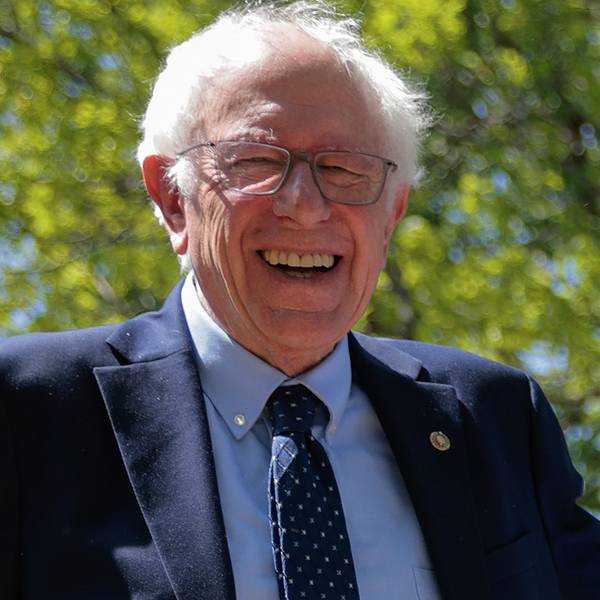
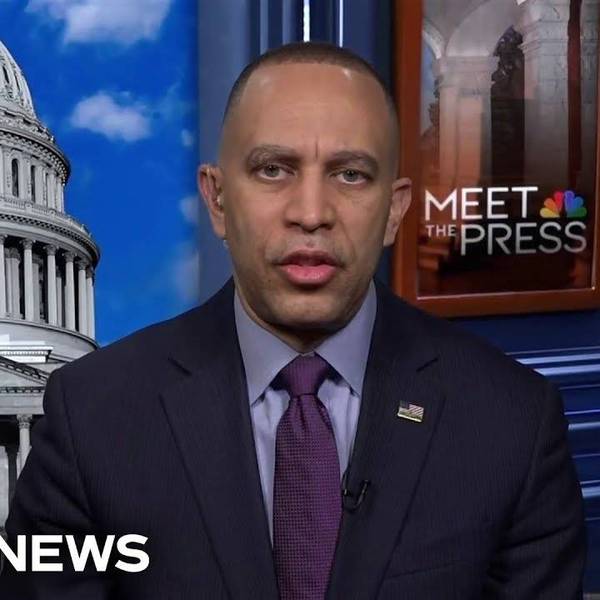

Jamie Sheldon, of San Francisco, holds a sign stating, "Love It! Improve It! Medicare For All!" as she listens to Nancy Pelosi, speaker of the U.S. House of Representatives, as she speaks to an audience during a town hall meeting on gun violence at Lincoln High School in San Francisco, Calif., on Tuesday, August 27, 2019. (Photo: Yalonda M. James/The San Francisco Chronicle via Getty Images)
Commission's Report Shows Medicare for All Is Logical Next Step for California
A universal healthcare system utilizing a single-payer model in the state will save California families and businesses over $100 billion per year. The door to quality, universal, and affordable care is open and so now we must walk through.
For years, the private insurance company lobby has falsely claimed that California can't afford quality and universal healthcare. But a comprehensive new study shows we simply can't afford not to adopt a universal healthcare system that will save California families and businesses over $100 billion per year.
After two years of careful study, a panel of healthcare experts, economists, and public health leaders appointed by Governor Gavin Newsom, the assembly speaker, and the senate pro tem has completed a comprehensive study on how to make California's healthcare system work better for everyone. Known as the Healthy California Commission for All, they concluded that a "unified financing" system would not only save thousands of lives, it would save Californians up to half a trillion dollars over the first decade it was adopted.
For advocates of saving lives and saving hard-pressed California families thousands of dollars every year, the conclusions were worth waiting for.
"Unified Financing" is a term the commission used to describe what is also commonly called Medicare for All or single-payer healthcare. Whatever you call it, this is a reform that would cut out the enormous waste of the for-profit insurance bureaucracy, saving California's families and businesses fully $158 billion per year by 2031, with savings growing every year after that, while improving and expanding care. Let's call $158 billion (in 2022 dollars) "the price of inaction" if the governor and legislature don't act to make single payer happen.
A little history helps us to understand just how comprehensive this study became. Newsom ran for governor promising to implement single-payer healthcare. His campaign slogan--"Courage for a Change" amplified this promise--he was saying quite clearly that he wouldn't just talk about life-saving reforms like Medicare for All, he would have the courage to implement them.
Once in office he did act--but carefully. He appointed the commission to fully study all options going forward, including single payer. And study they did. Perhaps no major policy reform in California history has been more comprehensively studied--as we have waited nearly the entirety of Newsom's first term for the commission's conclusions.
For advocates of saving lives and saving hard-pressed California families thousands of dollars every year, the conclusions were worth waiting for. They find, definitively, that California can implement a "unified financing system" that covers all Californians, lowers costs, saves lives and allows everyone to keep their current doctor.
Of particular importance--and most certainly significant to the Governor--are the findings that this kind of quality and universal care will help close the significant gaps in health outcomes we see in California based on race and ethnicity, with Black and Brown Californians in particular suffering dramatically higher death rates from Covid-19 and many other diseases. Newsom has said more times than we can count that equity will be his "North Star," so the finding of his own hand-picked commission that "unified financing" will finally bring health equity to all Californians should be a particularly strong pull for Newsom to act on the Commission's conclusions.
The study is done. Now we will finally see if our political leaders display "courage for a change" and take the steps necessary to implement it.
Those steps include 1) assign staff to immediately engage with the Biden administration to set the terms of federal support for single payer in California; 2) secure legislative support for the new system of guaranteed healthcare; 3) enact foundational reforms for equity, affordability and coverage.
The door to quality, universal and affordable care is open. On the other side is a California where we save lives and save money by cutting out waste and bureaucracy and putting quality healthcare before private insurance company profits.
An Urgent Message From Our Co-Founder
Dear Common Dreams reader, It’s been nearly 30 years since I co-founded Common Dreams with my late wife, Lina Newhouser. We had the radical notion that journalism should serve the public good, not corporate profits. It was clear to us from the outset what it would take to build such a project. No paid advertisements. No corporate sponsors. No millionaire publisher telling us what to think or do. Many people said we wouldn't last a year, but we proved those doubters wrong. Together with a tremendous team of journalists and dedicated staff, we built an independent media outlet free from the constraints of profits and corporate control. Our mission has always been simple: To inform. To inspire. To ignite change for the common good. Building Common Dreams was not easy. Our survival was never guaranteed. When you take on the most powerful forces—Wall Street greed, fossil fuel industry destruction, Big Tech lobbyists, and uber-rich oligarchs who have spent billions upon billions rigging the economy and democracy in their favor—the only bulwark you have is supporters who believe in your work. But here’s the urgent message from me today. It's never been this bad out there. And it's never been this hard to keep us going. At the very moment Common Dreams is most needed, the threats we face are intensifying. We need your support now more than ever. We don't accept corporate advertising and never will. We don't have a paywall because we don't think people should be blocked from critical news based on their ability to pay. Everything we do is funded by the donations of readers like you. When everyone does the little they can afford, we are strong. But if that support retreats or dries up, so do we. Will you donate now to make sure Common Dreams not only survives but thrives? —Craig Brown, Co-founder |
For years, the private insurance company lobby has falsely claimed that California can't afford quality and universal healthcare. But a comprehensive new study shows we simply can't afford not to adopt a universal healthcare system that will save California families and businesses over $100 billion per year.
After two years of careful study, a panel of healthcare experts, economists, and public health leaders appointed by Governor Gavin Newsom, the assembly speaker, and the senate pro tem has completed a comprehensive study on how to make California's healthcare system work better for everyone. Known as the Healthy California Commission for All, they concluded that a "unified financing" system would not only save thousands of lives, it would save Californians up to half a trillion dollars over the first decade it was adopted.
For advocates of saving lives and saving hard-pressed California families thousands of dollars every year, the conclusions were worth waiting for.
"Unified Financing" is a term the commission used to describe what is also commonly called Medicare for All or single-payer healthcare. Whatever you call it, this is a reform that would cut out the enormous waste of the for-profit insurance bureaucracy, saving California's families and businesses fully $158 billion per year by 2031, with savings growing every year after that, while improving and expanding care. Let's call $158 billion (in 2022 dollars) "the price of inaction" if the governor and legislature don't act to make single payer happen.
A little history helps us to understand just how comprehensive this study became. Newsom ran for governor promising to implement single-payer healthcare. His campaign slogan--"Courage for a Change" amplified this promise--he was saying quite clearly that he wouldn't just talk about life-saving reforms like Medicare for All, he would have the courage to implement them.
Once in office he did act--but carefully. He appointed the commission to fully study all options going forward, including single payer. And study they did. Perhaps no major policy reform in California history has been more comprehensively studied--as we have waited nearly the entirety of Newsom's first term for the commission's conclusions.
For advocates of saving lives and saving hard-pressed California families thousands of dollars every year, the conclusions were worth waiting for. They find, definitively, that California can implement a "unified financing system" that covers all Californians, lowers costs, saves lives and allows everyone to keep their current doctor.
Of particular importance--and most certainly significant to the Governor--are the findings that this kind of quality and universal care will help close the significant gaps in health outcomes we see in California based on race and ethnicity, with Black and Brown Californians in particular suffering dramatically higher death rates from Covid-19 and many other diseases. Newsom has said more times than we can count that equity will be his "North Star," so the finding of his own hand-picked commission that "unified financing" will finally bring health equity to all Californians should be a particularly strong pull for Newsom to act on the Commission's conclusions.
The study is done. Now we will finally see if our political leaders display "courage for a change" and take the steps necessary to implement it.
Those steps include 1) assign staff to immediately engage with the Biden administration to set the terms of federal support for single payer in California; 2) secure legislative support for the new system of guaranteed healthcare; 3) enact foundational reforms for equity, affordability and coverage.
The door to quality, universal and affordable care is open. On the other side is a California where we save lives and save money by cutting out waste and bureaucracy and putting quality healthcare before private insurance company profits.
For years, the private insurance company lobby has falsely claimed that California can't afford quality and universal healthcare. But a comprehensive new study shows we simply can't afford not to adopt a universal healthcare system that will save California families and businesses over $100 billion per year.
After two years of careful study, a panel of healthcare experts, economists, and public health leaders appointed by Governor Gavin Newsom, the assembly speaker, and the senate pro tem has completed a comprehensive study on how to make California's healthcare system work better for everyone. Known as the Healthy California Commission for All, they concluded that a "unified financing" system would not only save thousands of lives, it would save Californians up to half a trillion dollars over the first decade it was adopted.
For advocates of saving lives and saving hard-pressed California families thousands of dollars every year, the conclusions were worth waiting for.
"Unified Financing" is a term the commission used to describe what is also commonly called Medicare for All or single-payer healthcare. Whatever you call it, this is a reform that would cut out the enormous waste of the for-profit insurance bureaucracy, saving California's families and businesses fully $158 billion per year by 2031, with savings growing every year after that, while improving and expanding care. Let's call $158 billion (in 2022 dollars) "the price of inaction" if the governor and legislature don't act to make single payer happen.
A little history helps us to understand just how comprehensive this study became. Newsom ran for governor promising to implement single-payer healthcare. His campaign slogan--"Courage for a Change" amplified this promise--he was saying quite clearly that he wouldn't just talk about life-saving reforms like Medicare for All, he would have the courage to implement them.
Once in office he did act--but carefully. He appointed the commission to fully study all options going forward, including single payer. And study they did. Perhaps no major policy reform in California history has been more comprehensively studied--as we have waited nearly the entirety of Newsom's first term for the commission's conclusions.
For advocates of saving lives and saving hard-pressed California families thousands of dollars every year, the conclusions were worth waiting for. They find, definitively, that California can implement a "unified financing system" that covers all Californians, lowers costs, saves lives and allows everyone to keep their current doctor.
Of particular importance--and most certainly significant to the Governor--are the findings that this kind of quality and universal care will help close the significant gaps in health outcomes we see in California based on race and ethnicity, with Black and Brown Californians in particular suffering dramatically higher death rates from Covid-19 and many other diseases. Newsom has said more times than we can count that equity will be his "North Star," so the finding of his own hand-picked commission that "unified financing" will finally bring health equity to all Californians should be a particularly strong pull for Newsom to act on the Commission's conclusions.
The study is done. Now we will finally see if our political leaders display "courage for a change" and take the steps necessary to implement it.
Those steps include 1) assign staff to immediately engage with the Biden administration to set the terms of federal support for single payer in California; 2) secure legislative support for the new system of guaranteed healthcare; 3) enact foundational reforms for equity, affordability and coverage.
The door to quality, universal and affordable care is open. On the other side is a California where we save lives and save money by cutting out waste and bureaucracy and putting quality healthcare before private insurance company profits.