SUBSCRIBE TO OUR FREE NEWSLETTER
Daily news & progressive opinion—funded by the people, not the corporations—delivered straight to your inbox.
5
#000000
#FFFFFF
To donate by check, phone, or other method, see our More Ways to Give page.
Daily news & progressive opinion—funded by the people, not the corporations—delivered straight to your inbox.
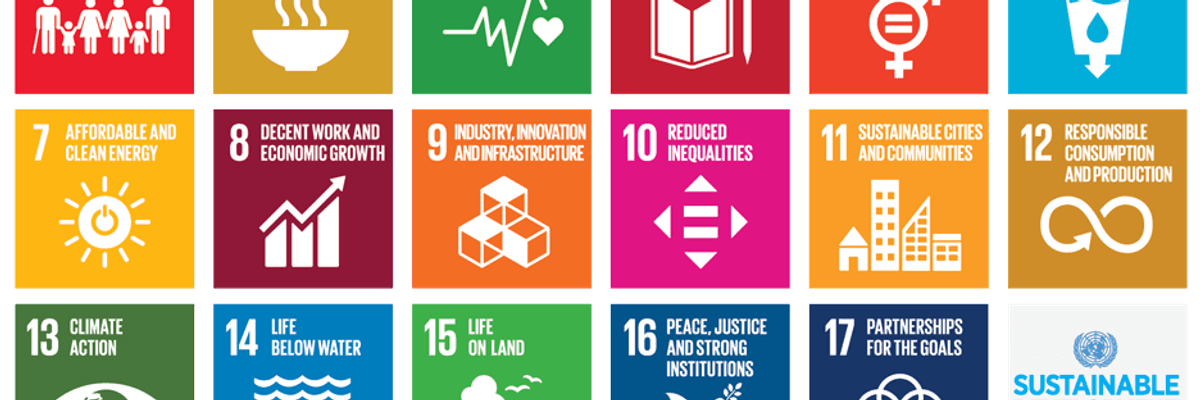
The UN 2030 Sustainable Development Goals (SDGs): The Sustainable Development Goals are the blueprint to achieve a better and more sustainable future for all. They address the global challenges we face, including poverty, inequality, climate change, environmental degradation, peace and justice.
Although the rulers of the world's major military and economic powers have repeatedly claimed that they are making their nations great again, their policies have not resulted in widespread happiness among their citizens.
That conclusion emerges from the recent World Happiness Report-2022, published by the UN Sustainable Development Solutions Network. Based on Gallup World Polls conducted from 2019 through 2021, this extensive study provides a revealing look at how roughly 150,000 respondents in 146 countries rated their own happiness. The study's findings underscore the limited levels of happiness in the world's major military-economic powers.
There is little doubt about which nations belong in this category. In 2020 (the latest year for which accurate figures are available), the world's biggest military spenders were the United States (#1), China (#2), India (#3), and Russia (#4). Collectively, they accounted for nearly 59 percent of the world's military spending and the vast majority of the world's nuclear weapons.
When nations are ranked by total wealth, a similar pattern appears: United States (#1), China (#2), India (#7), Russia (#13). Despite their ostensibly different economic models, they all boast a hefty share of the world's billionaires, and once again their ranking is rather similar: United States (#1), China (#2), India (#3), and Russia (#5).
And what has this enormous array of military and economic power produced for their citizens? Well, as it turns out, not a great deal of happiness. The most positive thing that can be said for it is that the United States currently ranks a rather dispiriting 16th on this score. China ranks 72nd. Russia ranks 80th. And India is 136th. Furthermore, over the decade since the annual world happiness surveys began, in 2012, none of these major powers has ever appeared among the ten happiest nations.
In 2022, the ten happiest countries were: Finland (#1), Denmark (#2), Iceland (#3), Switzerland (#4), Netherlands (#5), Luxembourg (#6), Sweden (#7), Norway (#8), Israel (#9), and New Zealand (#10).
It is deceptively easy to conclude that the explanation for this high level of happiness lies in the fact that these ten are all fairly comfortable, economically advanced nations. Even so, there is no significant correlation between a nation's rank in happiness and its per capita income. Indeed, seven of the nations (Finland, Denmark, Iceland, Netherlands, Sweden, Israel, and New Zealand) did not place at all among the top twelve nations in per capita income during 2021. Finland, ranking #1 for happiness for the fifth year in a row, ranked #25 in per capita income. New Zealand, ranking #10 for happiness, ranked #31 for per capita income. Conversely, Singapore, which ranked #3 in per capita income, ranked #27 for happiness, while United Arab Emirates, which ranked #6 in per capita income, ranked #24 for happiness. Factors other than top incomes were clearly at work in producing the happiest nations.
One such factor appears to be the provision of substantial public services. A striking feature of the world's nations is that all five Nordic countries rank among the ten happiest. What these five countries have in common are social democratic policies that counteract income inequality and dramatically reduce poverty by providing free or low-cost healthcare, dental care, housing, education, and childcare, as well as ample pensions and a range of other "welfare state" benefits. Moreover, the other five happiest countries also maintain significant social welfare systems.
The happiest nations also stand out for their relatively egalitarian distribution of wealth. Each of the ten happiest nations, except Israel, has greater equality of wealth than do the four major military-economic powers. And even that nation's wealth distribution is considerably more equal than that of the United States and only slightly more unequal than China's.
Yet another contrast appears when it comes to military spending. Given the enormous Gross Domestic Product (GDP) of the four biggest military-economic powers, an adequate "defense" of their nations should be less of an economic burden on them than it would be on the economies of these ten much smaller, less wealthy nations. But, in fact, the reverse is true in eight of the happiest nations, which devoted a smaller percentage of their GDP to military spending in 2020 (the latest year for which accurate figures are available) than did all but one of the four major military-economic powers. Sweden, for example, spent only 1.22 percent, Denmark 1.44 percent, and Finland 1.53 percent of their small GDPs on their armed forces, while India spent 2.88 percent, the United States 3.74 percent, and Russia 4.26 percent of their much larger GDPs to fund their military might.
Admittedly, poverty and national insecurity do appear to play important roles in reducing human happiness. The lowest ranking nations in World Happiness Report-2022 are very poor nations, or nations plagued by violence, or both, such as the Palestinian territories (#122), Myanmar (#126), Yemen (#132), and Afghanistan (#146).
Even so, as the global happiness studies indicate, great military and economic power bring nations only so far. Ultimately, a high level of happiness requires social solidarity.
Dear Common Dreams reader, It’s been nearly 30 years since I co-founded Common Dreams with my late wife, Lina Newhouser. We had the radical notion that journalism should serve the public good, not corporate profits. It was clear to us from the outset what it would take to build such a project. No paid advertisements. No corporate sponsors. No millionaire publisher telling us what to think or do. Many people said we wouldn't last a year, but we proved those doubters wrong. Together with a tremendous team of journalists and dedicated staff, we built an independent media outlet free from the constraints of profits and corporate control. Our mission has always been simple: To inform. To inspire. To ignite change for the common good. Building Common Dreams was not easy. Our survival was never guaranteed. When you take on the most powerful forces—Wall Street greed, fossil fuel industry destruction, Big Tech lobbyists, and uber-rich oligarchs who have spent billions upon billions rigging the economy and democracy in their favor—the only bulwark you have is supporters who believe in your work. But here’s the urgent message from me today. It's never been this bad out there. And it's never been this hard to keep us going. At the very moment Common Dreams is most needed, the threats we face are intensifying. We need your support now more than ever. We don't accept corporate advertising and never will. We don't have a paywall because we don't think people should be blocked from critical news based on their ability to pay. Everything we do is funded by the donations of readers like you. When everyone does the little they can afford, we are strong. But if that support retreats or dries up, so do we. Will you donate now to make sure Common Dreams not only survives but thrives? —Craig Brown, Co-founder |
Although the rulers of the world's major military and economic powers have repeatedly claimed that they are making their nations great again, their policies have not resulted in widespread happiness among their citizens.
That conclusion emerges from the recent World Happiness Report-2022, published by the UN Sustainable Development Solutions Network. Based on Gallup World Polls conducted from 2019 through 2021, this extensive study provides a revealing look at how roughly 150,000 respondents in 146 countries rated their own happiness. The study's findings underscore the limited levels of happiness in the world's major military-economic powers.
There is little doubt about which nations belong in this category. In 2020 (the latest year for which accurate figures are available), the world's biggest military spenders were the United States (#1), China (#2), India (#3), and Russia (#4). Collectively, they accounted for nearly 59 percent of the world's military spending and the vast majority of the world's nuclear weapons.
When nations are ranked by total wealth, a similar pattern appears: United States (#1), China (#2), India (#7), Russia (#13). Despite their ostensibly different economic models, they all boast a hefty share of the world's billionaires, and once again their ranking is rather similar: United States (#1), China (#2), India (#3), and Russia (#5).
And what has this enormous array of military and economic power produced for their citizens? Well, as it turns out, not a great deal of happiness. The most positive thing that can be said for it is that the United States currently ranks a rather dispiriting 16th on this score. China ranks 72nd. Russia ranks 80th. And India is 136th. Furthermore, over the decade since the annual world happiness surveys began, in 2012, none of these major powers has ever appeared among the ten happiest nations.
In 2022, the ten happiest countries were: Finland (#1), Denmark (#2), Iceland (#3), Switzerland (#4), Netherlands (#5), Luxembourg (#6), Sweden (#7), Norway (#8), Israel (#9), and New Zealand (#10).
It is deceptively easy to conclude that the explanation for this high level of happiness lies in the fact that these ten are all fairly comfortable, economically advanced nations. Even so, there is no significant correlation between a nation's rank in happiness and its per capita income. Indeed, seven of the nations (Finland, Denmark, Iceland, Netherlands, Sweden, Israel, and New Zealand) did not place at all among the top twelve nations in per capita income during 2021. Finland, ranking #1 for happiness for the fifth year in a row, ranked #25 in per capita income. New Zealand, ranking #10 for happiness, ranked #31 for per capita income. Conversely, Singapore, which ranked #3 in per capita income, ranked #27 for happiness, while United Arab Emirates, which ranked #6 in per capita income, ranked #24 for happiness. Factors other than top incomes were clearly at work in producing the happiest nations.
One such factor appears to be the provision of substantial public services. A striking feature of the world's nations is that all five Nordic countries rank among the ten happiest. What these five countries have in common are social democratic policies that counteract income inequality and dramatically reduce poverty by providing free or low-cost healthcare, dental care, housing, education, and childcare, as well as ample pensions and a range of other "welfare state" benefits. Moreover, the other five happiest countries also maintain significant social welfare systems.
The happiest nations also stand out for their relatively egalitarian distribution of wealth. Each of the ten happiest nations, except Israel, has greater equality of wealth than do the four major military-economic powers. And even that nation's wealth distribution is considerably more equal than that of the United States and only slightly more unequal than China's.
Yet another contrast appears when it comes to military spending. Given the enormous Gross Domestic Product (GDP) of the four biggest military-economic powers, an adequate "defense" of their nations should be less of an economic burden on them than it would be on the economies of these ten much smaller, less wealthy nations. But, in fact, the reverse is true in eight of the happiest nations, which devoted a smaller percentage of their GDP to military spending in 2020 (the latest year for which accurate figures are available) than did all but one of the four major military-economic powers. Sweden, for example, spent only 1.22 percent, Denmark 1.44 percent, and Finland 1.53 percent of their small GDPs on their armed forces, while India spent 2.88 percent, the United States 3.74 percent, and Russia 4.26 percent of their much larger GDPs to fund their military might.
Admittedly, poverty and national insecurity do appear to play important roles in reducing human happiness. The lowest ranking nations in World Happiness Report-2022 are very poor nations, or nations plagued by violence, or both, such as the Palestinian territories (#122), Myanmar (#126), Yemen (#132), and Afghanistan (#146).
Even so, as the global happiness studies indicate, great military and economic power bring nations only so far. Ultimately, a high level of happiness requires social solidarity.
Although the rulers of the world's major military and economic powers have repeatedly claimed that they are making their nations great again, their policies have not resulted in widespread happiness among their citizens.
That conclusion emerges from the recent World Happiness Report-2022, published by the UN Sustainable Development Solutions Network. Based on Gallup World Polls conducted from 2019 through 2021, this extensive study provides a revealing look at how roughly 150,000 respondents in 146 countries rated their own happiness. The study's findings underscore the limited levels of happiness in the world's major military-economic powers.
There is little doubt about which nations belong in this category. In 2020 (the latest year for which accurate figures are available), the world's biggest military spenders were the United States (#1), China (#2), India (#3), and Russia (#4). Collectively, they accounted for nearly 59 percent of the world's military spending and the vast majority of the world's nuclear weapons.
When nations are ranked by total wealth, a similar pattern appears: United States (#1), China (#2), India (#7), Russia (#13). Despite their ostensibly different economic models, they all boast a hefty share of the world's billionaires, and once again their ranking is rather similar: United States (#1), China (#2), India (#3), and Russia (#5).
And what has this enormous array of military and economic power produced for their citizens? Well, as it turns out, not a great deal of happiness. The most positive thing that can be said for it is that the United States currently ranks a rather dispiriting 16th on this score. China ranks 72nd. Russia ranks 80th. And India is 136th. Furthermore, over the decade since the annual world happiness surveys began, in 2012, none of these major powers has ever appeared among the ten happiest nations.
In 2022, the ten happiest countries were: Finland (#1), Denmark (#2), Iceland (#3), Switzerland (#4), Netherlands (#5), Luxembourg (#6), Sweden (#7), Norway (#8), Israel (#9), and New Zealand (#10).
It is deceptively easy to conclude that the explanation for this high level of happiness lies in the fact that these ten are all fairly comfortable, economically advanced nations. Even so, there is no significant correlation between a nation's rank in happiness and its per capita income. Indeed, seven of the nations (Finland, Denmark, Iceland, Netherlands, Sweden, Israel, and New Zealand) did not place at all among the top twelve nations in per capita income during 2021. Finland, ranking #1 for happiness for the fifth year in a row, ranked #25 in per capita income. New Zealand, ranking #10 for happiness, ranked #31 for per capita income. Conversely, Singapore, which ranked #3 in per capita income, ranked #27 for happiness, while United Arab Emirates, which ranked #6 in per capita income, ranked #24 for happiness. Factors other than top incomes were clearly at work in producing the happiest nations.
One such factor appears to be the provision of substantial public services. A striking feature of the world's nations is that all five Nordic countries rank among the ten happiest. What these five countries have in common are social democratic policies that counteract income inequality and dramatically reduce poverty by providing free or low-cost healthcare, dental care, housing, education, and childcare, as well as ample pensions and a range of other "welfare state" benefits. Moreover, the other five happiest countries also maintain significant social welfare systems.
The happiest nations also stand out for their relatively egalitarian distribution of wealth. Each of the ten happiest nations, except Israel, has greater equality of wealth than do the four major military-economic powers. And even that nation's wealth distribution is considerably more equal than that of the United States and only slightly more unequal than China's.
Yet another contrast appears when it comes to military spending. Given the enormous Gross Domestic Product (GDP) of the four biggest military-economic powers, an adequate "defense" of their nations should be less of an economic burden on them than it would be on the economies of these ten much smaller, less wealthy nations. But, in fact, the reverse is true in eight of the happiest nations, which devoted a smaller percentage of their GDP to military spending in 2020 (the latest year for which accurate figures are available) than did all but one of the four major military-economic powers. Sweden, for example, spent only 1.22 percent, Denmark 1.44 percent, and Finland 1.53 percent of their small GDPs on their armed forces, while India spent 2.88 percent, the United States 3.74 percent, and Russia 4.26 percent of their much larger GDPs to fund their military might.
Admittedly, poverty and national insecurity do appear to play important roles in reducing human happiness. The lowest ranking nations in World Happiness Report-2022 are very poor nations, or nations plagued by violence, or both, such as the Palestinian territories (#122), Myanmar (#126), Yemen (#132), and Afghanistan (#146).
Even so, as the global happiness studies indicate, great military and economic power bring nations only so far. Ultimately, a high level of happiness requires social solidarity.