SUBSCRIBE TO OUR FREE NEWSLETTER
Daily news & progressive opinion—funded by the people, not the corporations—delivered straight to your inbox.
5
#000000
#FFFFFF
To donate by check, phone, or other method, see our More Ways to Give page.
Daily news & progressive opinion—funded by the people, not the corporations—delivered straight to your inbox.
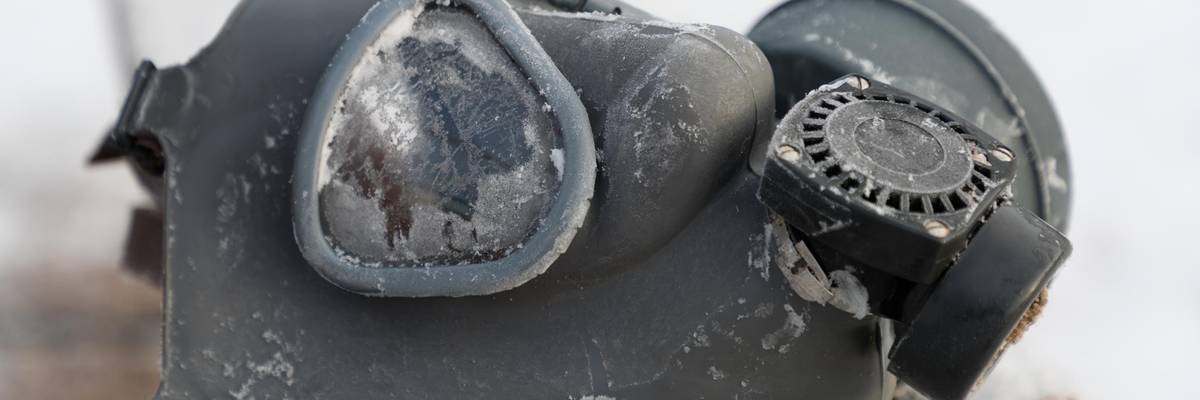
"At the same time that the atmospheric levels of greenhouse gases have continued to increase," writes Solomon, "so have the dangers of nuclear war." (Photo: Shutterstock)
When world leaders gather in Scotland next week for the COP26 climate change conference, activists will be pushing for drastic action to end the world's catastrophic reliance on fossil fuels. Consciousness about the climate emergency has skyrocketed in recent years, while government responses remain meager. But one aspect of extreme climate jeopardy--"nuclear winter"--has hardly reached the stage of dim awareness
Wishful thinking aside, the threat of nuclear war has not receded. In fact, the opposite is the case. The Bulletin of the Atomic Scientists has been moving the "Doomsday Clock" ever closer to cataclysmic midnight; the symbolic hands are now merely 100 seconds from midnight, in contrast to six minutes a decade ago.
A nuclear war would quickly bring cataclysmic climate change. A recent scientific paper, in sync with countless studies, concludes that--in the aftermath of nuclear weapons blasts in cities--"smoke would effectively block out sunlight, causing below-freezing temperatures to engulf the world." Researchers estimate such conditions would last for 10 years. The Federation of American Scientists predicts that "a nuclear winter would cause most humans and large animals to die from nuclear famine in a mass extinction event similar to the one that wiped out the dinosaurs."
While there's a widespread myth that the danger of nuclear war has diminished, this illusion is not the only reason why the climate movement has failed to include prevention of nuclear winter on its to-do list. Notably, the movement's organizations rarely even mention nuclear winter. Another factor is the view that--unlike climate change, which is already happening and could be exacerbated or mitigated by policies in the years ahead--nuclear war will either happen or it won't. That might seem like matter-of-fact realism, but it's more like thinly disguised passivity wrapped up in fatalism.
In the concluding chapter of his 2017 book "The Doomsday Machine," Daniel Ellsberg warns: "The threat of full nuclear winter is posed by the possibility of all-out war between the United States and Russia. ... The danger that either a false alarm or a terrorist attack on Washington or Moscow would lead to a preemptive attack derives almost entirely from the existence on both sides of land-based missile forces, each vulnerable to attack by the other: each, therefore, kept on a high state of alert, ready to launch within minutes of warning."
And he adds that "the easiest and fastest way to reduce that risk--and indeed, the overall danger of nuclear war--is to dismantle entirely" the Minuteman III missile force of ICBMs comprising the land-based portion of U.S. nuclear weaponry.
The current issue of The Nation magazine includes an article that Dan Ellsberg and I wrote to emphasize the importance of shutting down all ICBMs. Here are some key points:
At the same time that the atmospheric levels of greenhouse gases have continued to increase, so have the dangers of nuclear war. No imperatives are more crucial than challenging the fossil fuel industry and the nuclear weapons industry as the terrible threats to the climate and humanity that they are.
Dear Common Dreams reader, It’s been nearly 30 years since I co-founded Common Dreams with my late wife, Lina Newhouser. We had the radical notion that journalism should serve the public good, not corporate profits. It was clear to us from the outset what it would take to build such a project. No paid advertisements. No corporate sponsors. No millionaire publisher telling us what to think or do. Many people said we wouldn't last a year, but we proved those doubters wrong. Together with a tremendous team of journalists and dedicated staff, we built an independent media outlet free from the constraints of profits and corporate control. Our mission has always been simple: To inform. To inspire. To ignite change for the common good. Building Common Dreams was not easy. Our survival was never guaranteed. When you take on the most powerful forces—Wall Street greed, fossil fuel industry destruction, Big Tech lobbyists, and uber-rich oligarchs who have spent billions upon billions rigging the economy and democracy in their favor—the only bulwark you have is supporters who believe in your work. But here’s the urgent message from me today. It's never been this bad out there. And it's never been this hard to keep us going. At the very moment Common Dreams is most needed, the threats we face are intensifying. We need your support now more than ever. We don't accept corporate advertising and never will. We don't have a paywall because we don't think people should be blocked from critical news based on their ability to pay. Everything we do is funded by the donations of readers like you. When everyone does the little they can afford, we are strong. But if that support retreats or dries up, so do we. Will you donate now to make sure Common Dreams not only survives but thrives? —Craig Brown, Co-founder |
Norman Solomon is the national director of RootsAction.org and executive director of the Institute for Public Accuracy. The paperback edition of his latest book, War Made Invisible: How America Hides the Human Toll of Its Military Machine, includes an afterword about the Gaza war.
When world leaders gather in Scotland next week for the COP26 climate change conference, activists will be pushing for drastic action to end the world's catastrophic reliance on fossil fuels. Consciousness about the climate emergency has skyrocketed in recent years, while government responses remain meager. But one aspect of extreme climate jeopardy--"nuclear winter"--has hardly reached the stage of dim awareness
Wishful thinking aside, the threat of nuclear war has not receded. In fact, the opposite is the case. The Bulletin of the Atomic Scientists has been moving the "Doomsday Clock" ever closer to cataclysmic midnight; the symbolic hands are now merely 100 seconds from midnight, in contrast to six minutes a decade ago.
A nuclear war would quickly bring cataclysmic climate change. A recent scientific paper, in sync with countless studies, concludes that--in the aftermath of nuclear weapons blasts in cities--"smoke would effectively block out sunlight, causing below-freezing temperatures to engulf the world." Researchers estimate such conditions would last for 10 years. The Federation of American Scientists predicts that "a nuclear winter would cause most humans and large animals to die from nuclear famine in a mass extinction event similar to the one that wiped out the dinosaurs."
While there's a widespread myth that the danger of nuclear war has diminished, this illusion is not the only reason why the climate movement has failed to include prevention of nuclear winter on its to-do list. Notably, the movement's organizations rarely even mention nuclear winter. Another factor is the view that--unlike climate change, which is already happening and could be exacerbated or mitigated by policies in the years ahead--nuclear war will either happen or it won't. That might seem like matter-of-fact realism, but it's more like thinly disguised passivity wrapped up in fatalism.
In the concluding chapter of his 2017 book "The Doomsday Machine," Daniel Ellsberg warns: "The threat of full nuclear winter is posed by the possibility of all-out war between the United States and Russia. ... The danger that either a false alarm or a terrorist attack on Washington or Moscow would lead to a preemptive attack derives almost entirely from the existence on both sides of land-based missile forces, each vulnerable to attack by the other: each, therefore, kept on a high state of alert, ready to launch within minutes of warning."
And he adds that "the easiest and fastest way to reduce that risk--and indeed, the overall danger of nuclear war--is to dismantle entirely" the Minuteman III missile force of ICBMs comprising the land-based portion of U.S. nuclear weaponry.
The current issue of The Nation magazine includes an article that Dan Ellsberg and I wrote to emphasize the importance of shutting down all ICBMs. Here are some key points:
At the same time that the atmospheric levels of greenhouse gases have continued to increase, so have the dangers of nuclear war. No imperatives are more crucial than challenging the fossil fuel industry and the nuclear weapons industry as the terrible threats to the climate and humanity that they are.
Norman Solomon is the national director of RootsAction.org and executive director of the Institute for Public Accuracy. The paperback edition of his latest book, War Made Invisible: How America Hides the Human Toll of Its Military Machine, includes an afterword about the Gaza war.
When world leaders gather in Scotland next week for the COP26 climate change conference, activists will be pushing for drastic action to end the world's catastrophic reliance on fossil fuels. Consciousness about the climate emergency has skyrocketed in recent years, while government responses remain meager. But one aspect of extreme climate jeopardy--"nuclear winter"--has hardly reached the stage of dim awareness
Wishful thinking aside, the threat of nuclear war has not receded. In fact, the opposite is the case. The Bulletin of the Atomic Scientists has been moving the "Doomsday Clock" ever closer to cataclysmic midnight; the symbolic hands are now merely 100 seconds from midnight, in contrast to six minutes a decade ago.
A nuclear war would quickly bring cataclysmic climate change. A recent scientific paper, in sync with countless studies, concludes that--in the aftermath of nuclear weapons blasts in cities--"smoke would effectively block out sunlight, causing below-freezing temperatures to engulf the world." Researchers estimate such conditions would last for 10 years. The Federation of American Scientists predicts that "a nuclear winter would cause most humans and large animals to die from nuclear famine in a mass extinction event similar to the one that wiped out the dinosaurs."
While there's a widespread myth that the danger of nuclear war has diminished, this illusion is not the only reason why the climate movement has failed to include prevention of nuclear winter on its to-do list. Notably, the movement's organizations rarely even mention nuclear winter. Another factor is the view that--unlike climate change, which is already happening and could be exacerbated or mitigated by policies in the years ahead--nuclear war will either happen or it won't. That might seem like matter-of-fact realism, but it's more like thinly disguised passivity wrapped up in fatalism.
In the concluding chapter of his 2017 book "The Doomsday Machine," Daniel Ellsberg warns: "The threat of full nuclear winter is posed by the possibility of all-out war between the United States and Russia. ... The danger that either a false alarm or a terrorist attack on Washington or Moscow would lead to a preemptive attack derives almost entirely from the existence on both sides of land-based missile forces, each vulnerable to attack by the other: each, therefore, kept on a high state of alert, ready to launch within minutes of warning."
And he adds that "the easiest and fastest way to reduce that risk--and indeed, the overall danger of nuclear war--is to dismantle entirely" the Minuteman III missile force of ICBMs comprising the land-based portion of U.S. nuclear weaponry.
The current issue of The Nation magazine includes an article that Dan Ellsberg and I wrote to emphasize the importance of shutting down all ICBMs. Here are some key points:
At the same time that the atmospheric levels of greenhouse gases have continued to increase, so have the dangers of nuclear war. No imperatives are more crucial than challenging the fossil fuel industry and the nuclear weapons industry as the terrible threats to the climate and humanity that they are.