SUBSCRIBE TO OUR FREE NEWSLETTER
Daily news & progressive opinion—funded by the people, not the corporations—delivered straight to your inbox.
5
#000000
#FFFFFF
To donate by check, phone, or other method, see our More Ways to Give page.
Daily news & progressive opinion—funded by the people, not the corporations—delivered straight to your inbox.
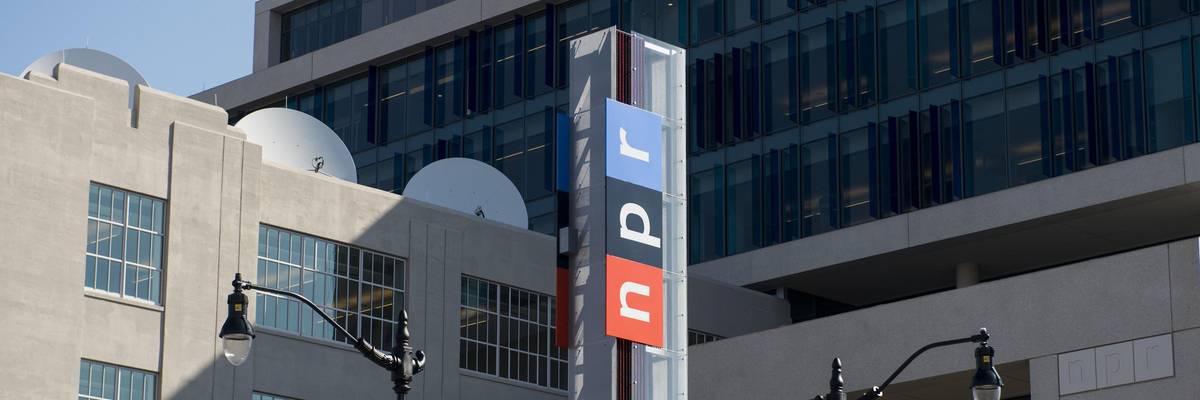
National Public Radio's new headquarters at 1111 North Capitol Street, NE opened on March 25, 2013, in the NOMA district in Washington. (Photo by Bill Clark/Getty Images)
This month is the 50th anniversary of National Public Radio (NPR). Knowing about my work back then with other advocates, to persuade Congress to pass legislation creating NPR and PBS, (which was opposed by most of the commercial radio/TV industry), a friend asked what I think of NPR now.
A few observations, drawn from listening to NPR largely over the WAMC station in Albany, New York during a Covid-19 year, are in order.
This month is the 50th anniversary of National Public Radio (NPR). Knowing about my work back then with other advocates, to persuade Congress to pass legislation creating NPR and PBS, (which was opposed by most of the commercial radio/TV industry), a friend asked what I think of NPR now.
A few observations, drawn from listening to NPR largely over the WAMC station in Albany, New York during a Covid-19 year, are in order.
The Corporate Crime Reporter provided NPR management with a list of law violations, such as those by Raymond James, an NPR "sponsor" pursuant to asking about any of NPR's Ad monitoring. NPR boss, the usually incommunicado John Lansing, essentially blew off the inquiry, saying there is no need for a filter to protect the audience.
Not many NPR reporters use words like "corporate crime," "corporate welfare," or cover the corporate capturing of agencies, the vast unaudited military budget, or many other realms of American life controlled by "corporatism." But then what can one expect when they ignore credible civic groups, who have timely evidence of such domination, and keep on interviewing one another inserting four-second sound bites to academics and consulting firms?
NPR's practice during election periods of having the anchors interview its reporters, who are often youngish, inexperienced, and bland, instead of skilled, fact-reliable outsiders is disappointing. NPR's election postmortems too often are superficial and lack rigor.
Just recently, an NPR report on the most recent ransomware attack on Colonial Pipeline continued its repeated omission of how victims of hackers actually pay in ransom or why such payments can't be traced. And NPR's reporting on why our secretive government seems helpless in protecting towns, cities, hospitals, and others who have been hit by ransomware attacks is anemic.
There is an omnipresent air of smugness about NPR, such as their constant display of confident ignorance on Congress' constitutional authority, and Presidential/Executive Branch lawlessness. This shortcoming was especially troubling during Trump's impeachments. Where are you, Supreme Court reporter Nina Totenberg, to give tutorials to your younger colleagues who need to be more sensitive to these issues and to their in-house ageism over the years?
Unlike its commercial competition, NPR and PBS's News Hour start their news programs with ads, something commercial NBC, CBS, and ABC do not do. NPR has puzzles during prime-time evening news time, this itself is a puzzling fillip.
NPR has long had a Public Editor on staff. They almost always respond to listeners' substantive complaints by saying these are not matters within their jurisdiction. The new Public Editor is Kelly McBride. She insisted on not being on staff but instead on contract from St. Petersburg, Florida. This is the link for the public editor: (https://help.npr.org/contact/s/contact?request=Ask-the-Public-Editor-about-ethics) to protect her independence. After a few tries, she actually returned my calls and reassured me that she is looking out for the listener's best interest. We'll see.
It would be good if listener feedback to NPR was made easier and more regularly structured. WAMC has lots of listener feedback on issues chosen daily by its Roundtable and other interview shows. But as one might expect some questions, as about top management salaries and bad advertisers lunching off WAMC's credibility, seem out of bounds.
I have started a Reporter's Alert suggesting many kinds of stories that are not covered or only nibbled at by the media. You can see them aggregate at https://reportersalert.org/ and of course, this resource is available for perusal by NPR's editors and reporters.
There is so much more to learn about NPR. Since NPR gives plenty of time to conservative politicians, an educational bipartisan Congressional hearing and report would be a good way to celebrate the 50th anniversary. It's just not productive to give NPR a pass simply by comparing it to the rancid competition spoiling our public airwaves for free.
Dear Common Dreams reader, It’s been nearly 30 years since I co-founded Common Dreams with my late wife, Lina Newhouser. We had the radical notion that journalism should serve the public good, not corporate profits. It was clear to us from the outset what it would take to build such a project. No paid advertisements. No corporate sponsors. No millionaire publisher telling us what to think or do. Many people said we wouldn't last a year, but we proved those doubters wrong. Together with a tremendous team of journalists and dedicated staff, we built an independent media outlet free from the constraints of profits and corporate control. Our mission has always been simple: To inform. To inspire. To ignite change for the common good. Building Common Dreams was not easy. Our survival was never guaranteed. When you take on the most powerful forces—Wall Street greed, fossil fuel industry destruction, Big Tech lobbyists, and uber-rich oligarchs who have spent billions upon billions rigging the economy and democracy in their favor—the only bulwark you have is supporters who believe in your work. But here’s the urgent message from me today. It's never been this bad out there. And it's never been this hard to keep us going. At the very moment Common Dreams is most needed, the threats we face are intensifying. We need your support now more than ever. We don't accept corporate advertising and never will. We don't have a paywall because we don't think people should be blocked from critical news based on their ability to pay. Everything we do is funded by the donations of readers like you. When everyone does the little they can afford, we are strong. But if that support retreats or dries up, so do we. Will you donate now to make sure Common Dreams not only survives but thrives? —Craig Brown, Co-founder |
This month is the 50th anniversary of National Public Radio (NPR). Knowing about my work back then with other advocates, to persuade Congress to pass legislation creating NPR and PBS, (which was opposed by most of the commercial radio/TV industry), a friend asked what I think of NPR now.
A few observations, drawn from listening to NPR largely over the WAMC station in Albany, New York during a Covid-19 year, are in order.
The Corporate Crime Reporter provided NPR management with a list of law violations, such as those by Raymond James, an NPR "sponsor" pursuant to asking about any of NPR's Ad monitoring. NPR boss, the usually incommunicado John Lansing, essentially blew off the inquiry, saying there is no need for a filter to protect the audience.
Not many NPR reporters use words like "corporate crime," "corporate welfare," or cover the corporate capturing of agencies, the vast unaudited military budget, or many other realms of American life controlled by "corporatism." But then what can one expect when they ignore credible civic groups, who have timely evidence of such domination, and keep on interviewing one another inserting four-second sound bites to academics and consulting firms?
NPR's practice during election periods of having the anchors interview its reporters, who are often youngish, inexperienced, and bland, instead of skilled, fact-reliable outsiders is disappointing. NPR's election postmortems too often are superficial and lack rigor.
Just recently, an NPR report on the most recent ransomware attack on Colonial Pipeline continued its repeated omission of how victims of hackers actually pay in ransom or why such payments can't be traced. And NPR's reporting on why our secretive government seems helpless in protecting towns, cities, hospitals, and others who have been hit by ransomware attacks is anemic.
There is an omnipresent air of smugness about NPR, such as their constant display of confident ignorance on Congress' constitutional authority, and Presidential/Executive Branch lawlessness. This shortcoming was especially troubling during Trump's impeachments. Where are you, Supreme Court reporter Nina Totenberg, to give tutorials to your younger colleagues who need to be more sensitive to these issues and to their in-house ageism over the years?
Unlike its commercial competition, NPR and PBS's News Hour start their news programs with ads, something commercial NBC, CBS, and ABC do not do. NPR has puzzles during prime-time evening news time, this itself is a puzzling fillip.
NPR has long had a Public Editor on staff. They almost always respond to listeners' substantive complaints by saying these are not matters within their jurisdiction. The new Public Editor is Kelly McBride. She insisted on not being on staff but instead on contract from St. Petersburg, Florida. This is the link for the public editor: (https://help.npr.org/contact/s/contact?request=Ask-the-Public-Editor-about-ethics) to protect her independence. After a few tries, she actually returned my calls and reassured me that she is looking out for the listener's best interest. We'll see.
It would be good if listener feedback to NPR was made easier and more regularly structured. WAMC has lots of listener feedback on issues chosen daily by its Roundtable and other interview shows. But as one might expect some questions, as about top management salaries and bad advertisers lunching off WAMC's credibility, seem out of bounds.
I have started a Reporter's Alert suggesting many kinds of stories that are not covered or only nibbled at by the media. You can see them aggregate at https://reportersalert.org/ and of course, this resource is available for perusal by NPR's editors and reporters.
There is so much more to learn about NPR. Since NPR gives plenty of time to conservative politicians, an educational bipartisan Congressional hearing and report would be a good way to celebrate the 50th anniversary. It's just not productive to give NPR a pass simply by comparing it to the rancid competition spoiling our public airwaves for free.
This month is the 50th anniversary of National Public Radio (NPR). Knowing about my work back then with other advocates, to persuade Congress to pass legislation creating NPR and PBS, (which was opposed by most of the commercial radio/TV industry), a friend asked what I think of NPR now.
A few observations, drawn from listening to NPR largely over the WAMC station in Albany, New York during a Covid-19 year, are in order.
The Corporate Crime Reporter provided NPR management with a list of law violations, such as those by Raymond James, an NPR "sponsor" pursuant to asking about any of NPR's Ad monitoring. NPR boss, the usually incommunicado John Lansing, essentially blew off the inquiry, saying there is no need for a filter to protect the audience.
Not many NPR reporters use words like "corporate crime," "corporate welfare," or cover the corporate capturing of agencies, the vast unaudited military budget, or many other realms of American life controlled by "corporatism." But then what can one expect when they ignore credible civic groups, who have timely evidence of such domination, and keep on interviewing one another inserting four-second sound bites to academics and consulting firms?
NPR's practice during election periods of having the anchors interview its reporters, who are often youngish, inexperienced, and bland, instead of skilled, fact-reliable outsiders is disappointing. NPR's election postmortems too often are superficial and lack rigor.
Just recently, an NPR report on the most recent ransomware attack on Colonial Pipeline continued its repeated omission of how victims of hackers actually pay in ransom or why such payments can't be traced. And NPR's reporting on why our secretive government seems helpless in protecting towns, cities, hospitals, and others who have been hit by ransomware attacks is anemic.
There is an omnipresent air of smugness about NPR, such as their constant display of confident ignorance on Congress' constitutional authority, and Presidential/Executive Branch lawlessness. This shortcoming was especially troubling during Trump's impeachments. Where are you, Supreme Court reporter Nina Totenberg, to give tutorials to your younger colleagues who need to be more sensitive to these issues and to their in-house ageism over the years?
Unlike its commercial competition, NPR and PBS's News Hour start their news programs with ads, something commercial NBC, CBS, and ABC do not do. NPR has puzzles during prime-time evening news time, this itself is a puzzling fillip.
NPR has long had a Public Editor on staff. They almost always respond to listeners' substantive complaints by saying these are not matters within their jurisdiction. The new Public Editor is Kelly McBride. She insisted on not being on staff but instead on contract from St. Petersburg, Florida. This is the link for the public editor: (https://help.npr.org/contact/s/contact?request=Ask-the-Public-Editor-about-ethics) to protect her independence. After a few tries, she actually returned my calls and reassured me that she is looking out for the listener's best interest. We'll see.
It would be good if listener feedback to NPR was made easier and more regularly structured. WAMC has lots of listener feedback on issues chosen daily by its Roundtable and other interview shows. But as one might expect some questions, as about top management salaries and bad advertisers lunching off WAMC's credibility, seem out of bounds.
I have started a Reporter's Alert suggesting many kinds of stories that are not covered or only nibbled at by the media. You can see them aggregate at https://reportersalert.org/ and of course, this resource is available for perusal by NPR's editors and reporters.
There is so much more to learn about NPR. Since NPR gives plenty of time to conservative politicians, an educational bipartisan Congressional hearing and report would be a good way to celebrate the 50th anniversary. It's just not productive to give NPR a pass simply by comparing it to the rancid competition spoiling our public airwaves for free.