SUBSCRIBE TO OUR FREE NEWSLETTER
Daily news & progressive opinion—funded by the people, not the corporations—delivered straight to your inbox.
5
#000000
#FFFFFF
To donate by check, phone, or other method, see our More Ways to Give page.
Daily news & progressive opinion—funded by the people, not the corporations—delivered straight to your inbox.
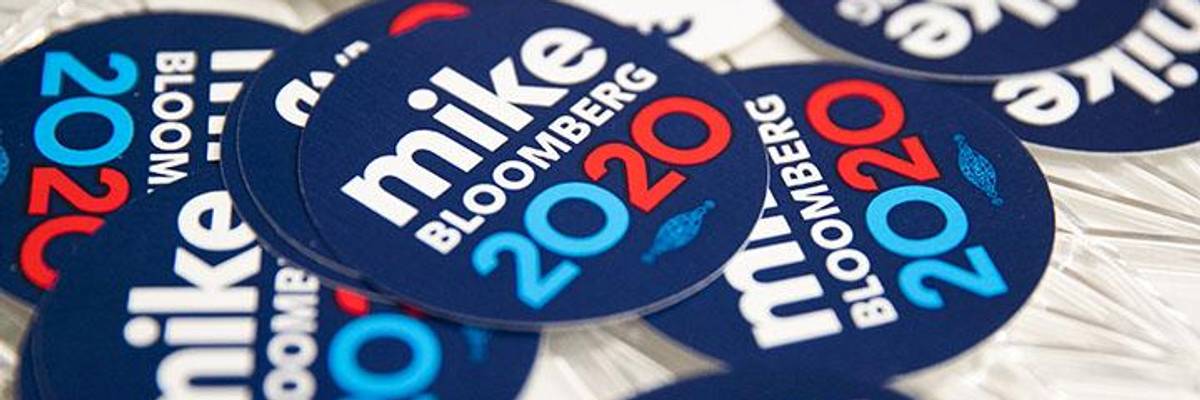
Amid his unprecedented advertising push, Bloomberg has risen in national polls. (Photo: Jeenah Moon/Getty Images)
Billionaire Michael Bloomberg spent $409 million of his own money on his White House bid through the end of January, shelling out an average of $5.9 million per day since he launched his campaign last November.
Bloomberg obliterated self-funding records just months into his White House bid. His unprecedented presidential run got even more expensive in January as the campaign spent $220 million. That amounts to more than $5,100 per minute and $85 per second.
Flush with virtually unlimited cash, Bloomberg's campaign is offering unmatched salaries and benefits to hire campaign staffers in almost every state. In January alone, the campaign spent more than $5 million on salaries and $3 million on rent. The former New York City Mayor spent roughly $400 million on television, radio and digital advertisements through mid-February in addition to paying influencers to promote his candidacy on social media.
Broadcasting companies are reporting record revenues thanks to Bloomberg's advertising blitz, while other campaigns are complaining that his spending spree is driving up prices and making it difficult to find staffers.
Those aren't the only ways Bloomberg's wealth has helped him in the Democratic primary. Bloomberg's philanthropy efforts -- and his massive political contributions to Democratic-aligned groups -- may have helped him pull in endorsements from prominent lawmakers. Bloomberg was the top Democratic donor during the 2018 cycle. His groups were among the most successful in electing Democrats to the House.
In his presidential bid, Bloomberg ignored the early primary states, instead focusing his spending on Super Tuesday states. Amid his unprecedented advertising push, Bloomberg has risen in national polls and peeled away support from former Vice President Joe Biden in the process. He is tied with the Democratic frontrunner, Sen. Bernie Sanders (I-Vt.), in delegate-rich states such as Virginia and North Carolina.
Still, pundits and analysts believe Bloomberg's momentum may be stifled by his widely panned performance in Wednesday's Democratic debate. During his first appearance in the debates, Bloomberg struggled to repel an onslaught of attacks from his primary opponents.
Sen. Elizabeth Warren (D-Mass.) pressed Bloomberg over allegations that he made sexist and disparaging comments toward women who worked for his company. He said he would not release women from nondisclosure agreements. Biden and Sanders also launched attacks at Bloomberg on his record as a Republican politician, particularly over his controversial stop-and-frisk policy in New York City.
Bloomberg has said that he will support the nominee with his extensive campaign infrastructure if he doesn't win the Democratic nomination. But Bloomberg has clashed with Sanders, calling him out on the debate stage and launching attack ads against the Vermont lawmaker. Sanders accuses Bloomberg of trying to "buy the presidency." Bloomberg's campaign this week urged other Democrats to drop out of the race to prevent Sanders from winning the nomination.
No candidate has ever come close to Bloomberg's personal spending. Broadcasting companies are reporting record revenues thanks to Bloomberg's advertising blitz, while other campaigns are complaining that his spending spree is driving up prices and making it difficult to find staffers.
Bloomberg's political career has hinged around leveraging his wealth. He won the 2001 New York City mayoral race by 3 points while spending $74 million of his own money. His Democratic opponent spent $16 million, which also would have been a record at the time.
The richest person to run for president, Bloomberg has not yet released his tax returns and will not file his financial disclosure until after Super Tuesday.
Dear Common Dreams reader, It’s been nearly 30 years since I co-founded Common Dreams with my late wife, Lina Newhouser. We had the radical notion that journalism should serve the public good, not corporate profits. It was clear to us from the outset what it would take to build such a project. No paid advertisements. No corporate sponsors. No millionaire publisher telling us what to think or do. Many people said we wouldn't last a year, but we proved those doubters wrong. Together with a tremendous team of journalists and dedicated staff, we built an independent media outlet free from the constraints of profits and corporate control. Our mission has always been simple: To inform. To inspire. To ignite change for the common good. Building Common Dreams was not easy. Our survival was never guaranteed. When you take on the most powerful forces—Wall Street greed, fossil fuel industry destruction, Big Tech lobbyists, and uber-rich oligarchs who have spent billions upon billions rigging the economy and democracy in their favor—the only bulwark you have is supporters who believe in your work. But here’s the urgent message from me today. It's never been this bad out there. And it's never been this hard to keep us going. At the very moment Common Dreams is most needed, the threats we face are intensifying. We need your support now more than ever. We don't accept corporate advertising and never will. We don't have a paywall because we don't think people should be blocked from critical news based on their ability to pay. Everything we do is funded by the donations of readers like you. When everyone does the little they can afford, we are strong. But if that support retreats or dries up, so do we. Will you donate now to make sure Common Dreams not only survives but thrives? —Craig Brown, Co-founder |
Billionaire Michael Bloomberg spent $409 million of his own money on his White House bid through the end of January, shelling out an average of $5.9 million per day since he launched his campaign last November.
Bloomberg obliterated self-funding records just months into his White House bid. His unprecedented presidential run got even more expensive in January as the campaign spent $220 million. That amounts to more than $5,100 per minute and $85 per second.
Flush with virtually unlimited cash, Bloomberg's campaign is offering unmatched salaries and benefits to hire campaign staffers in almost every state. In January alone, the campaign spent more than $5 million on salaries and $3 million on rent. The former New York City Mayor spent roughly $400 million on television, radio and digital advertisements through mid-February in addition to paying influencers to promote his candidacy on social media.
Broadcasting companies are reporting record revenues thanks to Bloomberg's advertising blitz, while other campaigns are complaining that his spending spree is driving up prices and making it difficult to find staffers.
Those aren't the only ways Bloomberg's wealth has helped him in the Democratic primary. Bloomberg's philanthropy efforts -- and his massive political contributions to Democratic-aligned groups -- may have helped him pull in endorsements from prominent lawmakers. Bloomberg was the top Democratic donor during the 2018 cycle. His groups were among the most successful in electing Democrats to the House.
In his presidential bid, Bloomberg ignored the early primary states, instead focusing his spending on Super Tuesday states. Amid his unprecedented advertising push, Bloomberg has risen in national polls and peeled away support from former Vice President Joe Biden in the process. He is tied with the Democratic frontrunner, Sen. Bernie Sanders (I-Vt.), in delegate-rich states such as Virginia and North Carolina.
Still, pundits and analysts believe Bloomberg's momentum may be stifled by his widely panned performance in Wednesday's Democratic debate. During his first appearance in the debates, Bloomberg struggled to repel an onslaught of attacks from his primary opponents.
Sen. Elizabeth Warren (D-Mass.) pressed Bloomberg over allegations that he made sexist and disparaging comments toward women who worked for his company. He said he would not release women from nondisclosure agreements. Biden and Sanders also launched attacks at Bloomberg on his record as a Republican politician, particularly over his controversial stop-and-frisk policy in New York City.
Bloomberg has said that he will support the nominee with his extensive campaign infrastructure if he doesn't win the Democratic nomination. But Bloomberg has clashed with Sanders, calling him out on the debate stage and launching attack ads against the Vermont lawmaker. Sanders accuses Bloomberg of trying to "buy the presidency." Bloomberg's campaign this week urged other Democrats to drop out of the race to prevent Sanders from winning the nomination.
No candidate has ever come close to Bloomberg's personal spending. Broadcasting companies are reporting record revenues thanks to Bloomberg's advertising blitz, while other campaigns are complaining that his spending spree is driving up prices and making it difficult to find staffers.
Bloomberg's political career has hinged around leveraging his wealth. He won the 2001 New York City mayoral race by 3 points while spending $74 million of his own money. His Democratic opponent spent $16 million, which also would have been a record at the time.
The richest person to run for president, Bloomberg has not yet released his tax returns and will not file his financial disclosure until after Super Tuesday.
Billionaire Michael Bloomberg spent $409 million of his own money on his White House bid through the end of January, shelling out an average of $5.9 million per day since he launched his campaign last November.
Bloomberg obliterated self-funding records just months into his White House bid. His unprecedented presidential run got even more expensive in January as the campaign spent $220 million. That amounts to more than $5,100 per minute and $85 per second.
Flush with virtually unlimited cash, Bloomberg's campaign is offering unmatched salaries and benefits to hire campaign staffers in almost every state. In January alone, the campaign spent more than $5 million on salaries and $3 million on rent. The former New York City Mayor spent roughly $400 million on television, radio and digital advertisements through mid-February in addition to paying influencers to promote his candidacy on social media.
Broadcasting companies are reporting record revenues thanks to Bloomberg's advertising blitz, while other campaigns are complaining that his spending spree is driving up prices and making it difficult to find staffers.
Those aren't the only ways Bloomberg's wealth has helped him in the Democratic primary. Bloomberg's philanthropy efforts -- and his massive political contributions to Democratic-aligned groups -- may have helped him pull in endorsements from prominent lawmakers. Bloomberg was the top Democratic donor during the 2018 cycle. His groups were among the most successful in electing Democrats to the House.
In his presidential bid, Bloomberg ignored the early primary states, instead focusing his spending on Super Tuesday states. Amid his unprecedented advertising push, Bloomberg has risen in national polls and peeled away support from former Vice President Joe Biden in the process. He is tied with the Democratic frontrunner, Sen. Bernie Sanders (I-Vt.), in delegate-rich states such as Virginia and North Carolina.
Still, pundits and analysts believe Bloomberg's momentum may be stifled by his widely panned performance in Wednesday's Democratic debate. During his first appearance in the debates, Bloomberg struggled to repel an onslaught of attacks from his primary opponents.
Sen. Elizabeth Warren (D-Mass.) pressed Bloomberg over allegations that he made sexist and disparaging comments toward women who worked for his company. He said he would not release women from nondisclosure agreements. Biden and Sanders also launched attacks at Bloomberg on his record as a Republican politician, particularly over his controversial stop-and-frisk policy in New York City.
Bloomberg has said that he will support the nominee with his extensive campaign infrastructure if he doesn't win the Democratic nomination. But Bloomberg has clashed with Sanders, calling him out on the debate stage and launching attack ads against the Vermont lawmaker. Sanders accuses Bloomberg of trying to "buy the presidency." Bloomberg's campaign this week urged other Democrats to drop out of the race to prevent Sanders from winning the nomination.
No candidate has ever come close to Bloomberg's personal spending. Broadcasting companies are reporting record revenues thanks to Bloomberg's advertising blitz, while other campaigns are complaining that his spending spree is driving up prices and making it difficult to find staffers.
Bloomberg's political career has hinged around leveraging his wealth. He won the 2001 New York City mayoral race by 3 points while spending $74 million of his own money. His Democratic opponent spent $16 million, which also would have been a record at the time.
The richest person to run for president, Bloomberg has not yet released his tax returns and will not file his financial disclosure until after Super Tuesday.