SUBSCRIBE TO OUR FREE NEWSLETTER
Daily news & progressive opinion—funded by the people, not the corporations—delivered straight to your inbox.
5
#000000
#FFFFFF
To donate by check, phone, or other method, see our More Ways to Give page.
Daily news & progressive opinion—funded by the people, not the corporations—delivered straight to your inbox.
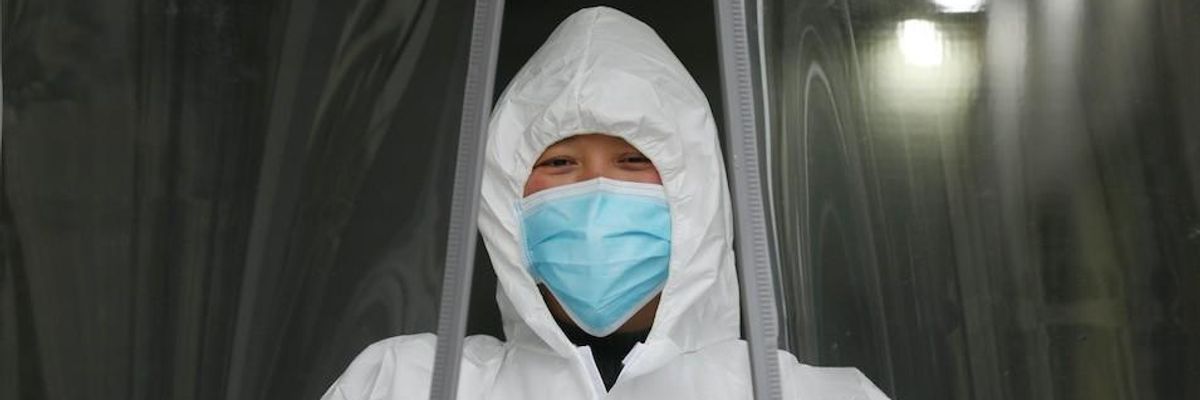
'The Wuhan animal markets presented the perfect storm for disease outbreak.' (Photo: Feature China/Barcroft Media/Getty Images)
Wuhan in China is the sprawling capital city of the Hubei province, and an epicentre of culture, education, manufacturing and transportation links.
Now, Wuhan has a new reputation. It is the city that gave birth to the Wuhan novel coronavirus (WN-CoV), the viral disease outbreak that has captured headlines, shut down cities and continues to spread while the rest of the world looks on with horrified abandon.
Coronaviruses are a common type of virus that cause mild illnesses, such as the common cold, but can cause more serious respiratory problems. Just a quick search will bring up all you need to know about this coronavirus. Where did it come from? How is the virus transmitted and what are the symptoms? Will face masks really keep you safe?
'Wet markets'
There are many discussions taking place about how we can prevent and stop the spread of disease, followed by calls from experts for better hygiene, tighter controls at airports, banning the unregulated movement of wild animals and limiting human-animal contact.
But the obvious solution, the simplest, most cost-effective solution which no-one has yet to admit, is to stop eating animals.
This coronavirus originated from one of Wuhan's many live-animal markets. Over 100 different animals are sold here, including wolf pups, civet cats, poultry and snakes.
These animals are kept in cramped, dirty conditions, with direct contact with humans. These markets are referred to as 'wet markets' - so called because animals are often slaughtered directly in front of customers.
Aside from the obvious issues with having a high population density made up of humans and animals - a hotbed for disease outbreak - these markets are repulsive places. They are filled with caged, frightened animals, many of which have been captured illegally in the wild.
Perfect storm
The animals are skinned and slaughtered, sending a cocktail of microorganisms into the air. The dreadful, cramped conditions and mix of wild and domestic creatures, alongside the throngs of people choosing their victims, is a pandemic in the making.
It was an inevitable consequence of poor hygiene, cross-contamination, and low animal welfare. The saddest part of this story is that scientists saw this coming. Researchers have been stressing the link between human and wildlife health for decades and, in particular, the potential threat of coronaviruses was first identified following the 2003 SARS outbreak (also caused by a virus jumping from animals to humans).
Scientists studying bats in the Yunnan Caves realised that the coronavirus was making the jump from bats to humans. It is now thought that the virus spread from bats to snakes, which are then captured and taken to live animals markets and eaten as a local delicacy.
Scientists saw this coming; the Wuhan animal markets merely presented the perfect storm for disease outbreak.
As much as we can improve hygiene and as much as we can control the movement of animals, all it takes is another perfect storm to spark the next pandemic.
Health crisis
You need only to look at the havoc we have wreaked throughout human history and our damaging relationship with our precious ecosystems to realise that we need systematic change.
The issue here isn't just about how we slaughter animals, it comes down to the fact that we slaughter and eat animals at all.
Here in the UK - and across the world - we are facing a continuing health crisis: antibiotic resistance. The alarming rise in antibiotic resistant bugs is partly a direct consequence of the inappropriate use of antibiotics in livestock farming.
Due to the cramped, dirty conditions that factory farmed animals live in, many farmers routinely use antibiotics to try to prevent the incredible range of diseases the animals suffer.
We must have a societal shift in the way we view animals, the environment and our diets. We must stop eating animals. It is time to finally make the connection between animal agriculture and environmental destruction, antibiotic resistance and disease outbreak.
No cruelty
We must stop tearing down forests to make way for animal farming or to grow animal feed.
We must protect ecosystems and prioritise the safety and freedom of wild animals, leaving them to live their lives away from human contact. If we don't take urgent and far-reaching action now, eating animals will be the death of us.
The world must wake up and shun all animal products and instead choose vegan. No cruelty, no cages, no blood and no zoonoses. It's a no brainer.
Dear Common Dreams reader, It’s been nearly 30 years since I co-founded Common Dreams with my late wife, Lina Newhouser. We had the radical notion that journalism should serve the public good, not corporate profits. It was clear to us from the outset what it would take to build such a project. No paid advertisements. No corporate sponsors. No millionaire publisher telling us what to think or do. Many people said we wouldn't last a year, but we proved those doubters wrong. Together with a tremendous team of journalists and dedicated staff, we built an independent media outlet free from the constraints of profits and corporate control. Our mission has always been simple: To inform. To inspire. To ignite change for the common good. Building Common Dreams was not easy. Our survival was never guaranteed. When you take on the most powerful forces—Wall Street greed, fossil fuel industry destruction, Big Tech lobbyists, and uber-rich oligarchs who have spent billions upon billions rigging the economy and democracy in their favor—the only bulwark you have is supporters who believe in your work. But here’s the urgent message from me today. It's never been this bad out there. And it's never been this hard to keep us going. At the very moment Common Dreams is most needed, the threats we face are intensifying. We need your support now more than ever. We don't accept corporate advertising and never will. We don't have a paywall because we don't think people should be blocked from critical news based on their ability to pay. Everything we do is funded by the donations of readers like you. When everyone does the little they can afford, we are strong. But if that support retreats or dries up, so do we. Will you donate now to make sure Common Dreams not only survives but thrives? —Craig Brown, Co-founder |
Wuhan in China is the sprawling capital city of the Hubei province, and an epicentre of culture, education, manufacturing and transportation links.
Now, Wuhan has a new reputation. It is the city that gave birth to the Wuhan novel coronavirus (WN-CoV), the viral disease outbreak that has captured headlines, shut down cities and continues to spread while the rest of the world looks on with horrified abandon.
Coronaviruses are a common type of virus that cause mild illnesses, such as the common cold, but can cause more serious respiratory problems. Just a quick search will bring up all you need to know about this coronavirus. Where did it come from? How is the virus transmitted and what are the symptoms? Will face masks really keep you safe?
'Wet markets'
There are many discussions taking place about how we can prevent and stop the spread of disease, followed by calls from experts for better hygiene, tighter controls at airports, banning the unregulated movement of wild animals and limiting human-animal contact.
But the obvious solution, the simplest, most cost-effective solution which no-one has yet to admit, is to stop eating animals.
This coronavirus originated from one of Wuhan's many live-animal markets. Over 100 different animals are sold here, including wolf pups, civet cats, poultry and snakes.
These animals are kept in cramped, dirty conditions, with direct contact with humans. These markets are referred to as 'wet markets' - so called because animals are often slaughtered directly in front of customers.
Aside from the obvious issues with having a high population density made up of humans and animals - a hotbed for disease outbreak - these markets are repulsive places. They are filled with caged, frightened animals, many of which have been captured illegally in the wild.
Perfect storm
The animals are skinned and slaughtered, sending a cocktail of microorganisms into the air. The dreadful, cramped conditions and mix of wild and domestic creatures, alongside the throngs of people choosing their victims, is a pandemic in the making.
It was an inevitable consequence of poor hygiene, cross-contamination, and low animal welfare. The saddest part of this story is that scientists saw this coming. Researchers have been stressing the link between human and wildlife health for decades and, in particular, the potential threat of coronaviruses was first identified following the 2003 SARS outbreak (also caused by a virus jumping from animals to humans).
Scientists studying bats in the Yunnan Caves realised that the coronavirus was making the jump from bats to humans. It is now thought that the virus spread from bats to snakes, which are then captured and taken to live animals markets and eaten as a local delicacy.
Scientists saw this coming; the Wuhan animal markets merely presented the perfect storm for disease outbreak.
As much as we can improve hygiene and as much as we can control the movement of animals, all it takes is another perfect storm to spark the next pandemic.
Health crisis
You need only to look at the havoc we have wreaked throughout human history and our damaging relationship with our precious ecosystems to realise that we need systematic change.
The issue here isn't just about how we slaughter animals, it comes down to the fact that we slaughter and eat animals at all.
Here in the UK - and across the world - we are facing a continuing health crisis: antibiotic resistance. The alarming rise in antibiotic resistant bugs is partly a direct consequence of the inappropriate use of antibiotics in livestock farming.
Due to the cramped, dirty conditions that factory farmed animals live in, many farmers routinely use antibiotics to try to prevent the incredible range of diseases the animals suffer.
We must have a societal shift in the way we view animals, the environment and our diets. We must stop eating animals. It is time to finally make the connection between animal agriculture and environmental destruction, antibiotic resistance and disease outbreak.
No cruelty
We must stop tearing down forests to make way for animal farming or to grow animal feed.
We must protect ecosystems and prioritise the safety and freedom of wild animals, leaving them to live their lives away from human contact. If we don't take urgent and far-reaching action now, eating animals will be the death of us.
The world must wake up and shun all animal products and instead choose vegan. No cruelty, no cages, no blood and no zoonoses. It's a no brainer.
Wuhan in China is the sprawling capital city of the Hubei province, and an epicentre of culture, education, manufacturing and transportation links.
Now, Wuhan has a new reputation. It is the city that gave birth to the Wuhan novel coronavirus (WN-CoV), the viral disease outbreak that has captured headlines, shut down cities and continues to spread while the rest of the world looks on with horrified abandon.
Coronaviruses are a common type of virus that cause mild illnesses, such as the common cold, but can cause more serious respiratory problems. Just a quick search will bring up all you need to know about this coronavirus. Where did it come from? How is the virus transmitted and what are the symptoms? Will face masks really keep you safe?
'Wet markets'
There are many discussions taking place about how we can prevent and stop the spread of disease, followed by calls from experts for better hygiene, tighter controls at airports, banning the unregulated movement of wild animals and limiting human-animal contact.
But the obvious solution, the simplest, most cost-effective solution which no-one has yet to admit, is to stop eating animals.
This coronavirus originated from one of Wuhan's many live-animal markets. Over 100 different animals are sold here, including wolf pups, civet cats, poultry and snakes.
These animals are kept in cramped, dirty conditions, with direct contact with humans. These markets are referred to as 'wet markets' - so called because animals are often slaughtered directly in front of customers.
Aside from the obvious issues with having a high population density made up of humans and animals - a hotbed for disease outbreak - these markets are repulsive places. They are filled with caged, frightened animals, many of which have been captured illegally in the wild.
Perfect storm
The animals are skinned and slaughtered, sending a cocktail of microorganisms into the air. The dreadful, cramped conditions and mix of wild and domestic creatures, alongside the throngs of people choosing their victims, is a pandemic in the making.
It was an inevitable consequence of poor hygiene, cross-contamination, and low animal welfare. The saddest part of this story is that scientists saw this coming. Researchers have been stressing the link between human and wildlife health for decades and, in particular, the potential threat of coronaviruses was first identified following the 2003 SARS outbreak (also caused by a virus jumping from animals to humans).
Scientists studying bats in the Yunnan Caves realised that the coronavirus was making the jump from bats to humans. It is now thought that the virus spread from bats to snakes, which are then captured and taken to live animals markets and eaten as a local delicacy.
Scientists saw this coming; the Wuhan animal markets merely presented the perfect storm for disease outbreak.
As much as we can improve hygiene and as much as we can control the movement of animals, all it takes is another perfect storm to spark the next pandemic.
Health crisis
You need only to look at the havoc we have wreaked throughout human history and our damaging relationship with our precious ecosystems to realise that we need systematic change.
The issue here isn't just about how we slaughter animals, it comes down to the fact that we slaughter and eat animals at all.
Here in the UK - and across the world - we are facing a continuing health crisis: antibiotic resistance. The alarming rise in antibiotic resistant bugs is partly a direct consequence of the inappropriate use of antibiotics in livestock farming.
Due to the cramped, dirty conditions that factory farmed animals live in, many farmers routinely use antibiotics to try to prevent the incredible range of diseases the animals suffer.
We must have a societal shift in the way we view animals, the environment and our diets. We must stop eating animals. It is time to finally make the connection between animal agriculture and environmental destruction, antibiotic resistance and disease outbreak.
No cruelty
We must stop tearing down forests to make way for animal farming or to grow animal feed.
We must protect ecosystems and prioritise the safety and freedom of wild animals, leaving them to live their lives away from human contact. If we don't take urgent and far-reaching action now, eating animals will be the death of us.
The world must wake up and shun all animal products and instead choose vegan. No cruelty, no cages, no blood and no zoonoses. It's a no brainer.