SUBSCRIBE TO OUR FREE NEWSLETTER
Daily news & progressive opinion—funded by the people, not the corporations—delivered straight to your inbox.
5
#000000
#FFFFFF
To donate by check, phone, or other method, see our More Ways to Give page.
Daily news & progressive opinion—funded by the people, not the corporations—delivered straight to your inbox.
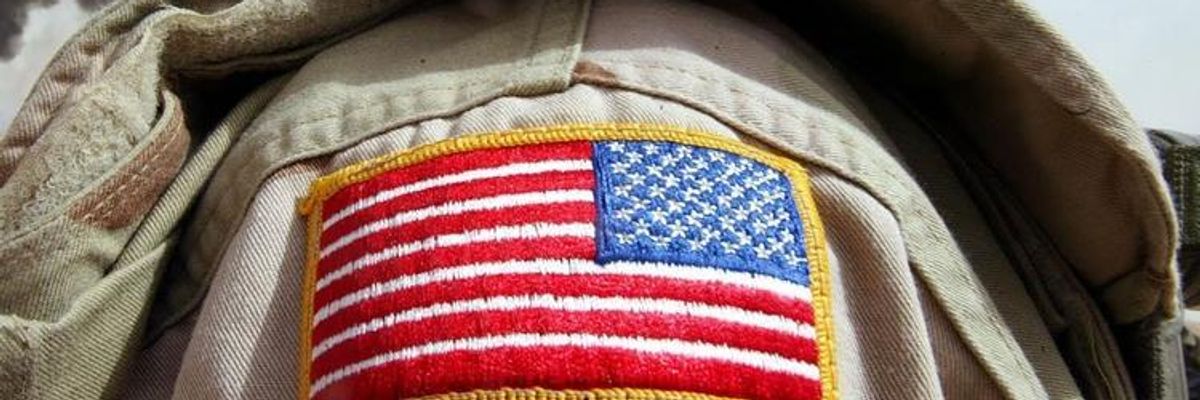
Ann Arbor (Informed Comment) - Trump is sending US troops to be based in Saudi Arabia, and King Salman has signed off on the paperwork.
Several hundred US military personnel will be at Prince Sultan Air Base, accompanying fighter jets and Patriot missile defense systems.
Ann Arbor (Informed Comment) - Trump is sending US troops to be based in Saudi Arabia, and King Salman has signed off on the paperwork.
Several hundred US military personnel will be at Prince Sultan Air Base, accompanying fighter jets and Patriot missile defense systems.
US troops were first based in Saudi Arabia during the Gulf War of 1990-91, when George H. W. Bush assembled a coalition to force Iraq back out of Kuwait, which it brutally occupied and tried to annex in August, 1990.
As Courtney Kube at NBC notes, in 1996, a terrorist bombing at Khobar Towers killed 19 US air force personnel and wounded 400 other persons, and as a result US servicemen were thereafter kept at Prince Sultan Airbase, which the US leased from the Saudis. The then no-fly zone over Iraq was policed from Prince Sultan.
Apparently everyone has forgotten that al-Qaeda made hay over the US military presence in Saudi Arabia. That country includes the twin holy cities of Mecca and Medina, and traditionalist Muslims believe that the second commander of the faithful, `Umar ibn al-Khattab, forbade non-Muslims to live in the holy land.
Usama Bin Laden characterized the US military presence in Saudi Arabia, the monarch of which is the "Guardian of the Two Holy Shrines," as a military occupation by foreign Christians and Jews ("crusaders and Zionists") of the Muslim holy land. Al-Qaeda used this allegation as a recruiting tool, and Bin Laden gave it as one of three major motivations for the September 11, 2001, attacks (the others were the sanctions on Iraq that killed thousands of children and the Israeli occupation of Jerusalem).
After the 2003 US invasion and occupation of Iraq, the US had lots of bases there, and felt no further need for the Prince Sultan Airbase, from which it withdrew. Qatar also offered its facilities, and the US put 10,000 troops into al-Udeid Air Base.
The impetus for the return of US troops to Prince Sultan Airbase in Saudi Arabia is the renewed tensions with Iran, which Trump caused by breaching the 2015 nuclear deal with Tehran.
Saudi Arabia's King Salman may also have lobbied for this move because Riyadh put Qatar under blockade, and feels at a disadvantage in this struggle because the US base al-Udeid makes Washington tilt toward Doha. But the US should be telling King Salman to make nice with Qatar; it shouldn't be enabling his blockade by coddling Riyadh.
But it is a very, very bad idea.
First, al-Qaeda and kindred movements such as ISIL have not gone away. They will use this move very effectively for propaganda and for radicalization.
Second, Saudi Arabia in 2015 launched a massive and debilitating air war on little Yemen, in which Riyadh is still embroiled. The Houthis who control northern Yemen have managed to get hold of silkworm missiles and have occasionally struck substantially inside Saudi Arabia. The US is inserting itself further into this struggle, and Prince Sultan base could be targeted by the Houthis, though their technology and resources are limited.
Third, given the murder of dissident journalist Jamal Khashoggi, it is very bad optics for the US to be opening a base in Saudi Arabia. It looks like an endorsement of the assassination of dissidents.
Fourth, the bigger the US footprint in the region, the more exposed US personnel are to attacks, and hawks like Secretary of State Mike Pompeo and national security adviser John Bolton will manipulate any such attacks into a reason for the US to go to war with Iran.
Dear Common Dreams reader, It’s been nearly 30 years since I co-founded Common Dreams with my late wife, Lina Newhouser. We had the radical notion that journalism should serve the public good, not corporate profits. It was clear to us from the outset what it would take to build such a project. No paid advertisements. No corporate sponsors. No millionaire publisher telling us what to think or do. Many people said we wouldn't last a year, but we proved those doubters wrong. Together with a tremendous team of journalists and dedicated staff, we built an independent media outlet free from the constraints of profits and corporate control. Our mission has always been simple: To inform. To inspire. To ignite change for the common good. Building Common Dreams was not easy. Our survival was never guaranteed. When you take on the most powerful forces—Wall Street greed, fossil fuel industry destruction, Big Tech lobbyists, and uber-rich oligarchs who have spent billions upon billions rigging the economy and democracy in their favor—the only bulwark you have is supporters who believe in your work. But here’s the urgent message from me today. It's never been this bad out there. And it's never been this hard to keep us going. At the very moment Common Dreams is most needed, the threats we face are intensifying. We need your support now more than ever. We don't accept corporate advertising and never will. We don't have a paywall because we don't think people should be blocked from critical news based on their ability to pay. Everything we do is funded by the donations of readers like you. When everyone does the little they can afford, we are strong. But if that support retreats or dries up, so do we. Will you donate now to make sure Common Dreams not only survives but thrives? —Craig Brown, Co-founder |
Ann Arbor (Informed Comment) - Trump is sending US troops to be based in Saudi Arabia, and King Salman has signed off on the paperwork.
Several hundred US military personnel will be at Prince Sultan Air Base, accompanying fighter jets and Patriot missile defense systems.
US troops were first based in Saudi Arabia during the Gulf War of 1990-91, when George H. W. Bush assembled a coalition to force Iraq back out of Kuwait, which it brutally occupied and tried to annex in August, 1990.
As Courtney Kube at NBC notes, in 1996, a terrorist bombing at Khobar Towers killed 19 US air force personnel and wounded 400 other persons, and as a result US servicemen were thereafter kept at Prince Sultan Airbase, which the US leased from the Saudis. The then no-fly zone over Iraq was policed from Prince Sultan.
Apparently everyone has forgotten that al-Qaeda made hay over the US military presence in Saudi Arabia. That country includes the twin holy cities of Mecca and Medina, and traditionalist Muslims believe that the second commander of the faithful, `Umar ibn al-Khattab, forbade non-Muslims to live in the holy land.
Usama Bin Laden characterized the US military presence in Saudi Arabia, the monarch of which is the "Guardian of the Two Holy Shrines," as a military occupation by foreign Christians and Jews ("crusaders and Zionists") of the Muslim holy land. Al-Qaeda used this allegation as a recruiting tool, and Bin Laden gave it as one of three major motivations for the September 11, 2001, attacks (the others were the sanctions on Iraq that killed thousands of children and the Israeli occupation of Jerusalem).
After the 2003 US invasion and occupation of Iraq, the US had lots of bases there, and felt no further need for the Prince Sultan Airbase, from which it withdrew. Qatar also offered its facilities, and the US put 10,000 troops into al-Udeid Air Base.
The impetus for the return of US troops to Prince Sultan Airbase in Saudi Arabia is the renewed tensions with Iran, which Trump caused by breaching the 2015 nuclear deal with Tehran.
Saudi Arabia's King Salman may also have lobbied for this move because Riyadh put Qatar under blockade, and feels at a disadvantage in this struggle because the US base al-Udeid makes Washington tilt toward Doha. But the US should be telling King Salman to make nice with Qatar; it shouldn't be enabling his blockade by coddling Riyadh.
But it is a very, very bad idea.
First, al-Qaeda and kindred movements such as ISIL have not gone away. They will use this move very effectively for propaganda and for radicalization.
Second, Saudi Arabia in 2015 launched a massive and debilitating air war on little Yemen, in which Riyadh is still embroiled. The Houthis who control northern Yemen have managed to get hold of silkworm missiles and have occasionally struck substantially inside Saudi Arabia. The US is inserting itself further into this struggle, and Prince Sultan base could be targeted by the Houthis, though their technology and resources are limited.
Third, given the murder of dissident journalist Jamal Khashoggi, it is very bad optics for the US to be opening a base in Saudi Arabia. It looks like an endorsement of the assassination of dissidents.
Fourth, the bigger the US footprint in the region, the more exposed US personnel are to attacks, and hawks like Secretary of State Mike Pompeo and national security adviser John Bolton will manipulate any such attacks into a reason for the US to go to war with Iran.
Ann Arbor (Informed Comment) - Trump is sending US troops to be based in Saudi Arabia, and King Salman has signed off on the paperwork.
Several hundred US military personnel will be at Prince Sultan Air Base, accompanying fighter jets and Patriot missile defense systems.
US troops were first based in Saudi Arabia during the Gulf War of 1990-91, when George H. W. Bush assembled a coalition to force Iraq back out of Kuwait, which it brutally occupied and tried to annex in August, 1990.
As Courtney Kube at NBC notes, in 1996, a terrorist bombing at Khobar Towers killed 19 US air force personnel and wounded 400 other persons, and as a result US servicemen were thereafter kept at Prince Sultan Airbase, which the US leased from the Saudis. The then no-fly zone over Iraq was policed from Prince Sultan.
Apparently everyone has forgotten that al-Qaeda made hay over the US military presence in Saudi Arabia. That country includes the twin holy cities of Mecca and Medina, and traditionalist Muslims believe that the second commander of the faithful, `Umar ibn al-Khattab, forbade non-Muslims to live in the holy land.
Usama Bin Laden characterized the US military presence in Saudi Arabia, the monarch of which is the "Guardian of the Two Holy Shrines," as a military occupation by foreign Christians and Jews ("crusaders and Zionists") of the Muslim holy land. Al-Qaeda used this allegation as a recruiting tool, and Bin Laden gave it as one of three major motivations for the September 11, 2001, attacks (the others were the sanctions on Iraq that killed thousands of children and the Israeli occupation of Jerusalem).
After the 2003 US invasion and occupation of Iraq, the US had lots of bases there, and felt no further need for the Prince Sultan Airbase, from which it withdrew. Qatar also offered its facilities, and the US put 10,000 troops into al-Udeid Air Base.
The impetus for the return of US troops to Prince Sultan Airbase in Saudi Arabia is the renewed tensions with Iran, which Trump caused by breaching the 2015 nuclear deal with Tehran.
Saudi Arabia's King Salman may also have lobbied for this move because Riyadh put Qatar under blockade, and feels at a disadvantage in this struggle because the US base al-Udeid makes Washington tilt toward Doha. But the US should be telling King Salman to make nice with Qatar; it shouldn't be enabling his blockade by coddling Riyadh.
But it is a very, very bad idea.
First, al-Qaeda and kindred movements such as ISIL have not gone away. They will use this move very effectively for propaganda and for radicalization.
Second, Saudi Arabia in 2015 launched a massive and debilitating air war on little Yemen, in which Riyadh is still embroiled. The Houthis who control northern Yemen have managed to get hold of silkworm missiles and have occasionally struck substantially inside Saudi Arabia. The US is inserting itself further into this struggle, and Prince Sultan base could be targeted by the Houthis, though their technology and resources are limited.
Third, given the murder of dissident journalist Jamal Khashoggi, it is very bad optics for the US to be opening a base in Saudi Arabia. It looks like an endorsement of the assassination of dissidents.
Fourth, the bigger the US footprint in the region, the more exposed US personnel are to attacks, and hawks like Secretary of State Mike Pompeo and national security adviser John Bolton will manipulate any such attacks into a reason for the US to go to war with Iran.