SUBSCRIBE TO OUR FREE NEWSLETTER
Daily news & progressive opinion—funded by the people, not the corporations—delivered straight to your inbox.
5
#000000
#FFFFFF
To donate by check, phone, or other method, see our More Ways to Give page.
Daily news & progressive opinion—funded by the people, not the corporations—delivered straight to your inbox.
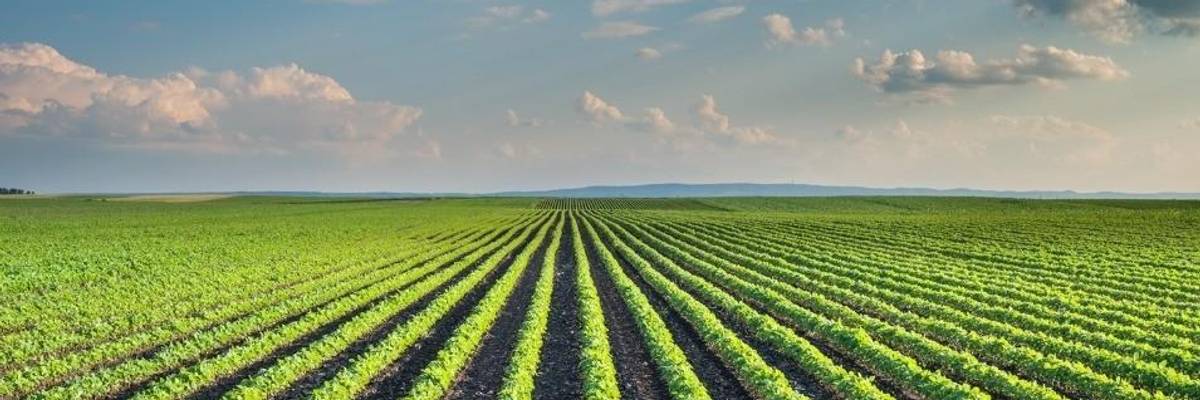
For survival and for prosperity, what's needed is an all-hands-on-deck reckoning with the vast scale of the change that is essential. (Photo: Public domain)
In early July, just as the United Nations (UN) was releasing stun-level scientific reports about climate changes, food disruptions, and accelerated extinctions, meteorologists reported that the preceding month, June 2019 was the hottest month ever recorded on Earth. They also reported that for the first time ever in recorded history temperatures in Anchorage, Alaska soared into the 90s, while rising up to 115 degrees F in Paris, France.
These were but three among the advancing army of clanging climate-change alarms.
As baldly stated in one of the UN reports from the Human Rights Office, if we maintain our economic and agricultural course we are headed for deeper disaster. Going forward on a status quo pathway will have a mighty impact not just on some remote places featured on TV news, but on our backyards, pantries, refrigerators, supermarkets, and our overall way of life. We are "sleepwalking into catastrophe."
Note well these parts of the report: Climate change also threatens basic human rights, and democracy itself. Within the next 10 years or so, the report states, climate change will cast tens of millions more human beings into poverty, hunger, and displacement from their homelands, according to the report.
The policies and actions that address climate change are not impediments to economic growth, but rather catalysts for a necessary transition to a green economy, improved labor rights, and poverty relief.
Climate change demands our attention now. That's the core message. A rowdy cascade of extreme, biblical-level weather events is steadily piercing the misinformation and complacency that surround climate change.
But acknowledging reality of climate change and its ominously real threat is but the first step in a decades-long journey into our future. For survival and for prosperity, what's needed is an all-hands-on-deck reckoning with the vast scale of the change that is essential.
As people's access to food, land, water, health care, housing, and education are threatened or destroyed, there will be an intensified need for policies that ensure respect for human, social, economic, and environmental rights.
The policies and actions that address climate change are not impediments to economic growth, but rather catalysts for a necessary transition to a green economy, improved labor rights, and poverty relief.
Although mass media paid minimal attention, on July 5, 2019 The UN's Committee on World Food Security (CFS) released a report, Agroecological and other innovative approaches for sustainable agriculture and food systems that enhance food security and nutrition.
The CFS report offers detail on the global food system, which is perched precariously at a crossroads. The report concludes that the food system needs a profound transformation at all levels, including the local level. We face complex, "multidimensional challenges," including a growing world population, urbanization, and climate change. They all increase pressure on natural resources, and negatively impact land, water, and biodiversity.
Transformation of agriculture through agroecological techniques and principles can and will have profoundly beneficial impacts on land, workers, and food.
In our era of challenge and tumultuous transition, agroecology is a leading idea: a stabilizing set of principles and practices for clean, just, and sustainable farms and food. Transformation of agriculture through agroecological techniques and principles can and will have profoundly beneficial impacts on land, workers, and food. Our entire relationship to the earth and our specific environments is being challenged. Agroecology and deep agroecology are intelligent, sophisticated, practical, and effective ways to meet and transcend those challenges, establishing a clean, healthy foundation on the earth for the next evolutionary step of humanity.
While governments may choose to ignore hard facts, and to hide information about it, we cannot afford to ignore it. Our lives, and the lives of our children, depend upon us waking up and acting now at some level of the system, from household on up to Washington, Ottawa, and beyond.
In a paper published in the Journal of Agriculture, Food Systems, and Community, Professor William E. Rees writes: "Based on current trends, the most food-secure populations by the second half of the 21st century will be those populations that have deliberately chosen and planned to re-localize as much of their own food systems as possible."
Knowing all these trends and their likely trajectories, I see that it has become a modern-day civic responsibility to be involved at some level with and to be directly supportive of clean, just and sustainable food production-agroecology and deep agroecology.
Dear Common Dreams reader, It’s been nearly 30 years since I co-founded Common Dreams with my late wife, Lina Newhouser. We had the radical notion that journalism should serve the public good, not corporate profits. It was clear to us from the outset what it would take to build such a project. No paid advertisements. No corporate sponsors. No millionaire publisher telling us what to think or do. Many people said we wouldn't last a year, but we proved those doubters wrong. Together with a tremendous team of journalists and dedicated staff, we built an independent media outlet free from the constraints of profits and corporate control. Our mission has always been simple: To inform. To inspire. To ignite change for the common good. Building Common Dreams was not easy. Our survival was never guaranteed. When you take on the most powerful forces—Wall Street greed, fossil fuel industry destruction, Big Tech lobbyists, and uber-rich oligarchs who have spent billions upon billions rigging the economy and democracy in their favor—the only bulwark you have is supporters who believe in your work. But here’s the urgent message from me today. It's never been this bad out there. And it's never been this hard to keep us going. At the very moment Common Dreams is most needed, the threats we face are intensifying. We need your support now more than ever. We don't accept corporate advertising and never will. We don't have a paywall because we don't think people should be blocked from critical news based on their ability to pay. Everything we do is funded by the donations of readers like you. When everyone does the little they can afford, we are strong. But if that support retreats or dries up, so do we. Will you donate now to make sure Common Dreams not only survives but thrives? —Craig Brown, Co-founder |
In early July, just as the United Nations (UN) was releasing stun-level scientific reports about climate changes, food disruptions, and accelerated extinctions, meteorologists reported that the preceding month, June 2019 was the hottest month ever recorded on Earth. They also reported that for the first time ever in recorded history temperatures in Anchorage, Alaska soared into the 90s, while rising up to 115 degrees F in Paris, France.
These were but three among the advancing army of clanging climate-change alarms.
As baldly stated in one of the UN reports from the Human Rights Office, if we maintain our economic and agricultural course we are headed for deeper disaster. Going forward on a status quo pathway will have a mighty impact not just on some remote places featured on TV news, but on our backyards, pantries, refrigerators, supermarkets, and our overall way of life. We are "sleepwalking into catastrophe."
Note well these parts of the report: Climate change also threatens basic human rights, and democracy itself. Within the next 10 years or so, the report states, climate change will cast tens of millions more human beings into poverty, hunger, and displacement from their homelands, according to the report.
The policies and actions that address climate change are not impediments to economic growth, but rather catalysts for a necessary transition to a green economy, improved labor rights, and poverty relief.
Climate change demands our attention now. That's the core message. A rowdy cascade of extreme, biblical-level weather events is steadily piercing the misinformation and complacency that surround climate change.
But acknowledging reality of climate change and its ominously real threat is but the first step in a decades-long journey into our future. For survival and for prosperity, what's needed is an all-hands-on-deck reckoning with the vast scale of the change that is essential.
As people's access to food, land, water, health care, housing, and education are threatened or destroyed, there will be an intensified need for policies that ensure respect for human, social, economic, and environmental rights.
The policies and actions that address climate change are not impediments to economic growth, but rather catalysts for a necessary transition to a green economy, improved labor rights, and poverty relief.
Although mass media paid minimal attention, on July 5, 2019 The UN's Committee on World Food Security (CFS) released a report, Agroecological and other innovative approaches for sustainable agriculture and food systems that enhance food security and nutrition.
The CFS report offers detail on the global food system, which is perched precariously at a crossroads. The report concludes that the food system needs a profound transformation at all levels, including the local level. We face complex, "multidimensional challenges," including a growing world population, urbanization, and climate change. They all increase pressure on natural resources, and negatively impact land, water, and biodiversity.
Transformation of agriculture through agroecological techniques and principles can and will have profoundly beneficial impacts on land, workers, and food.
In our era of challenge and tumultuous transition, agroecology is a leading idea: a stabilizing set of principles and practices for clean, just, and sustainable farms and food. Transformation of agriculture through agroecological techniques and principles can and will have profoundly beneficial impacts on land, workers, and food. Our entire relationship to the earth and our specific environments is being challenged. Agroecology and deep agroecology are intelligent, sophisticated, practical, and effective ways to meet and transcend those challenges, establishing a clean, healthy foundation on the earth for the next evolutionary step of humanity.
While governments may choose to ignore hard facts, and to hide information about it, we cannot afford to ignore it. Our lives, and the lives of our children, depend upon us waking up and acting now at some level of the system, from household on up to Washington, Ottawa, and beyond.
In a paper published in the Journal of Agriculture, Food Systems, and Community, Professor William E. Rees writes: "Based on current trends, the most food-secure populations by the second half of the 21st century will be those populations that have deliberately chosen and planned to re-localize as much of their own food systems as possible."
Knowing all these trends and their likely trajectories, I see that it has become a modern-day civic responsibility to be involved at some level with and to be directly supportive of clean, just and sustainable food production-agroecology and deep agroecology.
In early July, just as the United Nations (UN) was releasing stun-level scientific reports about climate changes, food disruptions, and accelerated extinctions, meteorologists reported that the preceding month, June 2019 was the hottest month ever recorded on Earth. They also reported that for the first time ever in recorded history temperatures in Anchorage, Alaska soared into the 90s, while rising up to 115 degrees F in Paris, France.
These were but three among the advancing army of clanging climate-change alarms.
As baldly stated in one of the UN reports from the Human Rights Office, if we maintain our economic and agricultural course we are headed for deeper disaster. Going forward on a status quo pathway will have a mighty impact not just on some remote places featured on TV news, but on our backyards, pantries, refrigerators, supermarkets, and our overall way of life. We are "sleepwalking into catastrophe."
Note well these parts of the report: Climate change also threatens basic human rights, and democracy itself. Within the next 10 years or so, the report states, climate change will cast tens of millions more human beings into poverty, hunger, and displacement from their homelands, according to the report.
The policies and actions that address climate change are not impediments to economic growth, but rather catalysts for a necessary transition to a green economy, improved labor rights, and poverty relief.
Climate change demands our attention now. That's the core message. A rowdy cascade of extreme, biblical-level weather events is steadily piercing the misinformation and complacency that surround climate change.
But acknowledging reality of climate change and its ominously real threat is but the first step in a decades-long journey into our future. For survival and for prosperity, what's needed is an all-hands-on-deck reckoning with the vast scale of the change that is essential.
As people's access to food, land, water, health care, housing, and education are threatened or destroyed, there will be an intensified need for policies that ensure respect for human, social, economic, and environmental rights.
The policies and actions that address climate change are not impediments to economic growth, but rather catalysts for a necessary transition to a green economy, improved labor rights, and poverty relief.
Although mass media paid minimal attention, on July 5, 2019 The UN's Committee on World Food Security (CFS) released a report, Agroecological and other innovative approaches for sustainable agriculture and food systems that enhance food security and nutrition.
The CFS report offers detail on the global food system, which is perched precariously at a crossroads. The report concludes that the food system needs a profound transformation at all levels, including the local level. We face complex, "multidimensional challenges," including a growing world population, urbanization, and climate change. They all increase pressure on natural resources, and negatively impact land, water, and biodiversity.
Transformation of agriculture through agroecological techniques and principles can and will have profoundly beneficial impacts on land, workers, and food.
In our era of challenge and tumultuous transition, agroecology is a leading idea: a stabilizing set of principles and practices for clean, just, and sustainable farms and food. Transformation of agriculture through agroecological techniques and principles can and will have profoundly beneficial impacts on land, workers, and food. Our entire relationship to the earth and our specific environments is being challenged. Agroecology and deep agroecology are intelligent, sophisticated, practical, and effective ways to meet and transcend those challenges, establishing a clean, healthy foundation on the earth for the next evolutionary step of humanity.
While governments may choose to ignore hard facts, and to hide information about it, we cannot afford to ignore it. Our lives, and the lives of our children, depend upon us waking up and acting now at some level of the system, from household on up to Washington, Ottawa, and beyond.
In a paper published in the Journal of Agriculture, Food Systems, and Community, Professor William E. Rees writes: "Based on current trends, the most food-secure populations by the second half of the 21st century will be those populations that have deliberately chosen and planned to re-localize as much of their own food systems as possible."
Knowing all these trends and their likely trajectories, I see that it has become a modern-day civic responsibility to be involved at some level with and to be directly supportive of clean, just and sustainable food production-agroecology and deep agroecology.