SUBSCRIBE TO OUR FREE NEWSLETTER
Daily news & progressive opinion—funded by the people, not the corporations—delivered straight to your inbox.
5
#000000
#FFFFFF
To donate by check, phone, or other method, see our More Ways to Give page.
Daily news & progressive opinion—funded by the people, not the corporations—delivered straight to your inbox.
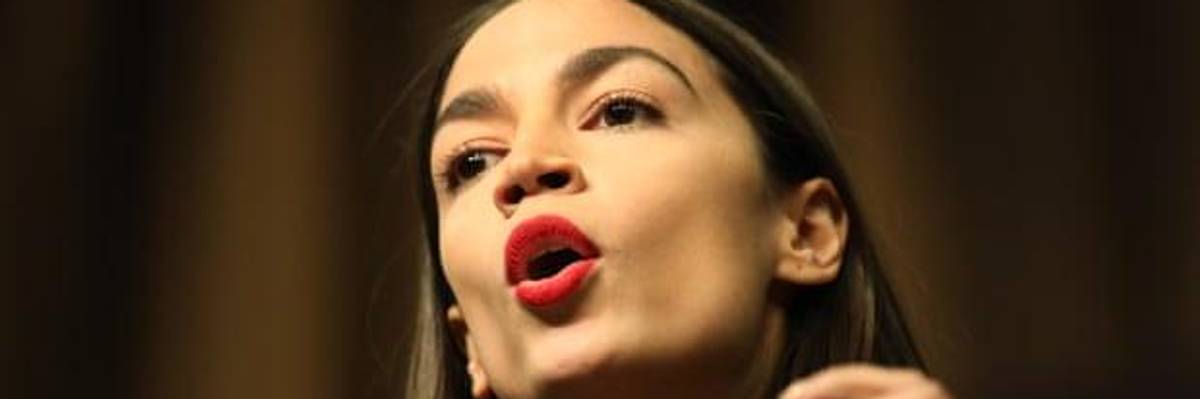
From Alexandria Ocasio-Cortez to Greta Thunberg, they are what's left of our fighting chance. (Photograph: UPI/Barcroft Images)
Forget "early warning signs" and "canaries in coalmines" - we're now well into the middle of the climate change era, with its epic reshaping of our home planet. Monday's news, from two separate studies, made it clear that the frozen portions of the Earth are now in violent and dramatic flux.
The first, led by the veteran Greenland glaciologist Jason Box, looked across the Arctic at everything from "increased tundra biomass" to deepening thaw of the permafrost layer. Their conclusion: "the Arctic biophysical system is now clearly trending away from its 20th century state and into an unprecedented state, with implications not only within but beyond the Arctic." To invent a word, the north is rapidly slushifying, with more rainfall and fewer days of hard freeze; the latest data shows that after a month of record temperatures in the Bering Sea, ocean ice in the Arctic is at an all-time record low for the date, crushing the record set ... last April.
The other study looked at the great mountain ranges of the planet, and found that their glaciers were melting much faster than scientists had expected. By the end of the century many of those alpine glaciers would be gone entirely; the Alps may lose 90% of their ice. From the Caucasus to the South Island of New Zealand, mountains are losing more than 1% of their ice each year now: "At the current glacier loss rate, the glaciers will not survive the century," said Michael Zemp, who runs the World Glacier Monitoring Service from his office at the University of Zurich.
The respectable have punted; so now it's up to the scruffy, the young, the marginal, the angry to do the necessary work.
One could list the "consequences" of these changes in great detail. They range from the catastrophic (Andean cities with no obvious source of water supply once the glaciers have melted) to the merely bitter (no one is going to die from a lack of skiing, but to lose the season when friction disappears will make many lives sadder). For the moment, though, don't worry about the "effects", just focus on what it means that some of the largest systems on Earth are now in seismic shift.
What it means, I think, is that no one should be shocked when Extinction Rebellion activists engage in mass civil disobedience. No one should be annoyed when school kids start leaving class en masse. No one should be surprised that Green New Deal advocates are now calling for dramatic overhaul of American society. In fact we should be deeply grateful: these activists, and the scientists producing these reports, are the only people on the planet who seem to understand the scale of the problem.
Not our political leaders. Obviously not Trump, but even most of the theoretically engaged premiers and presidents let themselves constantly be distracted by much smaller questions. (Brexit would seem like a silly charade at the best of times; at the moment it seems actively obscene). Not our business leaders, who make occasional greenwashing noises but continue passively belonging to organizations like the Chamber of Commerce that continue to fight serious change. Not those pension fund trustees still clinging to fossil fuel stocks even as they lose money.
The respectable have punted; so now it's up to the scruffy, the young, the marginal, the angry to do the necessary work. Their discipline and good humor and profound nonviolence are remarkable, from Alexandria Ocasio-Cortez to Greta Thunberg. They are what's left of our fighting chance.
The biggest physical features on the planet are now changing in ways they haven't since long before the dawn of human history. On the most distant poles, and on the highest peaks, we see almost unfathomable shifts. The only question is whether a similar shift is possible in our politics. Planet Earth is miles outside its comfort zone; how many of us will go beyond ours?
Dear Common Dreams reader, It’s been nearly 30 years since I co-founded Common Dreams with my late wife, Lina Newhouser. We had the radical notion that journalism should serve the public good, not corporate profits. It was clear to us from the outset what it would take to build such a project. No paid advertisements. No corporate sponsors. No millionaire publisher telling us what to think or do. Many people said we wouldn't last a year, but we proved those doubters wrong. Together with a tremendous team of journalists and dedicated staff, we built an independent media outlet free from the constraints of profits and corporate control. Our mission has always been simple: To inform. To inspire. To ignite change for the common good. Building Common Dreams was not easy. Our survival was never guaranteed. When you take on the most powerful forces—Wall Street greed, fossil fuel industry destruction, Big Tech lobbyists, and uber-rich oligarchs who have spent billions upon billions rigging the economy and democracy in their favor—the only bulwark you have is supporters who believe in your work. But here’s the urgent message from me today. It's never been this bad out there. And it's never been this hard to keep us going. At the very moment Common Dreams is most needed, the threats we face are intensifying. We need your support now more than ever. We don't accept corporate advertising and never will. We don't have a paywall because we don't think people should be blocked from critical news based on their ability to pay. Everything we do is funded by the donations of readers like you. When everyone does the little they can afford, we are strong. But if that support retreats or dries up, so do we. Will you donate now to make sure Common Dreams not only survives but thrives? —Craig Brown, Co-founder |
Forget "early warning signs" and "canaries in coalmines" - we're now well into the middle of the climate change era, with its epic reshaping of our home planet. Monday's news, from two separate studies, made it clear that the frozen portions of the Earth are now in violent and dramatic flux.
The first, led by the veteran Greenland glaciologist Jason Box, looked across the Arctic at everything from "increased tundra biomass" to deepening thaw of the permafrost layer. Their conclusion: "the Arctic biophysical system is now clearly trending away from its 20th century state and into an unprecedented state, with implications not only within but beyond the Arctic." To invent a word, the north is rapidly slushifying, with more rainfall and fewer days of hard freeze; the latest data shows that after a month of record temperatures in the Bering Sea, ocean ice in the Arctic is at an all-time record low for the date, crushing the record set ... last April.
The other study looked at the great mountain ranges of the planet, and found that their glaciers were melting much faster than scientists had expected. By the end of the century many of those alpine glaciers would be gone entirely; the Alps may lose 90% of their ice. From the Caucasus to the South Island of New Zealand, mountains are losing more than 1% of their ice each year now: "At the current glacier loss rate, the glaciers will not survive the century," said Michael Zemp, who runs the World Glacier Monitoring Service from his office at the University of Zurich.
The respectable have punted; so now it's up to the scruffy, the young, the marginal, the angry to do the necessary work.
One could list the "consequences" of these changes in great detail. They range from the catastrophic (Andean cities with no obvious source of water supply once the glaciers have melted) to the merely bitter (no one is going to die from a lack of skiing, but to lose the season when friction disappears will make many lives sadder). For the moment, though, don't worry about the "effects", just focus on what it means that some of the largest systems on Earth are now in seismic shift.
What it means, I think, is that no one should be shocked when Extinction Rebellion activists engage in mass civil disobedience. No one should be annoyed when school kids start leaving class en masse. No one should be surprised that Green New Deal advocates are now calling for dramatic overhaul of American society. In fact we should be deeply grateful: these activists, and the scientists producing these reports, are the only people on the planet who seem to understand the scale of the problem.
Not our political leaders. Obviously not Trump, but even most of the theoretically engaged premiers and presidents let themselves constantly be distracted by much smaller questions. (Brexit would seem like a silly charade at the best of times; at the moment it seems actively obscene). Not our business leaders, who make occasional greenwashing noises but continue passively belonging to organizations like the Chamber of Commerce that continue to fight serious change. Not those pension fund trustees still clinging to fossil fuel stocks even as they lose money.
The respectable have punted; so now it's up to the scruffy, the young, the marginal, the angry to do the necessary work. Their discipline and good humor and profound nonviolence are remarkable, from Alexandria Ocasio-Cortez to Greta Thunberg. They are what's left of our fighting chance.
The biggest physical features on the planet are now changing in ways they haven't since long before the dawn of human history. On the most distant poles, and on the highest peaks, we see almost unfathomable shifts. The only question is whether a similar shift is possible in our politics. Planet Earth is miles outside its comfort zone; how many of us will go beyond ours?
Forget "early warning signs" and "canaries in coalmines" - we're now well into the middle of the climate change era, with its epic reshaping of our home planet. Monday's news, from two separate studies, made it clear that the frozen portions of the Earth are now in violent and dramatic flux.
The first, led by the veteran Greenland glaciologist Jason Box, looked across the Arctic at everything from "increased tundra biomass" to deepening thaw of the permafrost layer. Their conclusion: "the Arctic biophysical system is now clearly trending away from its 20th century state and into an unprecedented state, with implications not only within but beyond the Arctic." To invent a word, the north is rapidly slushifying, with more rainfall and fewer days of hard freeze; the latest data shows that after a month of record temperatures in the Bering Sea, ocean ice in the Arctic is at an all-time record low for the date, crushing the record set ... last April.
The other study looked at the great mountain ranges of the planet, and found that their glaciers were melting much faster than scientists had expected. By the end of the century many of those alpine glaciers would be gone entirely; the Alps may lose 90% of their ice. From the Caucasus to the South Island of New Zealand, mountains are losing more than 1% of their ice each year now: "At the current glacier loss rate, the glaciers will not survive the century," said Michael Zemp, who runs the World Glacier Monitoring Service from his office at the University of Zurich.
The respectable have punted; so now it's up to the scruffy, the young, the marginal, the angry to do the necessary work.
One could list the "consequences" of these changes in great detail. They range from the catastrophic (Andean cities with no obvious source of water supply once the glaciers have melted) to the merely bitter (no one is going to die from a lack of skiing, but to lose the season when friction disappears will make many lives sadder). For the moment, though, don't worry about the "effects", just focus on what it means that some of the largest systems on Earth are now in seismic shift.
What it means, I think, is that no one should be shocked when Extinction Rebellion activists engage in mass civil disobedience. No one should be annoyed when school kids start leaving class en masse. No one should be surprised that Green New Deal advocates are now calling for dramatic overhaul of American society. In fact we should be deeply grateful: these activists, and the scientists producing these reports, are the only people on the planet who seem to understand the scale of the problem.
Not our political leaders. Obviously not Trump, but even most of the theoretically engaged premiers and presidents let themselves constantly be distracted by much smaller questions. (Brexit would seem like a silly charade at the best of times; at the moment it seems actively obscene). Not our business leaders, who make occasional greenwashing noises but continue passively belonging to organizations like the Chamber of Commerce that continue to fight serious change. Not those pension fund trustees still clinging to fossil fuel stocks even as they lose money.
The respectable have punted; so now it's up to the scruffy, the young, the marginal, the angry to do the necessary work. Their discipline and good humor and profound nonviolence are remarkable, from Alexandria Ocasio-Cortez to Greta Thunberg. They are what's left of our fighting chance.
The biggest physical features on the planet are now changing in ways they haven't since long before the dawn of human history. On the most distant poles, and on the highest peaks, we see almost unfathomable shifts. The only question is whether a similar shift is possible in our politics. Planet Earth is miles outside its comfort zone; how many of us will go beyond ours?