SUBSCRIBE TO OUR FREE NEWSLETTER
Daily news & progressive opinion—funded by the people, not the corporations—delivered straight to your inbox.
5
#000000
#FFFFFF
To donate by check, phone, or other method, see our More Ways to Give page.
Daily news & progressive opinion—funded by the people, not the corporations—delivered straight to your inbox.
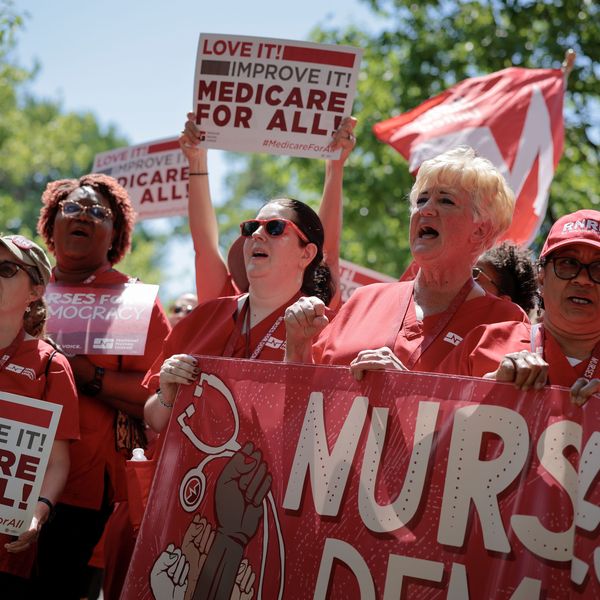
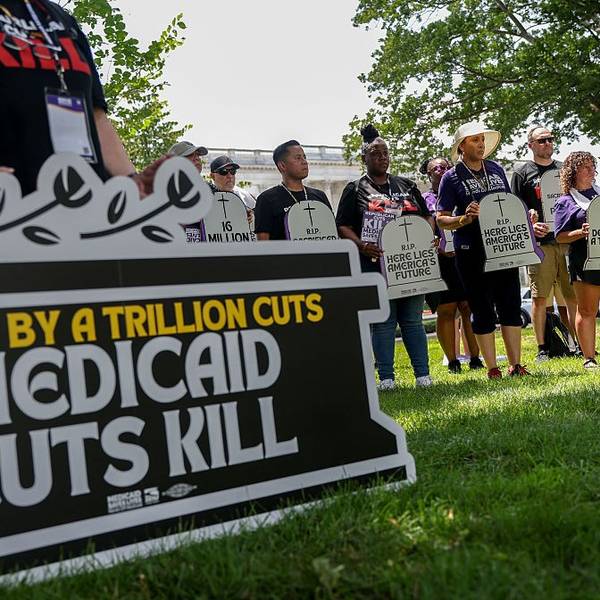
All across the country, citizens at town hall meetings are asking hard questions to the 217 Republicans like New York's John Faso and Elise Stefanik who voted in Congress to repeal Obamacare.
People's Action's Julie Chinitz offers advice about how we can talk with our family, friends, neighbors and leaders about what's at stake, and what we can do together to defend healthcare.
All across the country, citizens at town hall meetings are asking hard questions to the 217 Republicans like New York's John Faso and Elise Stefanik who voted in Congress to repeal Obamacare.
People's Action's Julie Chinitz offers advice about how we can talk with our family, friends, neighbors and leaders about what's at stake, and what we can do together to defend healthcare.
On May 4, Congress passed a health care repeal that will push 24 million people off health care and make health care more expensive for many millions more. The Senate will soon start writing its own legislation to take our health care away.
We've beat this repeal back before. Let's do it again. Help keep our firestorm going by talking with family, friends, and neighbors about how health care repeal will hurt us and our hometowns.
Talk About Our Values
Most of us believe the only decent thing is for everyone to get the health care they need. We believe our government should make sure we all can get health care - not take health care away. We don't think people should die or suffer because they don't have a lot of money.
But members of Congress who voted for this health repeal don't share these values. If they're like Rep. Mo Brooks of Alabama, they think we're to blame for our illnesses. Some, like Rep. Raul Labrador, refuse to understand that, yes, people do die if they can't afford health care. They really don't think our government should protect and promote access to health care. We do.
Stick to the Real Fundamentals of What the Health Repeal Does
Some members of Congress are plain lying about what their health care repeal bill does. So, let's make sure people in our hometowns know the fundamentals:
Talk About How Health Repeal Hurts Everyone
No matter where we live, people will be kicked off coverage - here are estimates by congressional district. Some people may see premiums go up because of health conditions: here are estimates of pre-existing condition surcharges and the number of people affected, also by congressional district.
This means more people cutting treatment short or not getting it at all, skipping medications, going without exams that catch cancer early, or being sent to collections. It means families having to take care of aging relatives instead of getting professional care (most people receiving long-term care are covered by Medicaid). It means stress and worry.
And lots of people will die.
Some people - mainly those who are younger and have higher incomes - may get more money for premiums. But their deductibles will spike, going up by about $1,550. And we all may be hit with those dollar caps on care - including people with employer plans.
But the bigger point is this: you just can't take health care away from this many people without dire consequences for entire communities. Hospitals and clinics may shutter, especially in rural areas. People will lose jobs in health care and related industries.
And small businesses - part of the fabric of our communities - will be hit by a double-whammy: no coverage for their employees (or themselves), and a customer base that's struggling under the weight of higher health care prices.
Say What You'll Do to Protect Healthcare in Your Hometown, and Invite People to Help!
Tell friends and family you're not going to let your member of Congress of the hook for their disastrous, reprehensible vote. You're going to call and let that congressperson know how outraged you are and your plans for holding them responsible. They should do the same.
Invite people to events in your hometown - rallies, town hall meetings, and other events where people are gathering to call for health care for everyone.
Now more than ever, we need to take democracy into our own hands. That means spreading the word and letting politicians know we're organized and committed - and we're not going away!
Dear Common Dreams reader, It’s been nearly 30 years since I co-founded Common Dreams with my late wife, Lina Newhouser. We had the radical notion that journalism should serve the public good, not corporate profits. It was clear to us from the outset what it would take to build such a project. No paid advertisements. No corporate sponsors. No millionaire publisher telling us what to think or do. Many people said we wouldn't last a year, but we proved those doubters wrong. Together with a tremendous team of journalists and dedicated staff, we built an independent media outlet free from the constraints of profits and corporate control. Our mission has always been simple: To inform. To inspire. To ignite change for the common good. Building Common Dreams was not easy. Our survival was never guaranteed. When you take on the most powerful forces—Wall Street greed, fossil fuel industry destruction, Big Tech lobbyists, and uber-rich oligarchs who have spent billions upon billions rigging the economy and democracy in their favor—the only bulwark you have is supporters who believe in your work. But here’s the urgent message from me today. It's never been this bad out there. And it's never been this hard to keep us going. At the very moment Common Dreams is most needed, the threats we face are intensifying. We need your support now more than ever. We don't accept corporate advertising and never will. We don't have a paywall because we don't think people should be blocked from critical news based on their ability to pay. Everything we do is funded by the donations of readers like you. When everyone does the little they can afford, we are strong. But if that support retreats or dries up, so do we. Will you donate now to make sure Common Dreams not only survives but thrives? —Craig Brown, Co-founder |
All across the country, citizens at town hall meetings are asking hard questions to the 217 Republicans like New York's John Faso and Elise Stefanik who voted in Congress to repeal Obamacare.
People's Action's Julie Chinitz offers advice about how we can talk with our family, friends, neighbors and leaders about what's at stake, and what we can do together to defend healthcare.
On May 4, Congress passed a health care repeal that will push 24 million people off health care and make health care more expensive for many millions more. The Senate will soon start writing its own legislation to take our health care away.
We've beat this repeal back before. Let's do it again. Help keep our firestorm going by talking with family, friends, and neighbors about how health care repeal will hurt us and our hometowns.
Talk About Our Values
Most of us believe the only decent thing is for everyone to get the health care they need. We believe our government should make sure we all can get health care - not take health care away. We don't think people should die or suffer because they don't have a lot of money.
But members of Congress who voted for this health repeal don't share these values. If they're like Rep. Mo Brooks of Alabama, they think we're to blame for our illnesses. Some, like Rep. Raul Labrador, refuse to understand that, yes, people do die if they can't afford health care. They really don't think our government should protect and promote access to health care. We do.
Stick to the Real Fundamentals of What the Health Repeal Does
Some members of Congress are plain lying about what their health care repeal bill does. So, let's make sure people in our hometowns know the fundamentals:
Talk About How Health Repeal Hurts Everyone
No matter where we live, people will be kicked off coverage - here are estimates by congressional district. Some people may see premiums go up because of health conditions: here are estimates of pre-existing condition surcharges and the number of people affected, also by congressional district.
This means more people cutting treatment short or not getting it at all, skipping medications, going without exams that catch cancer early, or being sent to collections. It means families having to take care of aging relatives instead of getting professional care (most people receiving long-term care are covered by Medicaid). It means stress and worry.
And lots of people will die.
Some people - mainly those who are younger and have higher incomes - may get more money for premiums. But their deductibles will spike, going up by about $1,550. And we all may be hit with those dollar caps on care - including people with employer plans.
But the bigger point is this: you just can't take health care away from this many people without dire consequences for entire communities. Hospitals and clinics may shutter, especially in rural areas. People will lose jobs in health care and related industries.
And small businesses - part of the fabric of our communities - will be hit by a double-whammy: no coverage for their employees (or themselves), and a customer base that's struggling under the weight of higher health care prices.
Say What You'll Do to Protect Healthcare in Your Hometown, and Invite People to Help!
Tell friends and family you're not going to let your member of Congress of the hook for their disastrous, reprehensible vote. You're going to call and let that congressperson know how outraged you are and your plans for holding them responsible. They should do the same.
Invite people to events in your hometown - rallies, town hall meetings, and other events where people are gathering to call for health care for everyone.
Now more than ever, we need to take democracy into our own hands. That means spreading the word and letting politicians know we're organized and committed - and we're not going away!
All across the country, citizens at town hall meetings are asking hard questions to the 217 Republicans like New York's John Faso and Elise Stefanik who voted in Congress to repeal Obamacare.
People's Action's Julie Chinitz offers advice about how we can talk with our family, friends, neighbors and leaders about what's at stake, and what we can do together to defend healthcare.
On May 4, Congress passed a health care repeal that will push 24 million people off health care and make health care more expensive for many millions more. The Senate will soon start writing its own legislation to take our health care away.
We've beat this repeal back before. Let's do it again. Help keep our firestorm going by talking with family, friends, and neighbors about how health care repeal will hurt us and our hometowns.
Talk About Our Values
Most of us believe the only decent thing is for everyone to get the health care they need. We believe our government should make sure we all can get health care - not take health care away. We don't think people should die or suffer because they don't have a lot of money.
But members of Congress who voted for this health repeal don't share these values. If they're like Rep. Mo Brooks of Alabama, they think we're to blame for our illnesses. Some, like Rep. Raul Labrador, refuse to understand that, yes, people do die if they can't afford health care. They really don't think our government should protect and promote access to health care. We do.
Stick to the Real Fundamentals of What the Health Repeal Does
Some members of Congress are plain lying about what their health care repeal bill does. So, let's make sure people in our hometowns know the fundamentals:
Talk About How Health Repeal Hurts Everyone
No matter where we live, people will be kicked off coverage - here are estimates by congressional district. Some people may see premiums go up because of health conditions: here are estimates of pre-existing condition surcharges and the number of people affected, also by congressional district.
This means more people cutting treatment short or not getting it at all, skipping medications, going without exams that catch cancer early, or being sent to collections. It means families having to take care of aging relatives instead of getting professional care (most people receiving long-term care are covered by Medicaid). It means stress and worry.
And lots of people will die.
Some people - mainly those who are younger and have higher incomes - may get more money for premiums. But their deductibles will spike, going up by about $1,550. And we all may be hit with those dollar caps on care - including people with employer plans.
But the bigger point is this: you just can't take health care away from this many people without dire consequences for entire communities. Hospitals and clinics may shutter, especially in rural areas. People will lose jobs in health care and related industries.
And small businesses - part of the fabric of our communities - will be hit by a double-whammy: no coverage for their employees (or themselves), and a customer base that's struggling under the weight of higher health care prices.
Say What You'll Do to Protect Healthcare in Your Hometown, and Invite People to Help!
Tell friends and family you're not going to let your member of Congress of the hook for their disastrous, reprehensible vote. You're going to call and let that congressperson know how outraged you are and your plans for holding them responsible. They should do the same.
Invite people to events in your hometown - rallies, town hall meetings, and other events where people are gathering to call for health care for everyone.
Now more than ever, we need to take democracy into our own hands. That means spreading the word and letting politicians know we're organized and committed - and we're not going away!