SUBSCRIBE TO OUR FREE NEWSLETTER
Daily news & progressive opinion—funded by the people, not the corporations—delivered straight to your inbox.
5
#000000
#FFFFFF
To donate by check, phone, or other method, see our More Ways to Give page.
Daily news & progressive opinion—funded by the people, not the corporations—delivered straight to your inbox.
On the heels of two telling reports from the Intergovernmental Panel of Climate Change (IPCC) and the National Climate Assessment detailing the substantial negative impacts from climate change around the world, the U.S. Environmental Protection Agency's (EPA's) decision to incorporate emissions trading and offsetting in their new carbon dioxide rule undermines its ability to deliver the real reductions in carbon emissions so urgently needed.
On the heels of two telling reports from the Intergovernmental Panel of Climate Change (IPCC) and the National Climate Assessment detailing the substantial negative impacts from climate change around the world, the U.S. Environmental Protection Agency's (EPA's) decision to incorporate emissions trading and offsetting in their new carbon dioxide rule undermines its ability to deliver the real reductions in carbon emissions so urgently needed.
We applaud the President for using the tools he has available, given that Congress refuses to act, and for setting hard targets for emissions reductions. However, the targets don't make the U.S. a leader in addressing climate change. Because this rule applies to only one segment of our economy - existing coal-fired power plants - the reduction targets fall far short of the IPCC's goal for developed countries of economy-wide reductions of 15 to 40 percent below 1990 emission levels by 2020. With the President's targets, U.S. economy-wide emissions would still be above 1990 levels in 2030.
In addition, by allowing states the option of using cap-and-trade and offsets, the administration has cut the legs out from under its own rule. Carbon trading is designed to benefit big corporate polluters. It lets industry decide for itself how to limit carbon emissions based on profit motive, and makes it cheaper for the dirtiest power plants to simply pay for permits instead of cleaning up pollution.
The U.S. needs only look to the European Union (EU) for evidence that cap and trade fails to deliver on its promises. The EU's Emissions Trading System (ETS) for carbon - the largest and longest-running in the world - has been fraught with problems, including corporate giveaways, gaming by the energy industry, volatile carbon prices, and fraud.
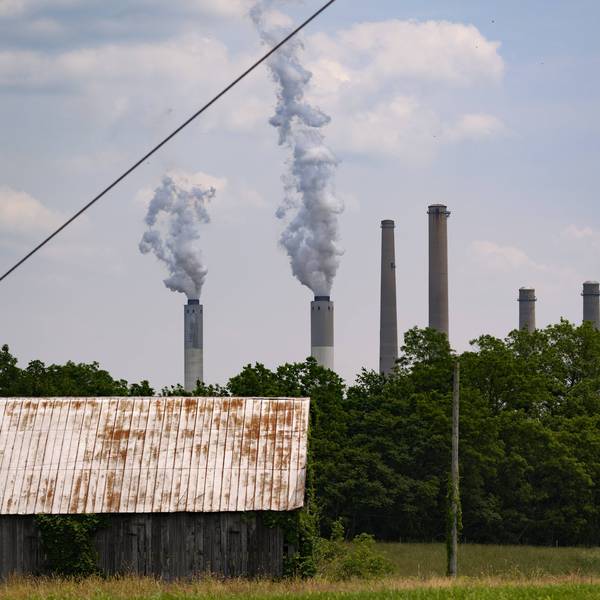
Proponents claim the U.S. can design cap-and-trade better than the Europeans, but they are already importing one of the worst aspects - offsetting. Offsets allow regulated power plants to pay farmers, foresters and others outside the cap to reduce their emissions, and then claim those cuts for themselves. Power plants keep polluting, and the families living in their shadow continue to breathe toxic emissions.
To top it off, it is nearly impossible for the supplier of an offset to guarantee that the offsetting action will be in place for the duration of a power plant's life. Given the 50-year lifespan of carbon in the atmosphere after its release, offsetting poses a real risk to long-term climate stability.
Even the U.S. Government Accountability Office points out that, 'offsets allow regulated entities to emit more while maintaining the emissions levels set by a cap and trade program or other program to limit emissions.
We need a bold rule that truly seeks legitimate carbon emission reduction by burning less fossil fuel, supporting energy efficiency, and ramping up the use of sustainable renewable energy in order to address climate change. The Clean Air Act calls for the "best system of emissions reduction" to reduce emissions from existing power plants. Unfortunately, trading and offsetting merely perpetuate pollution and encourage business-as-usual. The EPA should uphold the Clean Air Act by enforcing rules that reduce pollution - not promote a system that allows power plants to pay to pollute.
Dear Common Dreams reader, It’s been nearly 30 years since I co-founded Common Dreams with my late wife, Lina Newhouser. We had the radical notion that journalism should serve the public good, not corporate profits. It was clear to us from the outset what it would take to build such a project. No paid advertisements. No corporate sponsors. No millionaire publisher telling us what to think or do. Many people said we wouldn't last a year, but we proved those doubters wrong. Together with a tremendous team of journalists and dedicated staff, we built an independent media outlet free from the constraints of profits and corporate control. Our mission has always been simple: To inform. To inspire. To ignite change for the common good. Building Common Dreams was not easy. Our survival was never guaranteed. When you take on the most powerful forces—Wall Street greed, fossil fuel industry destruction, Big Tech lobbyists, and uber-rich oligarchs who have spent billions upon billions rigging the economy and democracy in their favor—the only bulwark you have is supporters who believe in your work. But here’s the urgent message from me today. It's never been this bad out there. And it's never been this hard to keep us going. At the very moment Common Dreams is most needed, the threats we face are intensifying. We need your support now more than ever. We don't accept corporate advertising and never will. We don't have a paywall because we don't think people should be blocked from critical news based on their ability to pay. Everything we do is funded by the donations of readers like you. When everyone does the little they can afford, we are strong. But if that support retreats or dries up, so do we. Will you donate now to make sure Common Dreams not only survives but thrives? —Craig Brown, Co-founder |
On the heels of two telling reports from the Intergovernmental Panel of Climate Change (IPCC) and the National Climate Assessment detailing the substantial negative impacts from climate change around the world, the U.S. Environmental Protection Agency's (EPA's) decision to incorporate emissions trading and offsetting in their new carbon dioxide rule undermines its ability to deliver the real reductions in carbon emissions so urgently needed.
We applaud the President for using the tools he has available, given that Congress refuses to act, and for setting hard targets for emissions reductions. However, the targets don't make the U.S. a leader in addressing climate change. Because this rule applies to only one segment of our economy - existing coal-fired power plants - the reduction targets fall far short of the IPCC's goal for developed countries of economy-wide reductions of 15 to 40 percent below 1990 emission levels by 2020. With the President's targets, U.S. economy-wide emissions would still be above 1990 levels in 2030.
In addition, by allowing states the option of using cap-and-trade and offsets, the administration has cut the legs out from under its own rule. Carbon trading is designed to benefit big corporate polluters. It lets industry decide for itself how to limit carbon emissions based on profit motive, and makes it cheaper for the dirtiest power plants to simply pay for permits instead of cleaning up pollution.
The U.S. needs only look to the European Union (EU) for evidence that cap and trade fails to deliver on its promises. The EU's Emissions Trading System (ETS) for carbon - the largest and longest-running in the world - has been fraught with problems, including corporate giveaways, gaming by the energy industry, volatile carbon prices, and fraud.
Proponents claim the U.S. can design cap-and-trade better than the Europeans, but they are already importing one of the worst aspects - offsetting. Offsets allow regulated power plants to pay farmers, foresters and others outside the cap to reduce their emissions, and then claim those cuts for themselves. Power plants keep polluting, and the families living in their shadow continue to breathe toxic emissions.
To top it off, it is nearly impossible for the supplier of an offset to guarantee that the offsetting action will be in place for the duration of a power plant's life. Given the 50-year lifespan of carbon in the atmosphere after its release, offsetting poses a real risk to long-term climate stability.
Even the U.S. Government Accountability Office points out that, 'offsets allow regulated entities to emit more while maintaining the emissions levels set by a cap and trade program or other program to limit emissions.
We need a bold rule that truly seeks legitimate carbon emission reduction by burning less fossil fuel, supporting energy efficiency, and ramping up the use of sustainable renewable energy in order to address climate change. The Clean Air Act calls for the "best system of emissions reduction" to reduce emissions from existing power plants. Unfortunately, trading and offsetting merely perpetuate pollution and encourage business-as-usual. The EPA should uphold the Clean Air Act by enforcing rules that reduce pollution - not promote a system that allows power plants to pay to pollute.
On the heels of two telling reports from the Intergovernmental Panel of Climate Change (IPCC) and the National Climate Assessment detailing the substantial negative impacts from climate change around the world, the U.S. Environmental Protection Agency's (EPA's) decision to incorporate emissions trading and offsetting in their new carbon dioxide rule undermines its ability to deliver the real reductions in carbon emissions so urgently needed.
We applaud the President for using the tools he has available, given that Congress refuses to act, and for setting hard targets for emissions reductions. However, the targets don't make the U.S. a leader in addressing climate change. Because this rule applies to only one segment of our economy - existing coal-fired power plants - the reduction targets fall far short of the IPCC's goal for developed countries of economy-wide reductions of 15 to 40 percent below 1990 emission levels by 2020. With the President's targets, U.S. economy-wide emissions would still be above 1990 levels in 2030.
In addition, by allowing states the option of using cap-and-trade and offsets, the administration has cut the legs out from under its own rule. Carbon trading is designed to benefit big corporate polluters. It lets industry decide for itself how to limit carbon emissions based on profit motive, and makes it cheaper for the dirtiest power plants to simply pay for permits instead of cleaning up pollution.
The U.S. needs only look to the European Union (EU) for evidence that cap and trade fails to deliver on its promises. The EU's Emissions Trading System (ETS) for carbon - the largest and longest-running in the world - has been fraught with problems, including corporate giveaways, gaming by the energy industry, volatile carbon prices, and fraud.
Proponents claim the U.S. can design cap-and-trade better than the Europeans, but they are already importing one of the worst aspects - offsetting. Offsets allow regulated power plants to pay farmers, foresters and others outside the cap to reduce their emissions, and then claim those cuts for themselves. Power plants keep polluting, and the families living in their shadow continue to breathe toxic emissions.
To top it off, it is nearly impossible for the supplier of an offset to guarantee that the offsetting action will be in place for the duration of a power plant's life. Given the 50-year lifespan of carbon in the atmosphere after its release, offsetting poses a real risk to long-term climate stability.
Even the U.S. Government Accountability Office points out that, 'offsets allow regulated entities to emit more while maintaining the emissions levels set by a cap and trade program or other program to limit emissions.
We need a bold rule that truly seeks legitimate carbon emission reduction by burning less fossil fuel, supporting energy efficiency, and ramping up the use of sustainable renewable energy in order to address climate change. The Clean Air Act calls for the "best system of emissions reduction" to reduce emissions from existing power plants. Unfortunately, trading and offsetting merely perpetuate pollution and encourage business-as-usual. The EPA should uphold the Clean Air Act by enforcing rules that reduce pollution - not promote a system that allows power plants to pay to pollute.