SUBSCRIBE TO OUR FREE NEWSLETTER
Daily news & progressive opinion—funded by the people, not the corporations—delivered straight to your inbox.
5
#000000
#FFFFFF
To donate by check, phone, or other method, see our More Ways to Give page.
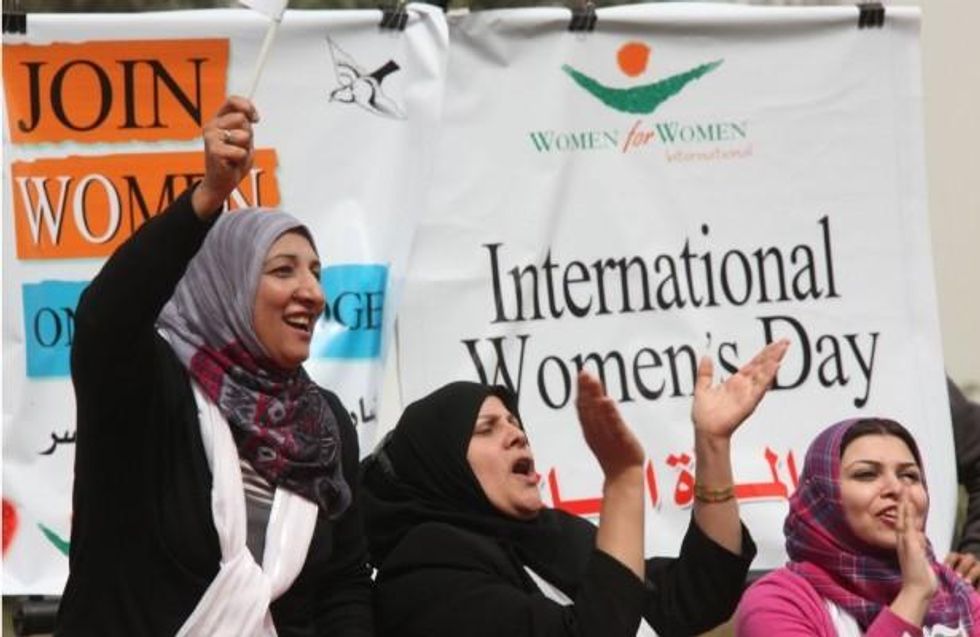
Today, the radical ardor behind the original project has cooled considerably--to the point where International Women's Day sometimes seems like just another excuse to sell cheap pink crap. Nevertheless, in honor of the socialist spirit that motivated the original observances, I thought I'd write a post focusing on some of the economic injustices facing women around around the world today.
As it happens, this month saw the release of a new World Bank report on women in the work world. Much as I'd love to be doing a happy dance and celebrating all the advances women have made since Clara Zetkin's day, it's sobering to realize how little things have changed for so many women around the globe. Even in countries where women have advanced, gender economic inequality remains a serious problem.
Consider some of the report's major findings:
* Women continue to trail behind men by every economic measure.
* Their labor force participation of women worldwide has stagnated over the past two decades, declining slightly from 57 percent to 55 percent today. Female labor force participation has sunk as low as 25 percent in the Middle East and North Africa.
* According to an ILO analysis of eighty-three countries, on average, women earn between 10 and 30 percent less than comparable men. There is no country in the earth where women have reached wage parity.
* Sexist bias and social norms continue to impose an enormous penalty on women's economic well-being. Women worldwide spend at least twice as much time as men do on unpaid housework and care work. According to the report's authors, close to 40 percent of people worldwide "agree that, when jobs are scarce, men should have more right to jobs than women."
* Women's lack of access to credit, land, and education remains serious obstacles. Though girls' access to education is improving in many areas of the world, in sixteen countries in 2010-12, female-to-male enrollment ratios in primary education were less than 90 percent, and millions of children in those countries were not enrolled at all.
* Various forms of sex-based economic discrimination are perfectly in the vast majority of countries in the world. 128 of 143 countries had some sort of sex-based legal differentiation in 2013. In some countries, women still need their husbands' consent to work.
How do we turn around this depressing state of affairs? While the authors of the report call for "proactive private sector leadership" as part of the solution, they understand full well that the magic of the market is not going to fix things. That's why they also recommend that the government step in and level the playing field. Among their suggestions: that governments integrate a "gender assessment" in labor market and growth diagnostics, and that governments enact a wide range of policies that advance gender equity, from improved child care and family leave policies to more female-friendly education programs.
The report is chock-full of fascinating tidbits, including a couple that are particularly notable considering the ideological bent of the World Bank. There's a particularly nice section about how market failures contribute to women's unjustly limited work opportunities.
Even more interestingly, the authors of the report take pains to point out that "economic growth does not guarantee gender equality." They note that countries including Japan, Kuwait and Qatar enjoy high levels of GDP, yet suffer from large gender wage gaps and poor records of gender equality in general. For many decades, the World Bank fetishized growth at all costs, with little concern about how that growth might be distributed. But in recent years, like its even eviler twin, the IMF, the World Bank has begun to show some concern about economic inequality.
It's an interesting tonal shift, at least.
But more important is what hasn't changed. A poster announcing one of the first International Women's Day rallies, in Germany 100 years ago, decried the "prejudice and reactionary attitudes" that "have denied full civic rights to women." Women are still fighting those very same attitudes--including the reactionary economic ideologies that harm them disproportionately, and deny them their full humanity and participation in civic life. Then as now, economic inequality was soaring, and women needed a feminism that could fight for them not only as women, but also as workers. Today, a century later, women need that kind of feminism every bit as much now as they did then. Clara Zetkin might be disappointed, but not surprised
Today, the radical ardor behind the original project has cooled considerably--to the point where International Women's Day sometimes seems like just another excuse to sell cheap pink crap. Nevertheless, in honor of the socialist spirit that motivated the original observances, I thought I'd write a post focusing on some of the economic injustices facing women around around the world today.
As it happens, this month saw the release of a new World Bank report on women in the work world. Much as I'd love to be doing a happy dance and celebrating all the advances women have made since Clara Zetkin's day, it's sobering to realize how little things have changed for so many women around the globe. Even in countries where women have advanced, gender economic inequality remains a serious problem.
Consider some of the report's major findings:
* Women continue to trail behind men by every economic measure.
* Their labor force participation of women worldwide has stagnated over the past two decades, declining slightly from 57 percent to 55 percent today. Female labor force participation has sunk as low as 25 percent in the Middle East and North Africa.
* According to an ILO analysis of eighty-three countries, on average, women earn between 10 and 30 percent less than comparable men. There is no country in the earth where women have reached wage parity.
* Sexist bias and social norms continue to impose an enormous penalty on women's economic well-being. Women worldwide spend at least twice as much time as men do on unpaid housework and care work. According to the report's authors, close to 40 percent of people worldwide "agree that, when jobs are scarce, men should have more right to jobs than women."
* Women's lack of access to credit, land, and education remains serious obstacles. Though girls' access to education is improving in many areas of the world, in sixteen countries in 2010-12, female-to-male enrollment ratios in primary education were less than 90 percent, and millions of children in those countries were not enrolled at all.
* Various forms of sex-based economic discrimination are perfectly in the vast majority of countries in the world. 128 of 143 countries had some sort of sex-based legal differentiation in 2013. In some countries, women still need their husbands' consent to work.
How do we turn around this depressing state of affairs? While the authors of the report call for "proactive private sector leadership" as part of the solution, they understand full well that the magic of the market is not going to fix things. That's why they also recommend that the government step in and level the playing field. Among their suggestions: that governments integrate a "gender assessment" in labor market and growth diagnostics, and that governments enact a wide range of policies that advance gender equity, from improved child care and family leave policies to more female-friendly education programs.
The report is chock-full of fascinating tidbits, including a couple that are particularly notable considering the ideological bent of the World Bank. There's a particularly nice section about how market failures contribute to women's unjustly limited work opportunities.
Even more interestingly, the authors of the report take pains to point out that "economic growth does not guarantee gender equality." They note that countries including Japan, Kuwait and Qatar enjoy high levels of GDP, yet suffer from large gender wage gaps and poor records of gender equality in general. For many decades, the World Bank fetishized growth at all costs, with little concern about how that growth might be distributed. But in recent years, like its even eviler twin, the IMF, the World Bank has begun to show some concern about economic inequality.
It's an interesting tonal shift, at least.
But more important is what hasn't changed. A poster announcing one of the first International Women's Day rallies, in Germany 100 years ago, decried the "prejudice and reactionary attitudes" that "have denied full civic rights to women." Women are still fighting those very same attitudes--including the reactionary economic ideologies that harm them disproportionately, and deny them their full humanity and participation in civic life. Then as now, economic inequality was soaring, and women needed a feminism that could fight for them not only as women, but also as workers. Today, a century later, women need that kind of feminism every bit as much now as they did then. Clara Zetkin might be disappointed, but not surprised
Today, the radical ardor behind the original project has cooled considerably--to the point where International Women's Day sometimes seems like just another excuse to sell cheap pink crap. Nevertheless, in honor of the socialist spirit that motivated the original observances, I thought I'd write a post focusing on some of the economic injustices facing women around around the world today.
As it happens, this month saw the release of a new World Bank report on women in the work world. Much as I'd love to be doing a happy dance and celebrating all the advances women have made since Clara Zetkin's day, it's sobering to realize how little things have changed for so many women around the globe. Even in countries where women have advanced, gender economic inequality remains a serious problem.
Consider some of the report's major findings:
* Women continue to trail behind men by every economic measure.
* Their labor force participation of women worldwide has stagnated over the past two decades, declining slightly from 57 percent to 55 percent today. Female labor force participation has sunk as low as 25 percent in the Middle East and North Africa.
* According to an ILO analysis of eighty-three countries, on average, women earn between 10 and 30 percent less than comparable men. There is no country in the earth where women have reached wage parity.
* Sexist bias and social norms continue to impose an enormous penalty on women's economic well-being. Women worldwide spend at least twice as much time as men do on unpaid housework and care work. According to the report's authors, close to 40 percent of people worldwide "agree that, when jobs are scarce, men should have more right to jobs than women."
* Women's lack of access to credit, land, and education remains serious obstacles. Though girls' access to education is improving in many areas of the world, in sixteen countries in 2010-12, female-to-male enrollment ratios in primary education were less than 90 percent, and millions of children in those countries were not enrolled at all.
* Various forms of sex-based economic discrimination are perfectly in the vast majority of countries in the world. 128 of 143 countries had some sort of sex-based legal differentiation in 2013. In some countries, women still need their husbands' consent to work.
How do we turn around this depressing state of affairs? While the authors of the report call for "proactive private sector leadership" as part of the solution, they understand full well that the magic of the market is not going to fix things. That's why they also recommend that the government step in and level the playing field. Among their suggestions: that governments integrate a "gender assessment" in labor market and growth diagnostics, and that governments enact a wide range of policies that advance gender equity, from improved child care and family leave policies to more female-friendly education programs.
The report is chock-full of fascinating tidbits, including a couple that are particularly notable considering the ideological bent of the World Bank. There's a particularly nice section about how market failures contribute to women's unjustly limited work opportunities.
Even more interestingly, the authors of the report take pains to point out that "economic growth does not guarantee gender equality." They note that countries including Japan, Kuwait and Qatar enjoy high levels of GDP, yet suffer from large gender wage gaps and poor records of gender equality in general. For many decades, the World Bank fetishized growth at all costs, with little concern about how that growth might be distributed. But in recent years, like its even eviler twin, the IMF, the World Bank has begun to show some concern about economic inequality.
It's an interesting tonal shift, at least.
But more important is what hasn't changed. A poster announcing one of the first International Women's Day rallies, in Germany 100 years ago, decried the "prejudice and reactionary attitudes" that "have denied full civic rights to women." Women are still fighting those very same attitudes--including the reactionary economic ideologies that harm them disproportionately, and deny them their full humanity and participation in civic life. Then as now, economic inequality was soaring, and women needed a feminism that could fight for them not only as women, but also as workers. Today, a century later, women need that kind of feminism every bit as much now as they did then. Clara Zetkin might be disappointed, but not surprised