SUBSCRIBE TO OUR FREE NEWSLETTER
Daily news & progressive opinion—funded by the people, not the corporations—delivered straight to your inbox.
5
#000000
#FFFFFF
To donate by check, phone, or other method, see our More Ways to Give page.
When the State Department revoked Edward Snowden's passport four months ago, the move was a reprisal from a surveillance-and-warfare state that operates largely in the shadows. Top officials in Washington were furious. Snowden had suddenly exposed what couldn't stand the light of day, blowing the cover of the world's Biggest Brother.
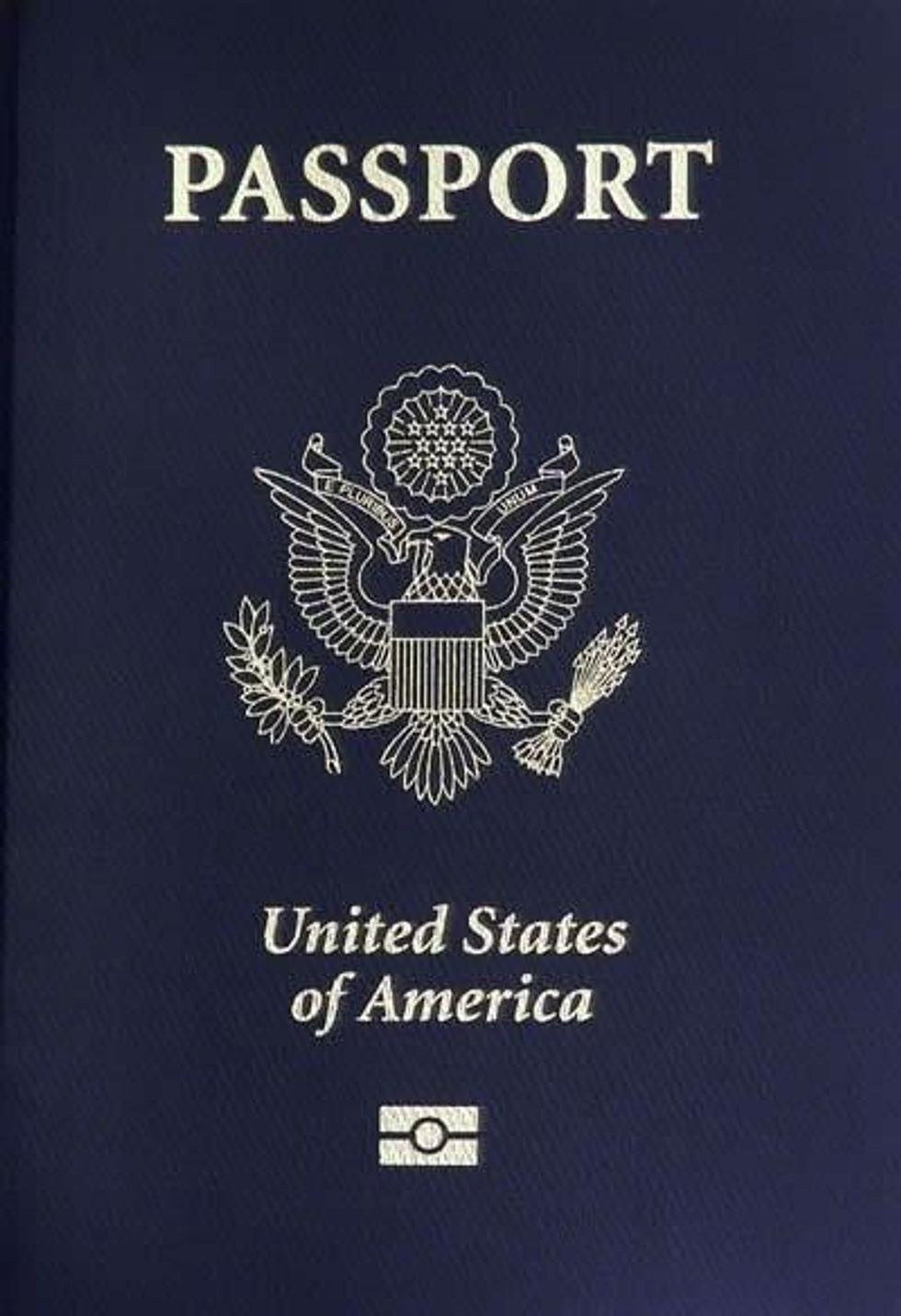
Cancellation of the passport wasn't just an effort to prevent the whistleblower from getting to a country that might grant political asylum. It was also a declaration that the U.S. government can nullify the right to travel just as surely as it can nullify the right to privacy.
"Although I am convicted of nothing," Snowden said in a July 1 statement after a week at a Moscow airport terminal, the U.S. government "has unilaterally revoked my passport, leaving me a stateless person. Without any judicial order, the administration now seeks to stop me exercising a basic right. A right that belongs to everybody. The right to seek asylum."
Since 1948, the Universal Declaration of Human Rights has affirmed with clarity: "Everyone has the right to seek and to enjoy in other countries asylum from persecution." The only other words of Article 14 specify an exception that clearly doesn't apply to Snowden: "This right may not be invoked in the case of prosecutions genuinely arising from non-political crimes or from acts contrary to the purposes and principles of the United Nations."
The extent of the U.S. government's scorn for this principle can be gauged by the lengths it has gone to prevent Snowden from gaining political asylum. It was a measure of desperation -- and contempt for international law -- that Washington got allied governments of France, Spain, Portugal and Italy to deny airspace to the plane of Bolivian President Evo Morales in early July, forcing the aircraft to land for a search on the chance that it was carrying Snowden from Moscow to political asylum in Bolivia.
Although Snowden was able to stay in Russia, revocation of his U.S. passport has been a crucial weapon to prevent him from crossing an international border for any reason other than to come home to prison in the United States.
Just as the decision to revoke Snowden's passport was entirely political, any remedy will be political. The law has nothing to do with it, other than giving the Secretary of State the power to revoke his passport.
Unfortunately, that option was established in the case of Philip Agee, the CIA agent who revealed wrongdoing and became a CIA foe. He lost a legal fight to regain his revoked passport when the U.S. Supreme Court ruled against him in 1981.
Thurgood Marshall was one of the dissenting justices in that 7-2 decision on Haig v. Agee. The other was William Brennan, who wrote that "just as the Constitution protects both popular and unpopular speech, it likewise protects both popular and unpopular travelers."
Justice Brennan added: "And it is important to remember that this decision applies not only to Philip Agee, whose activities could be perceived as harming the national security, but also to other citizens who may merely disagree with Government foreign policy and express their views."
Clearly winning the right to travel for "both popular and unpopular travelers" is a political battle ahead. A step in that direction has begun with an online petition telling Secretary of State John Kerry to restore Snowden's passport. Thousands of signers have posted cogent -- and often eloquent -- personal comments alongside their names.
"I urge you to immediately reinstate the passport of Edward Snowden, a U.S. whistleblower who has educated the public about threats to our privacy and precious constitutional rights," the petition says. "Due process is fundamental to democracy. Your revocation of Mr. Snowden's passport contradicts the words of many U.S. leaders who have often criticized other governments for violating the principle of freedom to travel." (The petition, launched by RootsAction.org, has gained more than 25,000 signers since mid-October.)
Whether sending missiles across borders or using the latest digital technology to spy on vast numbers of people, the U.S. government relies on military violence and chronic secrecy in an ongoing quest to exert control over as much of the world as possible. The agenda reeks of impunity and arrogant power. Revoking Edward Snowden's passport is in sync with that agenda. We should challenge it.
When the State Department revoked Edward Snowden's passport four months ago, the move was a reprisal from a surveillance-and-warfare state that operates largely in the shadows. Top officials in Washington were furious. Snowden had suddenly exposed what couldn't stand the light of day, blowing the cover of the world's Biggest Brother.
Cancellation of the passport wasn't just an effort to prevent the whistleblower from getting to a country that might grant political asylum. It was also a declaration that the U.S. government can nullify the right to travel just as surely as it can nullify the right to privacy.
"Although I am convicted of nothing," Snowden said in a July 1 statement after a week at a Moscow airport terminal, the U.S. government "has unilaterally revoked my passport, leaving me a stateless person. Without any judicial order, the administration now seeks to stop me exercising a basic right. A right that belongs to everybody. The right to seek asylum."
Since 1948, the Universal Declaration of Human Rights has affirmed with clarity: "Everyone has the right to seek and to enjoy in other countries asylum from persecution." The only other words of Article 14 specify an exception that clearly doesn't apply to Snowden: "This right may not be invoked in the case of prosecutions genuinely arising from non-political crimes or from acts contrary to the purposes and principles of the United Nations."
The extent of the U.S. government's scorn for this principle can be gauged by the lengths it has gone to prevent Snowden from gaining political asylum. It was a measure of desperation -- and contempt for international law -- that Washington got allied governments of France, Spain, Portugal and Italy to deny airspace to the plane of Bolivian President Evo Morales in early July, forcing the aircraft to land for a search on the chance that it was carrying Snowden from Moscow to political asylum in Bolivia.
Although Snowden was able to stay in Russia, revocation of his U.S. passport has been a crucial weapon to prevent him from crossing an international border for any reason other than to come home to prison in the United States.
Just as the decision to revoke Snowden's passport was entirely political, any remedy will be political. The law has nothing to do with it, other than giving the Secretary of State the power to revoke his passport.
Unfortunately, that option was established in the case of Philip Agee, the CIA agent who revealed wrongdoing and became a CIA foe. He lost a legal fight to regain his revoked passport when the U.S. Supreme Court ruled against him in 1981.
Thurgood Marshall was one of the dissenting justices in that 7-2 decision on Haig v. Agee. The other was William Brennan, who wrote that "just as the Constitution protects both popular and unpopular speech, it likewise protects both popular and unpopular travelers."
Justice Brennan added: "And it is important to remember that this decision applies not only to Philip Agee, whose activities could be perceived as harming the national security, but also to other citizens who may merely disagree with Government foreign policy and express their views."
Clearly winning the right to travel for "both popular and unpopular travelers" is a political battle ahead. A step in that direction has begun with an online petition telling Secretary of State John Kerry to restore Snowden's passport. Thousands of signers have posted cogent -- and often eloquent -- personal comments alongside their names.
"I urge you to immediately reinstate the passport of Edward Snowden, a U.S. whistleblower who has educated the public about threats to our privacy and precious constitutional rights," the petition says. "Due process is fundamental to democracy. Your revocation of Mr. Snowden's passport contradicts the words of many U.S. leaders who have often criticized other governments for violating the principle of freedom to travel." (The petition, launched by RootsAction.org, has gained more than 25,000 signers since mid-October.)
Whether sending missiles across borders or using the latest digital technology to spy on vast numbers of people, the U.S. government relies on military violence and chronic secrecy in an ongoing quest to exert control over as much of the world as possible. The agenda reeks of impunity and arrogant power. Revoking Edward Snowden's passport is in sync with that agenda. We should challenge it.
When the State Department revoked Edward Snowden's passport four months ago, the move was a reprisal from a surveillance-and-warfare state that operates largely in the shadows. Top officials in Washington were furious. Snowden had suddenly exposed what couldn't stand the light of day, blowing the cover of the world's Biggest Brother.
Cancellation of the passport wasn't just an effort to prevent the whistleblower from getting to a country that might grant political asylum. It was also a declaration that the U.S. government can nullify the right to travel just as surely as it can nullify the right to privacy.
"Although I am convicted of nothing," Snowden said in a July 1 statement after a week at a Moscow airport terminal, the U.S. government "has unilaterally revoked my passport, leaving me a stateless person. Without any judicial order, the administration now seeks to stop me exercising a basic right. A right that belongs to everybody. The right to seek asylum."
Since 1948, the Universal Declaration of Human Rights has affirmed with clarity: "Everyone has the right to seek and to enjoy in other countries asylum from persecution." The only other words of Article 14 specify an exception that clearly doesn't apply to Snowden: "This right may not be invoked in the case of prosecutions genuinely arising from non-political crimes or from acts contrary to the purposes and principles of the United Nations."
The extent of the U.S. government's scorn for this principle can be gauged by the lengths it has gone to prevent Snowden from gaining political asylum. It was a measure of desperation -- and contempt for international law -- that Washington got allied governments of France, Spain, Portugal and Italy to deny airspace to the plane of Bolivian President Evo Morales in early July, forcing the aircraft to land for a search on the chance that it was carrying Snowden from Moscow to political asylum in Bolivia.
Although Snowden was able to stay in Russia, revocation of his U.S. passport has been a crucial weapon to prevent him from crossing an international border for any reason other than to come home to prison in the United States.
Just as the decision to revoke Snowden's passport was entirely political, any remedy will be political. The law has nothing to do with it, other than giving the Secretary of State the power to revoke his passport.
Unfortunately, that option was established in the case of Philip Agee, the CIA agent who revealed wrongdoing and became a CIA foe. He lost a legal fight to regain his revoked passport when the U.S. Supreme Court ruled against him in 1981.
Thurgood Marshall was one of the dissenting justices in that 7-2 decision on Haig v. Agee. The other was William Brennan, who wrote that "just as the Constitution protects both popular and unpopular speech, it likewise protects both popular and unpopular travelers."
Justice Brennan added: "And it is important to remember that this decision applies not only to Philip Agee, whose activities could be perceived as harming the national security, but also to other citizens who may merely disagree with Government foreign policy and express their views."
Clearly winning the right to travel for "both popular and unpopular travelers" is a political battle ahead. A step in that direction has begun with an online petition telling Secretary of State John Kerry to restore Snowden's passport. Thousands of signers have posted cogent -- and often eloquent -- personal comments alongside their names.
"I urge you to immediately reinstate the passport of Edward Snowden, a U.S. whistleblower who has educated the public about threats to our privacy and precious constitutional rights," the petition says. "Due process is fundamental to democracy. Your revocation of Mr. Snowden's passport contradicts the words of many U.S. leaders who have often criticized other governments for violating the principle of freedom to travel." (The petition, launched by RootsAction.org, has gained more than 25,000 signers since mid-October.)
Whether sending missiles across borders or using the latest digital technology to spy on vast numbers of people, the U.S. government relies on military violence and chronic secrecy in an ongoing quest to exert control over as much of the world as possible. The agenda reeks of impunity and arrogant power. Revoking Edward Snowden's passport is in sync with that agenda. We should challenge it.