SUBSCRIBE TO OUR FREE NEWSLETTER
Daily news & progressive opinion—funded by the people, not the corporations—delivered straight to your inbox.
5
#000000
#FFFFFF
To donate by check, phone, or other method, see our More Ways to Give page.
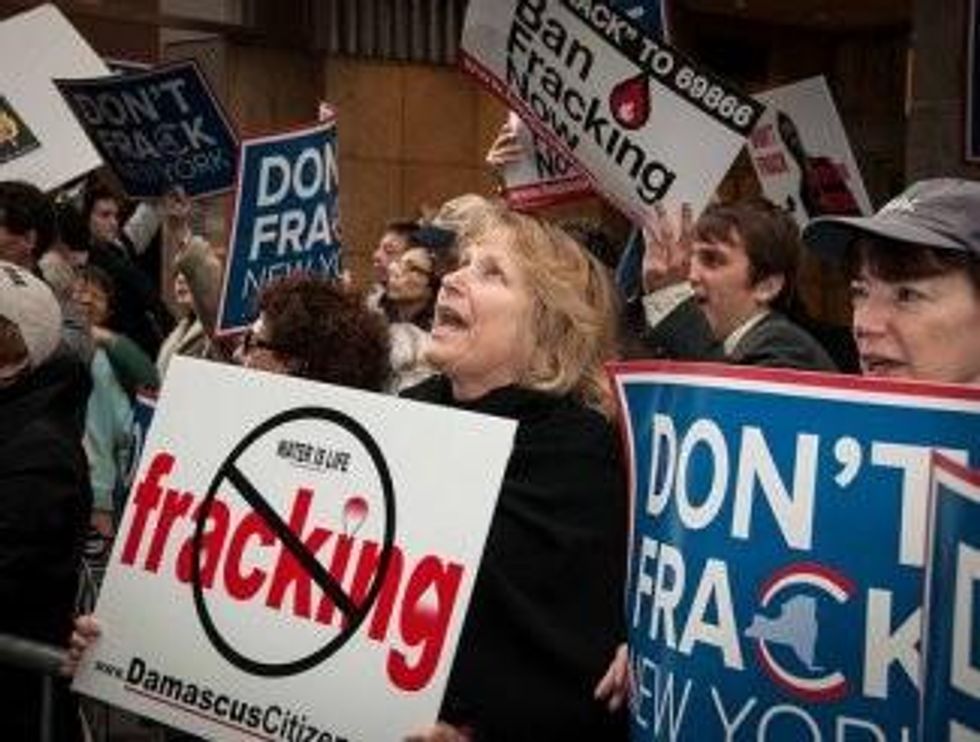
This Saturday, thousands of people around the world will take action to ban fracking in their communities as part of Global Frackdown 2, the second international day of action to ban fracking. More than 200 actions will be taking place in more than 20 countries spanning six continents, all calling for a ban on fracking. From Australia to India, France to Argentina, South Africa to Canada, and all across the United States, people will be taking action in their communities -- demanding that their elected representatives protect their communities and our planet from fracking and associated activities and work to move towards a clean energy future. Will you join us?
1. Mounting scientific evidence shows that drilling and fracking causes water pollution.
Every month, we see new evidence of the damage that drilling and fracking does to our essential water resources. Just this month, a peer reviewed study out of Duke University found elevated levels of radioactivity, salts and metals in river water and sediments at a site where wastewater from oil and gas operations was treated and discharged into a creek in western Pennsylvania. The researchers warned that this inadequate treatment could leave a long-term legacy of radioactivity in our waterways.
This comes just a few months after whistleblowers within the regional Environmental Protection Agency (EPA) office in Pennsylvania released a presentation to the Los Angeles Times that indicated EPA scientists believed that gas drilling and fracking was likely involved in the contamination of drinking water in Dimock, Pa. This follows similar evidence -- ignored by the EPA -- in Parker County, Texas and Pavilion, Wyo. Pressure is mounting on the EPA and Obama administration to reopen those investigations and this will be a major focus of Power Shift and some Global Frackdown actions.
2. Climate change is real and fracking causes climate change.
Drilling and fracking for oil and gas is contributing to global warming. In addition to the carbon dioxide released from burning natural gas and oil, the potent greenhouse gas methane leaks from drilling and fracking operations. Just last month, a new report from the International Panel on Climate Change (IPCC) stated unequivocally that methane is significantly worse for the climate than stated in its 2005 report. This report gives us even greater cause for concern about the rapid expansion of drilling and fracking for gas and its ability to contribute to climate change.
Building out the network of pipelines and infrastructure necessary to expand the use of fracked gas in the United States and export it overseas will lock in decades of dependence on dirty fossil fuels at a time when climate scientists are unequivocally stating we must keep fossil fuels in the ground. On October 19, we need to unite to call for a stop to this madness and a dedicated transition to a renewable energy system.
3. The oil and gas industry will be paying attention.
Last year, the oil and gas industry commissioned a white paper called, "The Global Anti-Fracking Movement: What it Wants, How it Operates and What's Next," conducted by a risk management firm to give the industry advice on how to respond to the effective movement to stop fracking, citing the Global Frackdown as one of many events that fostered global networking and collaboration for a ban. The report mentioned "outright bans constitute the most significant political risk to the industry." This year's Global Frackdown is even more powerful with over 340 partner organizations and even stronger and more powerful actions.
Oil and gas industry, take notice -- our movement is growing and won't be stopped.
4. Polls show Americans increasingly oppose fracking and we must not stop now.
The more people learn the truth about fracking, the more they oppose it. A national Pew Policy Center Poll released in September found that 49 percent of Americans oppose the increased use of fracking, while only 44 percent support it. The opposition grew by 11 percentage points just since March of this year, when only 38 percent of Americans opposed increased fracking. State polls in New York, California and Pennsylvania follow this trend. Organizing in communities across the United States and big mobilizations like the Global Frackdown are making a difference -- people are ready for real renewable energy solutions and do not want to saddle their communities and the planet with the dangers of fracking.
5. When we organize, we can win.
From six communities banning fracking in Argentina to moratoria on fracking in Netherlands and the Czech Republic, to continuing to keep New York free from fracking, to passing local measures against fracking in 395 communities across the United States, communities are fighting back... and we're winning.
Just last week, the highest court in France upheld the French Parliament's national ban on fracking and the European Union voted to approve requiring in-depth environmental audits before allowing drilling and fracking in shale in the European Union. The industry is strongly opposed to the bill.
This summer, more than one million petitions were delivered to the Obama Administration asking them to protect federal lands from drilling and fracking, with over 650,000 calling for a ban. This large outpouring of support for a ban shows how far our movement has come and puts us in a tremendous position to ramp up pressure on the administration to reverse its pro-fracking agenda.
So this Saturday, join the growing movement to ban fracking! Find an event near you and encourage your friends and family to join you. We must act now to protect our planet for future generations.
This Saturday, thousands of people around the world will take action to ban fracking in their communities as part of Global Frackdown 2, the second international day of action to ban fracking. More than 200 actions will be taking place in more than 20 countries spanning six continents, all calling for a ban on fracking. From Australia to India, France to Argentina, South Africa to Canada, and all across the United States, people will be taking action in their communities -- demanding that their elected representatives protect their communities and our planet from fracking and associated activities and work to move towards a clean energy future. Will you join us?
1. Mounting scientific evidence shows that drilling and fracking causes water pollution.
Every month, we see new evidence of the damage that drilling and fracking does to our essential water resources. Just this month, a peer reviewed study out of Duke University found elevated levels of radioactivity, salts and metals in river water and sediments at a site where wastewater from oil and gas operations was treated and discharged into a creek in western Pennsylvania. The researchers warned that this inadequate treatment could leave a long-term legacy of radioactivity in our waterways.
This comes just a few months after whistleblowers within the regional Environmental Protection Agency (EPA) office in Pennsylvania released a presentation to the Los Angeles Times that indicated EPA scientists believed that gas drilling and fracking was likely involved in the contamination of drinking water in Dimock, Pa. This follows similar evidence -- ignored by the EPA -- in Parker County, Texas and Pavilion, Wyo. Pressure is mounting on the EPA and Obama administration to reopen those investigations and this will be a major focus of Power Shift and some Global Frackdown actions.
2. Climate change is real and fracking causes climate change.
Drilling and fracking for oil and gas is contributing to global warming. In addition to the carbon dioxide released from burning natural gas and oil, the potent greenhouse gas methane leaks from drilling and fracking operations. Just last month, a new report from the International Panel on Climate Change (IPCC) stated unequivocally that methane is significantly worse for the climate than stated in its 2005 report. This report gives us even greater cause for concern about the rapid expansion of drilling and fracking for gas and its ability to contribute to climate change.
Building out the network of pipelines and infrastructure necessary to expand the use of fracked gas in the United States and export it overseas will lock in decades of dependence on dirty fossil fuels at a time when climate scientists are unequivocally stating we must keep fossil fuels in the ground. On October 19, we need to unite to call for a stop to this madness and a dedicated transition to a renewable energy system.
3. The oil and gas industry will be paying attention.
Last year, the oil and gas industry commissioned a white paper called, "The Global Anti-Fracking Movement: What it Wants, How it Operates and What's Next," conducted by a risk management firm to give the industry advice on how to respond to the effective movement to stop fracking, citing the Global Frackdown as one of many events that fostered global networking and collaboration for a ban. The report mentioned "outright bans constitute the most significant political risk to the industry." This year's Global Frackdown is even more powerful with over 340 partner organizations and even stronger and more powerful actions.
Oil and gas industry, take notice -- our movement is growing and won't be stopped.
4. Polls show Americans increasingly oppose fracking and we must not stop now.
The more people learn the truth about fracking, the more they oppose it. A national Pew Policy Center Poll released in September found that 49 percent of Americans oppose the increased use of fracking, while only 44 percent support it. The opposition grew by 11 percentage points just since March of this year, when only 38 percent of Americans opposed increased fracking. State polls in New York, California and Pennsylvania follow this trend. Organizing in communities across the United States and big mobilizations like the Global Frackdown are making a difference -- people are ready for real renewable energy solutions and do not want to saddle their communities and the planet with the dangers of fracking.
5. When we organize, we can win.
From six communities banning fracking in Argentina to moratoria on fracking in Netherlands and the Czech Republic, to continuing to keep New York free from fracking, to passing local measures against fracking in 395 communities across the United States, communities are fighting back... and we're winning.
Just last week, the highest court in France upheld the French Parliament's national ban on fracking and the European Union voted to approve requiring in-depth environmental audits before allowing drilling and fracking in shale in the European Union. The industry is strongly opposed to the bill.
This summer, more than one million petitions were delivered to the Obama Administration asking them to protect federal lands from drilling and fracking, with over 650,000 calling for a ban. This large outpouring of support for a ban shows how far our movement has come and puts us in a tremendous position to ramp up pressure on the administration to reverse its pro-fracking agenda.
So this Saturday, join the growing movement to ban fracking! Find an event near you and encourage your friends and family to join you. We must act now to protect our planet for future generations.
This Saturday, thousands of people around the world will take action to ban fracking in their communities as part of Global Frackdown 2, the second international day of action to ban fracking. More than 200 actions will be taking place in more than 20 countries spanning six continents, all calling for a ban on fracking. From Australia to India, France to Argentina, South Africa to Canada, and all across the United States, people will be taking action in their communities -- demanding that their elected representatives protect their communities and our planet from fracking and associated activities and work to move towards a clean energy future. Will you join us?
1. Mounting scientific evidence shows that drilling and fracking causes water pollution.
Every month, we see new evidence of the damage that drilling and fracking does to our essential water resources. Just this month, a peer reviewed study out of Duke University found elevated levels of radioactivity, salts and metals in river water and sediments at a site where wastewater from oil and gas operations was treated and discharged into a creek in western Pennsylvania. The researchers warned that this inadequate treatment could leave a long-term legacy of radioactivity in our waterways.
This comes just a few months after whistleblowers within the regional Environmental Protection Agency (EPA) office in Pennsylvania released a presentation to the Los Angeles Times that indicated EPA scientists believed that gas drilling and fracking was likely involved in the contamination of drinking water in Dimock, Pa. This follows similar evidence -- ignored by the EPA -- in Parker County, Texas and Pavilion, Wyo. Pressure is mounting on the EPA and Obama administration to reopen those investigations and this will be a major focus of Power Shift and some Global Frackdown actions.
2. Climate change is real and fracking causes climate change.
Drilling and fracking for oil and gas is contributing to global warming. In addition to the carbon dioxide released from burning natural gas and oil, the potent greenhouse gas methane leaks from drilling and fracking operations. Just last month, a new report from the International Panel on Climate Change (IPCC) stated unequivocally that methane is significantly worse for the climate than stated in its 2005 report. This report gives us even greater cause for concern about the rapid expansion of drilling and fracking for gas and its ability to contribute to climate change.
Building out the network of pipelines and infrastructure necessary to expand the use of fracked gas in the United States and export it overseas will lock in decades of dependence on dirty fossil fuels at a time when climate scientists are unequivocally stating we must keep fossil fuels in the ground. On October 19, we need to unite to call for a stop to this madness and a dedicated transition to a renewable energy system.
3. The oil and gas industry will be paying attention.
Last year, the oil and gas industry commissioned a white paper called, "The Global Anti-Fracking Movement: What it Wants, How it Operates and What's Next," conducted by a risk management firm to give the industry advice on how to respond to the effective movement to stop fracking, citing the Global Frackdown as one of many events that fostered global networking and collaboration for a ban. The report mentioned "outright bans constitute the most significant political risk to the industry." This year's Global Frackdown is even more powerful with over 340 partner organizations and even stronger and more powerful actions.
Oil and gas industry, take notice -- our movement is growing and won't be stopped.
4. Polls show Americans increasingly oppose fracking and we must not stop now.
The more people learn the truth about fracking, the more they oppose it. A national Pew Policy Center Poll released in September found that 49 percent of Americans oppose the increased use of fracking, while only 44 percent support it. The opposition grew by 11 percentage points just since March of this year, when only 38 percent of Americans opposed increased fracking. State polls in New York, California and Pennsylvania follow this trend. Organizing in communities across the United States and big mobilizations like the Global Frackdown are making a difference -- people are ready for real renewable energy solutions and do not want to saddle their communities and the planet with the dangers of fracking.
5. When we organize, we can win.
From six communities banning fracking in Argentina to moratoria on fracking in Netherlands and the Czech Republic, to continuing to keep New York free from fracking, to passing local measures against fracking in 395 communities across the United States, communities are fighting back... and we're winning.
Just last week, the highest court in France upheld the French Parliament's national ban on fracking and the European Union voted to approve requiring in-depth environmental audits before allowing drilling and fracking in shale in the European Union. The industry is strongly opposed to the bill.
This summer, more than one million petitions were delivered to the Obama Administration asking them to protect federal lands from drilling and fracking, with over 650,000 calling for a ban. This large outpouring of support for a ban shows how far our movement has come and puts us in a tremendous position to ramp up pressure on the administration to reverse its pro-fracking agenda.
So this Saturday, join the growing movement to ban fracking! Find an event near you and encourage your friends and family to join you. We must act now to protect our planet for future generations.