

SUBSCRIBE TO OUR FREE NEWSLETTER
Daily news & progressive opinion—funded by the people, not the corporations—delivered straight to your inbox.
5
#000000
#FFFFFF
To donate by check, phone, or other method, see our More Ways to Give page.
Tom Van Riper, who covers sports for Forbes magazine, points out that of the 31 owners of NFL teams, seventeen -- more than half -- are billionaires. Many boast of being self-made, in the image of Horatio Alger, but are now ensconced in luxury skyboxes far above the proletarians whose own dreams of glory ride vicariously on the grunts and groans of bulky but agile gladiators only one play away from a career-ending collision with the laws of physics.
For more than a year, public television's award-winning investigative journalism series FRONTLINE had been collaborating on a new documentary about brain trauma in pro football with journalists from ESPN, the giant sports network. The title: "League of Denial: The NFL's Concussion Crisis."
A hard-hitting promo for the investigation upset ESPN President John Skipper. "Over the top" was his description -- too "sensational." He was so "startled" -- his word -- that he pulled the plug on ESPN's partnership with FRONTLINE. The network has had a reputation for solid, even bold reporting of controversy and scandal in pro and amateur athletics. Not this time.
You have to ask, what was the actual reason for ESPN's decision? Could it really be what John Skipper claims? Or is it that NFL games are, as The New York Times recently wrote, "probably the most valuable commodity in televised sports." ESPN is paying $15.2 billion -- billion! -- for the rights to telecast "Monday Night Football" for 10 years through the year 2021, but it then reaps a fortune in advertising and subscriber fees. The monthly price to watch ESPN is four times higher than the next most expensive national cable network. More than $6 billion are hauled in from cable every year. It's the cash cow for the entire Disney empire. In an interview with the Times, former Disney CEO Michael Eisner said, "To this day, the Walt Disney Company would not exist without ESPN. The protection of Mickey Mouse is ESPN."
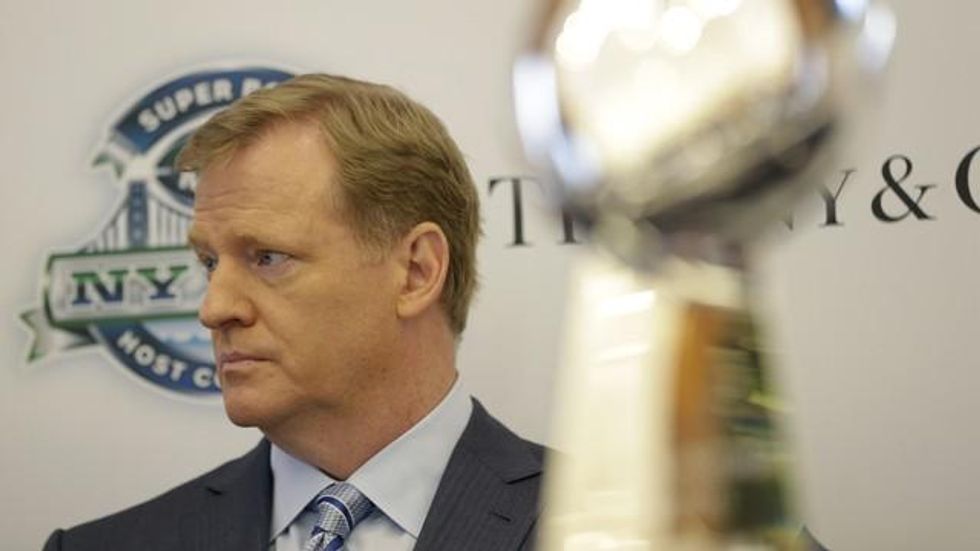
Shortly before his decision, John Skipper had lunch with NFL Commissioner Roger Goodell and two others in New York City. Sources told the Times, "The meeting was combative... with league officials conveying their irritation with the direction of the documentary." Skipper also admitted to ESPN's independent ombudsman Robert Lipsyte that he had spoken with Disney chairman and CEO Bob Iger. But he insists that the choice to remove ESPN from the FRONTLINE investigation was his own.
Whether coincidence or not, just after ESPN's decision to disassociate itself from FRONTLINE, the NFL settled a class-action suit brought by thousands of retired players and their families seeking damages from injuries linked to concussions. To the casual fan, it was a win for the players -- a sum of $765 million. But even if they finally have to cough up, the owners will feel no pain. That's just a fraction of the estimated $10 billion the league generates in revenue every year. The typical payout per plaintiff will amount to around $150,000 -- not nearly enough to cover a lifetime of lost wages and medical bills faced by the victims of serious brain trauma.
These players and their families haven't won much. It isn't even a tie. "Pitiless" was the description of the settlement by The Nation magazine's sportswriter Dave Zirin. And as another formidable sleuth of journalism, David Cay Johnston, recently asked in the Columbia Journalism Review, "If the settlement does not cover all the costs of medical care, much less lost future wages, who will bear that burden?"
His answer: taxpayers.
When players are no longer insured by the league and find themselves unable to afford private insurance for their enduring afflictions, taxpayers -- all of us -- will be the ones to pay, through Medicaid and Social Security disability.
We won't even be allowed to see the NFL's own extensive research into the neurological damage caused by concussions; the settlement allows the League and the owners to keep it under lock and key.
Football, like politics, "ain't beanbag." The fortunes of players can vanish in a single blow, while high in their plush digs, owners reap continuing gains from TV and advertising and the tax breaks and subsidies showered on them by compliant politicians. Big-time sports mirror the vast inequality that has come to define America in this century.
Something else to remember as we relax in our favorite easy chair, dazzled and thrilled by men who can be hurt for life. If their world were just, they would not be so matter-of-factly tossed aside, we might think twice about how we want to be entertained, and the owners of capital would be amply penalized for unsportsmanlike conduct.
Fortunately, we can still see "League of Denial" on FRONTLINE beginning October 8. Unfortunately, the title won't be just a metaphor.
Tom Van Riper, who covers sports for Forbes magazine, points out that of the 31 owners of NFL teams, seventeen -- more than half -- are billionaires. Many boast of being self-made, in the image of Horatio Alger, but are now ensconced in luxury skyboxes far above the proletarians whose own dreams of glory ride vicariously on the grunts and groans of bulky but agile gladiators only one play away from a career-ending collision with the laws of physics.
For more than a year, public television's award-winning investigative journalism series FRONTLINE had been collaborating on a new documentary about brain trauma in pro football with journalists from ESPN, the giant sports network. The title: "League of Denial: The NFL's Concussion Crisis."
A hard-hitting promo for the investigation upset ESPN President John Skipper. "Over the top" was his description -- too "sensational." He was so "startled" -- his word -- that he pulled the plug on ESPN's partnership with FRONTLINE. The network has had a reputation for solid, even bold reporting of controversy and scandal in pro and amateur athletics. Not this time.
You have to ask, what was the actual reason for ESPN's decision? Could it really be what John Skipper claims? Or is it that NFL games are, as The New York Times recently wrote, "probably the most valuable commodity in televised sports." ESPN is paying $15.2 billion -- billion! -- for the rights to telecast "Monday Night Football" for 10 years through the year 2021, but it then reaps a fortune in advertising and subscriber fees. The monthly price to watch ESPN is four times higher than the next most expensive national cable network. More than $6 billion are hauled in from cable every year. It's the cash cow for the entire Disney empire. In an interview with the Times, former Disney CEO Michael Eisner said, "To this day, the Walt Disney Company would not exist without ESPN. The protection of Mickey Mouse is ESPN."
Shortly before his decision, John Skipper had lunch with NFL Commissioner Roger Goodell and two others in New York City. Sources told the Times, "The meeting was combative... with league officials conveying their irritation with the direction of the documentary." Skipper also admitted to ESPN's independent ombudsman Robert Lipsyte that he had spoken with Disney chairman and CEO Bob Iger. But he insists that the choice to remove ESPN from the FRONTLINE investigation was his own.
Whether coincidence or not, just after ESPN's decision to disassociate itself from FRONTLINE, the NFL settled a class-action suit brought by thousands of retired players and their families seeking damages from injuries linked to concussions. To the casual fan, it was a win for the players -- a sum of $765 million. But even if they finally have to cough up, the owners will feel no pain. That's just a fraction of the estimated $10 billion the league generates in revenue every year. The typical payout per plaintiff will amount to around $150,000 -- not nearly enough to cover a lifetime of lost wages and medical bills faced by the victims of serious brain trauma.
These players and their families haven't won much. It isn't even a tie. "Pitiless" was the description of the settlement by The Nation magazine's sportswriter Dave Zirin. And as another formidable sleuth of journalism, David Cay Johnston, recently asked in the Columbia Journalism Review, "If the settlement does not cover all the costs of medical care, much less lost future wages, who will bear that burden?"
His answer: taxpayers.
When players are no longer insured by the league and find themselves unable to afford private insurance for their enduring afflictions, taxpayers -- all of us -- will be the ones to pay, through Medicaid and Social Security disability.
We won't even be allowed to see the NFL's own extensive research into the neurological damage caused by concussions; the settlement allows the League and the owners to keep it under lock and key.
Football, like politics, "ain't beanbag." The fortunes of players can vanish in a single blow, while high in their plush digs, owners reap continuing gains from TV and advertising and the tax breaks and subsidies showered on them by compliant politicians. Big-time sports mirror the vast inequality that has come to define America in this century.
Something else to remember as we relax in our favorite easy chair, dazzled and thrilled by men who can be hurt for life. If their world were just, they would not be so matter-of-factly tossed aside, we might think twice about how we want to be entertained, and the owners of capital would be amply penalized for unsportsmanlike conduct.
Fortunately, we can still see "League of Denial" on FRONTLINE beginning October 8. Unfortunately, the title won't be just a metaphor.
Tom Van Riper, who covers sports for Forbes magazine, points out that of the 31 owners of NFL teams, seventeen -- more than half -- are billionaires. Many boast of being self-made, in the image of Horatio Alger, but are now ensconced in luxury skyboxes far above the proletarians whose own dreams of glory ride vicariously on the grunts and groans of bulky but agile gladiators only one play away from a career-ending collision with the laws of physics.
For more than a year, public television's award-winning investigative journalism series FRONTLINE had been collaborating on a new documentary about brain trauma in pro football with journalists from ESPN, the giant sports network. The title: "League of Denial: The NFL's Concussion Crisis."
A hard-hitting promo for the investigation upset ESPN President John Skipper. "Over the top" was his description -- too "sensational." He was so "startled" -- his word -- that he pulled the plug on ESPN's partnership with FRONTLINE. The network has had a reputation for solid, even bold reporting of controversy and scandal in pro and amateur athletics. Not this time.
You have to ask, what was the actual reason for ESPN's decision? Could it really be what John Skipper claims? Or is it that NFL games are, as The New York Times recently wrote, "probably the most valuable commodity in televised sports." ESPN is paying $15.2 billion -- billion! -- for the rights to telecast "Monday Night Football" for 10 years through the year 2021, but it then reaps a fortune in advertising and subscriber fees. The monthly price to watch ESPN is four times higher than the next most expensive national cable network. More than $6 billion are hauled in from cable every year. It's the cash cow for the entire Disney empire. In an interview with the Times, former Disney CEO Michael Eisner said, "To this day, the Walt Disney Company would not exist without ESPN. The protection of Mickey Mouse is ESPN."
Shortly before his decision, John Skipper had lunch with NFL Commissioner Roger Goodell and two others in New York City. Sources told the Times, "The meeting was combative... with league officials conveying their irritation with the direction of the documentary." Skipper also admitted to ESPN's independent ombudsman Robert Lipsyte that he had spoken with Disney chairman and CEO Bob Iger. But he insists that the choice to remove ESPN from the FRONTLINE investigation was his own.
Whether coincidence or not, just after ESPN's decision to disassociate itself from FRONTLINE, the NFL settled a class-action suit brought by thousands of retired players and their families seeking damages from injuries linked to concussions. To the casual fan, it was a win for the players -- a sum of $765 million. But even if they finally have to cough up, the owners will feel no pain. That's just a fraction of the estimated $10 billion the league generates in revenue every year. The typical payout per plaintiff will amount to around $150,000 -- not nearly enough to cover a lifetime of lost wages and medical bills faced by the victims of serious brain trauma.
These players and their families haven't won much. It isn't even a tie. "Pitiless" was the description of the settlement by The Nation magazine's sportswriter Dave Zirin. And as another formidable sleuth of journalism, David Cay Johnston, recently asked in the Columbia Journalism Review, "If the settlement does not cover all the costs of medical care, much less lost future wages, who will bear that burden?"
His answer: taxpayers.
When players are no longer insured by the league and find themselves unable to afford private insurance for their enduring afflictions, taxpayers -- all of us -- will be the ones to pay, through Medicaid and Social Security disability.
We won't even be allowed to see the NFL's own extensive research into the neurological damage caused by concussions; the settlement allows the League and the owners to keep it under lock and key.
Football, like politics, "ain't beanbag." The fortunes of players can vanish in a single blow, while high in their plush digs, owners reap continuing gains from TV and advertising and the tax breaks and subsidies showered on them by compliant politicians. Big-time sports mirror the vast inequality that has come to define America in this century.
Something else to remember as we relax in our favorite easy chair, dazzled and thrilled by men who can be hurt for life. If their world were just, they would not be so matter-of-factly tossed aside, we might think twice about how we want to be entertained, and the owners of capital would be amply penalized for unsportsmanlike conduct.
Fortunately, we can still see "League of Denial" on FRONTLINE beginning October 8. Unfortunately, the title won't be just a metaphor.

