SUBSCRIBE TO OUR FREE NEWSLETTER
Daily news & progressive opinion—funded by the people, not the corporations—delivered straight to your inbox.
5
#000000
#FFFFFF
To donate by check, phone, or other method, see our More Ways to Give page.
In Argentina, Guatemala, Peru and other countries in the region, former dictators and many of those responsible for egregious human rights violations under former authoritarian regimes have been, or are in the process of being tried for their crimes. In Haiti, for the first time, there appears to be genuine hope that Haiti's former dictator Jean-Claude "Baby Doc" Duvalier will face human rights charges in court. But there's still a difficult road ahead and one of the main obstacles may be the U.S. government.
After Duvalier repeatedly failed to appear at appeals hearings regarding human rights charges, a Haitian judge issued an order for him to appear on February 28, meaning that Duvalier could be escorted there by authorities. If Duvalier finally does appear before the court, it will be the first time that he will be obliged to address political violence crimes that occurred during his 15-year dictatorship (1971 - 1986), which followed the 14-year dictatorship of his father Francois "Papa Doc" Duvalier (1957 - 1971).
Currently, Duvalier is facing charges of corruption that have been admitted by the Haitian courts. But on January 30, 2012, Investigative Judge Carves Jean rejected human rights charges brought against the former dictator, claiming they exceeded the statute of limitations. The hearings to which Duvalier has been summoned recently have been convened to address the appeal of the Judge's decision by victims' lawyers.
Judge Jean's ruling shocked the human rights community. Duvalier is one of the hemisphere's more notorious past dictators, infamous for brutally crushing dissent with the assistance of the dreaded "Tonton Macoute" secret police and the Haitian army during 15 years in power. During his rule, thousands were killed - many of them buried in mass graves - and thousands tortured. Hundreds of thousands more fled the country, some of them turned back by U.S. ships seeking to prevent them from reaching U.S. shores.
Amnesty International has condemned what it determined to be "stalling" by the Haitian judiciary, while the Inter-American Commission on Human Rights (IACHR) has pointed out that "torture, extrajudicial executions and forced disappearances committed during the regime of Jean-Claude Duvalier are crimes against humanity that, as such, are subject neither to a statute of limitations nor to amnesty laws."
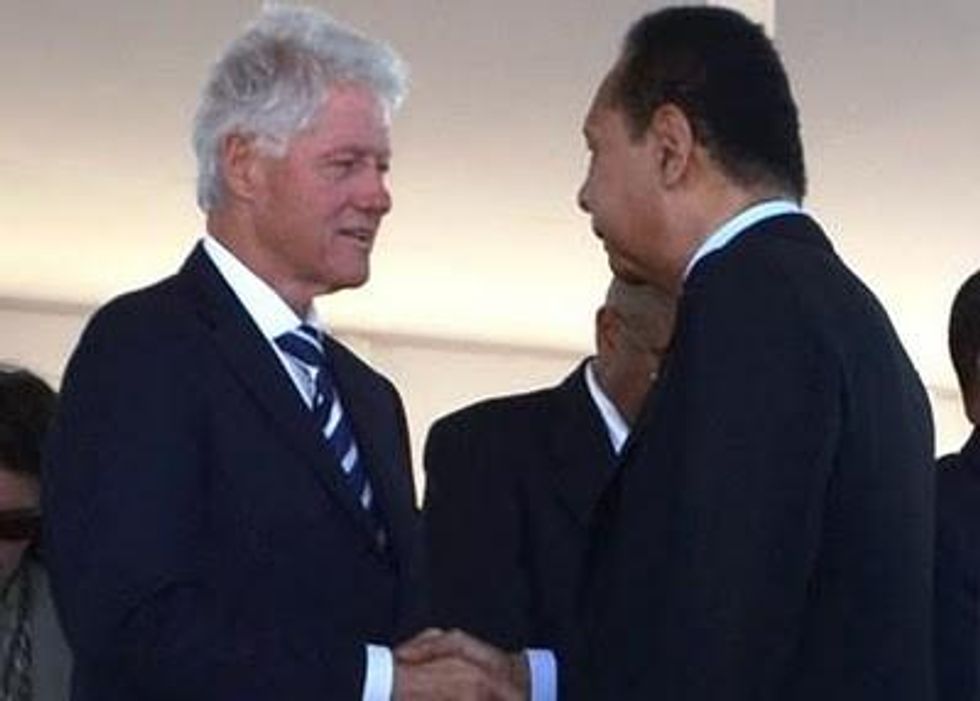
A critical external factor, many observers agree, is the U.S. government's response to the case, which has been consistently muted. Asked about Duvalier after his surprise return to Haiti in January 2011, then-Secretary of State Hillary Clinton hinted that Duvalier's past abuses were old news, and that trying him could hamper efforts to "stabilize" the country, and said that "Ultimately, a decision about what is to be done is left to the government and people of Haiti," a position that has been restated in subsequent State Department press briefings and other fora. Even more distressing, former president Bill Clinton went so far as to shake Duvalier's hand at a high-profile public event last year marking the second anniversary of the Haitian earthquake - as did Haitian President Michel Martelly.
Yet this position stands in sharp contrast to U.S. government stances regarding other fallen dictators. As Human Rights Watch described in June last year, Hillary Clinton vowed to "continue to press vigorously for expedient action by Senegal in finally holding [former Chadian dictator Hissene]Habre to account," for example, were "progress...not forthcoming on efforts to extradite or prosecute."
Even worse, the U.S. government may be obstructing justice by withholding documents that could be used as evidence against Duvalier, despite having made public similar documents about former Chilean dictator Augusto Pinochet and members of Argentina's former junta, for example, prior to judicial proceedings in those countries.
The U.S. response could signal an unwillingness to see Duvalier pay for his crimes, which might come as no surprise considering the enduring support the U.S. government showed for Duvalier during his rule, with U.S. aid to Haiti - including military training -- increasing during the 1970's and 80's. When a popular uprising finally forced Duvalier to flee in 1986, the U.S. flew him out on a military plane.
The U.S. position is also ironic considering that USAID has spent $150 million [PDF] on "governance and rule of law" programs in Haiti just since the earthquake, and helped to create the Superior Judicial Council - which has been dogged by controversy during its brief existence. Nor should Duvalier's return have caught U.S. officials off guard. A Wikileaked cable reveals that Duvalier's possible return was a concern as far back as 2006. The cable does not mention any desire by the U.S. government to see Duvalier tried, nor any mention of possible charges whatsoever.
The international community - including the United States - must stand on the side of justice and the Haitian people and demand that Duvalier be tried for human rights crimes. Were Duvalier to evade justice it would be a triumph for U.S. death squad diplomacy and for Haiti's other more infamous human rights criminals.
In Argentina, Guatemala, Peru and other countries in the region, former dictators and many of those responsible for egregious human rights violations under former authoritarian regimes have been, or are in the process of being tried for their crimes. In Haiti, for the first time, there appears to be genuine hope that Haiti's former dictator Jean-Claude "Baby Doc" Duvalier will face human rights charges in court. But there's still a difficult road ahead and one of the main obstacles may be the U.S. government.
After Duvalier repeatedly failed to appear at appeals hearings regarding human rights charges, a Haitian judge issued an order for him to appear on February 28, meaning that Duvalier could be escorted there by authorities. If Duvalier finally does appear before the court, it will be the first time that he will be obliged to address political violence crimes that occurred during his 15-year dictatorship (1971 - 1986), which followed the 14-year dictatorship of his father Francois "Papa Doc" Duvalier (1957 - 1971).
Currently, Duvalier is facing charges of corruption that have been admitted by the Haitian courts. But on January 30, 2012, Investigative Judge Carves Jean rejected human rights charges brought against the former dictator, claiming they exceeded the statute of limitations. The hearings to which Duvalier has been summoned recently have been convened to address the appeal of the Judge's decision by victims' lawyers.
Judge Jean's ruling shocked the human rights community. Duvalier is one of the hemisphere's more notorious past dictators, infamous for brutally crushing dissent with the assistance of the dreaded "Tonton Macoute" secret police and the Haitian army during 15 years in power. During his rule, thousands were killed - many of them buried in mass graves - and thousands tortured. Hundreds of thousands more fled the country, some of them turned back by U.S. ships seeking to prevent them from reaching U.S. shores.
Amnesty International has condemned what it determined to be "stalling" by the Haitian judiciary, while the Inter-American Commission on Human Rights (IACHR) has pointed out that "torture, extrajudicial executions and forced disappearances committed during the regime of Jean-Claude Duvalier are crimes against humanity that, as such, are subject neither to a statute of limitations nor to amnesty laws."
A critical external factor, many observers agree, is the U.S. government's response to the case, which has been consistently muted. Asked about Duvalier after his surprise return to Haiti in January 2011, then-Secretary of State Hillary Clinton hinted that Duvalier's past abuses were old news, and that trying him could hamper efforts to "stabilize" the country, and said that "Ultimately, a decision about what is to be done is left to the government and people of Haiti," a position that has been restated in subsequent State Department press briefings and other fora. Even more distressing, former president Bill Clinton went so far as to shake Duvalier's hand at a high-profile public event last year marking the second anniversary of the Haitian earthquake - as did Haitian President Michel Martelly.
Yet this position stands in sharp contrast to U.S. government stances regarding other fallen dictators. As Human Rights Watch described in June last year, Hillary Clinton vowed to "continue to press vigorously for expedient action by Senegal in finally holding [former Chadian dictator Hissene]Habre to account," for example, were "progress...not forthcoming on efforts to extradite or prosecute."
Even worse, the U.S. government may be obstructing justice by withholding documents that could be used as evidence against Duvalier, despite having made public similar documents about former Chilean dictator Augusto Pinochet and members of Argentina's former junta, for example, prior to judicial proceedings in those countries.
The U.S. response could signal an unwillingness to see Duvalier pay for his crimes, which might come as no surprise considering the enduring support the U.S. government showed for Duvalier during his rule, with U.S. aid to Haiti - including military training -- increasing during the 1970's and 80's. When a popular uprising finally forced Duvalier to flee in 1986, the U.S. flew him out on a military plane.
The U.S. position is also ironic considering that USAID has spent $150 million [PDF] on "governance and rule of law" programs in Haiti just since the earthquake, and helped to create the Superior Judicial Council - which has been dogged by controversy during its brief existence. Nor should Duvalier's return have caught U.S. officials off guard. A Wikileaked cable reveals that Duvalier's possible return was a concern as far back as 2006. The cable does not mention any desire by the U.S. government to see Duvalier tried, nor any mention of possible charges whatsoever.
The international community - including the United States - must stand on the side of justice and the Haitian people and demand that Duvalier be tried for human rights crimes. Were Duvalier to evade justice it would be a triumph for U.S. death squad diplomacy and for Haiti's other more infamous human rights criminals.
In Argentina, Guatemala, Peru and other countries in the region, former dictators and many of those responsible for egregious human rights violations under former authoritarian regimes have been, or are in the process of being tried for their crimes. In Haiti, for the first time, there appears to be genuine hope that Haiti's former dictator Jean-Claude "Baby Doc" Duvalier will face human rights charges in court. But there's still a difficult road ahead and one of the main obstacles may be the U.S. government.
After Duvalier repeatedly failed to appear at appeals hearings regarding human rights charges, a Haitian judge issued an order for him to appear on February 28, meaning that Duvalier could be escorted there by authorities. If Duvalier finally does appear before the court, it will be the first time that he will be obliged to address political violence crimes that occurred during his 15-year dictatorship (1971 - 1986), which followed the 14-year dictatorship of his father Francois "Papa Doc" Duvalier (1957 - 1971).
Currently, Duvalier is facing charges of corruption that have been admitted by the Haitian courts. But on January 30, 2012, Investigative Judge Carves Jean rejected human rights charges brought against the former dictator, claiming they exceeded the statute of limitations. The hearings to which Duvalier has been summoned recently have been convened to address the appeal of the Judge's decision by victims' lawyers.
Judge Jean's ruling shocked the human rights community. Duvalier is one of the hemisphere's more notorious past dictators, infamous for brutally crushing dissent with the assistance of the dreaded "Tonton Macoute" secret police and the Haitian army during 15 years in power. During his rule, thousands were killed - many of them buried in mass graves - and thousands tortured. Hundreds of thousands more fled the country, some of them turned back by U.S. ships seeking to prevent them from reaching U.S. shores.
Amnesty International has condemned what it determined to be "stalling" by the Haitian judiciary, while the Inter-American Commission on Human Rights (IACHR) has pointed out that "torture, extrajudicial executions and forced disappearances committed during the regime of Jean-Claude Duvalier are crimes against humanity that, as such, are subject neither to a statute of limitations nor to amnesty laws."
A critical external factor, many observers agree, is the U.S. government's response to the case, which has been consistently muted. Asked about Duvalier after his surprise return to Haiti in January 2011, then-Secretary of State Hillary Clinton hinted that Duvalier's past abuses were old news, and that trying him could hamper efforts to "stabilize" the country, and said that "Ultimately, a decision about what is to be done is left to the government and people of Haiti," a position that has been restated in subsequent State Department press briefings and other fora. Even more distressing, former president Bill Clinton went so far as to shake Duvalier's hand at a high-profile public event last year marking the second anniversary of the Haitian earthquake - as did Haitian President Michel Martelly.
Yet this position stands in sharp contrast to U.S. government stances regarding other fallen dictators. As Human Rights Watch described in June last year, Hillary Clinton vowed to "continue to press vigorously for expedient action by Senegal in finally holding [former Chadian dictator Hissene]Habre to account," for example, were "progress...not forthcoming on efforts to extradite or prosecute."
Even worse, the U.S. government may be obstructing justice by withholding documents that could be used as evidence against Duvalier, despite having made public similar documents about former Chilean dictator Augusto Pinochet and members of Argentina's former junta, for example, prior to judicial proceedings in those countries.
The U.S. response could signal an unwillingness to see Duvalier pay for his crimes, which might come as no surprise considering the enduring support the U.S. government showed for Duvalier during his rule, with U.S. aid to Haiti - including military training -- increasing during the 1970's and 80's. When a popular uprising finally forced Duvalier to flee in 1986, the U.S. flew him out on a military plane.
The U.S. position is also ironic considering that USAID has spent $150 million [PDF] on "governance and rule of law" programs in Haiti just since the earthquake, and helped to create the Superior Judicial Council - which has been dogged by controversy during its brief existence. Nor should Duvalier's return have caught U.S. officials off guard. A Wikileaked cable reveals that Duvalier's possible return was a concern as far back as 2006. The cable does not mention any desire by the U.S. government to see Duvalier tried, nor any mention of possible charges whatsoever.
The international community - including the United States - must stand on the side of justice and the Haitian people and demand that Duvalier be tried for human rights crimes. Were Duvalier to evade justice it would be a triumph for U.S. death squad diplomacy and for Haiti's other more infamous human rights criminals.