SUBSCRIBE TO OUR FREE NEWSLETTER
Daily news & progressive opinion—funded by the people, not the corporations—delivered straight to your inbox.
5
#000000
#FFFFFF
To donate by check, phone, or other method, see our More Ways to Give page.
On Tuesday, attorneys for the largest agrochemical corporation in the world, Monsanto, will present arguments before the Supreme Court asserting the company's rights to the generations of seeds that naturally reproduce from its genetically modified strains. Bowman vs. Monsanto Co. will be decided based on the court's interpretation of a complex web of seed
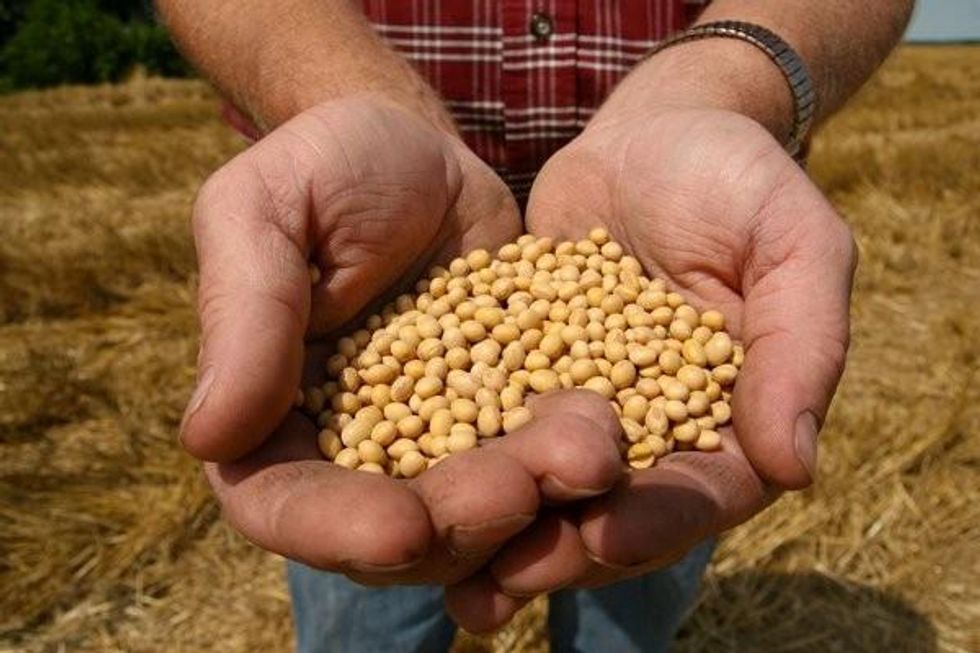
The journey of a 75-year-old Indiana farmer to the highest court in the country began rather uneventfully. Vernon Hugh Bowman purchased an undifferentiated mix of soybean seeds from a grain elevator, planted the seeds and then saved seed from the resulting harvest to replant another crop. Finding that Bowman's crops were largely the progeny of its genetically engineered proprietary soybean seed, Monsanto sued the farmer for patent infringement.
The case is a remarkable reflection on recent fundamental changes in farming. In the 200-plus years since the founding of this country, and for millenniums before that, seeds have been part of the public domain -- available for farmers to exchange, save, modify through plant breeding and replant. Through this process, farmers developed a diverse array of plants that could thrive in various geographies, soils, climates and ecosystems. But today this history of seeds is seemingly forgotten in light of a patent system that, since the mid-1980s, has allowed corporations to own products of life.
One of Monsanto's arguments is that when farmers save seed from a crop grown from patented seed and then use that seed for another crop, they are illegally replicating, or "making," Monsanto's proprietary seeds instead of legally "using" the seeds by planting them only one time and purchasing more seeds for each subsequent planting.
This logic is troubling to many who point out that it is the nature of seeds and all living things, whether patented or not, to replicate. Monsanto's claim that it has rights over a self-replicating natural product should raise concern. Seeds, unlike computer chips, for example, are essential to life. If people are denied a computer chip, they don't go hungry. If people are denied seeds, the potential consequences are much more threatening.
Although Monsanto and other agrochemical companies assert that they need the current patent system to invent better seeds, the counterargument is that splicing an already existing gene or other DNA into a plant and thereby transferring a new trait to that plant is not a novel invention. A soybean, for example, has more than 46,000 genes. Properties of these genes are the product of centuries of plant breeding and should not, many argue, become the product of a corporation. Instead, these genes should remain in the public domain.
The seed industry also claims that if patents are made narrower in scope, innovation, such as devising environmentally sustainable ways to farm, would be stifled. However, evidence casts doubt on the prevalent assumption that positive environmental impacts have resulted from their seed technologies.
Take the example of the genetically engineered soybean in question. Its innovative trait is that it is resistant to the herbicide Roundup, whose primary ingredient is glyphosate. However, weeds are developing a rapid resistance to glyphosate.
In January, Farm Industry News reported that the area of U.S. cropland infested with glyphosate-resistant weeds expanded to 61.2 million acres in 2012. These "super weeds" are gaining momentum, increasing 25% in 2011 and 51% in 2012.
In response, farmers resort to more soil-eroding tillage operations to combat the weeds, and they turn to more toxic chemicals. Based on data from the USDA, as much as 26% more pesticides per acre were used on genetically engineered crops than on conventional crops.
And what is the industry's response? Monsanto is planning to seek approval for dicamba-resistant soybeans, corn and cotton. Dow AgroSciences is seeking USDA approval of soybeans and corn resistant to 2, 4-D, an active ingredient in Agent Orange. It is difficult to understand how such innovation is enhancing the environment.
Finally, the agrochemical industry claims that its seed innovation has provided farmers more choices. Yet the market concentration of 10 agrochemical companies owning about two-thirds of global commercial seed for major crops has narrowed the choice of seeds for farmers and resulted in higher seed prices. Over an 11-year period, the cost per acre of planting soybeans has risen a dramatic 325%.
Our organizations interviewed hundreds of farmers across the nation for a recent report, "Seed Giants vs. U.S. Farmers." They explained that the high adoption rate of genetically engineered seed is largely because the companies have stopped offering conventional seed. One way to recoup the high investment that Monsanto and others say is spent on genetic engineering is to ensure that farmers have few other purchasing options.
When arguments from both sides have been presented, the Supreme Court justices will have to thoroughly consider the many complexities of patent law as it pertains to self-replicating organisms. But taking a few steps back from the microscope and the lawbooks, they may find that there is a discussion to be had about a much deeper question: the appropriate role of ownership and control over the very elements of life.
On Tuesday, attorneys for the largest agrochemical corporation in the world, Monsanto, will present arguments before the Supreme Court asserting the company's rights to the generations of seeds that naturally reproduce from its genetically modified strains. Bowman vs. Monsanto Co. will be decided based on the court's interpretation of a complex web of seed
The journey of a 75-year-old Indiana farmer to the highest court in the country began rather uneventfully. Vernon Hugh Bowman purchased an undifferentiated mix of soybean seeds from a grain elevator, planted the seeds and then saved seed from the resulting harvest to replant another crop. Finding that Bowman's crops were largely the progeny of its genetically engineered proprietary soybean seed, Monsanto sued the farmer for patent infringement.
The case is a remarkable reflection on recent fundamental changes in farming. In the 200-plus years since the founding of this country, and for millenniums before that, seeds have been part of the public domain -- available for farmers to exchange, save, modify through plant breeding and replant. Through this process, farmers developed a diverse array of plants that could thrive in various geographies, soils, climates and ecosystems. But today this history of seeds is seemingly forgotten in light of a patent system that, since the mid-1980s, has allowed corporations to own products of life.
One of Monsanto's arguments is that when farmers save seed from a crop grown from patented seed and then use that seed for another crop, they are illegally replicating, or "making," Monsanto's proprietary seeds instead of legally "using" the seeds by planting them only one time and purchasing more seeds for each subsequent planting.
This logic is troubling to many who point out that it is the nature of seeds and all living things, whether patented or not, to replicate. Monsanto's claim that it has rights over a self-replicating natural product should raise concern. Seeds, unlike computer chips, for example, are essential to life. If people are denied a computer chip, they don't go hungry. If people are denied seeds, the potential consequences are much more threatening.
Although Monsanto and other agrochemical companies assert that they need the current patent system to invent better seeds, the counterargument is that splicing an already existing gene or other DNA into a plant and thereby transferring a new trait to that plant is not a novel invention. A soybean, for example, has more than 46,000 genes. Properties of these genes are the product of centuries of plant breeding and should not, many argue, become the product of a corporation. Instead, these genes should remain in the public domain.
The seed industry also claims that if patents are made narrower in scope, innovation, such as devising environmentally sustainable ways to farm, would be stifled. However, evidence casts doubt on the prevalent assumption that positive environmental impacts have resulted from their seed technologies.
Take the example of the genetically engineered soybean in question. Its innovative trait is that it is resistant to the herbicide Roundup, whose primary ingredient is glyphosate. However, weeds are developing a rapid resistance to glyphosate.
In January, Farm Industry News reported that the area of U.S. cropland infested with glyphosate-resistant weeds expanded to 61.2 million acres in 2012. These "super weeds" are gaining momentum, increasing 25% in 2011 and 51% in 2012.
In response, farmers resort to more soil-eroding tillage operations to combat the weeds, and they turn to more toxic chemicals. Based on data from the USDA, as much as 26% more pesticides per acre were used on genetically engineered crops than on conventional crops.
And what is the industry's response? Monsanto is planning to seek approval for dicamba-resistant soybeans, corn and cotton. Dow AgroSciences is seeking USDA approval of soybeans and corn resistant to 2, 4-D, an active ingredient in Agent Orange. It is difficult to understand how such innovation is enhancing the environment.
Finally, the agrochemical industry claims that its seed innovation has provided farmers more choices. Yet the market concentration of 10 agrochemical companies owning about two-thirds of global commercial seed for major crops has narrowed the choice of seeds for farmers and resulted in higher seed prices. Over an 11-year period, the cost per acre of planting soybeans has risen a dramatic 325%.
Our organizations interviewed hundreds of farmers across the nation for a recent report, "Seed Giants vs. U.S. Farmers." They explained that the high adoption rate of genetically engineered seed is largely because the companies have stopped offering conventional seed. One way to recoup the high investment that Monsanto and others say is spent on genetic engineering is to ensure that farmers have few other purchasing options.
When arguments from both sides have been presented, the Supreme Court justices will have to thoroughly consider the many complexities of patent law as it pertains to self-replicating organisms. But taking a few steps back from the microscope and the lawbooks, they may find that there is a discussion to be had about a much deeper question: the appropriate role of ownership and control over the very elements of life.
On Tuesday, attorneys for the largest agrochemical corporation in the world, Monsanto, will present arguments before the Supreme Court asserting the company's rights to the generations of seeds that naturally reproduce from its genetically modified strains. Bowman vs. Monsanto Co. will be decided based on the court's interpretation of a complex web of seed
The journey of a 75-year-old Indiana farmer to the highest court in the country began rather uneventfully. Vernon Hugh Bowman purchased an undifferentiated mix of soybean seeds from a grain elevator, planted the seeds and then saved seed from the resulting harvest to replant another crop. Finding that Bowman's crops were largely the progeny of its genetically engineered proprietary soybean seed, Monsanto sued the farmer for patent infringement.
The case is a remarkable reflection on recent fundamental changes in farming. In the 200-plus years since the founding of this country, and for millenniums before that, seeds have been part of the public domain -- available for farmers to exchange, save, modify through plant breeding and replant. Through this process, farmers developed a diverse array of plants that could thrive in various geographies, soils, climates and ecosystems. But today this history of seeds is seemingly forgotten in light of a patent system that, since the mid-1980s, has allowed corporations to own products of life.
One of Monsanto's arguments is that when farmers save seed from a crop grown from patented seed and then use that seed for another crop, they are illegally replicating, or "making," Monsanto's proprietary seeds instead of legally "using" the seeds by planting them only one time and purchasing more seeds for each subsequent planting.
This logic is troubling to many who point out that it is the nature of seeds and all living things, whether patented or not, to replicate. Monsanto's claim that it has rights over a self-replicating natural product should raise concern. Seeds, unlike computer chips, for example, are essential to life. If people are denied a computer chip, they don't go hungry. If people are denied seeds, the potential consequences are much more threatening.
Although Monsanto and other agrochemical companies assert that they need the current patent system to invent better seeds, the counterargument is that splicing an already existing gene or other DNA into a plant and thereby transferring a new trait to that plant is not a novel invention. A soybean, for example, has more than 46,000 genes. Properties of these genes are the product of centuries of plant breeding and should not, many argue, become the product of a corporation. Instead, these genes should remain in the public domain.
The seed industry also claims that if patents are made narrower in scope, innovation, such as devising environmentally sustainable ways to farm, would be stifled. However, evidence casts doubt on the prevalent assumption that positive environmental impacts have resulted from their seed technologies.
Take the example of the genetically engineered soybean in question. Its innovative trait is that it is resistant to the herbicide Roundup, whose primary ingredient is glyphosate. However, weeds are developing a rapid resistance to glyphosate.
In January, Farm Industry News reported that the area of U.S. cropland infested with glyphosate-resistant weeds expanded to 61.2 million acres in 2012. These "super weeds" are gaining momentum, increasing 25% in 2011 and 51% in 2012.
In response, farmers resort to more soil-eroding tillage operations to combat the weeds, and they turn to more toxic chemicals. Based on data from the USDA, as much as 26% more pesticides per acre were used on genetically engineered crops than on conventional crops.
And what is the industry's response? Monsanto is planning to seek approval for dicamba-resistant soybeans, corn and cotton. Dow AgroSciences is seeking USDA approval of soybeans and corn resistant to 2, 4-D, an active ingredient in Agent Orange. It is difficult to understand how such innovation is enhancing the environment.
Finally, the agrochemical industry claims that its seed innovation has provided farmers more choices. Yet the market concentration of 10 agrochemical companies owning about two-thirds of global commercial seed for major crops has narrowed the choice of seeds for farmers and resulted in higher seed prices. Over an 11-year period, the cost per acre of planting soybeans has risen a dramatic 325%.
Our organizations interviewed hundreds of farmers across the nation for a recent report, "Seed Giants vs. U.S. Farmers." They explained that the high adoption rate of genetically engineered seed is largely because the companies have stopped offering conventional seed. One way to recoup the high investment that Monsanto and others say is spent on genetic engineering is to ensure that farmers have few other purchasing options.
When arguments from both sides have been presented, the Supreme Court justices will have to thoroughly consider the many complexities of patent law as it pertains to self-replicating organisms. But taking a few steps back from the microscope and the lawbooks, they may find that there is a discussion to be had about a much deeper question: the appropriate role of ownership and control over the very elements of life.